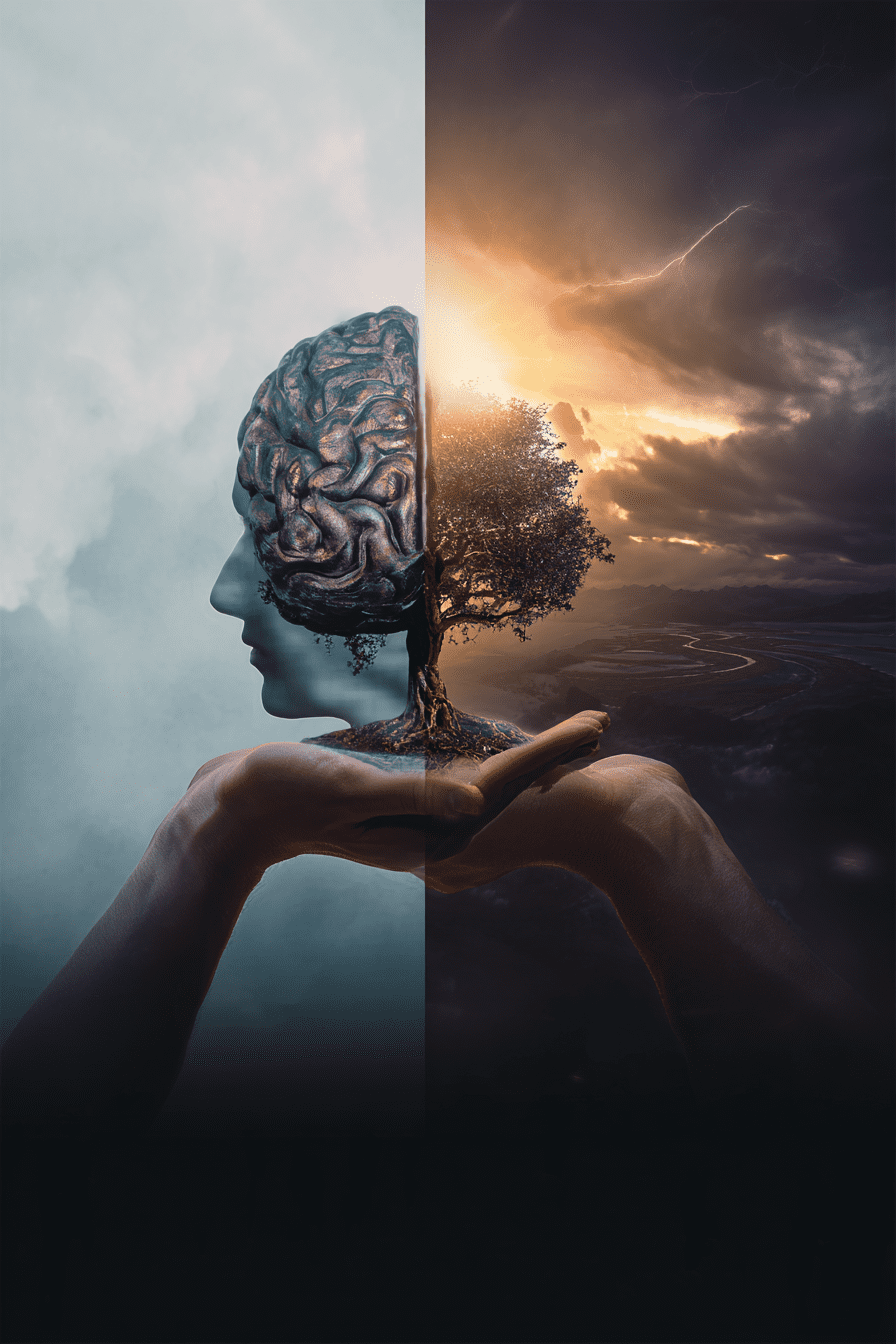

I’ve been there—that place where stress feels like an inseparable part of life. For years, I was a skeptic, convinced that things like spirituality, meditation, or mindfulness were just trendy buzzwords with no real substance. Everything changed when the crisis hit. Problems started piling up, and I felt like I was losing control and running on empty. That’s when, out of sheer desperation, I started looking for answers in places I had previously ignored. I didn’t expect this journey to transform not only my approach to life but my physical health as well.
I am not alone in this. Statistics show that chronic stress is a major culprit in weakening our immune systems, making us more susceptible to infections and chronic diseases. Scientific research confirms that stress isn’t just a state of mind but a real, physical burden on the body. So, is there a way to learn to live healthier, calmer, and more consciously, even when the world around us is rushing forward without restraint?
What Is Stress and How Does It Affect the Body?
To understand how we can deal with stress, we first need to understand what it actually is. In its simplest form, stress is the body’s natural reaction to challenges. When our ancestors stood face-to-face with a predator, their bodies triggered a mechanism we know today as the “fight or flight” response. This powerful biological switch floods the body with hormones like adrenaline and cortisol, preparing it for immediate action—the heart beats faster, breathing accelerates, and muscles tense up. It’s a brilliant survival system, but it was designed for short-term, intense situations.
The problem arises when this system is activated constantly by daily worries: work deadlines, financial troubles, or relationship drama. Our body can’t distinguish between a threat from a predator and the pressure of a project deadline. As a result, we fall into a state of chronic stress, and the mechanism meant to protect us starts to harm us. The nervous system remains in a constant state of high alert, leading to exhaustion. The endocrine system, constantly pumping out cortisol, begins to disrupt almost every function of the body—from metabolism to sleep.
However, the most destructive impact of chronic stress is on the immune system. As Dr. Robert Sapolsky, a neurobiologist at Stanford University, aptly noted: “chronic stress suppresses the immune system, making the body more susceptible to disease.” This isn’t just theory. Numerous studies, including those conducted by the American Psychological Association, prove that people living under constant tension catch infections more often, and their bodies recover more slowly. Long-term elevation of cortisol levels can inhibit the production of white blood cells, which are the key soldiers in our fight against viruses and bacteria. Consequently, we become defenseless against threats that a healthy body would handle without a problem.
Spirituality and Mindfulness as an Antidote to Stress
Since we already know that chronic stress acts like a silent saboteur, the question arises: how can we defend ourselves against it? The answer I discovered doesn’t lie in avoiding problems, but in changing our internal reaction to them. This is where spirituality and mindfulness come into play as powerful tools that allow us to regain control over our nervous system.
We often mistakenly equate spirituality with religion, but it’s a much broader concept. Spirituality is the search for meaning, a sense of connection to something greater than ourselves—whether it’s nature, other people, or a universal force. It’s a practice that allows us to look at daily problems from a wider perspective and find inner peace. Mindfulness is its perfect complement. It is the art of being fully present in the moment, without judgment or analysis. Instead of worrying about the future or dwelling on the past, you focus on what is happening here and now—on your breath, the taste of your morning coffee, the sounds of your surroundings.
When I first started practicing meditation, I was full of skepticism. Sitting in silence for a few minutes seemed like a total waste of time. However, as the days went by, I noticed a subtle but profound shift. Problems that used to trigger immediate panic in me began to lose their grip. I was learning to create space between the stimulus (the problem) and my reaction. I realized that while I don’t have influence over everything that happens to me, I have full control over how I respond to it. This discovery was a breakthrough.
Jon Kabat-Zinn, the creator of the Mindfulness-Based Stress Reduction (MBSR) program, put it beautifully: “Mindfulness is the key to stress reduction and living a more balanced life.” These aren’t just empty words. Scientific research provides solid evidence. Researchers at the University of California, Los Angeles (UCLA) and Johns Hopkins University have shown that regular meditation and mindfulness practice can significantly lower cortisol levels—the body’s primary stress hormone. When we train our brains to find calm, we literally reprogram our stress response at the biological level, giving the body a true chance to recover and return to balance.
How Do Spirituality and Mindfulness Impact Physical and Mental Health?
When we start to consciously manage stress through mindfulness techniques and spiritual development, the effects go far beyond just “feeling better.” This isn’t merely a fleeting moment of mental relief; it’s a profound physiological shift that resonates throughout the entire body. Understanding this mechanism helps us appreciate why these practices are so powerful for long-term health.
Strengthening Your Protective Shield: Your Immune System
One of the most fascinating discoveries in psychoneuroimmunology is the direct impact of meditation on our immunity. When we lower our stress hormone levels, we give our immune system the operational capacity it needs to function properly. In a state of chronic tension, the body is too busy fighting an imaginary threat to effectively defend itself against viruses or bacteria.
The research here is clear. Scientists have observed that individuals who regularly practice meditation show increased activity in genes responsible for producing antibodies and infection-fighting cells. In one study, participants who underwent mindfulness training demonstrated a significantly stronger immune response to a flu vaccine compared to a control group. This is proof that peace of mind translates into real physical strength.
Soothing the Mind: Fighting Anxiety and Burnout
In the realm of mental health, mindfulness acts like a precision surgical tool. In a world where anxiety, depression, and burnout are becoming epidemic, the ability to anchor oneself in the “here and now” is priceless. Anxiety feeds on the future—on “what if” scenarios. Depression often dwells on the past. Mindfulness teaches us how to break free from these thought loops.
Regular practice allows you to notice the moment a negative thought arises and, instead of getting carried away by it, simply observe it. This detachment reduces the emotional intensity of difficult experiences. The goal isn’t to stop feeling sadness or anger, but to prevent these emotions from defining you and taking control. As a result, the nervous system is less frequently overwhelmed, which dramatically reduces the risk of burnout.
Regeneration Through Sleep
Another pillar of health that improves with spirituality and mindfulness is sleep. Many of us know the feeling: your body is exhausted, but your mind is racing, analyzing the day’s events. Breathing techniques and pre-sleep meditation act as a “stop” signal for a runaway mind. Focusing on your breath activates the parasympathetic nervous system—the one responsible for relaxation and regeneration. This helps you fall asleep faster and experience deeper, more restorative sleep.
A Personal Perspective: More Than Theory
I can talk about studies for hours, but for me, the most important proof is my own experience. Since I incorporated these techniques into my life, I’ve noticed a fundamental difference in my energy levels. Before, after a stressful day, I was completely drained—I had no energy for anything but lying on the couch. Stress literally sucked the life out of me.
Today, even though my problems haven’t magically disappeared, my reaction to them is different. I don’t ruminate on them for hours. Because of this, I have the resources to actually solve them. I have more energy for my passions, for spending time with my loved ones, and for physical activity. It’s a positive feedback loop: less stress means better health, and better health means more strength to handle challenges. It’s not magic; it’s biology supported by awareness.
Stress Reduction Techniques: How to Get Started
Knowing that spirituality and mindfulness help is one thing. Putting them into practice amidst the chaos of daily life is another. We often think that to reap the benefits of meditation, we need to retreat to a monastery in the Himalayas or spend hours sitting in a lotus position. Nothing could be further from the truth. The key to success isn’t intensity, but consistency and simplicity.
Here are a few proven methods to help you take the first steps toward tranquility without turning your life upside down.
Meditation for Busy People
If the thought of “doing nothing” for 20 minutes terrifies you, start small.
- The 5-Minute Rule: Set a timer for 5 minutes. Sit comfortably with a straight spine (a chair is fine). Close your eyes and direct all your attention to your breath. Feel the cool air enter your nostrils and the warm air exit.
- What to Do with Thoughts? Your mind will undoubtedly wander—to your grocery list, work problems, or evening plans. This is normal. Don’t fight it. When you notice your mind has drifted, gently, without judgment, bring your attention back to your breath. It’s this act of returning that is the “muscle” you are training.
Mindfulness on the Go
You don’t have to sit in silence to practice mindfulness. You can turn almost any activity into a meditation.
- Mindful Eating: Instead of devouring your lunch in front of a computer screen, take a moment for a meal without distractions. Notice the colors on your plate, the smell of the food, its texture, and the taste of each bite. This simple exercise not only reduces stress but can also improve digestion.
- Mindful Walking: When you’re walking to your car or the bus stop, don’t immediately reach for your phone. Feel the contact of your feet with the ground, the rhythm of your steps, the breeze on your face. Be fully present in this short walk. It’s an excellent way to “reset” your nervous system between tasks.
Everyday Spirituality
Finding your own spiritual path doesn’t have to involve grand rituals. It’s about building a relationship with yourself and the world around you.
- Connect with Nature: A forest, a park, or even a small backyard can be a place of spiritual renewal. Nature has an incredible ability to quiet our inner world. When you spend time in green spaces, try to feel that you are a part of this ecosystem, not just an observer.
- Reflection and Gratitude: In the evening, instead of scrolling through social media, take a moment to reflect. What are you grateful for today? What good things happened? Practicing gratitude retrains your brain to notice the positives, which is a powerful antidote to stress.
- Prayer or Intention: If it aligns with your beliefs, a short prayer or setting a positive intention can provide a sense of support and meaning in difficult moments.
Your Emergency Tool: The 4-7-8 Technique
What do you do when stress hits suddenly and hard—right before an important meeting or during an argument? That’s when you need a quick, physiological tool.
The 4-7-8 breathing technique acts like an emergency brake for an overactive nervous system:
- Inhale through your nose for 4 seconds.
- Hold your breath for 7 seconds.
- Exhale through your mouth (making a “whoosh” sound) for 8 seconds.
Repeat this cycle 4 times. The extended exhale stimulates the vagus nerve, sending an immediate signal to your brain: “You are safe, you can relax.” It’s a biochemical hack that works almost instantly.
The Scientific Evidence: What the Research Says
For many of us, especially those with an analytical mind, the subjective feeling of “being calmer” isn’t enough. We need hard data, numbers, and charts to confirm that the time spent on meditation or spiritual practices isn’t wasted. Fortunately, over the last two decades, science has caught up with ancient wisdom, and the results from research conducted by prestigious institutions are fascinating.
Changes in Brain Structure
One of the most groundbreaking discoveries is in the field of neuroplasticity. It was once believed that the adult brain was fixed. Today, we know that regular mindfulness practice literally changes its architecture.
Research conducted by a team at Massachusetts General Hospital (affiliated with Harvard Medical School) showed that just 8 weeks of regular meditation leads to measurable changes in the brain. Participants showed an increase in gray matter density in the hippocampus—an area responsible for learning and memory. Even more importantly, a decrease in density was observed in the amygdala. This is the part of the brain that acts as our fire alarm, responsible for feelings of fear and stress. Simply put: meditation physically shrinks the part of your brain responsible for panicking.
As Dr. Richard Davidson, a renowned neuroscientist at the University of Wisconsin-Madison who has studied the brains of Buddhist monks for years, notes:
“Meditation is not just about relaxation; it is a profound transformation of the mind. Our research shows that we can train our brains just as we train our bodies, to become more resilient to stress and more compassionate.”
Spirituality and Longevity
Science is also examining the impact of spirituality (understood broadly, not necessarily religiously) on overall health and lifespan. Meta-analyses involving thousands of participants suggest that people who regularly engage in spiritual or religious practices live statistically longer.
Why is this? Researchers point to several factors. First, spirituality is often associated with a healthier lifestyle and avoidance of risky behaviors. Second, a sense of purpose and belonging to a community acts as a powerful buffer against stress. Studies published in journals likeJAMA Internal Medicine indicate that these practices can lower blood pressure and reduce the risk of cardiovascular disease, which are directly correlated with stress levels in our lives.
Resilience at the Cellular Level
The immune system benefits mentioned earlier are also confirmed in the lab. Studies show that mindfulness practices can lower levels of inflammatory markers in the body, such as C-reactive protein (CRP). Chronic inflammation is the root cause of many modern diseases, from diabetes to cancer. By reducing stress through mindfulness, we are extinguishing this invisible fire burning inside our bodies.
The conclusions from the world of science are clear: meditation and spirituality are not magic tricks, but powerful, biological tools for regulating the body. They are an investment in your health that yields tangible, physiological returns.
Myth or Fact? Debunking Common Beliefs
When I start talking about meditation or spiritual development, I often see a flicker of skepticism in people’s eyes. That’s completely understandable. A lot of stereotypes have grown around these topics that can effectively discourage anyone from trying. So, before you dismiss these tools, let’s look at the most common myths that hold us back from taking care of our own peace of mind.
Myth 1: “It’s Only for Religious People”
This is one of the most common misunderstandings. Many people equate spirituality with religion, fearing that meditation will require them to adopt a foreign belief system.
Fact: Spirituality and religion are two different things, though they can overlap. Religion is an organized system of beliefs and rituals. Spirituality is a broad concept that relates to your inner self, your search for meaning, peace, and connection to the world. You can be a devout Catholic, an agnostic, or a staunch atheist and still reap enormous benefits from practicing mindfulness. Mindfulness is a workout for the mind, just as the gym is a workout for the body—it doesn’t require you to change your worldview, only a willingness to work on yourself.
Myth 2: “Meditation Is a Waste of Time, and I’m Too Busy”
We live in a culture that glorifies being busy. “I don’t have time to sit and do nothing”—that’s a sentence I repeated to myself for years. I felt that every minute had to be productively spent on work or solving problems.
Fact: Meditation doesn’t take time; it gives it back. Sound paradoxical? Think about it this way: how much time do you waste during the day with a wandering mind, worrying about things you can’t control, or mindlessly scrolling on your phone out of exhaustion? Research shows that regular practice improves concentration and mental clarity. This allows you to work more efficiently, make better decisions, and recover your energy faster. Those 10-15 minutes invested in the morning pay off with dividends of better energy for the rest of the day. As the old Zen saying goes: “You should sit in meditation for 20 minutes every day—unless you’re too busy. Then you should sit for an hour.”
Myth 3: “It’s a Magic Wand for All Problems”
We often fall into the trap of wishful thinking. We expect that after a week of meditation, our life will turn into an idyllic paradise, our boss will stop annoying us, and our mortgage will pay itself off.
Fact: Mindfulness won’t make your problems disappear. It won’t erase difficult emotions or fix toxic relationships with a wave of a magic wand. What it does, however, is far more valuable. It changes your relationship with your problems. Instead of drowning in stress and reacting impulsively, you gain the space for calm analysis and action. It’s a process, not an instant fix. There will be days when meditation comes easily, and days when your mind feels like a troop of wild monkeys. That’s normal. The key isn’t perfection, but persistence and kindness toward yourself.
Conclusion: Your Path to Health and Peace
This journey through the scientific and personal aspects of stress, mindfulness, and spirituality clearly shows one thing: the way we manage our inner world has a direct and measurable impact on our physical health. We’ve explored how chronic stress sabotages our immune and hormonal systems. We’ve seen that practices like meditation and mindfulness are not just “nice-to-haves,” but powerful tools that can change brain structure, lower cortisol levels, and strengthen our natural protective shield.
Stress reduction is not a luxury for a select few, but a fundamental part of self-care. It’s the key to better sleep, more energy, mental clarity, and, ultimately, a longer and happier life. You don’t have to take my word for it—try it. Start with five minutes of meditation a day, a conscious breath in a difficult situation, or a silent walk without your phone in hand. Experiment and find what resonates with you.
For me, this journey has been a transformation from skepticism and exhaustion to inner peace and strength. This doesn’t mean my life is free of difficulties. The difference is that today, I have the tools to face them without burning out from the inside. This path has opened the door to a deeper understanding of myself and the world, bringing a sense of balance I once could only dream of.
Perhaps for you, this will also be the beginning of something special. Your path to health and peace starts with one small step. With one conscious breath. Take it today.
If my writing has inspired or helped you, I would be grateful for your support.
Need support yourself? Discover how I can help you.
AI Disclosure
I see my thoughts as the essence, much like the soul, and AI helps me give them form. It supports me with research, translation, and organizing ideas, but every perspective is my own. Curious how I use AI? Read more here.