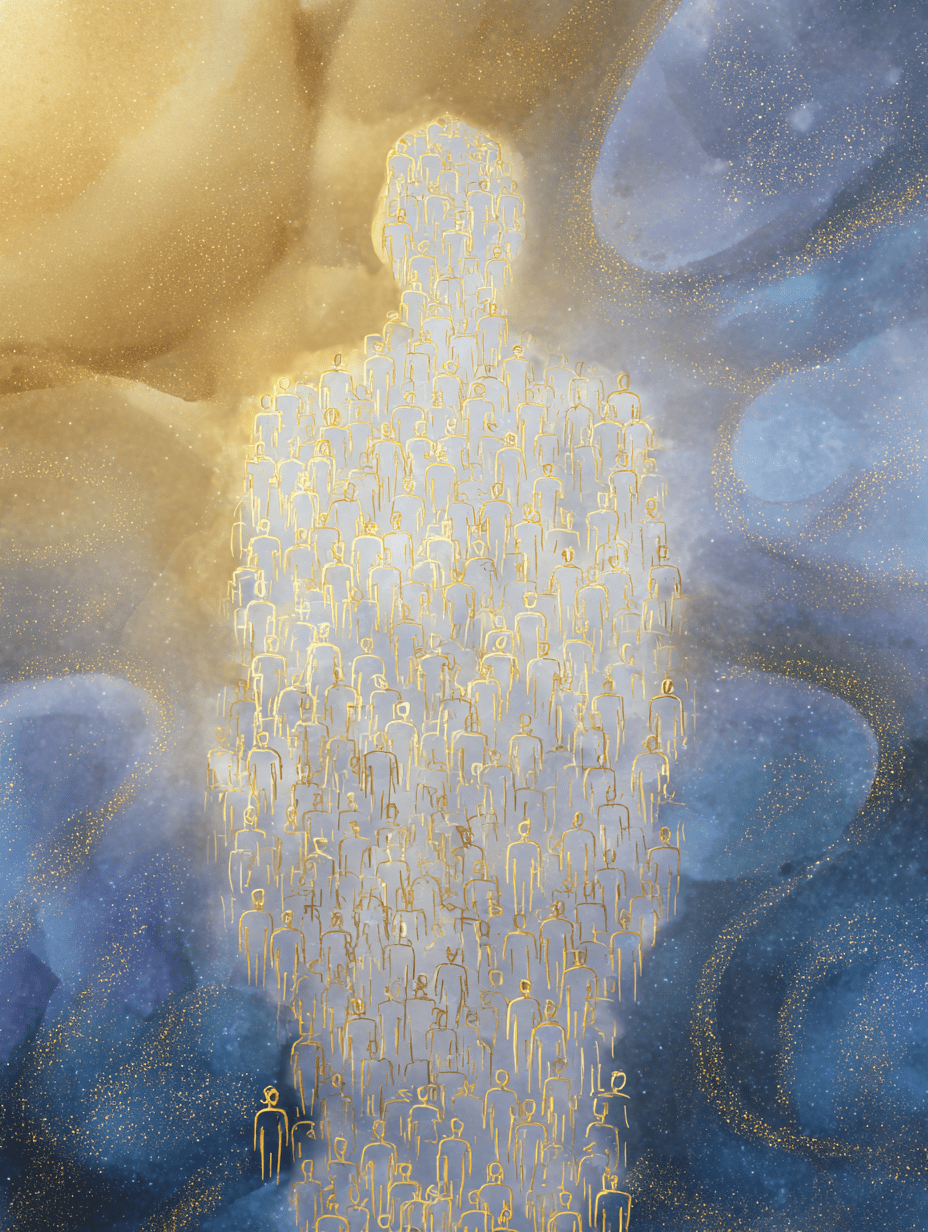

Before we dive into the feminine archetypes, I want to mention that I’ve already written about the male Jungian patterns in my article, “Recognizing Maturity and Shadows in Jungian Male Archetypes,” as well as a piece describing my personal experience discovering my own archetypes: “Exploring Jungian Male Archetypes: A Personal Journey.”
My desire to explore the feminine archetypes was sparked by an effort to understand my wife, with whom I am currently going through a divorce. I wanted to make sense of her behaviors, which often felt abstract and incomprehensible from my perspective. I began to realize how multidimensional our inner worlds are and how these forces interweave within our relationships. This knowledge has also proven invaluable in raising my three children, especially my daughter.
In my journey through the male archetypes, I discovered how powerful Jung’s map of the psyche can be for self-discovery. But this inner world isn’t reserved just for men. The female psyche also harbors fundamental energies that, when consciously integrated, lead to wholeness, power, and authenticity.
Although I am not a therapist myself, it is worth noting that a model complementary to the male “big four” is widely used in developmental and therapeutic practices. Again, my fascination with this topic grew primarily from a need to better understand my wife—her actions, which from my point of view, often seemed abstract and hard to grasp. I felt how important it was to capture these subtle, multidimensional energies that influence our relationships and understanding of one another. Meet the four feminine archetypes: the Queen, the Warrior, the Sage, and the Lover. This article is a practical guide to help you recognize how these energies live within you, where their mature potential lies, and where their shadows might be lurking.
1. The Queen: The Energy of Dignity and Responsibility
The mature Queen is the heart and backbone of her kingdom—whether that pertains to her inner world, her family, her relationships, or her broader community. Her authority stems from inner dignity, a sense of agency, and alignment with her own values—she doesn’t try to dominate others but instead inspires and leads by example. She knows how to maintain order, establish clear yet empathetic boundaries, and cares for her own well-being as much as that of her loved ones. She easily combines responsibility with care—making decisions and setting directions while remaining open to asking for support or delegating tasks, which is a sign of her mature leadership. Emotional stability, the ability to “hold the structure” even in difficult situations, and creating emotional safety for those around her make the Queen a pillar and a reference point for others.
In daily life, the mature Queen is not just someone who faces challenges with dignity but also one who effectively manages her time, energy, and relationships. She might be an entrepreneur, a team leader, a community organizer, or simply the person others rely on in moments of crisis. Her mature energy also manifests in her ability to appreciate her own successes, celebrate the achievements of others, and encourage everyone to collaborate. She doesn’t compete in a destructive way—instead, she builds, unites, and creates space for growth.
The Shadows of the Queen:
- The Tyrant Queen: Her kingdom becomes a prison built on control and perfectionism. Fearing a loss of influence or trust, she devalues others, cannot delegate responsibility, and tries to keep everything under strict control. She often criticizes, imposes her opinion, and expects obedience. This attitude can be found in families (a controlling mother or wife), the workplace (micromanagement, lack of trust in the team), and even in friendships, where a desire to constantly advise or judge appears. The Queen’s inner strength then turns into armor, and relationships become superficial, based on forced loyalty.
- The Abdicating Queen (The Prisoner): She renounces her power and withdraws from agency—she is passive, easily allows her own boundaries to be crossed. Emotionally dependent on the approval of others, she lives according to their expectations, and takes on the role of the “good girl” or the person always ready to serve at her own expense. The source of this difficulty is a fear of rejection and the need to be “good” at all costs. The Abdicating Queen easily succumbs to pressure, ignores her own needs, and gets lost in dependent relationships (e.g., in a couple where she avoids conflict just to maintain harmony; at work, where she can’t clearly express her limits and overworks herself for others). She thus loses her sense of self-worth.
Working with your “royal” energy involves learning authentic leadership without the need for control and returning to your agency—caring for your own needs without guilt. Inspiration can be found in women who know how to build healthy support systems, lead with respect, and are not afraid to show their vulnerability—for they know that true strength lies in the skillful balance of boundaries and empathy.
How to work with the Queen archetype:
- Boundary Work: Practice asking for support and saying “no” without guilt. Understand the difference between agency (caring for your realm) and control (trying to micromanage everything and everyone).
- Taming the Inner Critic: Notice when your inner voice becomes harsh. Practice self-compassion, treating yourself with the same care you would offer a friend.
- Micro-Decisions: Take small actions every day that restore your sense of agency: ask for something, decline a request, delegate a task. This strengthens your inner Queen.
2. The Warrior: The Energy of Action and Defending Values
The mature Warrior is the living embodiment of courage, agency, and perseverance. It is an archetype that has represented feminine strength for thousands of years—from mythological figures like Artemis and Athena to modern-day activists, athletes, and women fighting for their place in the world. Her personality is characterized by decisiveness, a readiness to take on challenges, and consistency in pursuing her goals and protecting what is important to her. She can clearly define her boundaries, defend them without aggression, and maintain respect for others. Discipline, independence, determination, and the effective translation of ideas into concrete actions—these are her greatest strengths.
In personal or professional relationships, the mature Warrior is someone who stands up for the weak, reacts to injustice, and is not afraid of difficult conversations. Her strength comes from the integration of body and mind—she cares for her physical condition but also develops mental strength and resilience to stress. She often gets involved in social initiatives, leads projects, or guides a group—not always on the front line, but always as a guarantor of action and consistency. Josephine Bonaparte, Simone de Beauvoir, or contemporary leaders of social movements can serve as examples of how to realize the mature energy of the Warrior in practice: bravely defending values without looking for the approval of others.
The Shadows of the Warrior:
- The Aggressor: When the Warrior loses her balance, her assertiveness turns into a “life-or-death” battle. She sets her boundaries rigidly, often reacting impulsively or even with hostility—both verbally and through her posture. She resorts to black-and-white thinking (“either-or”), rejects compromise and vulnerability, and cuts off relationships with harsh judgments. The Aggressor appears where anger and fear of powerlessness turn into an attack—for example, through sarcasm, malicious retorts, or constant criticism. At work or in the family, such a Warrior becomes dominant, shuts out feelings, and promotes a culture of efficiency over well-being.
- The Frozen Warrior: The opposite of the Aggressor is the blocked Warrior—passive in the face of conflict, avoiding confrontation, and endlessly postponing important actions. Instead of acting with energy, she sinks into procrastination, losing her enthusiasm and motivation. Unexpressed emotions accumulate in her body, which can lead to tension or even psychosomatic ailments. She chooses “politeness” and avoiding difficult conversations to not disturb the superficial peace. In relationships, she becomes submissive, giving up her own needs—out of fear of rejection or conflict.
The experiences of many women show that the Warrior’s shadow can appear both in professional life (e.g., as burnout, frustration with a lack of recognition) and in personal relationships, where an inability to defend one’s own space leads to growing anger or withdrawal. Conscious work with this archetype allows one to break free from autopilot: moving between firm self-protection and openness to dialogue.
It is worth practicing the Warrior’s “small victories” daily—by setting boundaries in conversation, making brave decisions, or assertively asking for what you really need. By celebrating successes, even the smallest ones, you build your strength and self-confidence—without falling into excessive harshness or burnout.
How to work with the Warrior archetype:
- Regulating Arousal: When you feel anger or anxiety rising, focus on your breath, ground yourself (feel your feet on the floor), and work with muscle tension. This helps you regain control.
- Assertiveness Training: Use “I” statements (“I feel…”, “I need…”). Learn to distinguish requests from demands. Set boundaries without guilt.
- Transforming Anger: Treat anger as information. What is it trying to tell you about your unmet needs? What action does it suggest?
3. The Sage (The Magician): The Energy of Insight and Intuition
The mature Sage (also called the Magician or Mentor) embodies the archetype of deep wisdom, intuition, and the ability to see beyond the patterns of everyday life. She is a woman who naturally combines a rational mind with the richness of her inner world of feelings and premonitions. Her strength is a broad perspective—she can analyze situations coolly and logically, but also listens to the voice of intuition, allowing her to make decisions that are both wise and “rooted in the heart.” She uses her knowledge ethically—not for control or recognition, but to serve others, solve complex problems, and inspire growth.
The mature Sage is often a mentor to others: she can support, guide, explain complicated matters in an understandable way, and help others see their hidden potential. In her professional life, she stands out for her creativity in problem-solving and her openness to non-standard approaches (e.g., in science, education, creative industries, psychology, or consulting). In relationships, she is a balancing voice of reason, yet at the same time, she can deeply empathize with the emotions of others. Her presence provides a sense of security and guidance.
In daily life, the mature Sage can:
- Learn from her own and others’ experiences without becoming bitter.
- Maintain distance from difficult emotions without suppressing them—she allows them to flow but doesn’t let them overwhelm her.
- See connections and meaning even in seemingly chaotic events.
- Be a source of practical, experience-based advice for others.
However, the dark sides of the Sage emerge when the archetype’s energy is distorted by fear, uncertainty, or an excessive need for control.
The Shadows of the Sage:
- The Manipulator: She uses her intelligence to play a game of “I know better.” She uses gaslighting and instrumentalizes relationships for her own benefit. She is cold and distant.
- The Detached Analyst: She escapes into a world of thoughts and planning to avoid contact with emotions and her body. Instead of feeling, she analyzes her feelings. Her wisdom is heartless.
The shadow appears, for example, in professional situations (making “dry” comments and withdrawing from the team), in the family (excessive criticism disguised as “advice,” distancing herself from the problems of loved ones instead of offering real help), or in romantic relationships (lack of commitment, emotional coldness, or competition instead of cooperation).
On one hand, the Manipulator can perfectly gain trust and build authority, but later uses access to someone’s secrets for her own purposes. The Detached Analyst, on the other hand, is a master of planning but loses contact with her own emotions—which leads to a sense of alienation and loneliness.
Working with this archetype involves integrating knowledge with the heart, maintaining a balance between analytical thinking and empathy, and consciously questioning one’s own intentions and involvement in the affairs of others.
How to work with the Sage archetype:
- Head, Body, and Heart Integration: Pay attention to signals from your body. Learn to name your emotions. Before making a decision, ask yourself: “What do I feel in my body? What is my heart telling me?”
- Checking Intentions: Regularly ask yourself: “Why am I using this knowledge? Do I want to help, or prove I’m right?” Practice transparency in your communication.
- Limiting Rumination: Learn to tolerate uncertainty and accept that not everything has to be perfect. Sometimes “good enough” is the best solution.
4. The Lover: The Energy of Vitality and Connection
The mature Lover is the embodiment of vitality, sensuality, and the joy of life, and her energy is saturated with a fullness of physical and emotional experiences. In the Lover archetype, the ability to build close, authentic relationships, the conscious use of one’s own creativity, and a deep connection with the body and its cycles—both biological and emotional—are intertwined. The mature Lover can enjoy pleasure without guilt, experience sensuality on her own terms, and at the same time not lose herself in relationships. Her closeness is conscious: she gives a lot, but does not lose her identity—instead of fusion, she chooses partnership and mutual support.
In daily life, the mature Lover expresses herself through mindfulness of small joys: she can find pleasure in ordinary moments, delight in music, dance, art, or nature. In relationships, she is not afraid to show emotions, speaks openly about her needs and desires, and builds relationships based on authenticity, trust, and mutual fascination. It is also an energy that inspires—the Lover is often the source of artistic or creative initiatives, and her presence enlivens any environment.
In her shadow aspect, however, the Lover can take extreme forms. The Dissolving or Addicted Lover cannot set boundaries: she desperately seeks intense sensations—whether through affairs, compulsive sexuality, an addiction to attention, or quick dopamine fixes (e.g., shopping, social media). In relationships, she idealizes partners, easily loses herself, becomes submissive, or accepts situations that do not serve her—all for the need to feel “important” and constantly experience ecstasy. She often escapes into fantasies or engages in emotionally unavailable situations, which over time leads to a sense of emptiness and disappointment in herself and others.
In contrast, the Blocked Lover is the opposite of ecstasy: she experiences a disconnection from desire and pleasure, not deriving joy from physicality and relationships. She may feel emotionally “frozen,” shy away from closeness, and not trust her own body and its signals. She often experiences anhedonia, or the loss of the ability to feel pleasure, and withdraws from relationships—fearing pain, rejection, or hurt. Over time, she may fall into chronic tension, avoid physical or emotional contact, and close herself off in a world of her own fears.
Conscious work with the Lover archetype allows for the recovery of authentic vitality—not through an excess of stimuli, but through the acceptance and celebration of sensuality, pleasure, and relationships on one’s own terms. It is a return to the body as a source of wisdom, boundaries, and empathy, and learning to express emotions openly but without threatening one’s integrity. The mature Lover allows for loving in a way that is free, tender, and at the same time rooted in oneself—thanks to which her energy enlivens not only intimate relationships but also the broader everyday life and sense of meaning.
How to work with the Lover archetype:
- Regulating Impulses: Notice your escape habits. Instead of reaching for a quick pleasure, stop and ask: “What do I really need right now?” Work on consent and safety in relationships.
- Dopamine Hygiene: Limit stimuli that offer instant gratification. Learn to “dose” pleasure and consciously feel it in your body.
- Repairing Attachment Patterns: Learn to recognize and communicate your needs in relationships. Build closeness through small, daily rituals and shared presence (co-regulation).
How to Work with Archetype Integration
Recognizing these energies is just the beginning. True transformation starts when we learn to manage them.
- Map Your Profile: Which energies are overactive in you, and which are suppressed? How does this affect your relationships, work, and health?
- Work in Sequence: We usually need stability and boundaries first (Queen/Warrior). Only on that foundation can we safely develop insight (Sage) and expand our vitality (Lover).
- Be Flexible: The goal is not to “be” one archetype, but to be able to “switch on” the right energy depending on the context.
- Combine Insight with Experience: Knowledge alone is not enough. Introduce somatic practices (body work), expressive arts (dancing, writing), and specific tasks into your life.
The Journey to Wholeness
Working with archetypes is not a sprint, but a fascinating, sometimes difficult journey into the depths of yourself. It is a process that teaches that true strength lies not in being a perfect version of yourself, but in consciously and bravely facing the full spectrum of your inner energies—both the light and the dark. Every step on this path, no matter how small, brings you closer to authenticity and inner harmony. Observe yourself with curiosity and compassion, and you will discover the power that has always been within you. Deepening this knowledge has also been invaluable for me in raising my three children, especially in my relationship with my daughter—I better understand the subtle ways in which archetypes influence development, emotions, and communication within the family.
If my writing has inspired or helped you, I would be grateful for your support.
Need support yourself? Discover how I can help you.
AI Disclosure
I see my thoughts as the essence, much like the soul, and AI helps me give them form. It supports me with research, translation, and organizing ideas, but every perspective is my own. Curious how I use AI? Read more here.