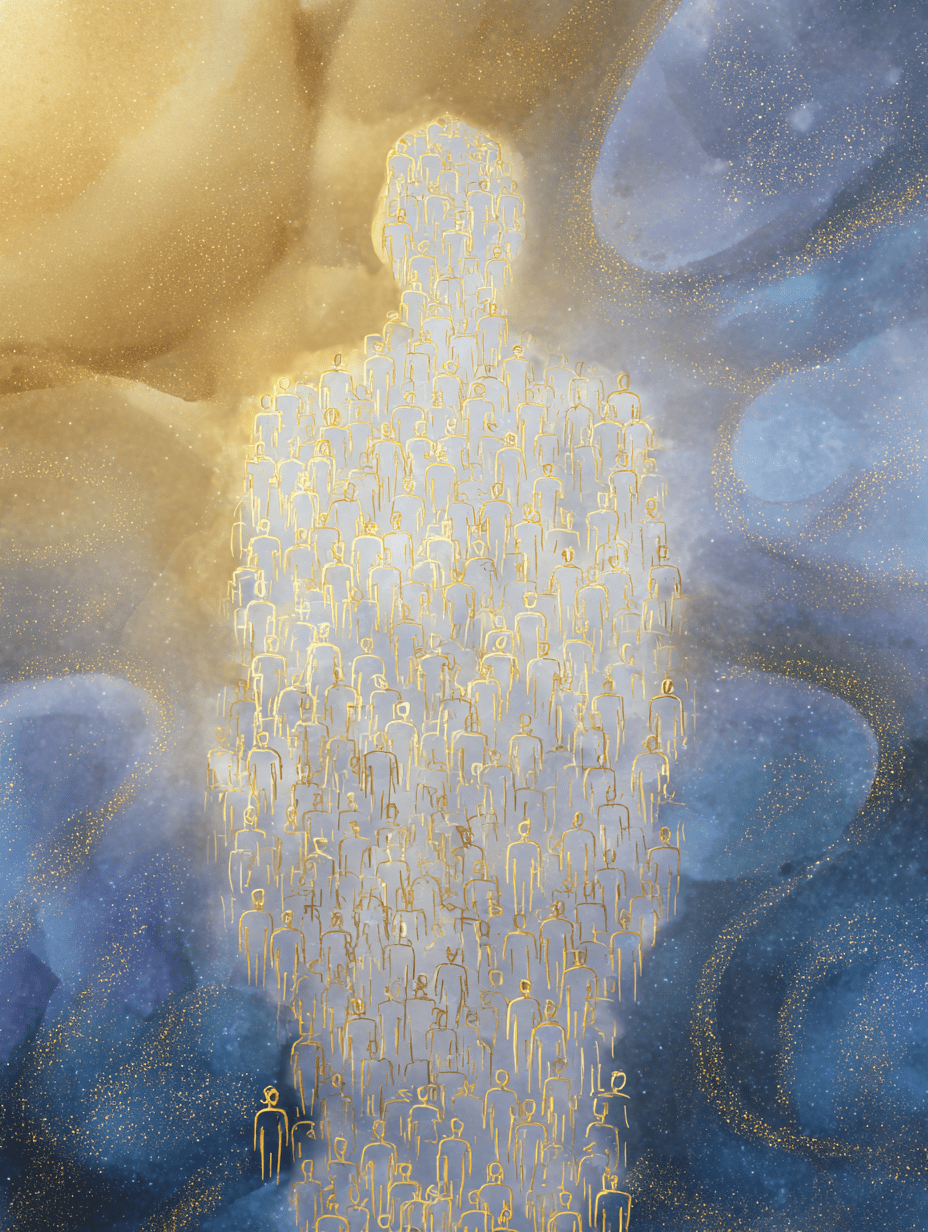

A breakup often feels like an earthquake. The foundations we built our daily lives on crack, and we find ourselves standing in the rubble, holding fragments of shared memories. It’s a moment filled with pain and grief, but also, paradoxically, immense potential. When the dust settles, a space appears. An empty, sometimes terrifying space that we instinctively want to fill with something new.
I’m writing this not just as an observer, but as someone who is living through it. My wife left, and—perhaps to the surprise of those around me—I’m not desperately searching for a new partner. On one hand, I don’t even have the time: I’m taking care of three children, running a household, and trying to give my kids the best possible environment to grow. I’m focused on their passions and their security. But I’m also using this time of “solitude”—free from new relationships—to get to know myself, to understand my expectations for life, and to discover my own path.
That said, finding a new partner soon after a breakup isn’t inherently wrong. Sometimes, life brings someone into your world who genuinely feels right, even while you’re still healing. What really matters is the intention and awareness you bring into a new relationship. If you feel ready to move forward, embrace it—but don’t skip the meaningful work of reflecting on your past relationship. Take time to understand what worked, what didn’t, and what you truly need going forward. This kind of self-awareness not only helps you avoid repeating old patterns but also allows you to show up as a more present and authentic partner. A new relationship can mark a beautiful chapter, but it becomes much deeper and more fulfilling when it’s rooted in lessons learned and your continued personal growth.
At the same time, I’m reading a lot, delving into both psychology and spirituality, especially in the context of relationships. It’s this constant learning and reflection that motivates me to share my thoughts with you. Instead of looking for someone to fill the void, I’m consciously choosing the path inward. I’m learning to be my own support and guide before I decide to invite someone else into my world.
The most common reaction after a breakup is the desire to find someone new. Someone to heal the wounds, restore our sense of worth, and make us feel loved again. But in our haste, we forget the most important piece of the puzzle: ourselves. The search for a new partner isn’t just about finding the right person “out there.” It’s primarily a journey inward to understand who we are when we’re not reflected in someone else’s eyes.
What Does Psychological Research Say?
International psychological research clearly shows that self-awareness is the foundation of satisfying relationships—both new and old. As Dr. Alison Cook emphasizes in her article, “The Benefits of Self-Awareness: A Tool Every Couple Needs,” self-knowledge is a mark of spiritual and emotional maturity. Similarly, work by Gary W. Lewandowski Jr., published in UC Berkeley’s Greater Good Science Center, points out that relationships that foster personal growth lead to greater life satisfaction and deeper human connection. Partners who are self-aware and invest in their development build relationships based on empathy, curiosity, and authenticity.
Studies show that growing self-awareness brings tangible benefits: higher relationship satisfaction, greater mental resilience, and a better ability to cope with difficulties. People who know their own needs can communicate their boundaries and expectations more effectively, rather than unconsciously repeating old patterns as noted by researchers like Michelle Maidenberg and the team of Gottman & Silver. In this way, instead of seeking a “band-aid” for their wounds, they become companions ready to share their passions and sense of purpose.
As Dallas Willard put it:
“Understanding is the basis of care. What you would take care of you must first understand.”
That’s why, before allowing ourselves to start a new relationship, it’s worth stopping to invest energy in discovering our own emotions, values, and expectations. This process of self-discovery—backed by current psychological knowledge and mindfulness practices—not only helps you choose a better partner but also ensures greater emotional stability and resilience for future challenges.
The Most Common Mistakes in Seeking a New Partner
In a world that promotes quick fixes and instant gratification, it’s easy to fall for the temptation of jumping into a new relationship right after a breakup. Studies, including those from the University of Toronto, show that many people start new relationships within a few months of a split, often without processing their emotions or reflecting on their needs. Psychologists explain that behind this urge are both biological mechanisms—a drop in dopamine and serotonin levels after a breakup—and social pressure, as well as a fear of loneliness.
This haste leads to impulsive decisions: choosing partners similar to our exes, ignoring warning signs, and using new relationships as a band-aid for emotional wounds. People with a tendency to fall in love quickly (“emophilia”) are particularly vulnerable to repeating unhealthy patterns. The key is to pause, reflect, and work on yourself to break the cycle of failures and build relationships on stable foundations.
Rushing and Escaping Loneliness
Loneliness after a breakup is often seen as an uncomfortable phase to be ended as quickly as possible. Psychologists indicate that this need is driven by both biological mechanisms, like a drop in happiness hormones, and social pressure. As a result, many people seek comfort in new intimacy, making impulsive decisions.
Unfortunately, such actions often lead to repeating previous patterns—choosing similar partners, ignoring red flags, and carrying unresolved emotions into the next relationship. Specialists, including psychologist Wendy L. Patrick, emphasize that rushing rarely leads to happiness and instead increases the risk of disappointment. That’s why it’s so important to give yourself time for reflection and to regain balance after a breakup.
Looking for an Emotional “Band-Aid”
After a breakup, many people look for comfort from pain and emptiness in a new relationship, hoping the other person will “patch up” their emotional wounds. However, this approach rarely yields lasting results. Psychologists warn that quickly getting involved in new relationships without processing emotions leads to disappointment and repeating the same mistakes.
Research from the University of Toronto shows we tend to choose partners with traits similar to our previous ones, even if we consciously want to avoid it. Without time for reflection and understanding ourselves, it’s easy to recreate the same patterns, which makes building healthy relationships difficult. Instead of looking for a “band-aid,” it’s worth focusing on your own healing and self-awareness.
Repeating Old Patterns
Psychological studies show that we have a natural tendency to recreate familiar emotional and relational patterns. Even if we consciously want to change our choices, we subconsciously follow established patterns that provide a sense of security. Without reflection, we easily repeat the same mistakes—the person changes, but the script remains the same.
Developing self-awareness after a breakup is crucial to breaking the cycle of failed relationships. Only by understanding our own mechanisms and working on ourselves can we make healthier choices and build lasting, satisfying connections.
Why It’s Worth Getting to Know Yourself First
Self-knowledge is the foundation upon which lasting and healthy relationships are built. In a spiritual context, this means getting to the core of your being—that part of you that is unchanging, regardless of your relationship status or life circumstances.
Understanding your own values, goals, and deep desires acts like a compass. When you know what is truly important to you—whether it’s freedom, security, spiritual growth, or family—you naturally attract people who vibrate on a similar frequency. You stop making compromises that violate your integrity.
Introspection also allows you to build authenticity. When you know your light and your shadows, you don’t have to pretend to be someone else to gain acceptance. You can enter a relationship as you—real, honest, and whole. It is this authenticity that is most magnetic.
Practical Steps to Self-Discovery
Self-knowledge doesn’t happen on its own. It’s a process that requires commitment and the courage to look where we usually don’t want to. Here are a few tools that can help you on this journey:
Meditation and Observing Emotions
Stop. Sit in silence. Let your thoughts flow without judging them. Meditation is not an escape from reality, but a deep immersion in it. Observe your emotions. What do you feel when you think about your ex-partner? What do you feel when you think about loneliness? Fear? Anger? Relief? Understanding these emotions is the first step to healing them.
Journaling
Putting your thoughts on paper has therapeutic power. Writing allows you to organize the chaos in your head and see things from a distance. Don’t censor yourself. Write about everything that hurts you, what you desire, what you fear. Often, it’s only by reading our own words that we discover a truth about ourselves that was hidden deep in our subconscious.
Working with Power Questions
Ask yourself tough questions and look for honest answers:
The answers to these questions can be painful, but they are necessary to move forward.
- Who am I when no one is watching?
- What do I truly want from life, regardless of being in a relationship?
- What are my non-negotiable values?
- What was my contribution to the breakdown of my previous relationship?
The answers to these questions can be painful, but they are necessary to move forward.
Patience and Authenticity in Building Relationships
In spirituality, it is said that everything happens in its own time. You can’t speed up the growth of a tree by pulling on its branches—it’s the same with love. Patience is an expression of trust in life. It’s an agreement that the healing process will take as long as it needs to.
Give yourself time to be “alone with yourself.” Use this period for growth, for passions, for building a relationship with yourself. When you stop desperately searching, you begin to radiate calm and self-confidence. It is this state that attracts the right people. Like attracts like. If you are full of fear and lack, you will attract someone who reflects that. If you are full of love and self-acceptance, you will attract a partner ready to offer the same.
Practices like mindfulness or gratitude help cultivate patience. Noticing the small miracles every day makes us stop living in anticipation of “something better” and start appreciating what is here and now.
Conclusion: Love Starts with You
Don’t treat the time after a breakup as a punishment or wasted years. Look at it as a gift—a chance to come home, to yourself. True love, the kind that gives you wings rather than tying you down, always begins with self-love. You have to become the person you would want to meet. You have to give yourself what you expect from others.
When you love yourself—with all your flaws, your history, and your scars—your heart will open to a new quality of relationship. You will no longer be looking for your other half, because you will understand that you are already a whole, juicy fruit. And a new partner will not be a completion, but a wonderful companion in sharing that fullness.
A Challenge for You Today:
Take a few moments to reflect on the patterns in your past relationships. Are there recurring themes or choices you’ve noticed? Write down one small, practical step you can take today to break a cycle—or nurture your own self-awareness as you move forward.
If my writing has inspired or helped you, I would be grateful for your support.
Need support yourself? Discover how I can help you.
AI Disclosure
I see my thoughts as the essence, much like the soul, and AI helps me give them form. It supports me with research, translation, and organizing ideas, but every perspective is my own. Curious how I use AI? Read more here.