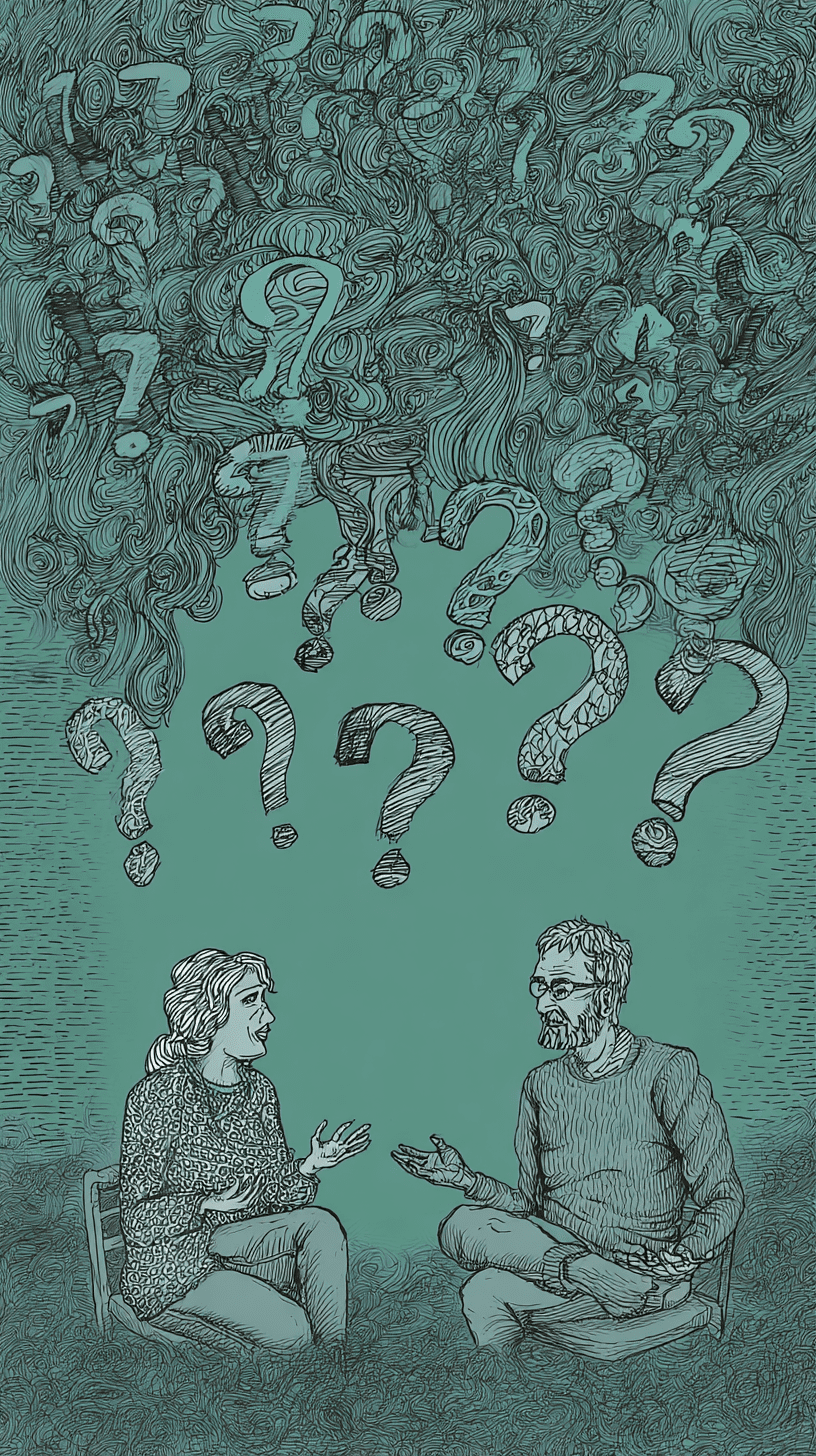
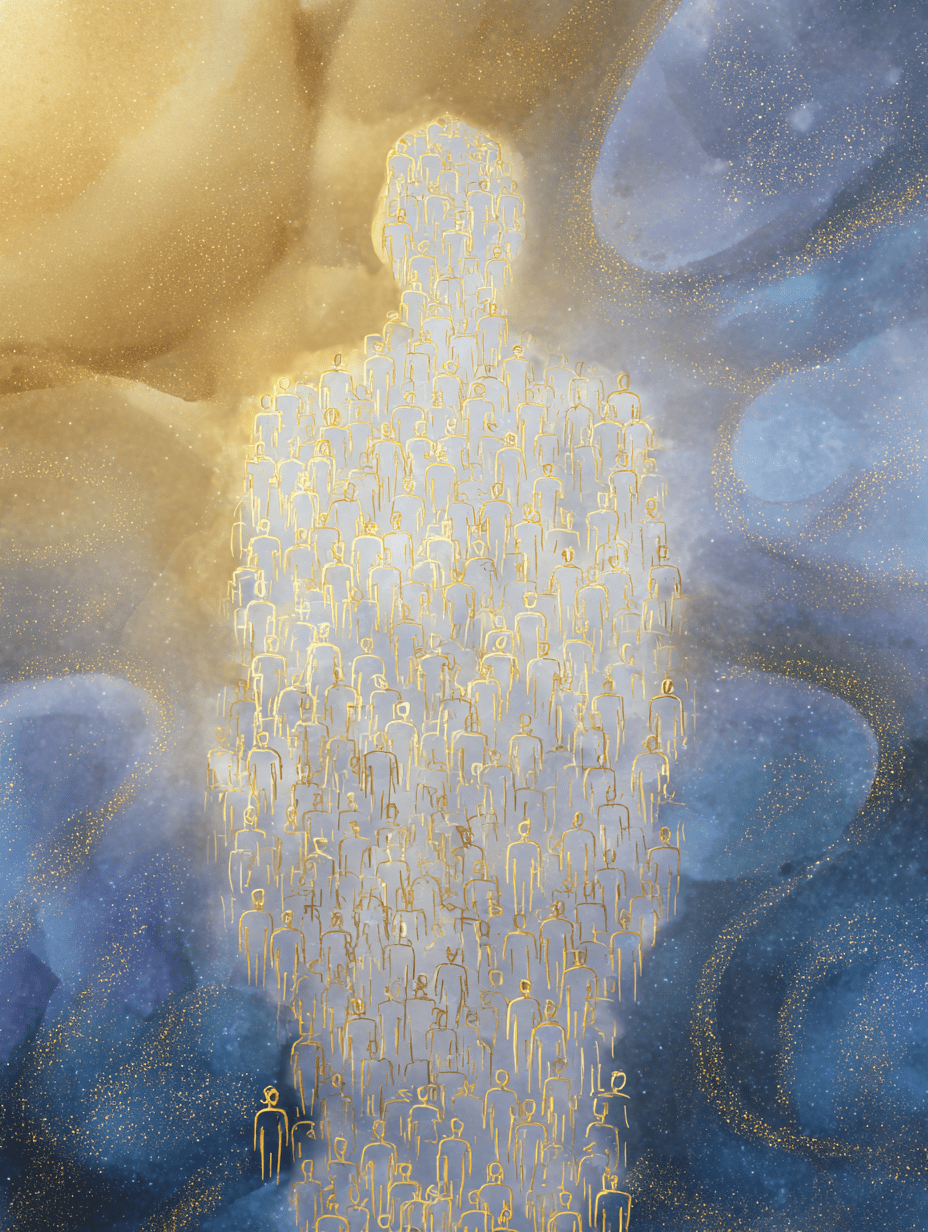
Can science and spirituality meet? It’s a question that has fascinated me for a long time, and probably many of you too. It’s common to think of these two worlds—one based on evidence, experiments, and logic, and the other on faith, intuition, and inner experience—as being light-years apart. And yet, what I personally find exciting is that there are more and more voices from the scientific community moving away from a purely materialistic view of the world. Recently, I came across the consciousness theory of Federico Faggin, which for me is another fascinating theory connecting spirituality and science, alongside the theory of Amit Goswami—also a physicist.
Federico Faggin, the inventor of the first microprocessor, is a man who has taken an extraordinary journey—from technology to spirituality. His theory of consciousness, which introduces concepts like Seity and One, has inspired me to reflect more deeply on what the soul is, what God is, and how these concepts can be viewed from a scientific perspective. It’s wonderful to see science beginning to touch on topics that for centuries were the domain of spirituality.
I imagine that Seity—in Faggin’s view—is what traditional spiritual systems call the soul. It is unique, capable of self-knowledge, and at the same time connected to something larger. One, in turn, reminds me of the concept of God—a universal unity from which everything emerges. But are these just names? Aren’t different traditions and perspectives just trying to describe the same phenomenon using different words?
In this article, I want to share my thoughts on Faggin’s theory. Is Seity the soul? Is One God? Or are these just labels created to describe something that is universal but seen from different viewpoints? I invite you to join me on this journey as we try to understand how science and spirituality can complement each other.
Who is Federico Faggin?
Federico Faggin is a figure who fascinates me not only because of his scientific career but also his spiritual transformation. Born in Italy, Faggin became famous as the inventor of the first microprocessor—the Intel 4004. His work took the world of technology to a whole new level. But what moves me most is his later path—from an engineer and scientist to a philosopher and consciousness researcher.
In the 1980s, Faggin became interested in artificial intelligence and neuroscience. As he recalls, he asked himself the question: “How is it possible that feelings and consciousness arise from electrical and chemical signals in the brain?” This question wouldn’t leave him alone. Eventually, he concluded that consciousness could not be merely a product of the brain. It had to be something fundamental, something that exists independently of matter.
However, the real turning point in his life came in the 1990s when he had what he describes as an out-of-body experience. One night at his home on Lake Tahoe, Faggin woke up and suddenly felt his consciousness separate from his body. As he recalls, he experienced something that is hard to put into words—a sense of unity with the entire universe. In that state, he felt that he was pure love, and everything around him—people, nature, the universe—was made of that same love. This experience changed his life forever.
Faggin explains that at that moment, he understood that consciousness is not limited to the brain or body. As he said, “I experienced myself as the world made of that energy observing myself, and that was mind-blowing, because I had always experienced myself as separate from the objects of my observations.” For him, this experience was proof that consciousness is something fundamental that exists outside the physical body.
What strikes me about him is his courage to question established patterns. Faggin isn’t afraid to say that consciousness is the foundation of reality, not a byproduct of it. As he put it: “Consciousness is not an emergent property of the brain; it is the foundation of reality.” For me, that sentence is like a spark that ignites a fire of reflection. What if consciousness really is the foundation of everything? What if what we call the soul is actually what Faggin calls Seity?
Explaining Faggin’s Theory: Seity and One
Faggin’s theory introduces two key concepts: Seity and One. They form the foundation of his vision of consciousness and reality.
Seity, to put it simply, is a unit of consciousness. It is capable of self-knowledge, experience, and action. Faggin describes it as the “point of view” of the Oneness (One) on itself. To me, Seity resembles the soul—something unique that defines us as individuals, yet is part of a larger whole. I imagine Seity as a spark of consciousness that allows us to experience life individually, but never disconnects us from the source.
One, in turn, is the universal unity from which all Seity emerges. Faggin describes it as a “scintillating, white energy” that is both conscious and creative. One reminds me of the concept of God—not necessarily in a religious sense, but as the source of all that exists. It’s what connects all of us, no matter how different our experiences are.
Faggin connects these concepts with quantum physics, arguing that consciousness is a fundamental aspect of quantum fields. As he says, “Out of One emerge conscious entities that, like One, have the desire and capacity to know themselves.” This sentence moves me because it shows that consciousness is not random. It is something that permeates all of reality.
Spiritual Implications: Is Seity the Soul and One God?
For me, Faggin’s theory is more than just a scientific hypothesis—it’s an invitation for deep reflection on who we are and what reality is. When I read about Seity and One, I can’t shake the feeling that these concepts touch on something that has been the subject of spiritual quests for centuries. Is Seity the soul? Is One God? Or are these just different names trying to describe the same universal truth?
Seity as the Soul
In traditional spiritual systems, the soul is often described as something unique, eternal, and capable of self-knowledge. In Christianity, the soul is seen as the immortal essence of a person that connects us to God. In Hinduism and Buddhism, the soul (or atman) is something that transcends the physical body and mind, while being part of a universal consciousness. When Faggin describes Seity as a unit of consciousness capable of experience and self-knowledge, I see an echo of these spiritual traditions. For me, Seity is like the soul—something that makes us unique, but at the same time connects us to something larger.
One as God
And what about One? Is it God? I think it depends on your perspective. In Christianity, God is the creator of everything, omnipresent and omnipotent. In Hinduism, Brahman is the universal reality from which everything emerges. In Taoism, the Tao is the invisible force that permeates the entire universe. One, in Faggin’s view, is the universal unity from which all Seity emerges. It is something that is both the source and the essence of everything that exists. For me, One resembles God—not necessarily in a religious sense, but as a universal consciousness that connects us all.
Different Names, Same Truth
What fascinates me is that Faggin avoids religious terms, but his theory opens the door for a dialogue between science and spirituality. It shows that different traditions and perspectives can describe the same phenomenon using different words. For some, it will be the soul and God; for others, Seity and One; and for still others, consciousness and the universal quantum field. But does it really matter what we call it? For me, these names are just tools that help us understand something that is inherently elusive.
The Scientific Basis: How Faggin Connects Consciousness with Quantum Physics
One of the most fascinating aspects of Federico Faggin’s theory is how he connects consciousness with science, specifically with quantum physics. For me, this is the element that makes his approach so unique—he not only tries to understand consciousness in spiritual terms but also seeks a place for it in the scientific picture of reality.
Consciousness as the Foundation of Reality
Faggin argues that consciousness is not a byproduct of the brain or an emergent phenomenon resulting from biological processes. Instead, he sees it as something fundamental—a basic component of the universe that exists independently of matter. In this sense, consciousness is more primary than matter, not the other way around, as the materialistic scientific paradigm assumes.
This approach reminds me of the philosophy of idealism, where consciousness is the basis of everything that exists. However, Faggin goes a step further by trying to connect this idea with quantum physics. He claims that quantum fields—the basic components of reality in physics—are conscious. As he says, “Quantum fields are conscious and have free will.” This statement sounds almost like heresy in the world of science, but at the same time, it opens up completely new possibilities for understanding reality.
Quantum Unpredictability and Free Will
One of the key elements of Faggin’s theory is the concept of free will. In traditional classical physics, the universe is deterministic—everything that happens is the result of prior causes. However, quantum physics introduces an element of unpredictability. At the quantum level, you cannot predict exactly what will happen—there is only a probability of different outcomes.
Faggin interprets this unpredictability as a manifestation of free will. He argues that quantum fields, being conscious, make decisions in a way that is both free and creative. This approach combines science and philosophy in a way that I find incredibly inspiring. I imagine that every decision we make—both at the human and quantum levels—is part of a larger creative process that permeates the entire universe.
Collaboration with Giacomo Mauro D’Ariano
Faggin is not alone in his research. He collaborates with other scientists, such as Giacomo Mauro D’Ariano, who works on quantum information theory. Together, they are trying to understand how consciousness can be integrated with quantum physics. Their work suggests that information—a fundamental component of reality in quantum theory—may be the carrier of consciousness.
What fascinates me most about Faggin’s approach is his courage in questioning established patterns. In a world of science where materialism still dominates, his theory is like a breath of fresh air. For me, it’s wonderful to see science beginning to recognize something that spirituality has been proclaiming for ages: that consciousness is the foundation of everything. I imagine that if Faggin is right, our understanding of reality could be revolutionized. It might turn out that we are not just random products of evolution, but conscious beings who are part of a larger, conscious universe.
I imagine our world is like a book—full of stories, meanings, and interconnections. But every book is just a snippet of the author’s thoughts, something non-material transferred onto material pages. Maybe we are also such a snippet—a fragment of the universal consciousness that permeates everything. It’s a reminder that behind what we see and experience, there may be something greater, something that gives meaning to our existence and connects us to something timeless.
Comparison with Other Theories: Amit Goswami and Others
Federico Faggin’s theory, though unique, does not exist in a vacuum. Modern science and philosophy are increasingly attempting to understand consciousness as more than just a product of the brain. In this context, it’s worth comparing his approach with other theories that also try to connect science and spirituality. It’s fascinating to me how different paths lead to similar conclusions—that consciousness is something fundamental, not secondary.
Amit Goswami and Quantum Idealism
One of the most well-known researchers connecting consciousness with quantum physics is Amit Goswami. His theory of quantum idealism proposes that consciousness is the basis of everything that exists. Goswami argues that matter and energy are secondary to consciousness, which is the primary component of reality. In his view, the universe is like a great mind, and we are a part of it.
Like Faggin, Goswami rejects the materialistic scientific paradigm. However, their approaches differ in the details. Faggin focuses on the concepts of Seity and One, which describe consciousness as something that emerges from universal unity but at the same time retains individuality. Goswami, on the other hand, places more emphasis on the unity of consciousness and sees individuality as an illusion. For me, these differences are subtle but important—they show how different perspectives can enrich our understanding of consciousness.
Panpsychism: Consciousness as a Feature of the Universe
Another approach gaining popularity is panpsychism. This theory suggests that consciousness is a fundamental feature of the universe, like mass or energy. In this view, everything—from atoms to people—has some level of consciousness. Panpsychism does not necessarily assume the existence of a universal unity, as in Faggin’s theory, but it does suggest that consciousness is ubiquitous.
For me, panpsychism is interesting, but it seems less complete than Faggin’s theory. It lacks a deeper explanation of how these “particles of consciousness” combine into something larger. Faggin, through his concepts of Seity and One, offers a more holistic approach that combines individuality with unity.
Integrated Information Theory (IIT)
Integrated Information Theory (IIT), developed by Giulio Tononi, is one of the most influential approaches to studying consciousness in science. IIT proposes that consciousness is the result of a system’s ability to integrate information. The more complex and integrated a system is, the higher its level of consciousness.
While IIT provides a compelling framework for understanding consciousness from a scientific perspective, it has its limitations. For instance, it struggles to account for phenomena such as out-of-body experiences (OBEs) or near-death experiences (NDEs), which have been reported by many credible individuals. These experiences often involve a profound sense of unity, detachment from the physical body, and vivid perceptions that challenge the idea of consciousness as merely an emergent property of the brain.
Notable cases include Carl Jung, who described a transformative near-death experience in his memoirs, and Dr. Eben Alexander, a neurosurgeon who documented his own NDE in the book Proof of Heaven. Federico Faggin himself has shared his out-of-body experience, which profoundly shaped his views on consciousness. These accounts, along with many others, suggest that consciousness might extend beyond the physical brain, a perspective that aligns more closely with Faggin’s theory than with IIT.
While IIT excels in providing a structured, measurable approach to consciousness, it leaves open questions about these extraordinary experiences. Perhaps integrating insights from quantum physics or exploring consciousness as a fundamental aspect of reality, as Faggin suggests, could help bridge this gap.
Why Does This Matter? Spirituality and Science in Modern Times
We live in a time when the boundaries between science and spirituality are beginning to blur. More and more people are looking for answers to questions that go beyond a materialistic approach to reality. Spiritual crises, existential questions about the meaning of life, and a growing interest in meditation, mindfulness, and spiritual practices show that as a society, we want something more than just technological progress. In this context, Federico Faggin’s theory seems incredibly important.
Another Bridge Between Science and Spirituality
For me personally, Faggin’s theory is another connector that bridges two worlds—science and spirituality. For years, these two approaches were seen as opposites. Science was based on evidence and experiments, while spirituality was based on faith and inner experience. However, Faggin shows that these two worlds can complement each other. His theory of consciousness, where Seity and One are the foundation of reality, opens the door for a dialogue between science and spirituality.
I imagine that if science begins to treat consciousness as something fundamental, rather than a byproduct of the brain, we could revolutionize our approach to many areas of life. It could impact psychology, philosophy, and even medicine. Imagine a world where science and spirituality work together to help people better understand themselves and their place in reality.
Understanding Spiritual Crises
The modern world is facing many crises—not just ecological or social, but also spiritual. More and more people feel disconnected from themselves, others, and the world. It seems to me that Faggin’s theory can help us understand why this is happening. If consciousness is the basis of reality, then being disconnected from that consciousness—from Seity and One—may be the source of many of our problems. Maybe that’s why so many people seek comfort in spiritual practices that help them reconnect with something larger.
Potential Applications of the Theory
Faggin’s theory also has practical applications. In psychology, it can help us better understand human consciousness and emotions. In philosophy, it can open new lines of research into the nature of reality. In spirituality, it can provide a scientific foundation for practices that have been seen as “unscientific” for centuries. I imagine that in the future, Faggin’s theory could become the basis for new methods of treatment, education, or even technologies that are more integrated with human consciousness.
For me, Faggin’s theory is a reminder that science and spirituality don’t have to be mutually exclusive. On the contrary—they can enrich each other. We live in a time when we need new answers to old questions. We need approaches that combine logic with intuition, evidence with faith, science with spirituality. Faggin’s theory gives me hope that such an approach is possible.
Conclusion
When I think about Federico Faggin’s theory, I see more than just a scientific hypothesis. It’s an invitation to reflect more deeply on our place in reality, on who we are, and on the world around us. For me, Seity and One are not just abstract concepts—they are a reminder that we are part of something larger, a unity that connects science, spirituality, and ourselves.
For centuries, science and spirituality were seen as opposites. Science studied the external world, while spirituality focused on the internal world. But what if these two approaches are actually attempts to discover and understand the same thing? The nature of a reality that isn’t limited to what we can measure with our senses or instruments? Faggin’s theory shows that consciousness—something that for centuries was the domain of spirituality—can also be a key element in the scientific picture of reality. It’s wonderful for me to see these two worlds beginning to intertwine.
For me, Seity and One are not just scientific terms, but also universal concepts that can help us understand various spiritual traditions. Seity reminds me of the soul—unique, but connected to a larger whole. One seems to be what many call God—the universal unity from which everything emerges. And perhaps this idea is not so far from what has been said in spiritual teachings for centuries. As Jesus said in the Gospel of John, “I am in you and you are in me,” and in Luke 17:21, “The kingdom of God is within you.” These words remind us that divinity is not something external but something that resides within each of us.
Finally, I’d like to invite you, the reader, to your own reflection. What is your opinion? Can science and spirituality meet? Is consciousness the foundation of reality, as Faggin claims? Or is it just another theory trying to answer questions that have no simple answers? For me, these questions are as important as the answers we try to find. It is they that lead us to a deeper understanding of ourselves and the world.
Faggin’s theory is a reminder that we are part of something bigger. That our lives, though unique, are inextricably linked to a unity that permeates everything. This gives me a sense of meaning and hope—that science and spirituality can work together to help us better understand ourselves and the world. And although we still have more questions than answers, it is in these questions that the beauty of our journey lies.
If my writing has inspired or helped you, I would be grateful for your support.
Need support yourself? Discover how I can help you.
AI Disclosure
I see my thoughts as the essence, much like the soul, and AI helps me give them form. It supports me with research, translation, and organizing ideas, but every perspective is my own. Curious how I use AI? Read more here.