
Why Does This Topic Matter?
Spirituality and fantasizing are two phenomena that, at first glance, might seem similar. Both engage our imagination, deep introspection, and that natural human desire to understand something bigger than ourselves. However, in reality, they are fundamentally different in their nature and purpose.
In today’s world, full of charismatic spiritual teachers, hundreds of meditation techniques, and endless philosophical theories, it is incredibly easy to mistake an authentic spiritual experience for an escape into a world of imagination. How do you tell one from the other? How do you stay true to your path without losing touch with reality? These are questions you should ask yourself, especially if you want your spiritual journey to be authentic and bring real changes to your life, rather than just serving as a temporary “anesthetic.”
For me, spirituality is something more than just meditation or reading philosophical, religious, or psychological books—it is a way of life that helps me discover myself, build deeper relationships with others, and find meaning in ordinary, gray daily life. I know from my own experience how easy it is to veer off this path, falling into the trap of fantasizing about being “enlightened” instead of doing the actual work on oneself.
If you want to learn more about my approach to spirituality, read my reflections in “How I See Spirituality”.
In this article, I want to share my thoughts on this thin line—I hope it helps you better understand your own spiritual journey.
Definitions and Differences: Spirituality vs. Fantasizing
To understand the risk of confusion and how thin the line can be, it’s worth first looking at what these two concepts essentially are.
As I’ve written in my other posts, spirituality for me is living daily life in harmony with my own values. It is regular reflection on my behavior—what I did well, what I did wrong, what I neglected. It is also building deeper, empathetic relationships and simply living everyday life with mindfulness towards universal values.
Spirituality
Spirituality is not an escape from reality or life—on the contrary, it is a way to experience it more fully and consciously. It requires systematic, sometimes hard work, critical thinking about oneself, and a readiness to confront life as it is, not just as we would like it to be.
I don’t want this to sound negative or depressing. When I write about systematic reflection, I don’t mean you have to analyze your mistakes every single day. For me, reflection comes naturally when I see that I am drifting away from my values, or when I analyze my behavior over a longer period. It doesn’t matter how you do it—what’s important is that you do it your way.
When I write about hard work and critical thinking, I don’t mean self-blame or self-flagellation. Hard work in this sense means not giving up—you might get lost, stray from the path, but the work is in coming back to it. It’s returning to mindfulness and reflection to become a better human being. Critical thinking should be positive—draw conclusions, don’t blame yourself. Be proud that you notice mistakes and are learning from them, fixing what can be fixed, and making fewer of them over time.
Fantasizing
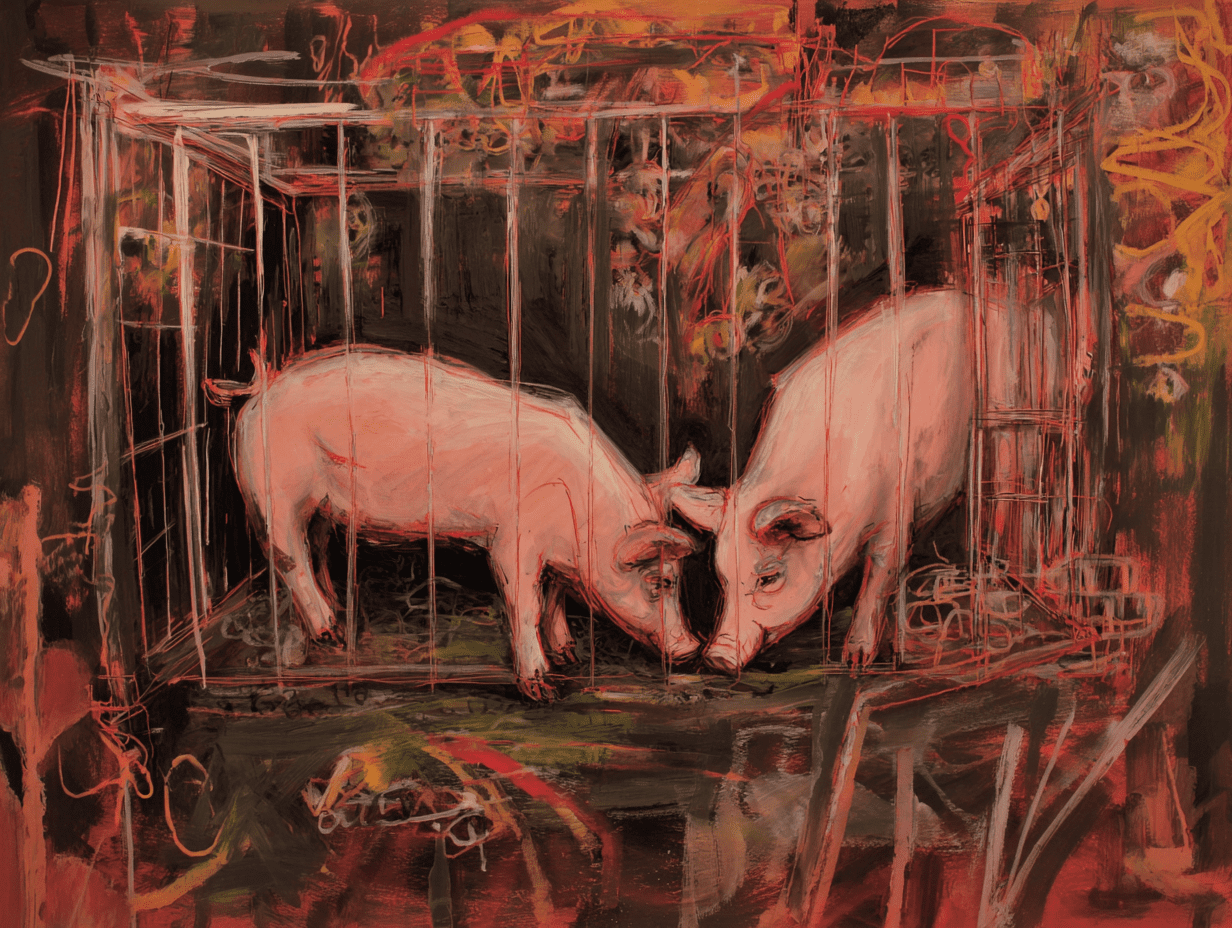
Fantasizing is the process of creating scenarios and images in your mind that are often detached from reality. Fantasy can be a great source of relaxation, creativity, and inspiration, but in excess, it can become a defense mechanism. It can lead to avoiding problems, neglecting daily duties, and creating an illusory world where everything is perfect.
I’ll add a side note here: I’ve caught myself doing this many times, especially when reading books about theories not just on spirituality, but also physics or the universe. I fantasized while reading about universal consciousness, about consciousness creating the world, about having “power” over matter. When reading about quantum physics, I imagined how everything is essentially energy; I was fascinated by the vision of other civilizations. There is nothing wrong with this if it’s just relaxation. The problem starts when it becomes an escape from daily matters. If you start believing you can telepathically influence others, or that you don’t need to care about earthly matters because it’s all a projection—that’s where the danger lies, because our brains are plastic and suggestible.
You can overfeed your brain with fantasies to the point where you eventually end up in a psych ward. For me, spirituality is practice, action, and usually mundane life. It’s not just wrestling with difficulties, but also the joy of having fun or partying, as long as you stay true to your values. Prayer, meditation, or reflection are tools, but if they don’t translate into your life, it’s just a spiritual facade—a knock-off, a pretense, or simply fantasizing about spirituality.
The Key Difference
Spirituality leads to a deeper understanding of yourself, the world, and values—even if that understanding is sometimes painful. Ideally, it translates into daily life. Fantasizing can serve as relaxation, which is fine, but in its bad form, it “feeds” the ego or acts as a band-aid on emotional wounds, giving temporary relief but not healing the source of the pain. Spirituality requires the courage to face the truth; fantasizing allows us to hide in a safe cocoon of illusion.
Why Is It Easy to Mistake Spirituality for Fantasy?
The boundary between these two worlds can be extremely fluid. My reflections on being your own guru (more on this in the article “Be Your Own Guru”) show how important autonomy and healthy skepticism are on the spiritual path. Thinking for yourself and trusting yourself protects you from the trap of easy, quick solutions, which are often just empty promises. A conscious attitude and critical approach help distinguish authentic spirituality from visions that might just be attractive fantasies.
I believe that every single one of the 8 billion souls has their own unique path—there is no single universal pattern to rely on. The lack of rigid frameworks makes it easy to get lost in the fog of one’s own desires and projections. You can read more about the uniqueness of every spiritual path in my article “8 Billion Souls, 8 Billion Paths – Why Spirituality is Unique for Everyone”.
I’m not claiming there are no patterns—there are religions, ethics, etc.—but I am talking about your personal interpretation of spiritual concepts. You can be a religious person, but if you practice without reflection or mindfulness, your spirituality might just be superficial. Similarly, while reading books, it’s easy to fall into fantasizing—remember that these are just theories which, by themselves, won’t change your life. Inspiration is good, but change depends on your actions.
Main Similarities and Traps
- The Role of Imagination: Both processes intensely engage imagination and introspection. In meditation, you use imagination to calm down. In reflection, you analyze various concepts to translate them into action. In fantasizing, in the negative sense, imagination becomes an escape. The line here is often very subtle.
- Detachment from Daily Life: Both deep prayer and daydreaming can lead to a temporary “disconnect” from the here and now. I don’t see anything wrong with this, provided it doesn’t negatively affect your responsibilities—I’d even say it’s a great way to reflect or relax.
- Spiritual Escapism: This is the most dangerous trap. It’s the situation where we use spiritual jargon and practices to avoid confronting problems at work, in a relationship, or with finances. You can meditate for hours to avoid thinking about accumulating debt, or take out high-interest payday loans while praying for God to perform a miracle so the funds magically appear to pay them back. That is not spirituality—that is escape.
How to Recognize if It’s Spirituality or Fantasy?
Authenticity is the key. If your spirituality is real, it should be rooted in your values and actions. Here are a few check-in questions that might help you verify your experiences:
- Does what I am experiencing help me better understand myself and the world?
True spirituality sheds light on our shadows, fears, and mechanisms. Fantasizing usually paints a picture of us in superlatives, skipping over the difficult aspects of our personality. If you start thinking you have “superpowers” like a superhero, you’re probably drifting off a bit. Spirituality is ordinary humanity; you won’t get superpowers.
I don’t want to sound like an arrogant know-it-all here—maybe there are people with telepathic abilities, channeling skills, or who feel energy like in Ayurveda or Chinese medicine. I’m not ruling that out, but even if so, they are exceptions.
I am talking about the statistical human, like me or you, because the “extraordinarily spiritual” (and that’s no mockery or irony) probably aren’t reading my blog. - Do my spiritual practices have a real impact on my daily life?
Does meditation make you more patient with your kids? Does your philosophy make you more honest at work? If your “spirituality” ends the moment you get up from the kneeler, leave the temple, step away from the confessional, put down the rosary or holy book, or stand up from your meditation cushion—to me, that is just fantasy. - Am I using spirituality as an escape from problems?
Ask yourself an honest question: do I escape into “higher vibrations” because I don’t want to feel sadness, anger, or disappointment, which are natural parts of the human experience? Do I use spirituality as an excuse not to deal with my children? As an excuse to avoid facing a change in my life, for example, a job that doesn’t suit me at all? Or maybe I use spirituality to escape the necessity of taking care of my health?
The Role of Imagination in Spirituality: Tool or Obstacle?
My reflections on the nature of God or universal consciousness naturally lead me to the conclusion that imagination is essential. It allows us to touch ideas that go beyond matter. Imagination can be a powerful ally—it helps visualize goals, build empathy (imagining what another person feels), and discover deeper truths through metaphors.
However, as I notice in my texts, imagination becomes an obstacle when we start escaping into it from reality. Not for a moment, but notoriously, neglecting physical life. When the vision of an ideal world becomes more important than real action to improve it, we fall into the trap of illusion. Healthy spirituality uses imagination but always returns to reality to act within it.
How to Stay True to Your Spiritual Path?
To avoid getting lost in the labyrinth of your own mind, it is worth applying a few practical rules (which I often mention on the blog):
- Grounding: Regularly come back to earth. Practices like mindfulness, bodywork, sports, spending time with family, or simply contact with nature are essential. Remember that we are spiritual beings, but we have physical bodies and a life to live right here and now.
- Critical Self-Reflection: Don’t be afraid to question your experiences. Asking yourself difficult questions about the authenticity of your own motivations is a sign of maturity, not a lack of faith.
- Support and Perspective: Sometimes our own mind plays tricks on us. A conversation with a trusted mentor, friend, or therapist can help see the situation from a different perspective and help us distinguish our fantasies from spirituality and real life, if the need arises.
Summary: Spirituality as a Path to Authenticity
Spirituality is a process that requires constant mindfulness, deep reflection, but above all—action. As I wrote, mentioning my personal crises, it is often pain and difficulties that become the catalyst for true awakening. Pain strips us of fantasies and forces us to seek the truth.
Remember that spirituality is not an escape from reality into a colorful world of dreams. It is a path to a deeper understanding of reality, accepting it, and, if possible, changing it for the better. Imagination is a wonderful gift and a powerful tool on this path, but only when it serves authenticity, not illusion. Be brave in your journey and always check if your spirituality helps you be a better human being—here and now.
If my writing has inspired or helped you, I would be grateful for your support.
Need support yourself? Discover how I can help you.
AI Disclosure
I see my thoughts as the essence, much like the soul, and AI helps me give them form. It supports me with research, translation, and organizing ideas, but every perspective is my own. Curious how I use AI? Read more here.