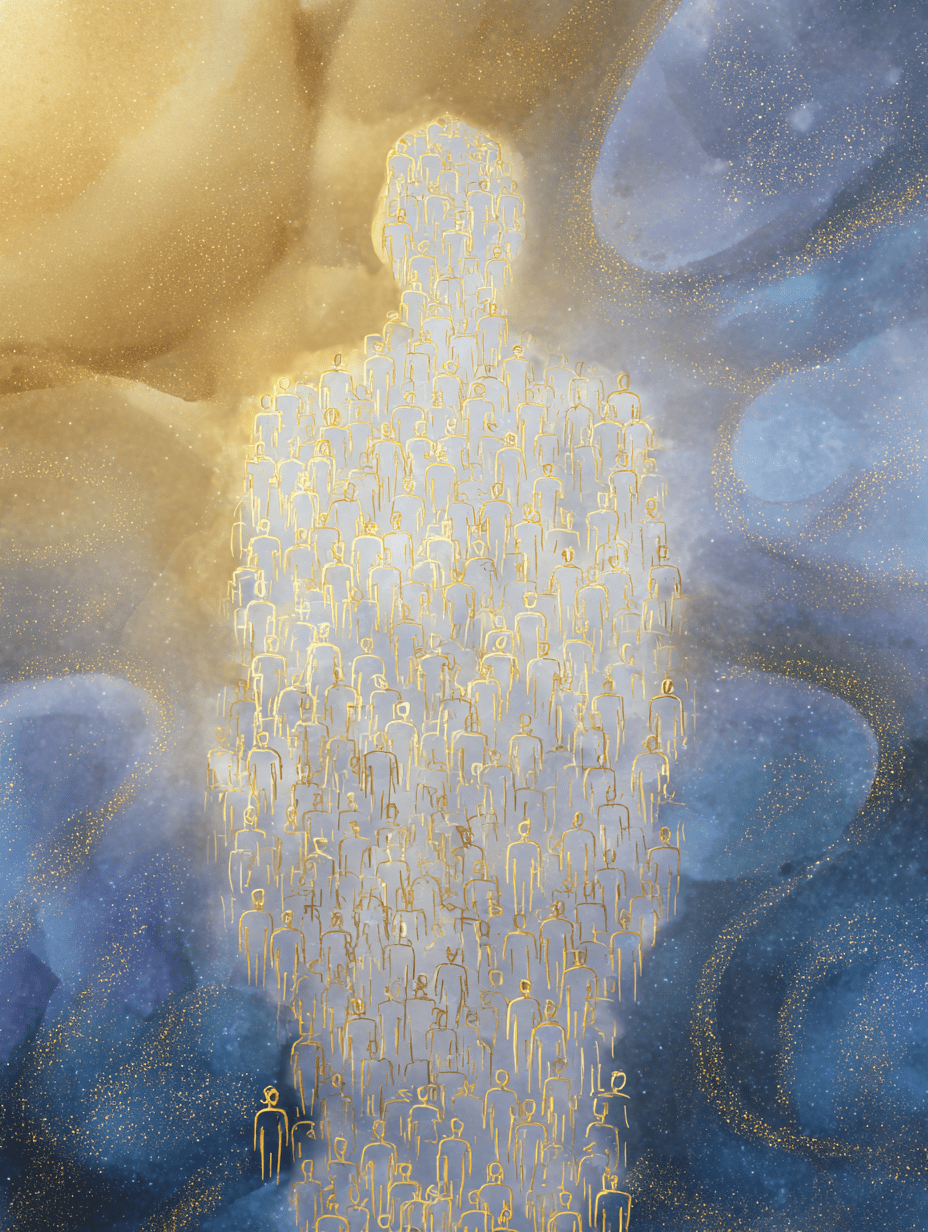

Reaching a long-awaited goal often tastes different than we expected. Do you know that feeling? You climb to the top, you get what you fought for months to achieve, but inside—instead of fanfare—there is a deafening silence. That’s the moment when your ambition crashes into a deeper sense of meaning. That is exactly where the ego and the soul meet.
We often treat these two spheres as enemies. In spiritual development circles, we hear that the ego needs to be “killed,” while in the world of business and success, the soul is pushed to the margins as an impractical sentiment. But what if the conflict between them is just an illusion? What if the key to being whole isn’t choosing one side, but getting them to cooperate consciously?
In this article, take a look with me at how to stop fighting with yourself. You will see why a strong ego is essential to protect your boundaries, and how to make it an efficient tool in the hands of your deepest values. I invite you on a journey from inner conflict to harmony.
Ego: Friend or Enemy?
In many spiritual growth circles, the ego has gotten a bad reputation. People talk about the need to “kill it” or “get rid of it” to achieve enlightenment. This narrative is often a result of mystical teachings that aim for transcendence—going beyond the “self” in pursuit of higher states of consciousness. This is a path often chosen by monks, mystics, or people fully dedicated to a spiritual life.
However, in everyday life, which includes work, relationships, and functioning in society, the ego is absolutely essential to us. It is the structure of our personality, our interface for communicating with the world. It allows us to plan, protect our boundaries, take care of our safety, and build relationships with others. Without a functioning ego, we would be defenseless and lost in daily life. Think of it like a manager who organizes resources, solves problems, and makes sure everything runs smoothly and safely.
The problem doesn’t lie in the existence of the ego, but in its excessive dominance. Trouble starts when the ego—with its fears, perfectionism, and defense mechanisms—takes complete control. Then its voice drowns out what is quiet and subtle: our intuition, deeper values, and sense of meaning. That is the moment when a friend becomes a tyrant, and its concern for safety turns into a fear of any risk. Understanding this dual nature is the first step to learning to cooperate with it, rather than fighting it.
For a deeper dive into how the ego can sabotage your happiness and relationships, check out my article on “When ego harms your life,” where I explore its shadow side more extensively.
The Soul: A Quiet Voice in the Noise of Daily Life
If the ego is the loud captain, then what is the soul? It is a quiet, subtle whisper that is easily drowned out in the noise of daily matters. It is your internal navigation that points in a direction based not on fear or ambition, but on deep values, a sense of meaning, and authenticity. Psychology might call it the “observing self,” the drive for self-actualization, or a system of higher values. Regardless of the name, it refers to that part of you that goes beyond immediate gain and the fear of judgment.
Unlike the ego, which focuses on survival and building status in the external world, the soul asks: “What is all this for?” It speaks up when you feel a pang of unfulfillment despite your successes or when you just “feel” something, even if logic suggests otherwise. Its language is intuition, creativity, and a sense of connection with something bigger than yourself.
If you’re curious about the interplay between the soul and our moral compass, I explore this dynamic further in my reflections on the dance of soul and conscience.
Modern life, with its emphasis on productivity and constant stimulation, does not encourage listening to this voice. That is why connecting with it requires conscious effort and creating space for silence.
How to do it?
- Practice mindfulness: Find a few minutes a day to just be. Focus on your breath, observe your thoughts without judging. It is in this pause between stimulus and reaction that space for the soul appears.
- Keep a journal: Write freely, without censoring yourself. Ask yourself questions: “What moved me today?”, “When did I feel most like myself?”. This simple tool helps separate the voice of the ego from the whisper of intuition.
- Look for moments of silence: A walk in the woods, looking at the stars, or just sitting by the window with a cup of tea. It’s about turning off external noise to hear what is happening inside.
Connecting with the soul isn’t a one-time event, but a process that requires regular practice and attention in everyday life.
Integration: Ego as a Tool for the Soul
The key to inner strength is not fighting the ego, but raising and transforming it. Imagine an ideal setup in a company: the ego is a competent, efficient operations manager who manages resources well, takes care of safety, and gets tasks done. However, it is not the manager who sets the strategy and mission of the company. The strategy is set by the owner—that is, your values, your soul.
The drama begins when the manager (ego) barricades themselves in the office and starts ruling, ignoring the owner’s vision. Integration relies on restoring the proper hierarchy. The goal is a state where a strong, efficient ego becomes a tool in the hands of the soul. Psychology calls this state personality integration or maturity. It is the moment when we can take care of ourselves (healthy selfishness) so that we have the resources to care for others and achieve higher goals. Learning to spot when the “manager” is trying to take over is crucial—I’ve shared practical tips on this in my guide on “How to recognize when ego takes control.”
What does the cooperation of Ego and Soul look like?
When these two forces start playing on the same team, internal tension disappears. Instead of constant struggle (“I want to, but I’m afraid,” “I should, but I don’t feel it”), flow appears.
- The ego provides structure: It plans, organizes time, takes care of finances and boundaries.
- The soul gives direction: It indicates why we are doing this, what makes sense to us, and what aligns with our conscience.
3 steps to harmony
How to move from theory to practice? This process takes time, but it can be summed up in simple, repeatable steps.
Step 1: Awareness (Notice the manager)
Start observing your reactions. When you feel a strong fear of judgment, a need to prove you are right, or jealousy—that’s a sign that the ego has taken the wheel. Don’t fight it. Just notice it: “Okay, now my ego is speaking, and it’s afraid of losing control.” Just naming this state creates distance.
Step 2: Reflection (Ask the owner)
When emotions settle a bit, ask yourself a question from the level of the soul: “What do I really need in this situation?”, “What reaction would align with my deepest values?”. Maybe instead of attacking someone in a discussion (ego), you will choose understanding or simply walking away (soul/values).
Step 3: Action (Joint implementation)
Now use the ego to complete the task, but on the soul’s terms. If your value is helping others (soul), use your ambition and organizational skills (ego) to create a project that genuinely helps someone, rather than just bringing you applause.
Healthy spirituality and a mature psyche lead in the same direction: toward inner harmony, where we don’t have to choose between ourselves and the world. We take care of our own needs so we can serve others wisely and with love. This is the point where the ego and soul shake hands.
The Harmony of Ego and Soul: Two Sides of the Same Coin
I often encounter the belief that therapy and spirituality are two separate worlds. Therapy is associated with “fixing” the psyche, analyzing the past, and working with emotions, while spirituality is supposed to lift us toward something higher. However, in the context of working with the ego and the soul, these two paths not only do not exclude each other, but they actually complement each other perfectly. For a deeper exploration of how these paths work together to create inner harmony, I’ve written about my personal journey and insights in my article on “Therapy and spirituality.”
Imagine you are building a house. Therapy is the foundation and structural work—it makes sure the walls are straight and the basement is dry. Spirituality is the light that comes through the windows and gives the interior its atmosphere. Without solid walls (a healthy ego), the light has nothing to reflect off of. Without light (the soul), the house is just a cold construction.
How does therapy tame the Ego?
Psychotherapy, especially in depth or cognitive-behavioral approaches, is an excellent training ground for working with the ego. It is here that we learn to recognize defense mechanisms that once protected us but now limit us.
- Shadow Work: C.G. Jung’s concept fits perfectly into this process. It allows us to see those parts of the ego we have repressed—shame, aggression, jealousy. Instead of letting them steer us from the back seat, we bring them into the light and integrate them.
- Mindfulness-Based Therapy: It teaches us to observe thoughts and emotions without identifying with them. This is a key skill to stop being a slave to a reactive ego (“someone criticized me = I am worthless”) and regain agency.
Therapy helps “clean” the ego of toxic buildup, making it more flexible and ready for cooperation.
How does spirituality feed the Soul?
While therapy organizes the structure, spiritual practices fill it with content. They give us access to resources that go beyond an intellectual understanding of the world.
- Gratitude Practice: It’s more than a nice habit. It is a powerful tool for redirecting attention from lack (the ego’s domain) to abundance (the soul’s domain). When you give thanks, your ego quiets down because it doesn’t have to fight for anything.
- Meditation, mindfulness, prayer, contemplation: Regularly immersing yourself in silence allows you to hear that quiet voice of the soul I wrote about earlier. It is a moment of recharging batteries with energy other than caffeine or adrenaline.
Find your unique balance
You don’t have to choose between the voice of the ego and the voice of the soul. The fullest growth happens when you listen to the voice of both, and make decisions based on them with the support of your conscience. A healthy ego needs spiritual depth so it doesn’t become narcissistic. A beautiful soul needs an efficient ego to be able to actually act in the world.
I encourage you to experiment. If you feel stuck in fears and patterns—reach for therapeutic support. If you feel empty despite a well-organized life—open yourself to spiritual practices. Look for your own alchemy, where the psyche and spirituality join hands, leading you toward wholeness.
A Vision of Inner Harmony: More Than the Sum of Its Parts
The road from conflict to cooperation between the ego and the soul is not a straight line—it’s more like a dance where sometimes you step on each other’s toes, only to finally find a common rhythm. Through this article, we have traveled from demystifying the ego, through discovering the quiet voice of the soul, all the way to practical methods of integrating them.
Remember that the goal is not to become an ascetic devoid of ambition, nor a soulless manager of your own life. True power comes from combining these two worlds. Imagine a life where your ambitions are fuel for your deepest values. A life where you achieve success not to feed an insatiable ego, but to realize a mission that gives you a deep sense of fulfillment. If you’re interested in how this balance influences our overall well-being, I’ve shared a spiritual perspective on “Ego and happiness” that might resonate with you.
When the ego becomes a servant of the soul, you stop fighting for survival and start creating. The paralyzing fear of judgment and the empty chase for “more” disappear. In their place appears a peace resulting from consistency—you think, feel, and act in one direction. This is exactly the moment where psychology and spirituality meet to give you the fullness of humanity.
I leave you with a question that can become the beginning of your own transformation:
What would your life look like if your ego stopped being your master and became the most loyal tool in the hands of your soul?
If my writing has inspired or helped you, I would be grateful for your support.
Need support yourself? Discover how I can help you.
AI Disclosure
I see my thoughts as the essence, much like the soul, and AI helps me give them form. It supports me with research, translation, and organizing ideas, but every perspective is my own. Curious how I use AI? Read more here.