
In moments of deep emotional pain, we often say things like “my soul hurts” or we feel a “pain in our soul.” These are poetic and profound expressions that perfectly capture the intensity of our experience. But have you ever stopped to wonder what is actually hurting inside of us? Is our deepest essence—what we call the soul—even capable of feeling fear, jealousy, or a sense of loss?
Research in mindfulness and psychology helps shed light on this. Pioneers like Dr. Jon Kabat-Zinn, who founded Mindfulness-Based Stress Reduction (MBSR), have shown that cultivating present-moment awareness fosters resilience to stress and emotional upheaval. Through mindfulness, people learn to recognize their thoughts and emotions as passing events—not defining truths. As Eckhart Tolle wisely states in The Power of Now, “You are not your mind.” This perspective opens a doorway to understanding that the suffering we experience often springs not from our soul, but from the ever-reactive ego.
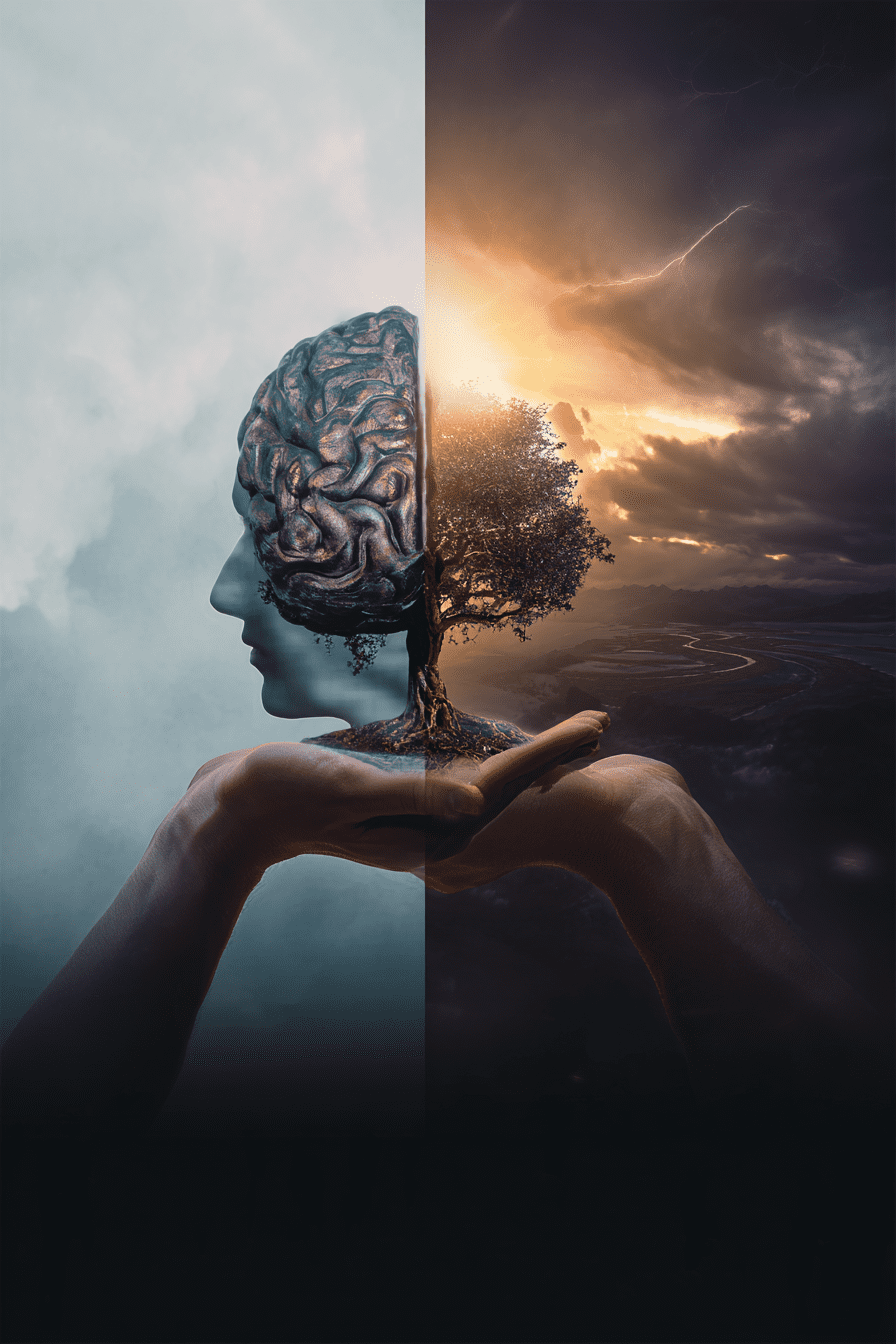
Spiritual traditions and modern psychology increasingly point to the idea that the source of our suffering is not the soul, but the ego—our psychological construct, our sense of identity. The soul remains an untouched, peaceful observer. Understanding this fundamental difference is the key to finding inner peace, even in the midst of life’s storms. It’s an awareness that allows us to accept difficult emotions without letting them define who we are.
Why the Ego Suffers, Not the Soul
To understand why suffering affects the ego and not the soul, we first need to distinguish between these two aspects of our being. The ego is our identity, built on stories, beliefs, social roles, and attachments. It’s the “I” that has a name, a past, plans for the future, and a set of expectations for the world. The ego exists in a world of form and comparison, and its main job is to protect this identity.
The ego’s suffering is born from the fear of loss. We’re afraid of losing love, status, security, or control. When reality doesn’t meet our expectations—when someone rejects us, criticizes us, or our plans fall apart—the ego feels threatened. That’s when we feel pain, anger, shame, or jealousy. As I wrote in my article, “When Does Ego Harm Your Life?”, the ego harms us most when we identify with it completely, believing we are the sum of our thoughts and achievements.
On the other hand, the soul is our true nature—pure consciousness that exists beyond form and time. It has no name, no history, and no expectations. It is a calm, quiet observer that simply is. The soul doesn’t judge, compare, or fear loss, because it knows it is part of something larger and indestructible. It doesn’t experience emotions in a turbulent, human way. It is the source of peace, love, and inner wisdom that we can always return to. For those interested in a deeper dive into this concept, my post “Soul Through the Ages” explores its historical and philosophical dimensions.
My Experience as an Example
For a long time, this knowledge was just a theory to me. It wasn’t until I went through a personal crisis that I truly felt this truth in every cell of my body. As my divorce was being finalized and my wife was living separately, my ego was going through absolute torture. Every move she made—a trip to the hairdresser, a night out with friends—triggered a wave of stress and painful thoughts. “She’s doing it for him,” “She’s happier without me,” “I’m losing everything”—these narratives looped in my head, generating immense pain.
Even though I was already practicing meditation, mindfulness, and breathwork, the suffering kept coming back. But thanks to these practices, I started to notice something. A small space began to appear between the wave of painful thoughts and my reaction to them. In that space, I could ask myself a question: “Who is really suffering here?” The answer was clear. It wasn’t my soul that was in pain. It was my wounded ego, screaming out of fear of rejection and loss of control.
This discovery was revolutionary. I understood that the pain, while real, was a product of my mind, my story, and my attachments. I was not the pain. I was the awareness observing it. This shift in perspective didn’t make the suffering disappear overnight, but it allowed me to accept it. I stopped fighting it and started observing it with kindness, like the difficult emotions of a small child. That was the beginning of true healing.
How the Ego and Soul Coexist
The key to inner balance isn’t to destroy the ego, but to understand its role and learn how to work with it. We need the ego to function in the material world. It helps us set boundaries, pursue goals, and build relationships. It’s like the captain of a ship, navigating the stormy seas of everyday life. I explore this dynamic further in “Boundaries and the Ego”, where I discuss how a healthy ego is essential for loving without being taken advantage of.
The problem arises when the captain forgets that the ship has a deeper purpose than just avoiding storms. The soul is like a compass, always pointing toward our true harbor—to peace, love, and meaning. When we identify solely with the ego, we become slaves to fear and desire. But when we connect with the soul, the ego can become its conscious and wise servant. As I touched upon in “Ego and Happiness”, this shift is crucial for finding lasting joy.
Spiritual practices like meditation, prayer, yoga, or spending time in nature help us quiet the noise of the ego and hear the subtle voice of the soul. They teach us to “switch” from a mode of doing and controlling (the ego) to a mode of being and accepting (the soul). This allows us to make decisions based not just on fear or ambition, but in alignment with our deepest truth.
Practical Tips: How to Cope with the Ego’s Suffering
Observing and managing the ego’s suffering is a skill you can develop—and one you can apply in daily situations, big and small. Here are a few practical ways that can help you:
- Practice Mindfulness: When you feel a difficult emotion—fear, anger, sadness—stop. This might happen when a coworker criticizes your work, your partner seems distracted, or you see a friend’s vacation photos online and feel envy. Instead of reacting immediately, turn your attention to your breath and the sensations in your body. Notice the emotion without judging it. Tell yourself, “I feel fear,” or “I notice jealousy,” instead of “I am afraid” or “I am jealous.” This simple shift creates distance and reminds you that you are the observer of the emotion, not the emotion itself.
- Have a “Conversation with Your Ego”: When you notice your ego taking over—for instance, you’re feeling defensive after feedback at work, or resentment because your friend didn’t text you back—try to start a gentle internal dialogue. Ask, “What are you afraid of? What do you need right now?” Often, the ego acts like a scared child who wants to be heard and reassured. Thank it for wanting to protect you, but gently remind yourself that you, as a conscious adult, are in charge. This practice helps defuse intense emotions and interrupt old patterns.
- Identify Your Triggers: Think about what situations most often provoke painful ego reactions in you. Is it public criticism, feeling left out in a group, your partner paying more attention to someone else, or comparing your life to what you see on social media? As I wrote in my article, “How to Recognize When Ego Takes Control”, awareness of your own patterns is the first step to changing them. When you know your triggers, you can prepare for them—pausing before speaking in a tense meeting, sending yourself compassion before scrolling social media, or naming your feelings before they erupt. Over time, you’ll gain the power to consciously choose a different response.
Conclusion and Inspiration
Suffering is an inseparable part of the human experience. We can’t completely eliminate it, but we can change our relationship with it. Understanding that it is our ego, not our soul, that is the source of emotional pain gives us incredible freedom. It makes us realize that beneath the surface of turbulent emotional waves, there is always an ocean of calm—our true, spiritual nature.
I encourage you to reflect on your own experience. When was the last time you felt your ego suffering? What thoughts and stories accompanied it? Can you find that quiet, peaceful place within yourself that is untouched by life’s dramas?
Your perspective is valuable. Share your thoughts and experiences in the comments below. Together, we can create a space for learning and mutual support on this beautiful, though sometimes difficult, journey of self-discovery.
A Challenge for You Today:
Take a moment today to recall a recent situation where you felt emotional pain—maybe it was rejection, jealousy, or anxiety. Ask yourself honestly: Was that pain coming from your ego’s fears and narratives? Write down the thoughts and feelings that came up, and then, in a new paragraph, try to observe the same situation from the perspective of your soul—that calm, wise part of you that’s simply aware. Notice what changes. Even this small act of reflection can begin to transform how you experience suffering and open you to greater inner peace.
If my writing has inspired or helped you, I would be grateful for your support.
Need support yourself? Discover how I can help you.
AI Disclosure
I see my thoughts as the essence, much like the soul, and AI helps me give them form. It supports me with research, translation, and organizing ideas, but every perspective is my own. Curious how I use AI? Read more here.