
Deciding to work on yourself—whether through therapy, spiritual exploration, or a combination of both—is one of the most impactful steps you can take in life. Yet, many of us hesitate, held back by misconceptions, fear of the unknown, or outdated beliefs. “Therapy will make me someone I’m not,” “Spirituality is for people disconnected from reality,” “I have to pick a side: science or faith.” Does any of this sound familiar?
These myths act as invisible barriers, discouraging us from seeking help or exploring our inner world, leaving us stuck in patterns that no longer serve us. Inspired by my other article, “Therapy and Spirituality: A Holistic Path to Inner Harmony,” where I explored how these two approaches can work together to build resilience and balance, this piece will focus on debunking the most common myths about psychotherapy and spirituality. Addressing these misconceptions is the first step toward reclaiming your freedom—the freedom to choose your own path to growth and harmony.
1. Myth: “Therapy is only for people with serious mental health problems”
Many people still believe that you only end up in a therapist’s office when the situation becomes dramatic—like deep depression, trauma, or a nervous breakdown. That’s not true.
Think of therapy like a gym for your mind. You don’t wait until you have an injury to start taking care of your physical fitness, right? Therapy is a great tool for understanding yourself better, improving the quality of your relationships, or working on emotions in daily life. What’s more, therapeutic work is most effective when we start it during a time of relative calm—that’s when it acts as prevention, and the changes we make tend to stick better.
2. Myth: “Spirituality is the same as religion”
These two concepts are often confused, but they aren’t the same thing. Religion is an organized system of beliefs, dogmas, and rituals that we share with a community. Spirituality is something much more personal and intimate.
Spirituality is your private search for meaning, peace, and connection to something bigger than yourself. You can be a deeply religious person and draw from spirituality within your faith. You can also be an atheist and lead a rich spiritual life, finding the sacred in nature, art, or human relationships. Practices like meditation, mindfulness, or practicing gratitude are available to everyone, regardless of their beliefs.
3. Myth: “I have to choose one path—either science or spirituality”
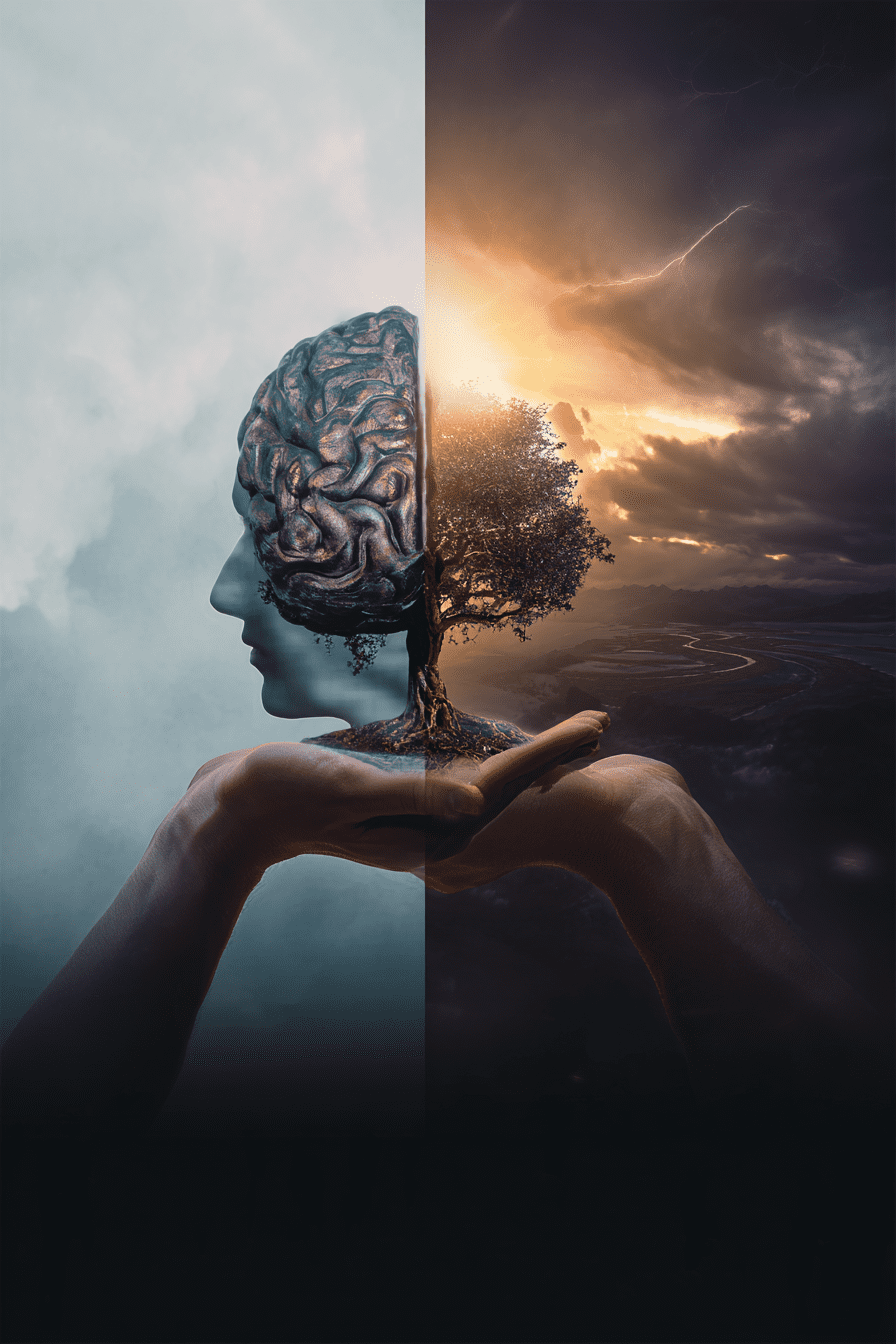
The belief that science and spirituality exclude each other is incredibly harmful. You don’t have to choose between “reason” and “heart.” A human being is multidimensional—we have a body, a mind, and a soul (or a realm of values). Ignoring any of these areas leads to imbalance.
You can use Cognitive Behavioral Therapy to work on your thought habits while also meditating to cultivate inner peace. These two paths not only don’t cancel each other out, but they actually strengthen each other, creating a more complete picture of healing.
4. Myth: “Therapy lasts a lifetime”
The image of a couch where you spend decades is a movie stereotype. Some people worry that starting therapy means a never-ending process. That’s not true.
Therapy is a process that can and should be tailored to your needs. For some, a few or a dozen sessions are enough to deal with a specific crisis or problem. Others decide on longer work to address deeper personality structures. It is you, in agreement with your therapist, who decides on the goals and duration of the treatment.
5. Myth: “Spirituality is an escape from reality”
You often hear that people involved in spiritual development have their “heads in the clouds” and avoid real problems. There is even a term, “spiritual bypassing,” which describes using spirituality to drown out difficult emotions.
However, healthy, mature spirituality isn’t an escape, but a tool for a deeper understanding of yourself and the world. Practices like meditation or journaling help you cope better with daily challenges, not run away from them. They teach acceptance of what is difficult, rather than denial.
6. Myth: “Therapy and spirituality are for the weak”
This is one of the most damaging myths, often rooted in a culture of “handling it yourself.” The truth is the exact opposite: seeking help or exploring your own spirituality requires courage.
Being ready to stand face-to-face with your own emotions, fears, and past is an act of strength, not weakness. Working on yourself is an investment in a better, more conscious life, not an admission of failure.
7. Myth: “Therapy is just talking—I can talk to a friend”
Talking to a loved one is priceless and gives huge support, but it won’t replace professional therapy. This is a common argument that downplays the role of a specialist.
A therapist has specialized knowledge and tools that help you understand the deeper mechanisms of your thinking and behavior. A friend can listen and comfort you, but a therapist will help you process difficult emotions, notice unconscious patterns, and find concrete solutions, all while maintaining necessary objectivity.
8. Myth: “Spirituality requires tons of time and special rituals”
For many people, spirituality is associated with something complicated: hour-long meditations, going on retreats, or studying secret knowledge. Meanwhile, spirituality can be simple and available right here and now.
You can practice it through a moment of reflection with your morning coffee, conscious breathing on your way to work, or practicing gratitude before sleep. It doesn’t require big preparations or a calendar revolution, just an openness to yourself and the intention of being present.
9. Myth: “Therapy will change me into someone I don’t want to be”
The fear of losing your identity is a common block to starting treatment. People worry that a therapist will “reprogram” their mind or force changes against their will.
In reality, good therapy helps you become more yourself—it peels away layers of fear, shame, and imposed beliefs that obscure your true nature. The changes you make are always your decision. A therapist doesn’t force solutions but accompanies you in discovering what is best for you.
10. Myth: “Spirituality is just positive thinking”
Spirituality is sometimes confused with naive optimism, so-called “toxic positivity,” which ignores pain and difficult emotions. True spirituality embraces the whole human experience—both the light and the shadow.
It’s the ability to be with what is difficult and find meaning in challenges. It’s not about forcing a smile when you want to cry, but about understanding and accepting your states, drawing wisdom from them.
Conclusion
The truth is, you don’t have to choose. A human being is a multidimensional creature—we need to take care of both our psyche and our spirit. Ignoring either of these spaces leads to an inner lack of balance.
You can go to therapy to work through childhood patterns and meditate at the same time to develop mindfulness. These two paths not only don’t exclude each other, but they amplify each other’s effects, creating a fuller picture of healing. The most important thing is to dare to take the first step—beyond fear and beyond myths. Your path to harmony is unique, and only you can discover it.
If my writing has inspired or helped you, I would be grateful for your support.
Need support yourself? Discover how I can help you.
AI Disclosure
I see my thoughts as the essence, much like the soul, and AI helps me give them form. It supports me with research, translation, and organizing ideas, but every perspective is my own. Curious how I use AI? Read more here.