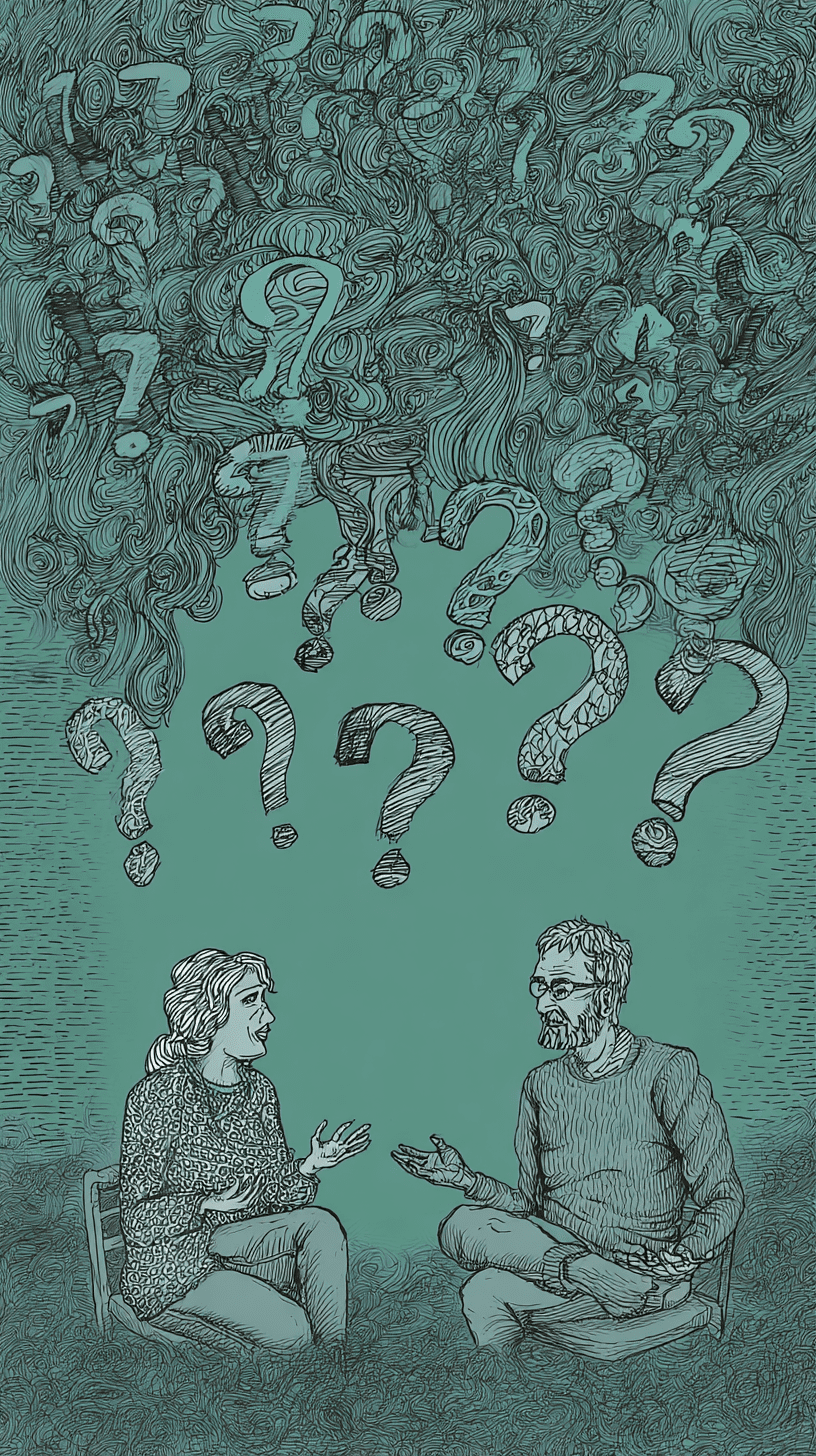
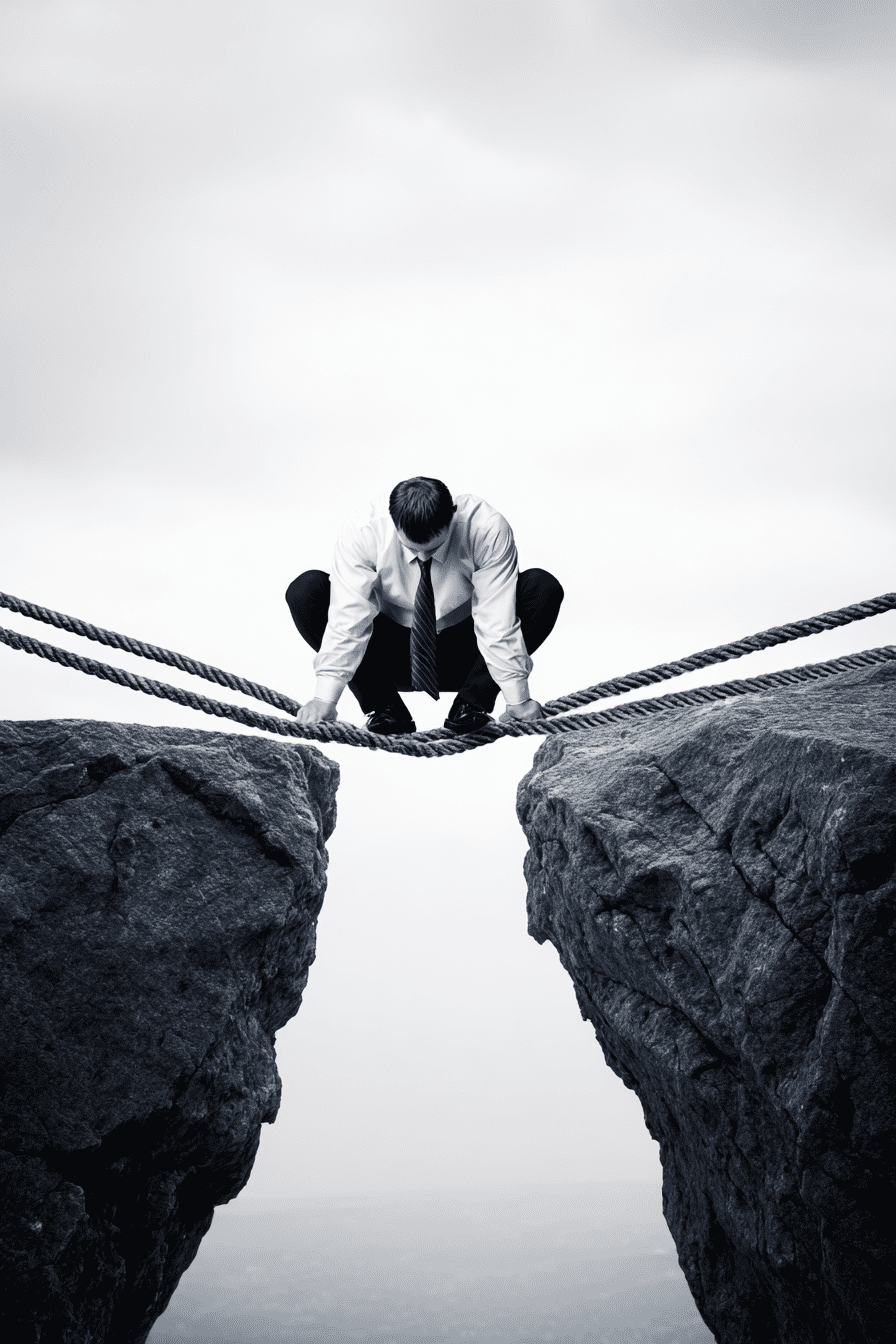
Introduction: The Stress Paradox
I used to think stress was the enemy—something to be avoided at all costs. It seemed obvious: the less stress in life, the better. But over time, I realized that stress itself isn’t the problem. The real issue is how we react to it. Can stress be more than just a burden? Can it actually make us stronger?
Stress has been a frequent companion in my life, but it wasn’t until my biggest crisis hit that I was forced to really think about it. My marriage fell apart, and I was left alone with three kids. The hardest part was realizing I had been deceived for a long time. My wife was leading a double life, and her relationship with our children had become almost indifferent. Every attempt to talk ended in an argument or silence. I felt my world crumbling.
I write more about this crisis and my path to rebuilding in the article “From Crisis to Growth: My Personal Story.” Here, however, I want to focus on the paradox of stress itself and not distract from the main topic, as my personal story is quite extensive.
These experiences, though painful, taught me the most about myself and life. Before this, stress was just part of my daily routine—running a business, raising kids, the pandemic, inflation. But this crisis pushed me to search for answers. I realized that while stress feels destructive, it can also be a force that builds us up.
In this article, I’ll show you how science and psychology explain this paradox and how you can use it in your daily life to turn challenges into strength.
What Is Stress? The Science Behind It
Stress is something we all deal with—even if we call it by different names. For me, it wasn’t one sudden explosion, but a long, exhausting state that gradually drained my strength and will to live. Evolution gave us the “fight, flight, or freeze” mechanism to protect our ancestors from real physical threats. Today, the threats look completely different.
Instead of running from a predator, we’re running from an overload of responsibilities, feeling pressure at work, or dealing with the fallout of a sleepless night after a tough argument at home. In my case, this stress turned into a daily marathon: first the breakdown of my marriage, then facing the fact that my wife had practically withdrawn from the children, leaving me responsible for their daily lives and their hidden but very real pain. On top of that, I had to keep running a business with her for a while longer. I lived with daily worries—could I provide a good future for the kids? I even worried about her—was she sick? Because a healthy person who wants to leave doesn’t behave this way, especially toward their own children.
There were days when I went on autopilot and did everything that needed to be done—yet internally, I felt more and more exhausted, both mentally and physically. Looking back, I see that stress wore many faces, and I wasn’t always aware of how much it was consuming me. Now I know that even if stress hurts and seems purely negative, it can be the start of real change.
Over time, I learned how important it is to understand what stress really is. Just knowing that there are different types, understanding how tension builds, where these reactions come from, and that stress is actually a natural protective state—all of this paradoxically brings relief. It gives you a sense of control. The more I know, the easier it is to spot when fear is mobilizing me and when it’s overwhelming me, and how to better handle daily crises.
I’ll walk you through this step by step—starting with the different types of stress and how to recognize when it’s your ally versus when it threatens burnout.
Types of Stress:
There are two main types of stress—and surprisingly, not all of them are bad.
Eustress is often called “good” stress. It’s the kind of tension that mobilizes us to act and helps us achieve goals. It shows up before important events, like an exam, a job interview, or a public speech. Eustress gives us energy, improves focus, and motivates us to overcome difficulties. It can make us work more effectively, be more creative, and learn faster. Examples include the excitement of preparing for a dream trip, the thrill before your first day at a new job, or getting ready for a sports challenge. The key to using eustress is being mindful of your own needs and planning properly—this way, the tension doesn’t spiral out of control but works in your favor.
Distress, on the other hand, is “bad” stress—long-term, draining, and overwhelming. Distress appears when we feel that the demands of our environment exceed our capabilities, and breaks for recovery are too short. It can be linked to chronic work problems, a difficult family situation, financial uncertainty, or recurring conflict. Distress leads to feelings of helplessness, fatigue, lack of motivation, and eventually burnout and serious health problems—both mental and physical. It shows up as chronic tiredness, irritability, headaches, or sleep issues. To deal with distress, it’s worth learning to recognize the first signs of overload, regularly taking time to rest, and seeking support (including professional help if needed). Consciously building a balance between different areas of life, developing mental resilience, and learning relaxation techniques can help here.
I realized that distinguishing between these two types of stress is key—we can then better manage our energy, protect our health, and use natural mobilization mechanisms to our advantage.
Understanding the biological basis of stress was also important for me, specifically which brain centers are responsible for it. Understanding that it’s just chemistry allowed me to limit its intensity through mindfulness. Ultimately, through my awareness, I control my body, behavior, and brain—chemistry shouldn’t control me.
So, how does stress affect the brain?
When we sense danger, a part of the brain called the amygdala activates the stress response. This causes a spike in adrenaline and cortisol, preparing the body for action. Meanwhile, the prefrontal cortex, responsible for decision-making and regulating emotions, tries to manage the situation. However, chronic stress can weaken its function, making logical thinking difficult.
Research from Harvard Medical School shows that “chronic stress can shrink the prefrontal cortex.” This explains why it’s so hard to make rational decisions when we are under long-term tension.
Why is stress unavoidable?
Stress is a natural part of life. You can’t eliminate it completely because it’s part of our biology. But how we react to it determines whether it becomes our enemy or our ally.
The Stress Paradox: How Challenges Strengthen Us
Now for perhaps the most important and interesting part, at least for me. How can stress make us stronger—how can we use it for our personal growth?
Resilience:
Resilience is the ability to adapt in the face of difficulties. We aren’t born with it—we develop it through experience. Studies, like those conducted by Mark D. Seery, show that people who experience moderate levels of stress are more likely to develop resilience compared to those who experience none at all. It’s precisely those moments when we have to face difficulties that build our inner strength.
Post-Traumatic Growth (PTG):
Difficult experiences can lead to personal development, a phenomenon known as post-traumatic growth. In my case, the marital crisis forced me to ask myself questions I had previously avoided: Who am I without this relationship? What gives my life meaning? Although the process was painful, it allowed me to discover new values and goals.
Brain Neuroplasticity:
The brain has the ability to change and adapt. As Norman Doidge writes in his book, “neuroplasticity allows the brain to reorganize itself, transforming challenges into opportunities for growth.” The challenge is to teach it new patterns of reacting to stress, which we can achieve through conscious practices like mindfulness or changing our perspective.
How Does Stress Affect the Body and Mind?
Stress isn’t just something we feel in our heads—it’s a reaction that affects our entire body. I remember how, in the darkest moments of my life, stress literally took control of me. I couldn’t sleep, I’d wake up in the middle of the night with my heart pounding, and during the day I felt like my body was constantly tense.
I also had episodes of depression that lasted several days. I would lie down, thinking it was just for a moment, but paralysis would take over—I didn’t want to sleep, but I couldn’t get up either. I lay curled up, unable to take any action for several hours. During this period, even simple things like making a meal for the kids seemed overwhelming. Lack of concentration and racing thoughts made daily duties a huge challenge.
That’s why it’s so important to realize what the effects of stress are. Understanding them makes it easier to deal with them.
Physiological Effects of Stress
When we are stressed, our body mobilizes for action. Adrenaline and cortisol levels rise, the heart beats faster, and breathing becomes shallower. This short-term reaction is useful. However, if stress lasts too long, it begins to destroy the body. It can lead to heart problems, a weakened immune system, and even chronic diseases.
I remember much earlier in my life, due to work stress and burnout, I started getting sick more often. A simple cold would last for weeks. I’d barely get over one illness, and a moment later I’d be sick again. I felt my body simply didn’t have the strength to fight.
Psychological Effects of Stress
Chronic stress leads to burnout, anxiety, and depression. In my case, long-term stress meant I didn’t feel like doing anything—no entertainment, no hobbies. Thoughts swirled in my head that I couldn’t get rid of.
On the other hand, moderate stress can be motivating. I managed to stabilize that intense stress and turn it into something positive. I changed my perspective and treated it all as a challenge—not a life failure. This taught me that it can be tamed. Stress is like a spirited horse—sometimes unruly, difficult to lead, but possible to control.
I realized that stress doesn’t have to be my enemy. You can master it and use it. I started to see that in small doses it can drive me—like during my crisis, when I had to find a solution to the problem of supporting myself and the kids and raising them alone.
Practical Tools for Managing Stress
During the worst of the crisis, I knew I had to tame the stress somehow. Before, it was just there—negatively impacting life but not directly threatening the family’s existence. Now, living under such stress could, in the long run, lead to the children, who were already without a mother, being left without a father too.
That’s why I started diving deep into the subject—psychology, neurobiology, spirituality. Thanks to this, I discovered several tools that really changed my approach to stress.
Acceptance as the First Step
The first lesson—and probably the most important one—was understanding that I can’t control everything. For a long time, I fought reality. It wasn’t the solo parenting that stressed me out so much, but the fact of my wife leaving, her affairs, and her distancing herself from us. I had to accept it, though, because I couldn’t change her or turn back time.
As psychologist Steven Hayes notes: “Acceptance is not resignation; it is the first step toward change.” I remember the moment when I first sat down and told myself: “This is my reality. I can’t change it, but I can decide what to do with it.” It was a huge relief.
Mindfulness and Awareness
Mindfulness became my daily ritual. At first, it was mainly breathing exercises. In the morning or during moments of high stress, I would go out onto the terrace and focus on my breath. The simplest technique that helped me was a 4-5 second inhale, a pause of the same length, a 4-5 second exhale, and another pause. I repeated this for a few minutes until I felt my body calming down.
Research by Sara Hölzel confirms that mindfulness reduces amygdala activity, which helps in better emotional regulation. For me, it was the moment I could feel I was regaining control.
Over time, I started applying mindfulness in different areas of life—during meals, walks, conversations, and also observing my thoughts and emotions. I no longer limited myself to breathing exercises but tried to be more present in every moment.
Breaking Problems into Small Steps
Everything used to seem overwhelming. How will I cope with the kids? How will I maintain the house? How will I work? Instead of thinking about the whole day, I focused on one thing: what can I do right now? It could be something simple, like making coffee, starting the laundry, or checking the kids’ homework. Each small step gave me a sense of agency and activated dopamine in my brain—the reward hormone.
Social Support or Inner Resilience
For a long time, I was convinced I had to handle everything myself—and that’s what I did. I avoided talking about my problems because the situation was very delicate. I didn’t want my wife to withdraw completely from our lives, and the children still knew nothing about what was happening. Before the formal divorce, I didn’t want to spread the word about our problems because I knew it could trigger pressure from parents and family. I was afraid that if everything came out, my wife might cut contact completely—not just with me, but with the children.
This loneliness taught me to look for strength within myself and build my own mental resilience. Although research by Cohen and Wills confirms that social support is a key buffer protecting against the negative effects of stress, I walked my path almost entirely alone.
Over time, searching for answers and meaning in all of this, I began to reach deeper—reflecting on what life was trying to teach me. I concluded that I had to start following my own path and focus on fundamental values. My task became caring for the children and ensuring our future, preparing them for adulthood, and simultaneously developing myself to be the best support for them.
This allowed me to see that there is something more than just material things and everyday life—this spiritual perspective became a source of peace, meaning, and strength. From my own experience, I also see how important openness to support is, even if it appears in a non-obvious form. In my case, this meant opening myself to my soul and to God—seeking support there, as at that stage, I couldn’t find it among people.
Looking back, I also strongly recommend seeking the presence and help of others whenever possible—an honest conversation or shared silence can significantly ease the journey through life’s difficulties.
Other Tools
Everyone deals with stress in their own way, and the tools I described were key for me in the most difficult moments of my life. I focused on acceptance, mindfulness, breaking problems into small steps, and building inner strength because they allowed me to regain control and find meaning in everyday life.
This doesn’t mean other methods aren’t equally effective. Sports, outdoor activity, spending time with children, developing passions, reading, or changing your environment—all of this also helped me deal with stress. However, in this section, I wanted to focus on less obvious tools that played a special role in my life.
There are many tools for dealing with stress, and everyone should find those that best suit their needs and situation. For me, focusing on my development and values was crucial, allowing me not only to survive difficult moments but also to find the strength in them to keep going.
One such tool that deserves special attention is changing your perspective. It’s an approach that completely changed my view of stress and allowed me to see it not just as a challenge, but as an opportunity for growth.
How to Change Your Perspective on Stress?
The biggest change in my life was learning to look at stress from a different perspective. Instead of seeing it as an enemy, I started treating it like a teacher.
Reframing:
Instead of thinking “this will destroy me,” I started saying “this will make me stronger.” At first, it was hard—how could I see anything positive in what happened to me? But over time, I noticed that every difficulty teaches me something new. Instead of asking “why me?”, I started asking “what can this experience teach me?”.
Gratitude and Positive Thinking:
Every evening I tried to find at least one thing I could be grateful for. Sometimes it was something small, like a child’s smile or a moment of silence with coffee. But these small things helped me balance negative emotions and see that even in difficult moments there is something good.
Accepting Uncertainty:
I realized that not everything in life can be predicted or controlled. Instead of fighting uncertainty, I learned to accept it. This allowed me to focus on what I can change, instead of wasting energy on things beyond my influence.
Changing Internal Narrative:
I started paying attention to how I talk to myself in my thoughts. Instead of criticizing myself for mistakes, I tried to be more understanding toward myself. Instead of saying “I can’t do it,” I said “I’ll try.” This change in internal dialogue helped me build greater self-confidence and better deal with challenges.
Long-term Perspective:
When something seemed overwhelming, I tried to look at it from a distance. I asked myself: “Will this matter in a year? In five years?” This perspective helped me understand that many problems that seem huge in the moment lose their significance over time.
A Chance for Growth and Self-Realization:
Changing my perspective allowed me to see that stress and difficulties can be not only a challenge but also a chance for growth. I realized that now, despite a greater number of responsibilities, I have the opportunity to live in harmony with myself and pursue my passions. Before, many things held me back—lack of time, lack of space for my own needs, and also the emotional burden related to the relationship. Now, although life isn’t easier, I feel I have greater freedom to decide about myself and my direction.
This experience taught me that changing your perspective not only helps survive difficult moments but also opens the door to new possibilities. Instead of focusing on what I lost, I started to see what I could gain—and that gave me the strength to move forward.
Summary: How to Come Out Stronger from Difficulties
Stress doesn’t have to be the enemy—it can be a teacher. The key is changing your perspective and using tools that will help you transform difficulties into strength. This doesn’t mean difficult moments will disappear, but that you will learn to go through them with greater awareness and resilience.
I encourage you to take small steps. Maybe it will be a short mindfulness practice, a conversation with a loved one, or simply a moment of reflection on what recent challenges have taught you.
I don’t know if I will ever fully understand stress, but I know that thanks to it, I became stronger. Maybe you can too? Share your thoughts in the comments.
If my writing has inspired or helped you, I would be grateful for your support.
Need support yourself? Discover how I can help you.
AI Disclosure
I see my thoughts as the essence, much like the soul, and AI helps me give them form. It supports me with research, translation, and organizing ideas, but every perspective is my own. Curious how I use AI? Read more here.