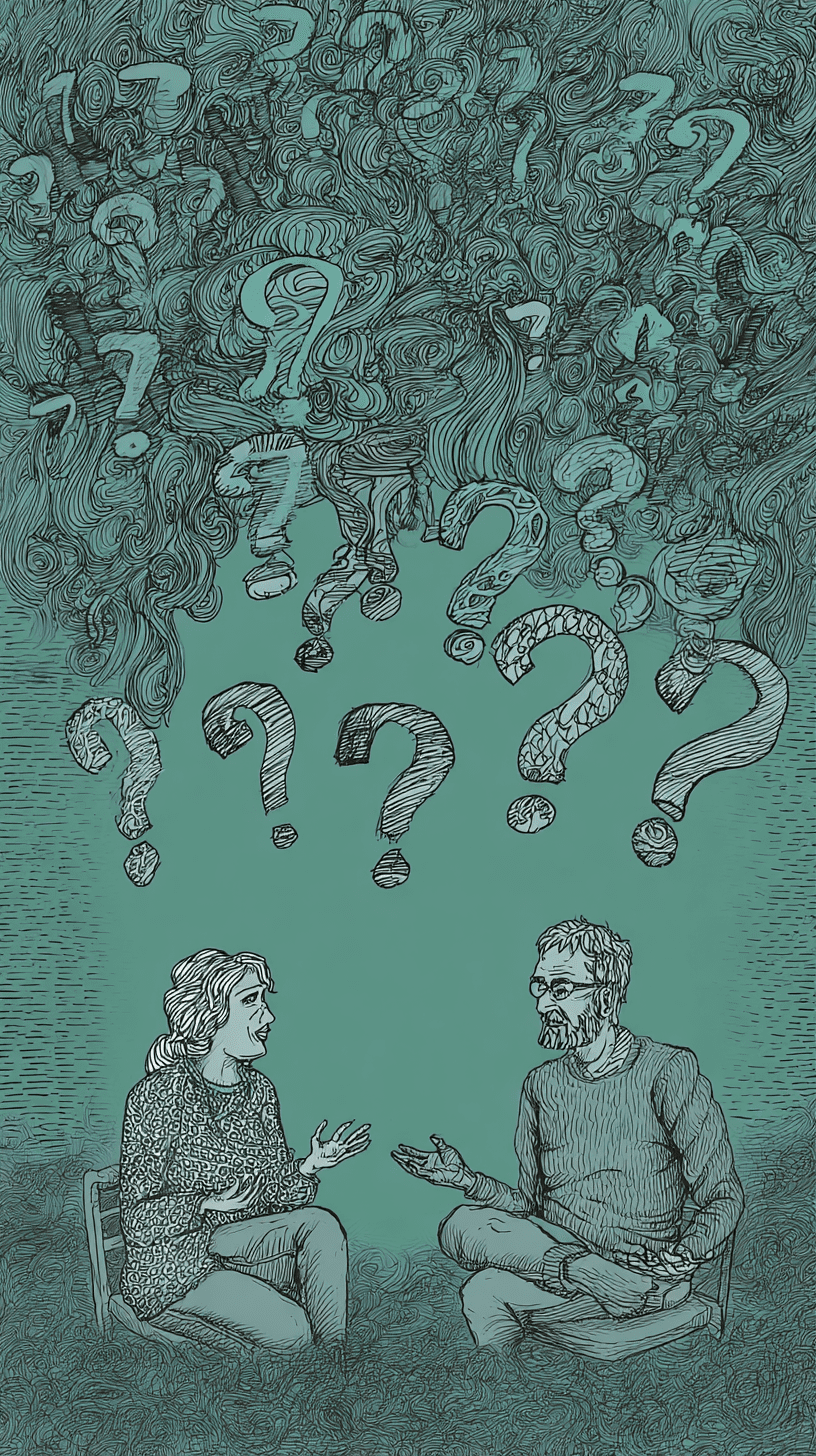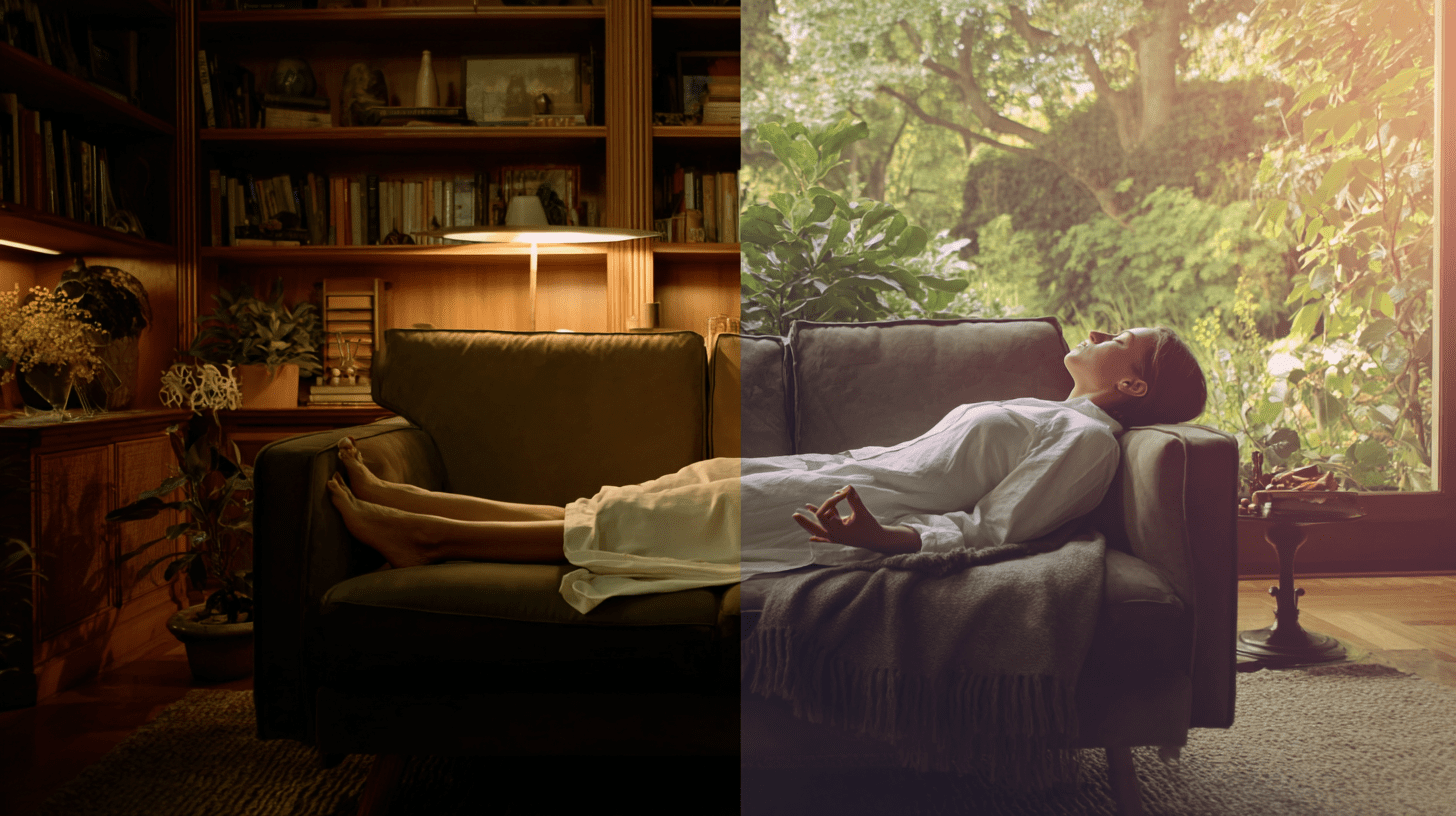
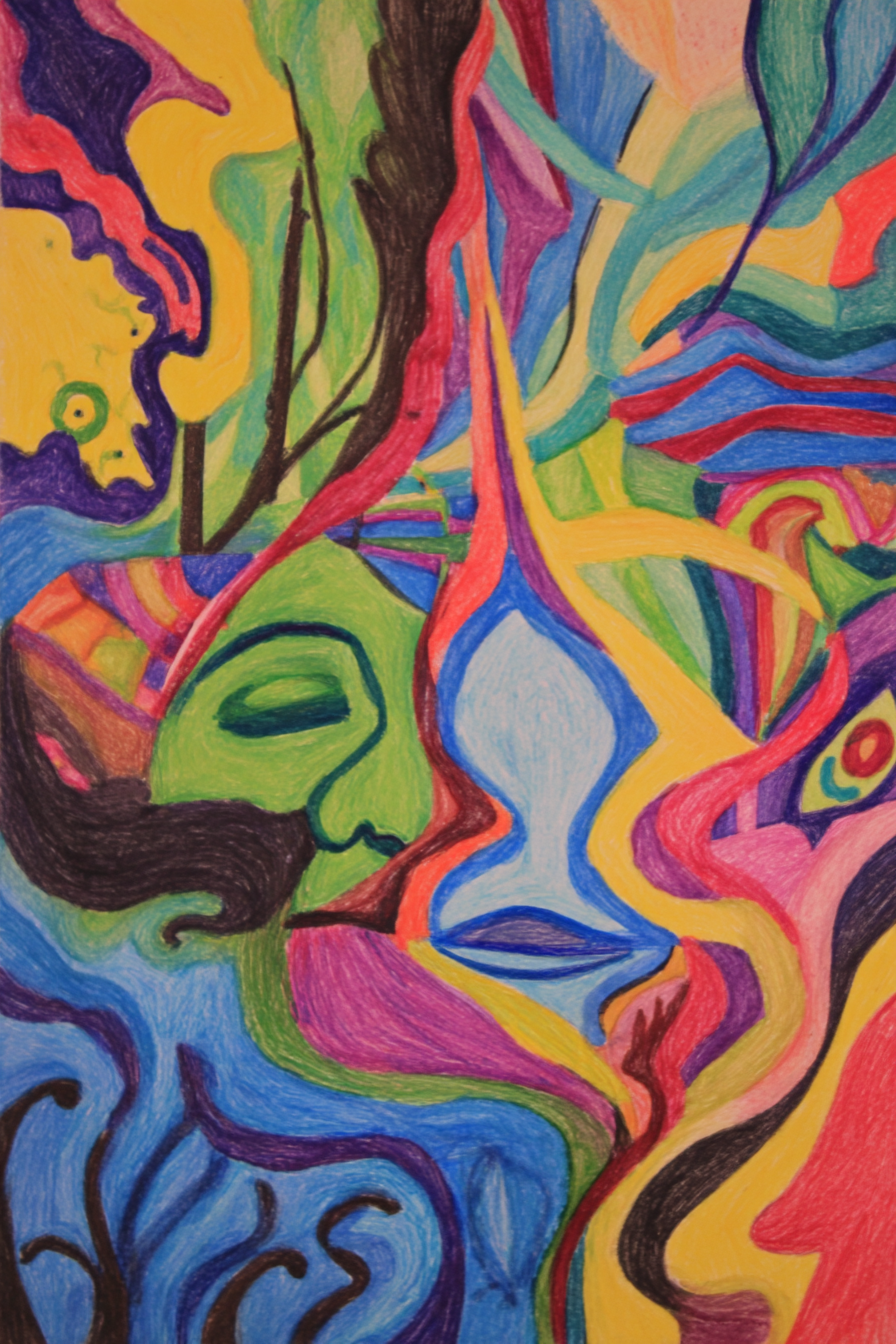
When I think about spirituality, I rarely see it as something that happens only on a meditation cushion or in the silence of a temple. For me, the spirituality I found within myself quite recently is something alive, pulsing just beneath the surface of everyday life. It’s not a distant goal we march towards exhaustingly (besides, it’s not a goal, but a path), nor is it enlightenment waiting after days-long meditation “sessions” that demand years of sacrifice. It’s more like a whisper you hear in your head when you actually listen.
We often think that to touch the depths of our own soul, we have to cut ourselves off from the world. That we need special conditions, absolute silence, and strict discipline. But what if I told you that your path to spiritual awakening could lead through a paintbrush, a favorite song hummed in the shower, or even through mindfully chopping vegetables for dinner?
I believe spirituality is the art of being fully present in the process of creating—whether you’re composing a symphony or just arranging a bouquet of wildflowers. It’s that moment where the line between the creator and the creation blurs, and we become a channel for something bigger than ourselves.
Jalaluddin Rumi, the Persian poet and mystic whose story partly inspired me to write this article, put it in words that are always close to my heart:
“Let yourself be silently drawn by the strange pull of what you really love. It will not lead you astray.”
Let yourself be silently pulled by that strange current of what you really love. It is exactly there, in the space of your creativity and passion, that the answers to questions we are afraid to ask are often hidden. That’s where you meet your soul—not in rigid dogmas, but in the freedom of expression.
In this article, I want to invite you on a journey along less obvious spiritual paths. I want to show you how art, music, film, and even simple observation of nature can become powerful tools for self-discovery. You don’t have to be a monk to experience the sacred. Sometimes it’s enough to let yourself be awed by light hitting an old building or be moved by a line of dialogue in an “ordinary” movie.
This is an invitation to discover that divinity isn’t hiding from you—it’s waiting for you to notice it in what you are already doing.
Different Views on Spirituality: Scientific, Psychological, and Spiritual
Before we go further, it’s worth stopping for a moment to understand that spirituality isn’t reserved solely for mystics or theologians. We find echoes of it in surprising places—in scientific research, in psychologists’ offices, and, of course, in deep spiritual traditions. These different perspectives don’t exclude each other; on the contrary, in my opinion, they form a cohesive whole, just described in a different way, a different language, showing how integral the search for meaning is to our humanity.
The Scientific View: The Brain in a State of Creation
At first glance, science and spirituality might seem like distant poles. However, when we look at the processes happening in our brains during creative expression, these boundaries start to blur. Research on neuroplasticity shows that activities like painting, playing an instrument, or even writing poetry literally sculpt our brains anew. They create new neural connections, which makes us more open to new experiences and perspectives.
For a deeper dive into how learning new skills can rejuvenate your brain and enhance your sense of purpose, check out “How Learning New Skills Keeps Your Brain Young and Thriving.”
When we engage in the act of creating, activity in the prefrontal cortex—the part of the brain responsible for planning, judgment, and self-criticism—often decreases. At the same time, activity increases in areas related to imagination, emotions, and senses. In a sense, our inner critic goes silent, and we enter a state scientists call “flow.” It is in this state that we lose track of time, forget about ourselves, and our actions become almost effortless. Doesn’t that sound like a description of deep meditation?
From a scientific point of view, creativity is a powerful tool for stress reduction. It lowers cortisol levels, the stress hormone, and stimulates dopamine production, giving us a sense of satisfaction and joy. Making something with your own hands—whether it’s a painting or a dish—is a biological mechanism that helps us regain balance and feel more present in our lives.
The Psychological View: Meeting Yourself in Flow
Psychology has long appreciated the role of creativity in building a healthy and integrated personality. Mihály Csíkszentmihályi, the creator of flow theory, described this state as an optimal experience, a moment when we are so absorbed in an activity that nothing else matters. The action itself becomes the reward.
For me, the state of flow is the psychological equivalent of spiritual connection. It’s a moment when our ego gives way to something bigger. Writing an article, listening to music that moves every cell in my body, or walking in the forest and observing nature with mindfulness, I experience exactly this. My thoughts slow down, and I become an observer and a participant at the same time.
From this perspective, creativity isn’t just a way to make beautiful things. It is primarily a tool for self-discovery. When you write a poem, paint a picture, or sculpt in clay, you unconsciously transfer hidden emotions, fears, dreams, and desires onto your work. Art becomes a mirror in which you can see parts of yourself that you don’t have access to on a daily basis. It’s a dialogue with your own subconscious, conducted in the language of symbols, colors, and shapes.
The Spiritual View: Creativity as a Divine Spark
In many spiritual traditions, the act of creating is seen as imitating the divine act of creation. When we create, we become co-creators of the universe. Regardless of whether we call this force God, Source, Energy, or the Universe, in the act of creation, we connect with it in the most direct way.
For me, writing is a form of prayer. It appears as an act of contemplation, listening to intuition, and opening up to inspiration that seems to come from something bigger—the soul, the universe, or inner depth. Ideas, and consequently the articles that appear on the page, often seem to come from a place outside of me, as if they were a whisper of the soul—intuition or creativity—concepts that are still not fully explained by science. Similarly, when I watch a movie and suddenly some dialogue or image hits me with unusual power, I don’t receive it as the voice of the soul, but as an impulse that inspires a sudden idea. It’s a moment when the soul speaks to me in a language I understand. More than once, an article I wrote was inspired by a reflection that came to me while watching an ordinary movie.
I’ll just mention that recently, thanks to my son’s passion for film (he’s only 13, but already has impressive knowledge about film production, covering technical nuances, content, and cinema history), I often reach for old American cinema with James Stewart, among others. Seemingly ordinary movies we watched together, like Harvey, inspired me to explore ancient legends and beliefs, as well as to reflect on how important it is to be yourself and find joy in life—even if others think you’re a weirdo. In turn, It’s a Wonderful Life tells the story of a man who dreamed of travel his whole life, but fate constantly put new challenges in front of him. Finally, in a moment of despair, the hero wanted to commit suicide, but an angel showed him how much good wouldn’t have happened if he had never been born. This is a deep message about the meaning of our life, which we often don’t notice, and which can completely change our perspective on what’s truly important. My point is that you don’t have to watch movies about spirituality or religion; you can find inspiration and topics for reflection in every movie, book, etc.
Returning to the thread of creativity, spirituality in it isn’t about achieving technical perfection. You don’t have to be a second Mozart or Van Gogh. It’s about intention and presence. About allowing yourself to be imperfect, to play, to experiment. When you allow yourself free expression, you open a channel through which inspiration can flow. Then even the simplest activity, like watching clouds or listening to birds singing, becomes a deep spiritual experience.
These three perspectives—scientific, psychological, and spiritual—show that our need to create is deeply rooted in our nature. You might say that this isn’t spirituality—it’s just the brain. Maybe, but I rather think that the brain is just a tool, and consciousness mediates between the soul, the mind, and matter. Its plasticity is the result of the influence of the mind and soul, not just material processes.
Besides the classic, materialistic approach to causality, meaning so-called upward causality, where matter is responsible for everything, including consciousness, two other approaches stand out that are particularly inspiring to me. The first is downward causality, described by thinkers like Amit Goswami. It assumes that consciousness is primary and influences the material world, transforming possibilities into reality. This approach emphasizes a “top-down” process where higher-order phenomena shape lower levels of reality.
The second is non-computable (quantum) causality, studied by Roger Penrose. His work points to the non-algorithmic nature of consciousness, suggesting that it cannot be fully explained using classical physics or computational models. Instead, consciousness involves processes going beyond deterministic frameworks, which points to the mysterious role of quantum mechanics in understanding the mind.
Both of these theories, although different, open new perspectives in studying the relationship between consciousness and the material world, questioning traditional materialistic approaches and expanding our understanding of causality.
In my reasoning, all these perspectives—scientific, psychological, and spiritual—indicate that creativity is something more than just a process; it is a natural language through which the soul expresses its deepest desires and connection with reality.
Creative Ways to Discover Spirituality
Since we already know that creativity is the natural language of the soul, supported by science and psychology, it’s time to dive into concrete practices. The paths below are not rigid instructions, but rather invitations. Invitations to play, explore, and find what resonates most deeply with you. Spirituality doesn’t require you to abandon who you are. On the contrary—it asks you to become yourself fully.
Art and Creation: Dialogue with Intuition
Painting and Drawing: You don’t have to be a master with a brush. A sheet of paper and a pencil or paints are enough. Try painting intuitively—without a plan, without expectations. Let your hand lead, choose colors that speak to you in the given moment. What emerges might be an abstract record of your emotions, a landscape of your soul. It’s meditation in motion, where instead of focusing on your breath, you focus on color and form.
Writing Poetry and Songs: Words have immense power. As I wrote about Rumi, poetry is a language that can touch the inexpressible. Try pouring your feelings, observations, and even dreams onto paper. Don’t worry about rhymes or rhythm. Focus on honesty. Writing then becomes a form of prayer, a conversation with yourself and the world. Your poems can become a mirror in which you see the truth about yourself.
Sculpting and Other Manual Forms: Working with matter—clay, wood, and even paper in the art of origami—has something primal about it. When your hands shape a physical object, the mind quiets down. This process teaches patience, humility, and acceptance of imperfection. Every fold of paper or kneading of clay is an act of mindfulness that brings us here and now, to the only moment that really exists.
Music and Sound: Vibration of the Soul
Listening: Choose a track that moves you—it can be classical music, instrumental, ambient, or even nature sounds. Put on headphones, close your eyes, and let the sound fill your entire being. Don’t analyze it. Feel it. Observe what images, emotions, and memories it evokes. Music can bypass our mental barriers and reach straight to the heart.
Playing an Instrument: Regardless of whether it’s a piano, guitar, or a simple keyboard, it’s one of the purest forms of creative expression. When your fingers touch the keys or strings, and sounds begin to fill the space, you enter a state of deep presence. You don’t have to be a virtuoso—it’s enough to allow yourself to freely play with sound. By playing, you can express emotions that are hard to put into words, while feeling a connection with something bigger. It’s a dialogue between you and the music that calms the mind, opens the heart, and allows the soul to speak in the language of harmony.
Composing: You don’t need a recording studio for this. Your voice is enough. Try humming a melody that spontaneously comes to your mind. You can also use simple apps on your phone or a small instrument. It’s about the act of creating sound, about expressing yourself through vibration. Your own melody is a unique imprint of your soul in a given moment.
Film and Literature: Finding Meaning in Stories
Reading: Books and poetry are sometimes portals to other worlds and souls. When you read, you enter into a dialogue with an author who might have lived hundreds of years ago. Their thoughts become yours, their perspective broadens yours. Works of mystics like Rumi, poets like Hafez, or philosophers like Alan Watts, are ready-made maps for a spiritual journey. But just as well, it can be a contemporary novel that stirs something in you that has been asleep for a long time.
Watching Movies: Movies aren’t just entertainment. They are modern parables. Of course, there are deeply spiritual works like The Tree of Life or Baraka that invite contemplation. As I mentioned earlier, thanks to my son’s passion, I rediscovered old American movies like Harvey or It’s a Wonderful Life. These seemingly ordinary productions inspired me to reflect on the meaning of life, being yourself, and drawing joy from everyday life. Watch movies with an open heart, and you’ll start to notice messages hidden between the lines of the script.
Nature and Everyday Life: Holiness in Simplicity
Observing Nature: Go outside. Sit on a bench and simply be. Listen to the birds singing, the rustle of leaves, watch the clouds floating across the sky. Nature doesn’t rush, doesn’t judge. It is a perfect teacher of being here and now. Staring at a sunset, touching the bark of a tree, feeling the wind on your face—these are all acts of deep communion with the world, simple forms of meditation available to everyone.
Cooking with Intention: Instead of treating meal prep as another chore, try approaching it like a ritual. Focus on the smell of herbs, the colors of vegetables, the sound of chopping. Be grateful for the food you have. In this way, a mundane activity becomes a creative act and a spiritual practice that feeds not only the body but also the soul.
These are just examples, and each of these paths is open. There are no good or bad choices on them. Experiment, play, combine them. Maybe your path will turn out to be dancing in the rain, taking photos of old buildings, or making holiday decorations. In Christian traditions, this could be, for example, making handmade Christmas ornaments or painting Easter eggs. The key is your attention and openness of heart. Spirituality isn’t something you must find—it is already within you, waiting for you to express it in your unique, creative way.
Psychological and Spiritual Benefits of Creativity
Maybe after reading the above, you are asking yourself: why waste time on all these “unproductive” activities at all? Why waste hours drawing if I’m not an artist? Why write poems no one will read? I don’t know if you know, but in a world focused on results and efficiency, the process of creating itself is a deep medicine—both for our mind and for the spirit. The benefits that flow from creativity go far beyond aesthetic pleasure. It’s a form of therapy we prescribe to ourselves.
Healing for the Mind: The Psychological Perspective
From a psychological point of view, creativity acts as a safety valve for our emotions. We often carry feelings inside us that we can’t put into words—sadness, fear, but also unexpressed joy. Art gives them form. When you pour your anger onto a canvas in the form of chaotic colors or write out your fear in a journal, you perform an act of externalization. You pull what torments you outside. It ceases to be a shapeless shadow in your head and becomes something tangible that you can face.
Research confirms that engaging in creative activities lowers stress and anxiety levels. The American Art Therapy Association indicates that the creative process helps in regulating emotions and reducing nervous tension. That’s why coloring mandalas or working with clay are so effective in moments of crisis. They allow the mind to rest from constant analysis and racing thoughts, moving us into a state of here and now.
Creativity also builds our self-awareness. When you create, you often unconsciously reveal to yourself the truth about who you are and what you need. Maybe you notice your drawings have been dark and heavy lately? Or maybe the theme of freedom keeps returning in your songs? These are signals from your subconscious, signposts on the map of your personal development.
Connection with the Soul: The Spiritual Perspective
The spiritual benefits of creativity are even more subtle, but powerful. As I wrote in my reflections on the meaning of life, I believe we are here to experience and grow. Creativity is one of the purest channels through which our intuition speaks.
In the daily noise, it’s hard to hear the voice of the soul. It is quiet, delicate, easily drowned out by logic and obligations. But when you enter a creative trance, the logical mind steps aside. That’s when the door opens for intuition. Answers to nagging questions come suddenly, as if “out of nowhere.” You start to understand things with your heart, not just your head.
For many people, the act of creating is a moment of transcendence—stepping outside one’s own little “I” and feeling a connection with something bigger. Regardless of whether you call it God, the Universe, or Nature, in a moment of inspiration you feel that you are part of a great, living whole. It’s a feeling of deep peace and meaning that we so often look for in the external world, but which is actually waiting to be discovered inside us.
Through creativity, we also learn trust. We trust that the blank page will fill with words, that a shape will emerge from a piece of wood. It’s a lesson in faith in the process, faith that even from chaos, beauty can arise. It’s a spiritual practice of acceptance and surrendering to the flow of life, which transforms not only what we create but primarily ourselves.
Creativity: A Bridge Between Personal and Spiritual Growth
Creativity is not just a tool for spiritual awakening; it’s also a cornerstone of personal development. When we create, we engage both our emotional and intellectual capacities, fostering self-awareness and resilience. Whether it’s through painting, writing, or simply solving everyday challenges with a fresh perspective, creativity helps us grow as individuals while deepening our connection to something greater. It represents a unique intersection where science and spirituality meet, demonstrating that the act of creating is as much about personal transformation as it is about spiritual discovery.
As you can see, creativity and the development of new talents are essential not only for personal growth but also for spiritual awakening. To explore how these two paths complement and enrich each other, visit “Spiritual Growth vs. Personal Growth.”
You might also be interested in discovering how science and spirituality can work together to enhance personal growth. For more insights, check out “The Power of Combining Spirituality and Science in Personal Growth.”
Inspiring Examples and Quotes
Theory and research are one thing, but real magic happens when we see these ideas come alive in human experience. Sometimes we need a spark—a story or a quote that hits straight to the heart and reminds us of our own potential. Creativity as a spiritual path is not a new idea; it is a thread woven into the history of humanity, visible in the lives of great artists, mystics, and ordinary people who dared to create.
Rumi, whose wisdom I often invoke in articles, perfectly understood this truth. His poetry is a constant invitation to awaken our inner creator and abandon what limits us. As he wrote himself:
“You were born with wings, why prefer to crawl through life?”
This question reminds me that within each of us lies the ability to rise above daily worries, and creativity is precisely those wings. It’s not a privilege for the chosen few, but our inherent right.
Art history is full of examples of souls who found a connection with the divine through their work. Just look at the life of Vincent van Gogh. His paintings are not just records of landscapes, but primarily deep spiritual experiences. In his letters, he wrote about how he saw something eternal in nature, something of the infinite, God. Sunflowers, starry nights, wheat fields—all of this was a manifestation of the sacred to him. Painting wasn’t a craft for him, but a way to touch the mystery of existence, a form of prayer with a brush. His art, though often born of pain and loneliness, is a testament to how creativity can become a bridge between suffering and transcendence.
I personally experienced this transforming power during a crisis, when I felt lost, and answers to questions about meaning seemed unattainable. In those moments, I would sit down to write—not with the intention of creating another blog article, but simply to throw the chaos of thoughts out of myself. I shared them with the world in the form of loose reflections, fictional stories with a message, or quasi-scientific articles based on what I had read recently—how I understand it and how I see it. Sometimes, while writing, flashes of clarity began to appear. I started to better understand how to apply these ideas in my life, and at the same time, I couldn’t keep up with writing down ideas for future articles. One sentence led to another, and I discovered with surprise that only by writing do I find the answers myself.
These examples show that your path doesn’t have to be grand or dramatic. You don’t have to be Rumi or Van Gogh. It’s enough to allow yourself authenticity. Your creativity, your unique expression, is your personal dialogue with the infinite.
How to Start Your Creative Spiritual Journey?
Maybe you are reading these words and feel a gentle stir inside—a quiet voice saying “try.” But right after, a louder, rational mind appears asking: “But where do I start? I have no talent, I have no time.” Relax. This isn’t an exam. There are no grades here. Your creative spiritual journey begins with one simple step: allowing yourself to be a beginner.
Here are a few practical tips that will help you take that first step on the road to discovering yourself through creativity.
- Follow curiosity, not ambition
Think about what makes your heart beat a little faster? Is it the sound of a piano? The smell of oil paints? Or maybe the rustle of pages in an old notebook? Choose one activity that attracts you—not because you “should” develop in it, but because it gives you pleasure. If you like listening to music, start by consciously listening to favorite tracks, but this time focus on the emotions they awaken in you, not the melody. If you are drawn to writing, buy a simple notebook and start writing anything. Let joy be your guide, not perfection. - Create small rituals
Spirituality loves regularity but hates coercion. You don’t have to dedicate an hour a day to it. 15 minutes is enough. But let it be your 15 minutes. Brew tea, light a candle, turn off your phone. Create a space where you feel safe. Let this time be dedicated solely to being with yourself and your creative medium. Treat this moment like a meeting with a friend—with your own soul. - Keep a reflection journal
This is one of the most powerful tools. Regardless of whether you paint, cook, or watch movies, write down your thoughts. What did you feel during that activity? What thoughts flowed through your head? Did any answers to nagging questions appear? The journal becomes a map of your journey. Over time, returning to old entries, you will see how much you have changed and how much wisdom lies dormant within you. - Turn off the inner critic
This is the hardest but most important point. When you start creating, a voice might appear in your head saying: “This is ugly,” “This makes no sense,” “You are wasting time.” Thank that voice for its concern and keep doing your thing. Spirituality in creativity isn’t about creating a masterpiece that will hang in a gallery. It’s about the process. Your scribbles, your clumsy poems, your experiments in the kitchen—they are all perfect because they are yours. Be open to new experiences and don’t judge your actions through the prism of productivity.
Remember that this journey is yours and yours alone. There is no wrong path. Every line on paper, every sound, every moment of awe at the world brings you closer to the truth about yourself. Start where you are, with what you have. That is entirely enough.
Summary: Spirituality in Everyday Moments
Approaching the end of our reflections, I would like to leave you with one thought: spirituality isn’t something you have to conquer, fight for, or find at the end of the world. It is here. Hidden in the smell of morning coffee, in a ray of sunlight hitting your desk, in a melody that unexpectedly brings tears to your eyes. It is in every creative act—the big one, like painting a picture, and the small one, like a smile sent to a stranger.
Understanding the soul isn’t a one-time act of enlightenment, but a continuous, fascinating journey. It is a process of discovering layer by layer who we really are. And in this journey, there are no better or worse tools. Meditation on a cushion is classic, but it might be tedious and require huge effort for you, whereas meditation with a brush in hand or with hands buried in garden soil might be pleasant, more authentic, and equally deep.
Don’t be afraid to look for your own path. Don’t be afraid to experiment. Allow yourself the luxury of being an imperfect creator of your life. Watch movies and look for the truth about yourself in them. Listen to music and let it heal your heart. Write, paint, dance, cook—do whatever makes you feel alive. Because it is precisely in this feeling of vitality, in this spark of joy and passion, that God resides.
When you open up to creativity, you will notice that the world starts speaking to you. You will begin to see signs, answers, and inspiration where you previously saw only gray everyday life. Your life will gain depth, colors, and flavor you hadn’t dreamed of before.
Let these words of Rumi be a signpost for your further path:
“When you do things from your soul, you feel a river moving in you, a joy.”
I wish for you to find that river within yourself and let it flow freely, carrying you towards an ever-deeper understanding of yourself and the world. Your soul already knows the way. You just have to start listening to it.
If my writing has inspired or helped you, I would be grateful for your support.
Need support yourself? Discover how I can help you.
AI Disclosure
I see my thoughts as the essence, much like the soul, and AI helps me give them form. It supports me with research, translation, and organizing ideas, but every perspective is my own. Curious how I use AI? Read more here.