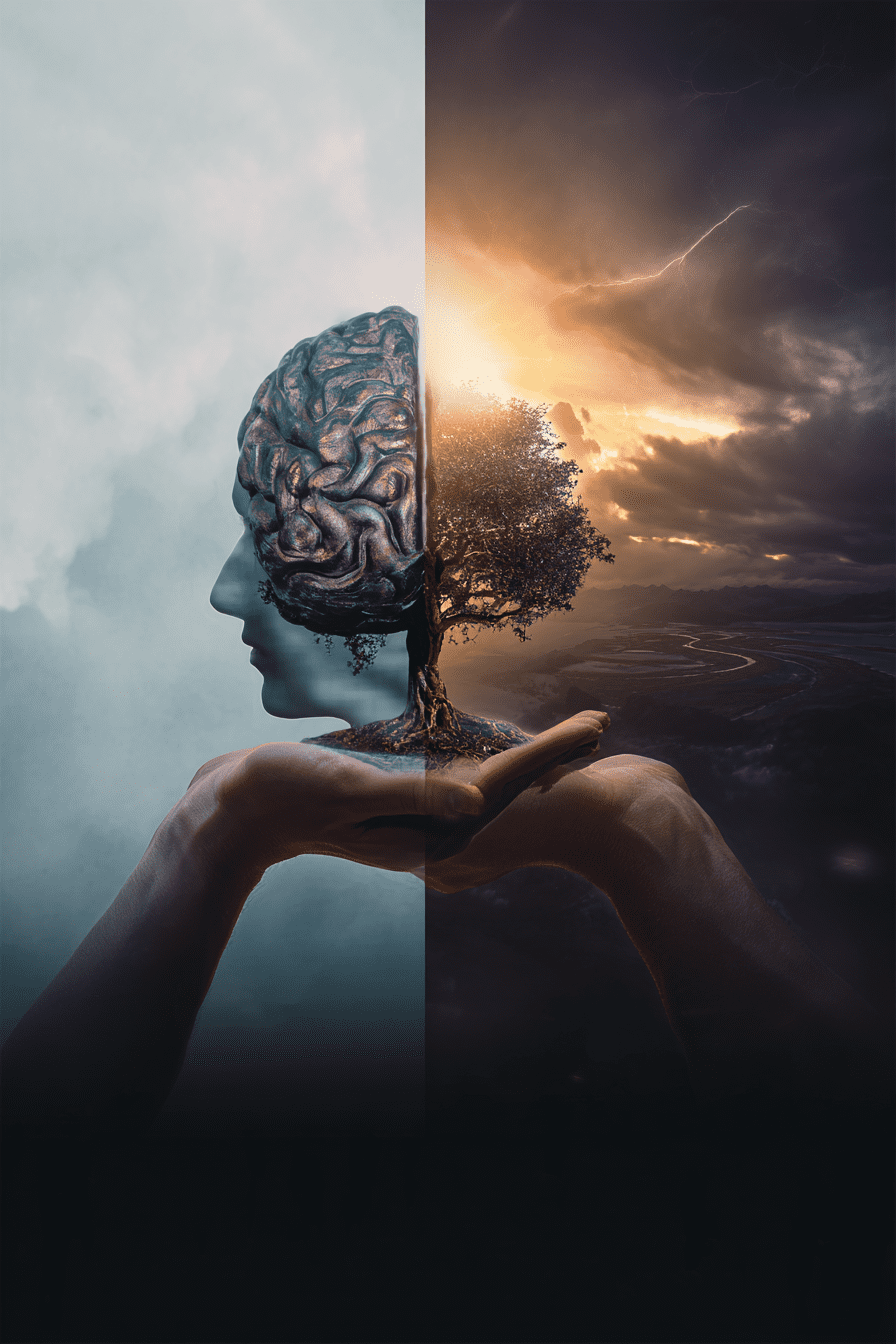
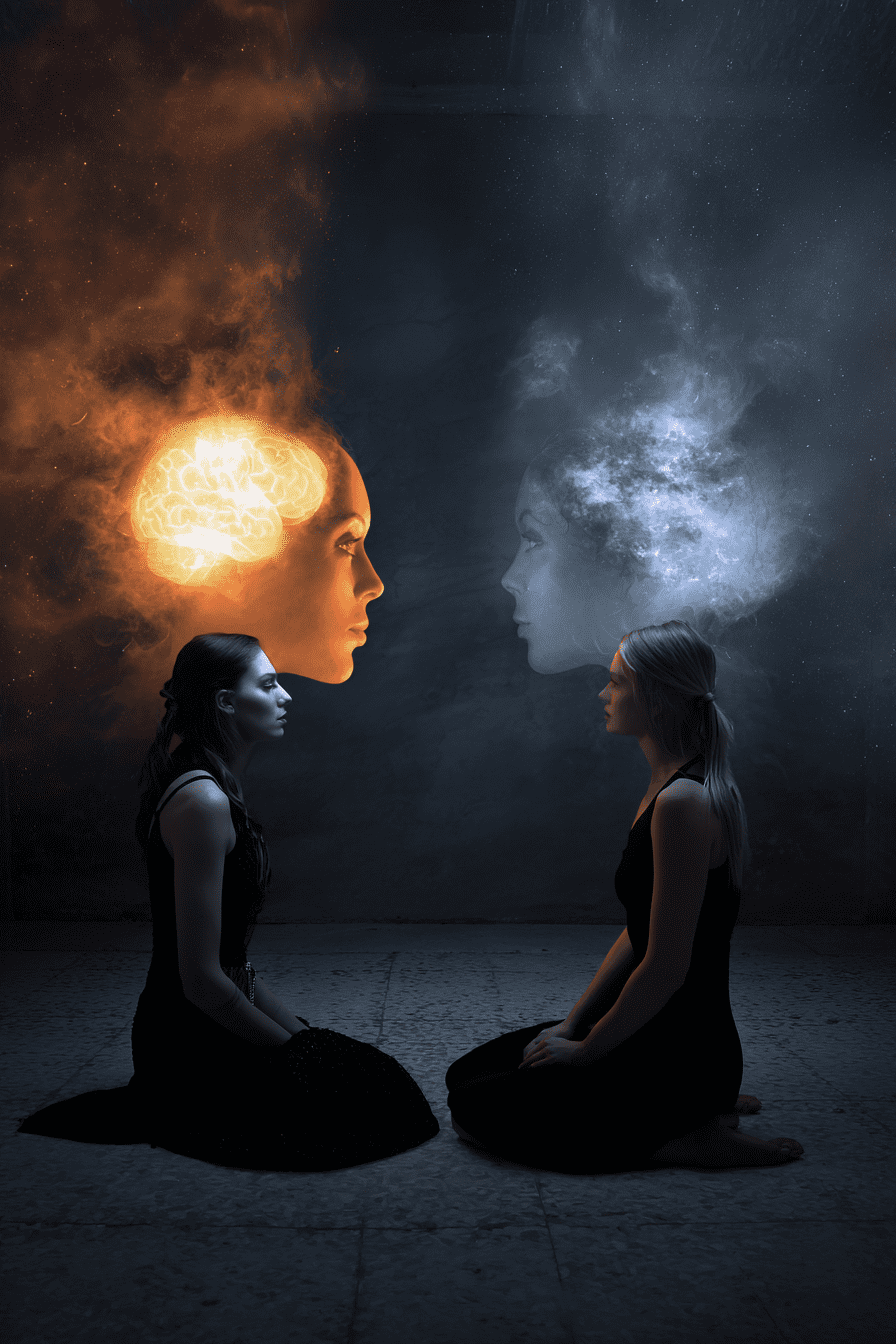
I often wonder why psychology, as helpful as it is, sometimes just isn’t enough. Why are we always searching for something more? I don’t see these thoughts as doubting spirituality, a belief in a soul, or something bigger than the material world. It’s more of a philosophical reflection, an attempt to understand why we need something deeper beyond psychology.
Psychology gives us a lot of tools—it teaches us how to handle our emotions, build healthy relationships, and change our lives for the better. But even with this knowledge and these techniques, I often feel like it’s just scratching the surface. Underneath, there’s something harder to put into words. Is that “something” spirituality? Maybe it fills a void that psychology can’t reach. Or maybe it was spirituality that inspired the psychological tools we use today.
I see great value in the practical advice psychology offers for daily life—how to love in a healthy way, how to set boundaries, how to have compassion for yourself and others. But when I use these techniques, I sometimes ask myself: why am I doing this? Why should I be a better person? Why should I care about my relationships? Psychology is great at answering “how,” but not always “why.” And it’s that “why” that seems crucial to me. Interestingly, some branches of psychology, like logotherapy, focus specifically on the search for meaning as a key to mental well-being. Viktor Frankl’s work, which I’ve written about here, highlights how finding purpose can help us navigate even the most challenging circumstances.
But is it still only psychology? When logotherapy encourages us to choose a positive and purposeful attitude, even in situations where suffering is unavoidable, doesn’t it already touch on spirituality? In my view, logotherapy stands at the boundary between psychology and spirituality. Choosing a positive and purposeful attitude in the face of suffering requires deep reflection on values, the meaning of life, and our place in the world.
Logotherapy, while rooted in psychology, ventures into the realm of spirituality because it answers the question “why be good?” not through external circumstances, but through the idea that life has meaning regardless of what happens around us. It’s not just about improving well-being—it’s about preserving our humanity and dignity, even in the darkest moments. This is where psychology and spirituality meet, offering a fuller picture of what it means to live a meaningful life.
This is where spirituality comes in, offering answers to questions about meaning and the values behind our actions. For those who don’t connect with spirituality, philosophy can be an equally valuable path to finding meaning and reflecting on life. Philosophy, especially its secular branches, provides tools to ask questions about values, ethics, and the purpose of existence. While many philosophies touch on spirituality, they don’t require belief in anything beyond the material world. Stoicism, existentialism, or humanism are examples of schools of thought that help us understand ourselves and find harmony in daily life through rational thinking and introspection. Like spirituality, philosophy encourages reflection on what truly matters, but it does so in a more universal way, accessible to everyone, regardless of their beliefs.
Psychology shows us how to be a better person; spirituality reminds us why it’s worth it. But that doesn’t mean spirituality doesn’t also teach us “how.” Spirituality also shows us the way to become a better person, often through reflection on values, the meaning of life—which we are discovering or creating—and our connection to something larger than ourselves. Psychology, on the other hand, provides the tools and techniques to put those values into practice.
Let me try to illustrate this with a personal example that shows how psychology and spirituality can work together in practice.
Forgiveness was one of the toughest challenges for me, but it was the combination of psychology and spirituality that helped me understand and get through it.
When my wife was leading a double life and left (My Crisis Story), I felt anger, resentment, and immense pain. Psychology taught me that forgiveness is an act for myself—not for her. By forgiving, I could free myself from the weight of those emotions, find peace, and start rebuilding my life. Spirituality, on the other hand, reminded me that forgiveness is more than just releasing pain. It’s an act of love and compassion that allows me to stay true to the values I believe in. Holding onto unforgiveness is hate, and hate pulls us away from what’s most important in life. By forgiving her, I’m not excusing what she did, but I’m choosing love and peace over anger and hate. Forgiving myself was just as important—accepting that I couldn’t control everything and giving myself permission to make mistakes. It was this combination of psychology and spirituality that helped me find balance and move on.
Spirituality allows me to feel unique, but thanks to psychology, I can experience this in a healthy way. In a world full of spiritual theories and practices, psychology helps me maintain balance and common sense. For me, being a “better person” doesn’t mean being better than others, but better for myself and for the world. Psychology helps me understand the mechanisms behind my emotions and behaviors, and spirituality gives it a deeper meaning, reminding me why it’s worth striving for that ideal.
Another important role of psychology for me is “grounding.” In a time when the internet is flooded with posts about “magical” affirmations, prophecies, or trendy spiritual theories, psychology helps distinguish what can genuinely support us from fleeting fads and illusions. Of course, everyone has the right to believe what helps them, but for me, a balance between being open to spiritual experiences and using common sense is key. Psychology explains the mechanisms behind affirmations or personal development, showing how these practices work on our minds in a realistic, not magical, way. This helps maintain a healthy distance from manipulation, fantasy, or dangerous influences, like those in cults. This shows how psychology, while modern, helps maintain a balance between spirituality and common sense by drawing inspiration from ancient philosophical and spiritual traditions.
When I look at the roots of psychology, I see how deeply they are connected to spirituality and philosophy. In the past, people didn’t have psychologists or therapists, but they asked themselves the same questions we do today: Who am I? Why do I suffer? How can I live a better life? They looked for answers in religion, philosophy, and spirituality. Ancient texts—the Vedas, the Bible, the Tao Te Ching—contain guidance on how to deal with emotions and live in harmony with others and oneself. These were the first guides to the human psyche, even if they weren’t called psychology back then. Philosophers like Socrates and Aristotle also wondered what it means to be human—their reflections combined intellectual and spiritual dimensions. The message from these traditions became the foundation of modern psychology.
I remember the first time I strongly felt that psychology and spirituality were inseparably linked. It was during a difficult time in my life when I felt lost and overwhelmed, dealing with the personal crisis I mentioned earlier. The challenges I was facing pushed me to seek help in psychology books that suggested how to manage emotions, set boundaries, and understand myself better. It was like learning a new language that allowed me to better express and understand my own experiences.
And yet, even with these tools, something was still missing. I knew how to act, but I didn’t understand why I should make the effort. Why is it worth trying to be a good person, even when faced with injustice? Why shouldn’t I feed my anger or hatred when someone hurts me?
That’s when I returned to spirituality. I started practicing mindfulness, introspection, and more often turned to questions of meaning: about love, consciousness, compassion, the nature of the soul. Psychology gave me the tools; spirituality opened me up to deeper motivations. I found inspiration for self-improvement in both scientific books and spiritual texts, but it was the spiritual ones that led me to reflect on the true meaning and value of my actions.
I also remember moments when, because of my wife’s behavior—her emotional chaos, depression, and risky decisions—I would sit down to meditate, full of anxiety and turmoil. Sometimes, even for a moment, a deep sense of peace would emerge—a quiet reminder that even difficulties have a place in my life for a reason, and that meaning can be found again, even in everyday tasks: caring for my children, ensuring their well-being, and supporting their development, especially when their mother was less available to them. My children became my most important motivation and source of meaning, and my own growth and inner strength proved essential to face this new role. These experiences didn’t remove the difficulties, but they gave me the strength to face them and take action.
These difficult experiences with my wife—her refusal of help and emotional chaos—taught me how important it is to combine psychology and spirituality. Psychology helped me understand the mechanisms of her behavior and my own emotions, while spirituality gave me the strength not to get lost in anger and resentment. This combination allowed me to focus on what was most important—caring for my children and building a new life.
Today, I see psychology and spirituality as two sides of the same coin. Psychology helps deal with everyday challenges, and spirituality gives them deeper meaning. Of course, this division is a simplification, as the two fields often overlap. But together, they create a more complete picture of our development, allowing us to live more consciously, authentically, and with a sense of purpose.
Maybe that’s why we need both—one without the other feels incomplete. Psychology provides the tools, and spirituality gives them meaning. Together, they help me better understand myself and act in line with my values. But that’s just my experience. What do you think? Share your thoughts in comments.
If this article has sparked your curiosity about how psychology and spirituality can work together, I encourage you to explore my other piece, Therapy and Spirituality: A Holistic Path to Inner Harmony. There, I dive deeper into how these two approaches complement each other, offering practical tools from psychology alongside the deeper meaning and purpose that spirituality provides. Together, they create a balanced and holistic path to personal growth and resilience.
If my writing has inspired or helped you, I would be grateful for your support.
Need support yourself? Discover how I can help you.
AI Disclosure
I see my thoughts as the essence, much like the soul, and AI helps me give them form. It supports me with research, translation, and organizing ideas, but every perspective is my own. Curious how I use AI? Read more here.