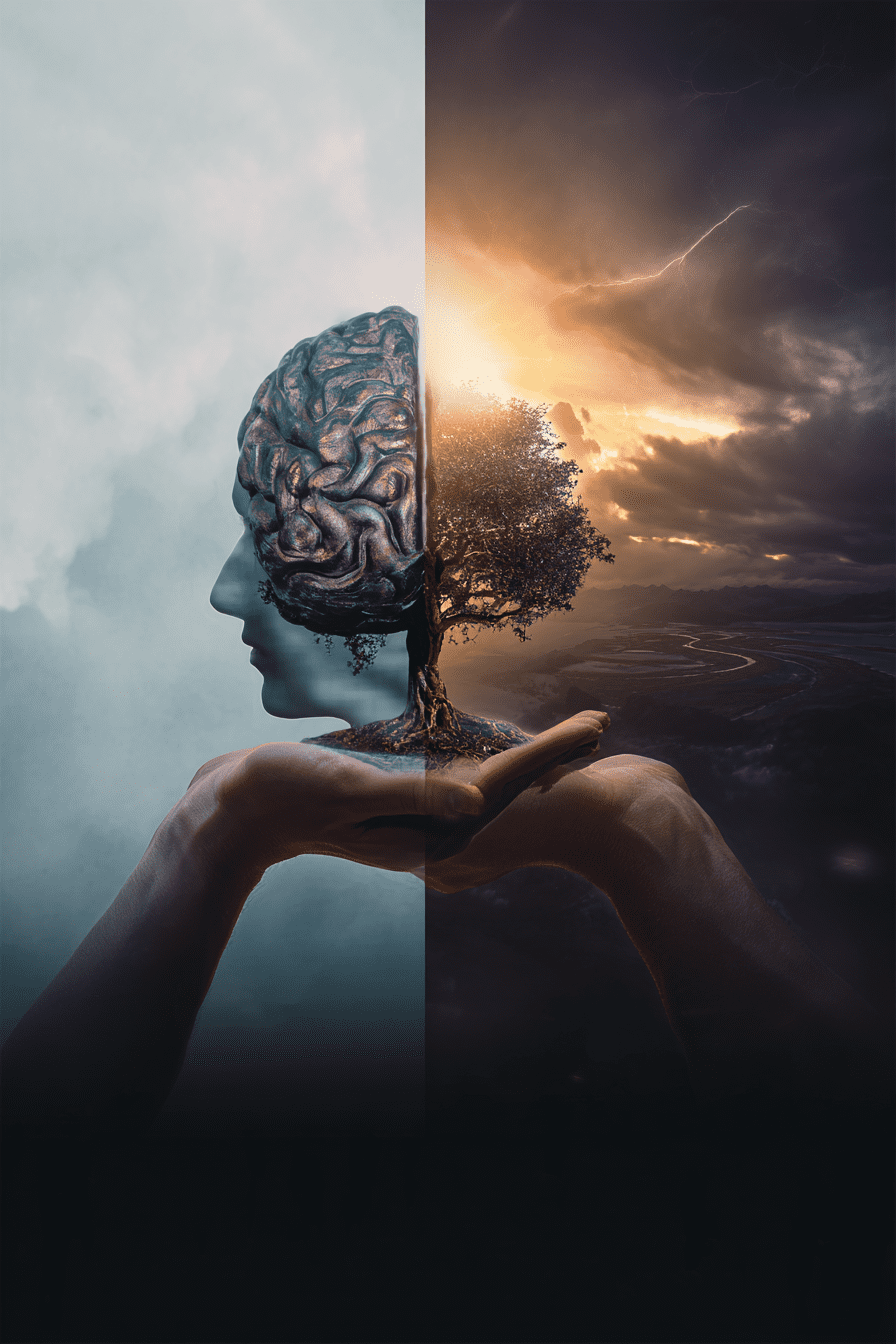
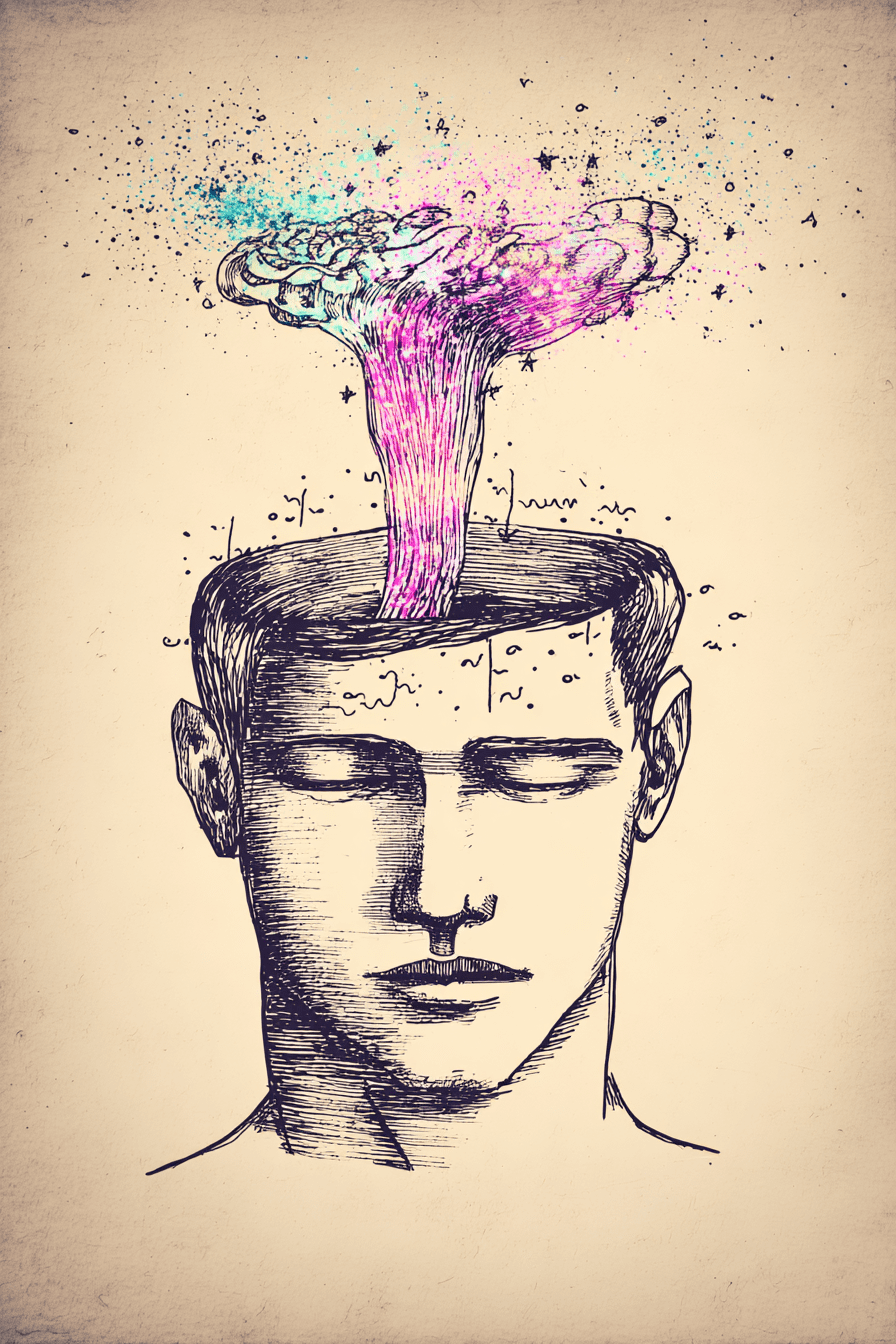
What do I believe? When it comes to God, do I believe in the Christian God, Allah in Islam, Yahweh in Judaism, Brahman in Hinduism, or maybe in the spiritual guidance of Buddhism? Do I believe that God is everything? Do I believe that God exists, or not? I don’t know. You can read more about my thoughts on God in Do I Believe in God?.
So how can I define my faith?
Maybe I’m an atheist?
An atheist doesn’t believe in God. Maybe everything we see is just matter, evolution, chance. But does that change anything? Does not believing in God mean I can’t believe in goodness, love, and respect? I don’t think so.
Or maybe I’m an agnostic?
An agnostic says, “I don’t know.” I don’t know if God exists or not. Maybe we’ll never find out. Maybe it’s a question without an answer. But do I have to know? Maybe it’s enough for me to be open to different possibilities.
Or maybe I’m a deist?
A deist believes that God exists but isn’t tied to any religion. It’s a higher power that created the universe but doesn’t interfere in our lives. Maybe God is just the beginning of everything, something that gave existence and then let us act on our own.
Or maybe I’m a pantheist?
Pantheism is the belief that God is everything that exists—the universe, nature, energy. Everything is connected, and God isn’t a someone, but rather an everything. It’s a beautiful thought that every particle of reality is part of something bigger.
Or maybe I’m a spiritual humanist?
I believe in people, in their potential, in our ability to be better. I believe in universal values like love, goodness, and respect. I don’t need religion to know it’s worthwhile to be a good person.
Or maybe I’m a mystic?
A mystic believes in something that goes beyond rational understanding. They believe in spiritual experiences, in intuition, in something we feel but can’t describe. Maybe this “something” is God?
Or maybe I’m a spiritual philosopher?
I like to ponder, analyze, and ask questions. Who are we? Why are we here? What happens after death? Maybe I’ll never find the answers, but the search itself is important to me.
Or maybe I’m a spiritual eclectic?
I draw inspiration from different traditions, religions, and philosophies. I don’t stick to one path because each has something valuable to offer. I create my own belief system that fits my life.
Or maybe my faith is New Age?
New Age is an approach that combines various spiritual traditions, philosophies, and practices. It’s a belief in energy, in the spiritual connection of everything, in the power of meditation, intuition, and self-development. New Age isn’t limited to one religion or system but draws from many sources to create something new. Maybe this is what’s closest to me—an openness to diversity and the search for my own path?
Or maybe I’m a little bit of everything?
You can call me New Age, you can call me an atheist, an agnostic, whatever—I don’t care, because it’s not important to me. I don’t know what my faith is either. Or rather, I don’t want to define myself. What for?
So what do I believe in?
I believe in universal values.
I believe I should be a good person. I believe there is something besides our physical bodies, something we call a soul, something spiritual. And even if there isn’t, I believe in myself and in people. I believe we can be better if we bring mindfulness and reflection into our lives.
I believe that if there is life after death, or if the theory of reincarnation is true, or even if there is nothing—we are born, we die, and we disappear, because there is nothing—then life should be lived well, in accordance with universal values.
What are these universal values?
I don’t think anyone has a ready-made list. Everyone has to discover their own. Many of them are probably shared—I think everyone would agree that goodness, love, and respect are the foundations. But each of us must learn to understand them for ourselves, to interpret them through the lens of our own life and experiences. It’s important to put them into practice, to apply them in our daily choices and relationships with others.
Because values are not just words—they are the way we live. Universal values, in my opinion, are what give meaning to our existence and allow us to build better relationships with others and with ourselves.
What else do I believe?
I believe in enlightenment, which might have been manifested in the writing of holy books in various religions, but also in the genius of someone like Einstein.
And maybe my inspiration for this search—Amit Goswami—is another enlightened person? After all, he had a dream. In his memoirs, Amit Goswami described a dream that was crucial for his research on consciousness. In that dream, he heard a clear message:
“The Tibetan Book of the Dead is correct. It’s your job to prove it!”
Goswami called this one of the “big dreams,” which, as Carl Jung claimed, can change a life forever. This experience inspired him to a deeper understanding and scientific study of consciousness, reincarnation, and life after death, which he later described in his books.
I believe that such big dreams can be a guide for us, an inspiration to search, to ask questions for which we may not always find answers. Maybe the meaning is hidden in these questions, in the journey itself? It’s not about knowing everything, but about being open to the unknown, to what might surprise us.
Maybe enlightenment isn’t just about big discoveries, but also about small moments when we feel we understand something better—about ourselves, about others, about the world. Maybe it’s the moments when we feel we are part of something bigger, even if we can’t name it.
I believe that life is a constant search—for meaning, for values, for truth. And even if we never find one final answer, the search itself has value. It shapes us, teaches us, and allows us to be better people. When I say constant, I don’t mean doing it instead of dealing with daily life, not as an escape from life, but a search woven into everyday reality through mindfulness, reflection, books, conversations, etc.
Maybe that’s why I don’t want to define myself. I don’t want to lock myself into one label, one belief system. I’d rather be open, I’d rather ask questions, I’d rather search. Because there is something beautiful in this search—something that makes life meaningful, even if we don’t have all the answers.
If you want to read more of my reflections on spirituality and the search, I invite you to read How I See Spirituality.
If my writing has inspired or helped you, I would be grateful for your support.
Need support yourself? Discover how I can help you.
AI Disclosure
I see my thoughts as the essence, much like the soul, and AI helps me give them form. It supports me with research, translation, and organizing ideas, but every perspective is my own. Curious how I use AI? Read more here.