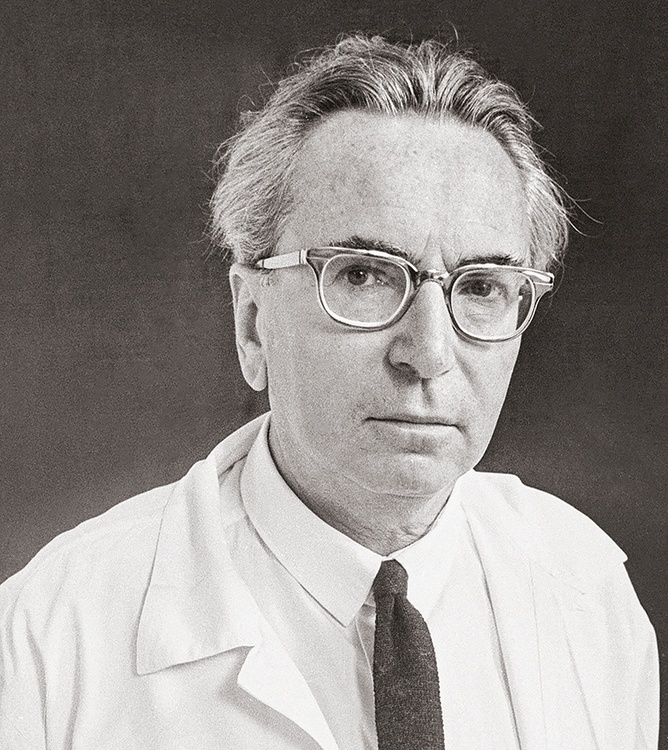
When I look at the world today—full of constant hustle, digital noise, and the anxiety of tomorrow—I often find myself returning to stories that seem impossible. To people who, in the midst of the deepest darkness, managed to ignite a light. One such figure I revisit regularly for spiritual grounding is Viktor Frankl.
Before we go further, it is worth pausing for a moment on the subject of concentration camps, especially for international readers who may not know all the historical details. Concentration camps were places of forced detention established primarily by the Nazi regime in Germany during World War II. Hundreds of thousands of prisoners—including Jews, Poles, Roma, people with disabilities, and political opponents—experienced starvation, slave labor, violence, inhumane conditions, and systematic extermination there. The most infamous of these places was Auschwitz-Birkenau, where millions of lives were lost. It was there that Viktor Frankl experienced the deepest suffering, and it was there that he began to develop his reflection on the meaning of life even in the face of absolute evil.
You might have heard of him. Austrian psychiatrist, neurologist, founder of logotherapy. But above all—a man who walked through the hell of concentration camps, including Auschwitz, and emerged not with hatred, but with a profound conviction that life has meaning. Always. Under any circumstances.
His book, Man’s Search for Meaning, isn’t just a read. It’s a survival manual for the soul. Today, I want to share with you what Frankl taught me about finding meaning when the world around us feels like it’s falling apart.
Suffering as an Inhuman Teacher
Imagine losing everything. Your job, your life’s work, your home, your clothes, and finally—most terrifying of all—your loved ones. You become a number tattooed on a forearm. Every day is a battle for a crust of bread, to avoid a beating, to survive just one more hour.
In such conditions, most of us would break mentally. It’s only natural. Yet Frankl, observing himself and his fellow prisoners, noticed something extraordinary. Those who survived were rarely the physically strongest. The survivors were those who had a “why.” Those who held a goal in their minds, an image of a future for which the present suffering was worth enduring. Those who held onto hope for a better tomorrow.
Any one of us can find ourselves in a situation that feels hopeless, where everything around us seems to be shattering into pieces. In such moments, however, it is crucial to remember the power of our internal motivation and our capacity for survival.
Suffering is often an unavoidable part of life. But it is up to us what meaning we assign to it. It can be an inhumane prison for us, but it can also become an inspiration for change, for a better future.
Frankl believed that suffering, while painful, could be transformed into something meaningful. As he wrote:
“In some ways suffering ceases to be suffering at the moment it finds a meaning, such as the meaning of a sacrifice.”
This perspective allowed him to endure unimaginable hardships and find purpose even in the darkest moments.
Some people possess a natural strength and determination; others have to find it. There is no single universal recipe for discovering your “why.” For some, reflecting on their core values helps. For others, visualizing a goal or dream they want to achieve in the future does the trick.
For Frankl, that goal was the desire to rewrite the manuscript of his book, which had been taken from him upon arrival at the camp, and the hope of reuniting with his wife. It was this thought that kept him alive when his body wanted to give up.
Logotherapy: Healing the Soul with Meaning
This experience became the foundation of his therapeutic method, which he called logotherapy (from the Greek logos—meaning). While Freud believed humans are driven by the pursuit of pleasure, and Adler believed it was the pursuit of power, Frankl posed something different: our deepest need is the drive for meaning.
When we feel emptiness, when a crisis hits us—whether it’s job loss, a breakup, or facing illness—we often ask: “Why me?” Frankl suggests flipping the perspective. Don’t ask what you expect from life. Ask what life expects from you in this specific moment. This question allows us to focus on a goal that is important to us and gives our life meaning.
According to Frankl, we cannot avoid suffering and difficulties in life. But how we react to them impacts our inner freedom and our ability to find meaning in the situation we are experiencing. We can choose our attitude toward suffering and transform it into something positive—for example, a lesson that allows us to become a better version of ourselves.
If you’re curious to learn more about the principles and practical applications of logotherapy, I’ve explored this in detail in another article: Logotherapy Explained: Viktor Frankl’s Path to Finding Meaning in Life.
Lessons on Freedom in Captivity
There is one quote by Frankl that I keep written in my notebook and return to in difficult moments. It goes like this:
“Everything can be taken from a man but one thing: the last of the human freedoms—to choose one’s attitude in any given set of circumstances, to choose one’s own way.”
It’s a powerful thought. Even in the camp, where guards decided on life and death, they couldn’t take one thing away from the prisoners: how they reacted to their suffering. Would they succumb to animal instincts, or would they preserve a shred of dignity, sharing their last crumb of bread with someone even hungrier?
Frankl himself shared his bread with others, even when he was starving. He also observed how some prisoners maintained their inner dignity by helping others, offering words of encouragement, or simply refusing to let the inhumanity of the camp strip them of their humanity.
In our much safer world, this lesson is just as relevant. We can’t control traffic jams, political decisions, internet trolls, or getting laid off. That is our “chaos.” But we have absolute, inalienable freedom in deciding how we respond. Will we let stress and bitterness destroy us, or will we treat it as a challenge?
Practical Applications of Logotherapy
Frankl believed that meaning is the cornerstone of human resilience. He famously wrote:
“Life is never made unbearable by circumstances, but only by lack of meaning and purpose.”
This insight forms the foundation of logotherapy and offers a practical framework for finding meaning, even in the most challenging situations.
Finding meaning in difficult situations:
- Losing a job: Instead of asking, “Why did this happen to me?” ask, “How can I use this time to develop new skills or discover new passions?”
- Health challenges: Even in illness, meaning can be found by supporting others, sharing experiences, or deepening one’s spirituality.
Questions to ask yourself:
- “What is life asking of me right now?”
- “How can I bring meaning to this situation?”
Exercise:
Write down three things that give your life meaning and reflect on how you can nurture them daily.
How to Find Meaning Today?
Frankl doesn’t just leave us with theory. He points to three paths we can take to find a sense of meaning, even when things are tough:
- Creating and Doing. Doing something that leaves a mark. This could be your professional work, but just as easily raising children, tending a garden, or helping a neighbor.
- Experiencing. Experiencing something (art, nature) or encountering another human being (love). Frankl wrote that love is the only way to grasp another human being in the innermost core of their personality.
- Attitude Toward Suffering. This is the hardest, but most significant path. If we cannot change the situation causing us pain (an incurable disease, a loss), we are challenged to change ourselves. Suffering ceases to be suffering the moment it finds a meaning—such as the meaning of a sacrifice or spiritual growth.
Frankl emphasized that meaning is not a one-size-fits-all concept. He explained:
“For the meaning of life differs from man to man, from day to day and from hour to hour. What matters, therefore, is not the meaning of life in general but rather the specific meaning of a person’s life at a given moment.”
This perspective encourages us to seek meaning in the present, adapting to the unique challenges and opportunities of each moment.
Practical Exercise:
For one week, write down one situation each day where you found meaning or value, even in difficult circumstances.
Your “Will to Meaning”
We live in times Frankl called an “existential vacuum.” We have the means to live, but often nothing to live for. We have comfort, yet we feel empty. Boredom and apathy are the diseases of our civilization.
Reading Frankl teaches humility, but it also gives incredible strength. It makes us realize we are not victims of fate. We are co-creators of our reality.
Frankl’s philosophy is rooted in the belief that we are not passive victims of our circumstances. As he wrote:
“Man is not fully conditioned and determined but rather determines himself whether he gives in to conditions or stands up to them.”
This idea empowers us to take responsibility for our lives and actively shape our reality, even in the face of adversity.
If you are going through your own personal crisis right now, try looking at it through the eyes of this Viennese psychiatrist. Ask yourself:
- What is this situation calling me to do?
- What attitude can I adopt to maintain respect for myself?
- Who or what makes it worth it for me to survive this time?
Meaning isn’t invented while sitting on the couch. Meaning is discovered. Sometimes in a beautiful sunset, and sometimes, paradoxically, right in the middle of a life storm. Frankl proved that light can be found even where darkness should theoretically reign supreme. And that is a lesson worth holding onto.
Conclusion
Viktor Frankl’s life teaches us that even in the darkest moments, we have the power to choose our attitude and find meaning. His story is a testament to the resilience of the human spirit and the profound impact of holding onto a “why” in the face of unimaginable suffering. Frankl proved that meaning is not something handed to us—it is something we discover, even in the midst of chaos. His legacy reminds us that light can always be found, even where darkness seems to reign.
If my writing has inspired or helped you, I would be grateful for your support.
Need support yourself? Discover how I can help you.
AI Disclosure
I see my thoughts as the essence, much like the soul, and AI helps me give them form. It supports me with research, translation, and organizing ideas, but every perspective is my own. Curious how I use AI? Read more here.