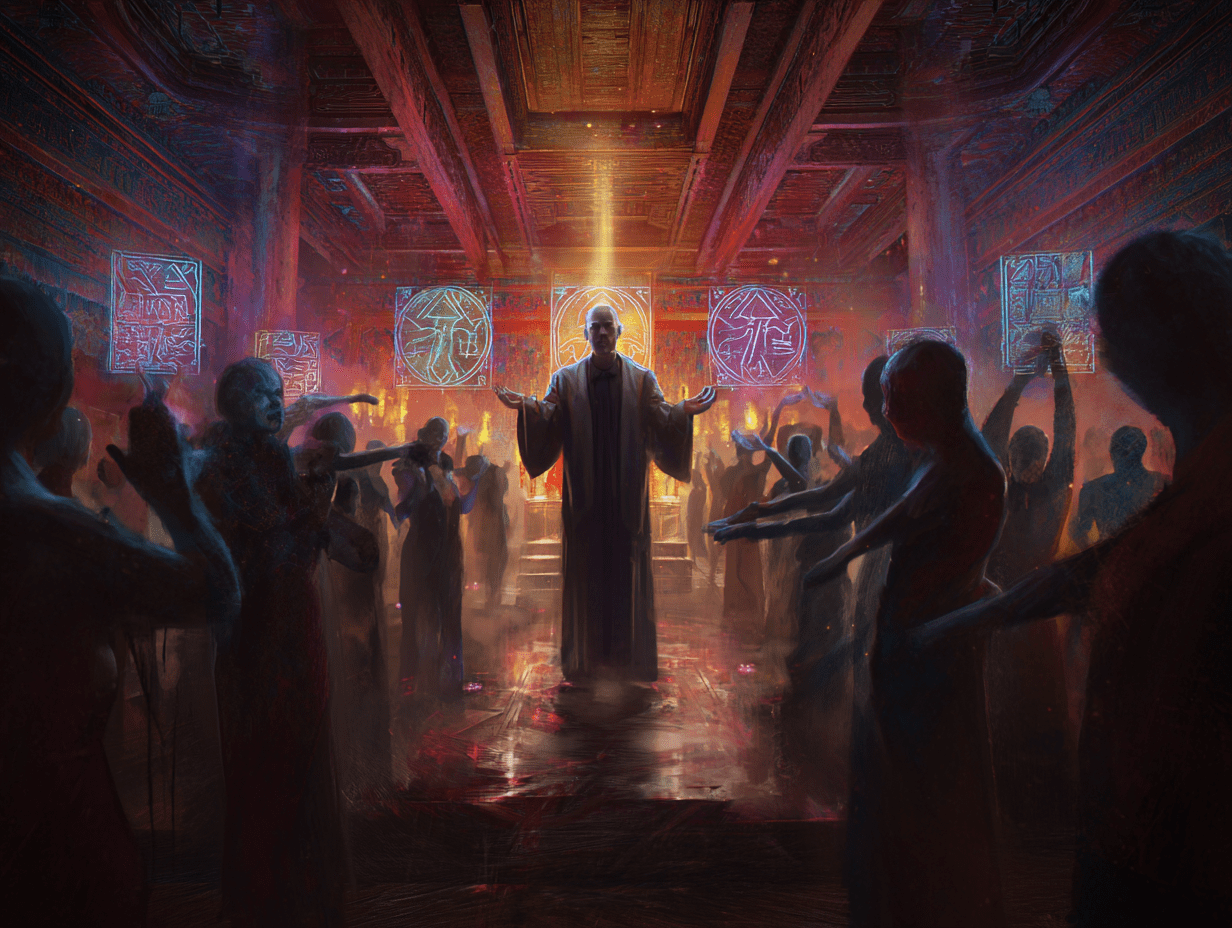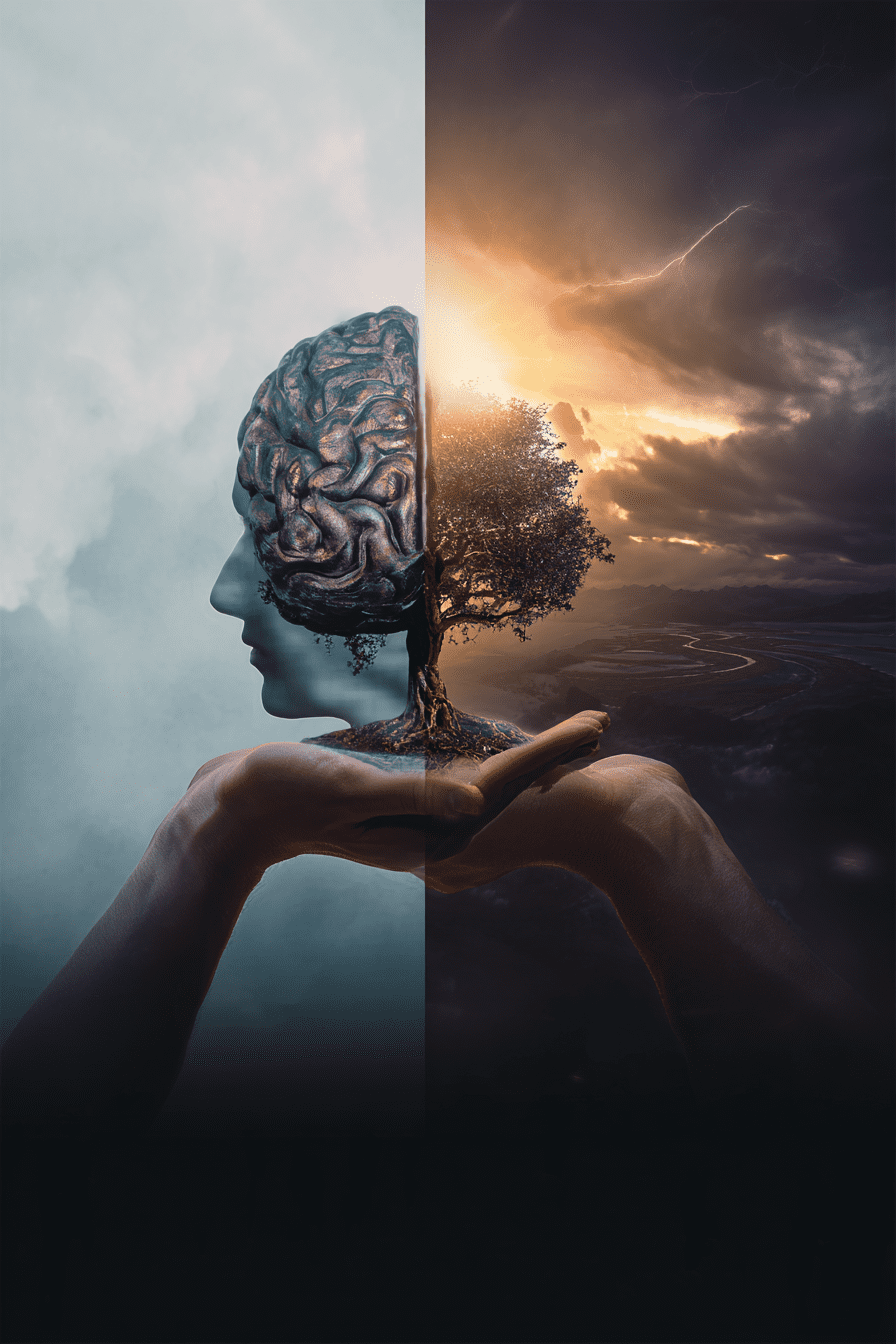

Have you ever experienced a moment where the boundary between “you” and the rest of the world simply dissolved? A moment of absolute clarity where time stopped mattering, and you felt an inexplicable unity with something far greater than your everyday ego? That feeling, often hard to put into words, has been with humanity for millennia. Mystics, poets, and sages call it enlightenment, nirvana, or a touch of the divine, but today, someone else is looking at it with equal fascination: neurobiology.
We often ask ourselves if spirituality is something external, or perhaps a process happening deep within us. In this post, we’ll embark on a fascinating journey to the frontier of two worlds: ancient wisdom and modern science. We will explore exactly what happens inside our heads when we touch infinity, and try to answer one of the most important questions: are mystical experiences just a biochemical trick of the mind, or is the brain a precise instrument—an antenna tuned to receive universal consciousness?
I invite you on a journey into the depths of your own mind to see if science can explain what has remained a mystery of the soul for ages.
What Are Mystical Experiences? From Whispers of the Soul to Universal Truths
Before we dive into brain maps, it’s worth pausing for a moment to understand what these mysterious “mystical experiences” actually are. Although they sound esoteric, they aren’t reserved solely for saints, monks meditating in seclusion, or shamans. This is a universal human experience that can touch any of us—sometimes when we least expect it.
Simply put, a mystical experience is a state of consciousness where the boundaries of our “self” blur. It’s a moment when our daily perception of reality, based on separation and ego, gives way to a profound sense of unity with the surrounding world. The philosopher William James, one of the first researchers of this phenomenon, described these states as being:
- Ineffable: Hard to describe in words; they escape logic and language.
- Noetic: They provide a sense of deep insight into the nature of reality.
- Transient: usually lasting from a few minutes to a few hours.
- Passive: We feel as if something is happening through us, rather than by us.
The Universal Language of Spirit
Regardless of culture, era, or belief system, descriptions of these states are strikingly similar. The Sufi mystic Rumi wrote about “dissolving in the Ocean of Love,” which corresponds perfectly with the Buddhist concept of Nirvana—the extinguishing of the ego and union with the void. Contemporary spiritual teacher Eckhart Tolle speaks of the “power of now,” a state where the mind goes quiet and we experience being in its pure form.
This shows that mystical experiences don’t belong to any specific religion. They are more of a common denominator of human spirituality. They appear in Christianity (the experiences of St. Teresa of Ávila), Judaism (Kabbalistic devekut—clinging to God), Hinduism (samadhi), and indigenous traditions worldwide. As I wrote in the article “Universal Consciousness: Is the Universe God?”, mystical experiences can be seen as moments of contact with a universal consciousness that permeates everything that exists. It’s as if human consciousness, regardless of cultural programming, has a built-in capacity to transcend its limitations and touch something fundamental.
These moments of deep connection leave a lasting mark. They often lead to a fundamental shift in how we perceive ourselves and the world, bringing an inner peace and sense of meaning that is hard to find in the daily hustle. So, since this experience is so deeply human, science couldn’t just walk past it indifferently. It started asking questions: what is really happening inside our heads when we touch infinity?
The Neurobiology of Transcendence: What Happens in the Brain When the “Self” Disappears?
When a mystic speaks of “dissolving the ego,” a neurobiologist sees something completely different, though equally fascinating. Instead of a metaphorical description, science observes concrete changes in the electrical and chemical activity of our brain. It turns out that the state of transcendence is not magic, but a precisely orchestrated neuronal spectacle.
Silence in the Default Mode Network (DMN)
A key player in this process is the Default Mode Network (DMN), a brain region often called the “ego center.” It’s responsible for our sense of “self,” daydreaming, and overthinking. Essentially, it’s the internal narrator that constantly comments on our reality.
Research, including studies on experienced meditators and people under the influence of psychedelic substances (like psilocybin), shows something remarkable: during deep mystical states, DMN activity drops drastically (source: Nature Study on DMN and Psychedelics). When the “ego command center” goes quiet, the boundaries separating us from the external world vanish. The brain stops filtering reality through the lens of “mine” and “me,” opening up to a raw, unfiltered experience of being. This is the neurological explanation for the feeling of oneness with the Universe.
The Chemistry of Awe: Serotonin and Dopamine
Mystical experiences are also a powerful chemical storm. The brain is flooded with neurotransmitters that alter our perception:
- Serotonin: Often called the happiness hormone, in this context, it works deeper. It influences visual perception and the sense of meaning. It’s what makes the world suddenly seem more “alive,” and a simple leaf on a tree takes on profound spiritual significance.
- Dopamine: Responsible for the reward system, but during mystical states, its role goes beyond simple pleasure. It triggers feelings of bliss, euphoria, and deep awe, which mystics describe as religious ecstasy.
Source: NCBI Study on Neurotransmitters.
But how can we consciously influence these processes? Practices like gratitude journaling and mindfulness meditation have been shown to naturally boost serotonin and dopamine levels, creating a foundation for more frequent moments of clarity and joy. These small, intentional actions can help us tap into the same neurochemical pathways activated during profound mystical states.
Understanding the role of serotonin and dopamine highlights how these small, intentional habits can naturally enhance neurochemical processes, making mystical states more accessible in daily life.
The Dance of Brain Waves
Changes also occur at the level of brain waves—the rhythm at which our neurons communicate. In a normal waking state, Beta waves dominate (activity, analysis). However, during deep meditation or prayer, the brain tunes into different frequencies:
- Theta Waves (4-8 Hz): Linked to deep relaxation, access to the subconscious, and creativity. This is a state that often accompanies “aha!” moments or sudden spiritual insights.
- Gamma Waves (above 30 Hz): The fastest brain waves, associated with hyper-focus and the integration of information from different brain areas. In experienced Buddhist monks, incredibly high amplitude Gamma waves have been observed, suggesting a state of heightened awareness and mental clarity (source: NCBI Study on Gamma Waves).
As I wrote in “Feeding Your Brain with Thoughts”, our thoughts and spiritual practices have a profound impact on brain function, which is confirmed by research on meditation and neuroplasticity. Practices such as meditation, breathwork, or contemplative prayer act like a “gym for the brain,” training it to enter these specific states. Science shows us, then, that mysticism has its biological reflection—our brain is essentially anatomically designed to experience great things.
Practical Applications of Neuroscience in Daily Life
Now that we’ve explored the fascinating interplay between neuroscience and transcendence, you might wonder: how can this knowledge be applied in everyday life? Here are some practical ways to harness the power of your brain to enhance your well-being and deepen your connection to the world around you:
- Meditation for Stress Reduction: Regular meditation helps quiet the Default Mode Network (DMN), reducing overthinking and stress. Start with just 5 minutes a day, focusing on your breath.
- Mindfulness in Daily Activities: Practice mindfulness by fully engaging in simple tasks, like eating or walking. This strengthens your brain’s ability to stay present and reduces anxiety.
- Breathwork for Emotional Balance: Techniques like the 4-7-8 breathing method activate the parasympathetic nervous system, calming your mind and body.
- Learning New Skills: Engage in activities like learning a new language or playing an instrument to boost neuroplasticity and keep your brain sharp.
- Gratitude Journaling: Writing down three things you’re grateful for each day rewires your brain to focus on positivity, enhancing overall happiness.
By incorporating these practices into your routine, you can train your brain to not only function better but also to experience deeper states of connection and peace.
Experiment with these techniques to find what resonates most with you, and remember that consistency is key to unlocking their full potential.
Biology or Something More? The Age-Old Dilemma
Since we can pinpoint which neurons “light up” during ecstasy and which neurotransmitters trigger a sense of unity, does that mean God, the Soul, or Universal Consciousness are merely products of our biology? This is a question that divides thinkers into two camps and leads us to a fascinating intersection of science and philosophy.
From a strict materialist perspective, the answer seems simple: it’s all in your head. Since stimulating the right brain areas (for example, using Dr. Michael Persinger’s “God Helmet”) can induce a feeling of a higher power’s presence, mysticism could be reduced to a specific glitch or function of our nervous system. For a materialist, a mystical experience is like a dream—real in feeling, but non-existent outside the dreamer’s mind. It’s a tempting explanation because it strips the world of mystery and gives us a sense of control.
Mystical experiences don’t always require psychedelics or external tools. Practices like deep meditation, breathwork, or even spending time in nature can create similar states of transcendence. Whether it’s a quiet moment of mindfulness or an immersive experience in nature, these methods remind us that the path to transcendence is as diverse as the individuals who walk it. The key is patience, openness, and a willingness to explore.
However, this reductionist vision has its limits. Does the fact that we can describe the chemistry of love (dopamine, oxytocin, vasopressin) make love any less of a real, profound experience that gives meaning to our lives? Does knowing the anatomy of the eye make the beauty of a sunset any less real?
The Brain as an Antenna
Here enters a perspective that is particularly close to my heart—the concept of the brain as a receiver, not a creator of consciousness. Imagine your brain is like a radio receiver. When you listen to music, you know that complex electronic processes are happening inside the radio. If you damage the radio, the music will stop or become distorted. But does that mean the music is created inside the radio? Of course not. The radio merely captures a signal that exists independently of it.
In this metaphor, often cited by Aldous Huxley among others, our brain (and especially the aforementioned DMN) acts as a “reducing valve.” Its job is to filter the vastness of universal consciousness into a narrow stream that allows us to survive in the physical world. Mystical experiences—whether induced by meditation or other factors—would then be a momentary loosening of this valve. It’s the moment when the “radio” stops picking up just one station (our ego) and opens up to the full spectrum of waves.
This approach doesn’t negate neurobiological discoveries. On the contrary, it gives them deeper meaning. The brain changes we observe might simply be the biological trace of contact with something that transcends our physicality. As I wrote in the article Spirituality in the Physical World: How I Found My Footing, the boundary between the material and the spiritual might be much thinner than we think. Perhaps our biology doesn’t “produce” God but was evolutionarily designed to be able to experience Him.
So, an open question remains, one that everyone must answer in their own heart: do you feel like a machine generating illusions, or like an instrument tuned to the music of the spheres?
Mysticism in Practice: How to Open the Doors of Perception?
Since we already know that our brains are equipped with the right hardware to receive the “signal” of transcendence, a natural question arises: how do we tune it? Do we have to wait for a spontaneous flash of enlightenment, or are there proven methods to invite these experiences into our lives? The answer is yes, although this path requires patience and humility.
The most accessible and safe tool remains meditation and mindfulness. Here are some practical steps to get started:
- Mindfulness Exercise: Sit quietly for 5 minutes, focus on your breath, and observe your thoughts without judgment.
- Use Apps: Apps like Headspace or Calm can guide you through the process, making it easier to build a consistent habit.
- Explore Group Sessions: For those seeking a more dynamic approach, consider exploring guided meditations or group sessions to deepen your practice.
Another interesting path is breathwork, for example, Holotropic Breathwork. This technique, developed by Stanislav Grof, uses accelerated breathing and music to induce altered states of consciousness without chemical substances (source: Holotropic Breathwork Research). While Holotropic Breathwork can be a powerful tool, it’s important to approach it responsibly, ideally under the guidance of a trained facilitator, to ensure a safe and meaningful experience.
It is impossible to ignore a topic that is currently experiencing a renaissance in the scientific world: psychedelics. Substances like psilocybin (found in mushrooms) or DMT are currently being intensely studied for their therapeutic potential in treating depression or end-of-life anxiety. Research from Johns Hopkins University shows that administering psilocybin in controlled conditions can induce mystical experiences in subjects, which they rate as some of the most important events of their lives (source: Johns Hopkins Study on Psilocybin). These are powerful tools that can shut off the brain’s “reducing valve” almost instantly. However, a big “but” appears here. Shortcuts can be tempting, but they carry risks. Spirituality is not an extreme sport, and striving for intense sensations without proper preparation and integration can end in confusion rather than enlightenment. The brain is a delicate instrument—it’s better to tune it with sensitivity than to hit it with a hammer in hopes of hearing celestial music.
Gratitude also plays a key role in opening the doors of perception. Here’s how you can incorporate it into your daily life:
- Daily Gratitude Practice: Write down three things you’re grateful for each day.
- Activate the Brain’s Reward System: Practicing gratitude boosts dopamine and serotonin levels, fostering positivity and creating a fertile ground for deeper insights (source: Study on Gratitude and Brain Chemistry).
As I wrote in the article „Spiritual Practices for Everyday Resilience”, it is consistency—those small, daily moments of pause—that slowly sculpts our brain, making it more susceptible to deeper insights.
Remember, small, daily efforts can lead to profound transformations over time. Whether it’s a moment of stillness, a deep breath, or a heartfelt expression of gratitude, each small action brings you closer to the infinite potential within.
Mystical Experiences and Daily Life: How to Bring Heaven Down to Earth?
A mystical experience, no matter how profound, is only a fleeting moment. The real art begins later—when we return to the world of bills, traffic jams, and daily chores. How do we integrate this insight into the nature of reality with our lives so that it doesn’t become just a distant, sentimental memory?
The most important change that occurs after an authentic experience of transcendence is a reevaluation of priorities. Suddenly, it turns out that many things we fought so fiercely for—social recognition, material success, being right in arguments—lose their significance. In their place appears a desire to live in harmony with a deeper truth: a desire for authenticity, compassion, and inner peace. We begin to see that our relationships with others are not a battlefield for the ego, but a chance for connection and mutual support.
This is exactly where intention and awareness play a key role. As I wrote in the article on intention, energy, and awareness, what we focus our attention on grows in strength. After experiencing oneness, intention becomes less about “getting” something and more about “being” someone—more present, kind, and aware. We begin to cultivate within ourselves the states we knew in moments of elation, trying to bring them into every, even the simplest, activity.
I remember a moment years ago when, during a solitary hike in the mountains, tired and overwhelmed by personal problems, I sat on a rock. Looking at the valley stretching out before me, I suddenly felt the weight of my entire “self”—my stories, fears, and ambitions—simply slide off me. For a few minutes, I was just seeing, just breathing, a part of that landscape. Nothing more. This experience didn’t magically solve my problems, but it gave me something far more valuable: perspective. I understood that I am something more than the sum of my worries. Since then, when life gets too heavy, I return in my thoughts to that rock. Not to escape, but to remind myself that beneath the surface of daily chaos, a river of peace always flows. And that I can tap into it at any moment.
Conclusion: The Brain as a Tool for Transcendence
Our journey through the corners of neurons and the vastness of the spirit is coming to an end, but the questions we asked ourselves remain open. Science has shown us that the brain is not an obstacle on the path to spirituality, but its physical foundation. It is a fascinating tool that allows us—biological beings—to touch the Infinite.
We don’t have to choose between the microscope and faith. Neurobiology and mysticism are two languages describing the same breathtaking reality. Understanding the mechanisms taking place in our heads doesn’t strip transcendence of its magic; on the contrary, it makes it even more extraordinary, showing that the capacity to experience God (or the Universe) is written into our DNA.
I encourage you to explore on your own. Observe your mind, practice mindfulness, and don’t be afraid to ask difficult questions. Your own answer is the most important one.
Mystical experiences are not out of reach. Simple practices like starting with 2-5 minutes of meditation, exploring breathwork, or spending time in nature can open the door to profound states of connection. Gratitude, too, plays a key role—activating the brain’s reward system and fostering positivity. These small, intentional actions can lead to transformative changes over time.
Remember, the journey to transcendence begins with a single step.
Whether it’s a moment of stillness, a deep breath, or a heartfelt expression of gratitude, each small action brings you closer to the infinite potential within.
And you, how do you feel about it? Do you think mystical experiences are just a fascinating chemical game in the brain, or perhaps something that goes far beyond biology? Share your thoughts in the comments below—I’d love to know your point of view.
If my writing has inspired or helped you, I would be grateful for your support.
Need support yourself? Discover how I can help you.
AI Disclosure
I see my thoughts as the essence, much like the soul, and AI helps me give them form. It supports me with research, translation, and organizing ideas, but every perspective is my own. Curious how I use AI? Read more here.