The attic smelled of lavender and old paper, a scent that Clara always associated with secrets. She hadn’t stepped foot in her grandmother’s house for years, not since the funeral. But now, tasked with clearing out the estate, she found herself wading through generations of memories packed into cardboard boxes.
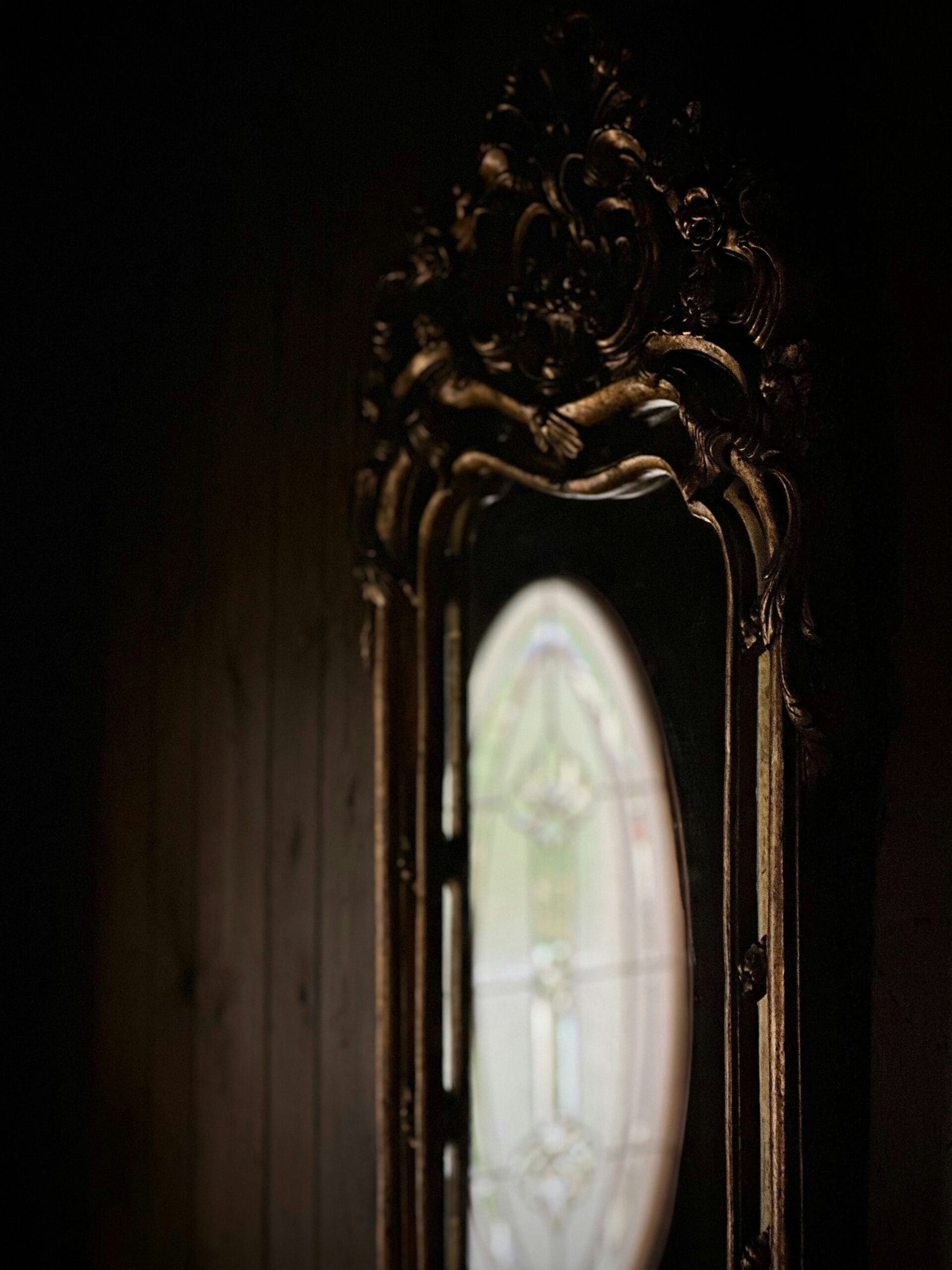
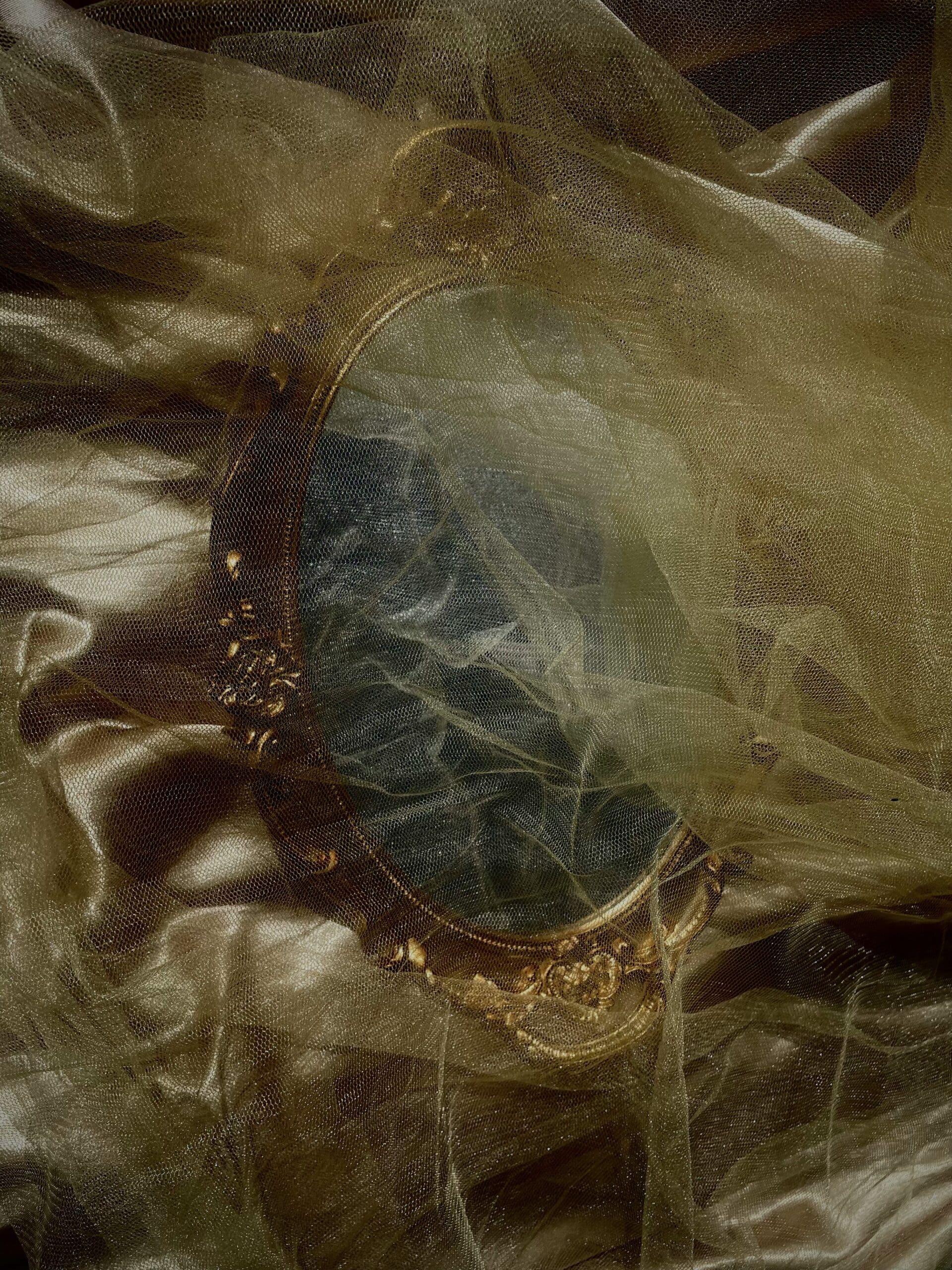
The afternoon light filtered through the dusty window, illuminating floating motes of dust that danced like tiny spirits. Clara pushed aside a heavy velvet curtain revealing a corner she hadn’t noticed before. There, propped against the wall, stood a tall, oval mirror in an ornate silver frame.
It wasn’t just dusty; it seemed to absorb the light around it. The glass was dark, almost liquid, like the surface of a deep lake at midnight.
Clara approached it cautiously. She expected to see her own tired face—the dark circles under her eyes, the worry lines etched by a job she hated and a life that felt increasingly small. But as she stood before the glass, her reflection didn’t appear.
Instead, the surface rippled.
The Reflection of What Could Be
At first, Clara thought it was a trick of the light. She blinked, stepping closer. The dark surface swirled and clarified, but it didn’t show the attic. It showed a vibrant studio filled with canvases. Sunlight poured onto a wooden floor splattered with paint. In the center of the room stood a woman painting with fierce, joyful strokes.
Clara gasped. The woman was her. But it was a version of her she hadn’t seen in a decade—a version that hadn’t given up art for the stability of accounting. This Clara looked radiant, her hands stained with blue and gold, her eyes alive with a fire the real Clara had let burn out long ago.
“Look closer,” a voice seemed to whisper, though the room was silent. It vibrated in her chest, more a feeling than a sound.
Clara reached out, her fingertips hovering inches from the cold glass. The image shifted. Now she saw herself standing on a stage, speaking with confidence to a crowd, not shrinking into the background as she usually did. The scene shifted again. She saw herself traveling, laughing in a bustling market in Marrakesh, not sitting alone in her grey apartment.
The mirror wasn’t showing her face. It was showing her soul’s neglected hunger.
Confronting the Shadows
Suddenly, the golden light in the mirror faded. The image darkened. Clara recoiled as the scene changed to something colder. She saw herself sitting at her current desk, but aged twenty years. The fire in her eyes was completely gone, replaced by a hollow, gray resignation. She looked safe. She looked comfortable. And she looked devastatingly empty.
Then, shapes began to form around this older Clara—shadowy figures representing her fears. The Fear of Failure loomed tall, whispering that she wasn’t good enough. The Fear of Judgment pointed fingers, laughing at her dreams.
Clara’s heart raced. She wanted to look away, to cover the mirror back up and run downstairs to the safety of the known world. But she couldn’t move.
“You cannot outrun what you carry inside,” the silent voice resonated again. “To ignore the shadow is to let it lead you.”
Tears pricked her eyes. The mirror was merciless. It showed her the cost of her safety. It showed her that the “sensible” path she had chosen was actually the most dangerous one of all, because it was slowly killing her spirit.
She realized then that the monster wasn’t the risk of failure; the monster was the certainty of regret.
Breaking the Glass Ceiling
Clara took a deep, shuddering breath. She looked straight into the eyes of her older, hollow self in the reflection.
“I don’t want to be you,” she said aloud, her voice trembling in the quiet attic.
As she spoke, the image in the mirror shattered—not physically, but visually. The dark scene dissolved into brilliant white light. When it cleared, Clara finally saw her true reflection. But it was different now. She looked tired, yes, and scared. But behind the fear, she saw a spark. It was small, fragile, but it was there.
She saw the potential. The mirror had stripped away the excuses and the numbness, leaving her with a raw, terrifying choice.
She picked up a nearby cloth and gently draped it back over the glass. She didn’t need to see any more. The vision was burned into her mind.
Clara walked down the stairs, leaving the dust and the lavender scent behind. She picked up her phone and dialed the number she had written on a post-it note months ago but never called—the lease agent for the small art studio downtown.
The mirror remained in the attic, silent and dark. It had done its job. It hadn’t given her answers; it had given her back her question.
Reflection
And now, a question for you…
What do you make of Clara’s encounter in the attic? Was the mirror truly magical, or was it a manifestation of her own subconscious finally breaking through the barriers she had built?
Perhaps the mirror represents radical honesty—the kind that is uncomfortable and sometimes painful to face. It reminds us that we often avoid looking too closely at ourselves because we are afraid of the gap between who we are and who we know we could be.
If you stood before that mirror today, what would it show you? Would it reveal a passion you’ve buried, a fear that is holding you back, or a strength you didn’t know you possessed?
Share your thoughts in the comments below. Are you ready to wipe the dust off your own reflection?
If my writing has inspired or helped you, I would be grateful for your support.
Need support yourself? Discover how I can help you.
AI Disclosure
I see my thoughts as the essence, much like the soul, and AI helps me give them form. It supports me with research, translation, and organizing ideas, but every perspective is my own. Curious how I use AI? Read more here.