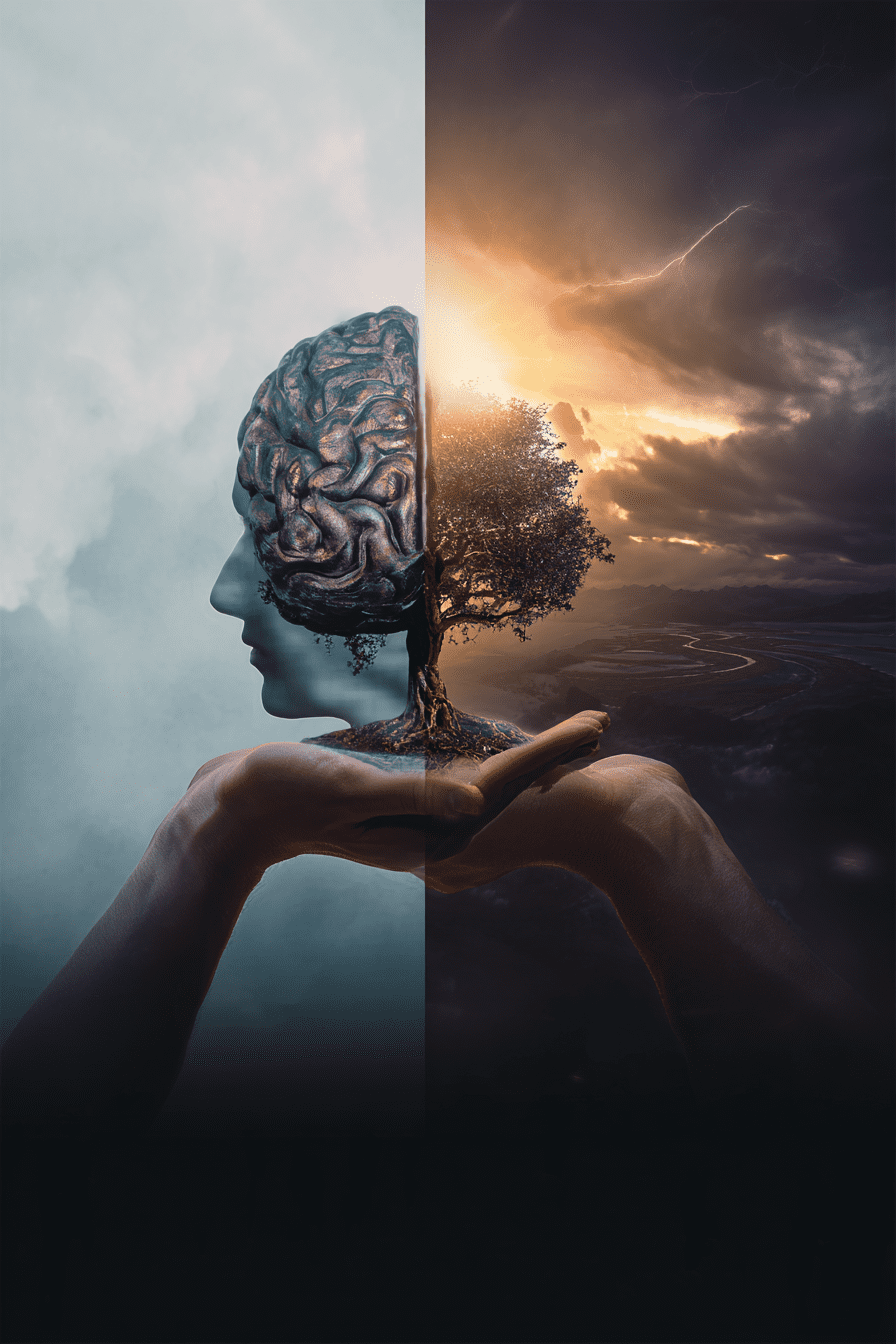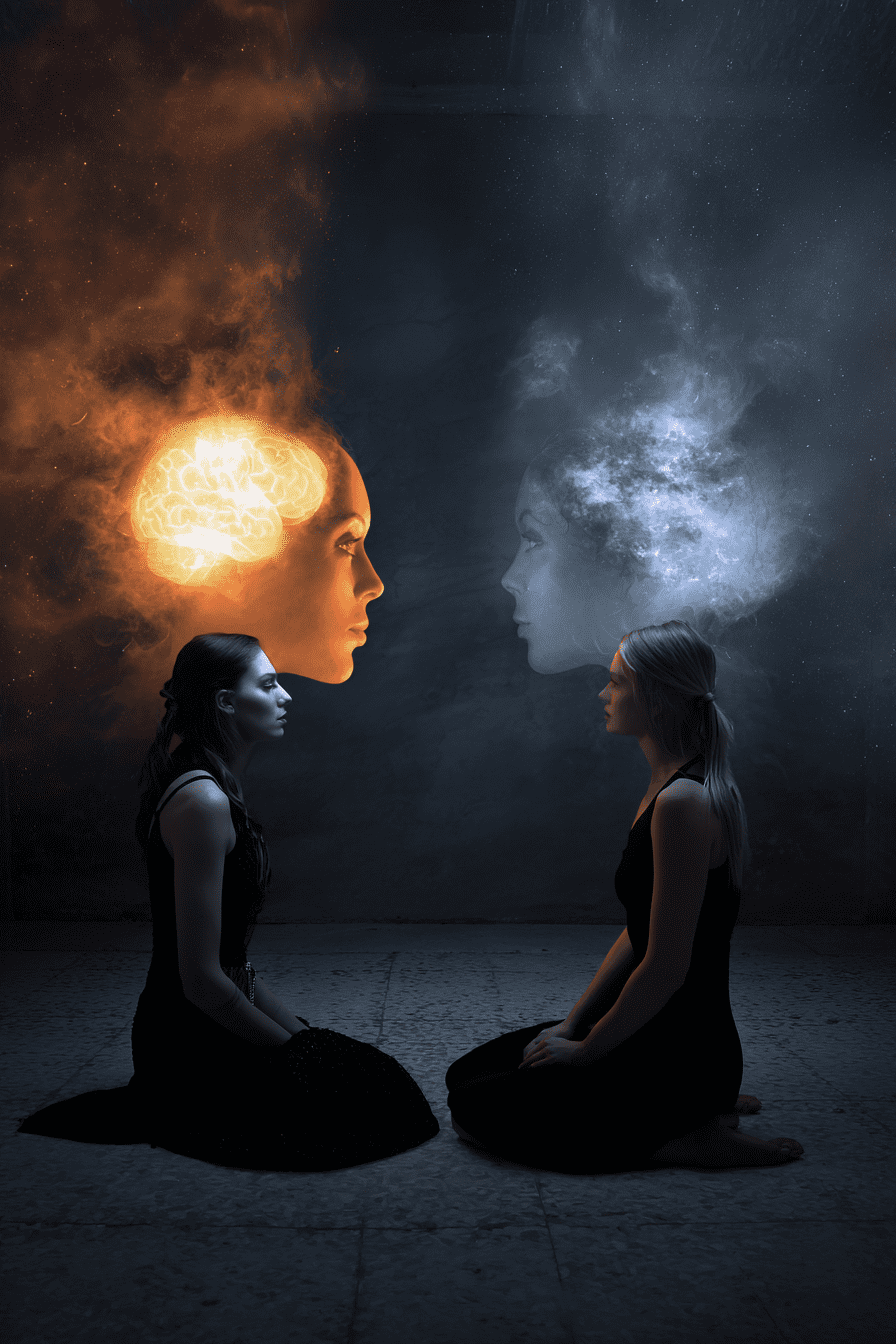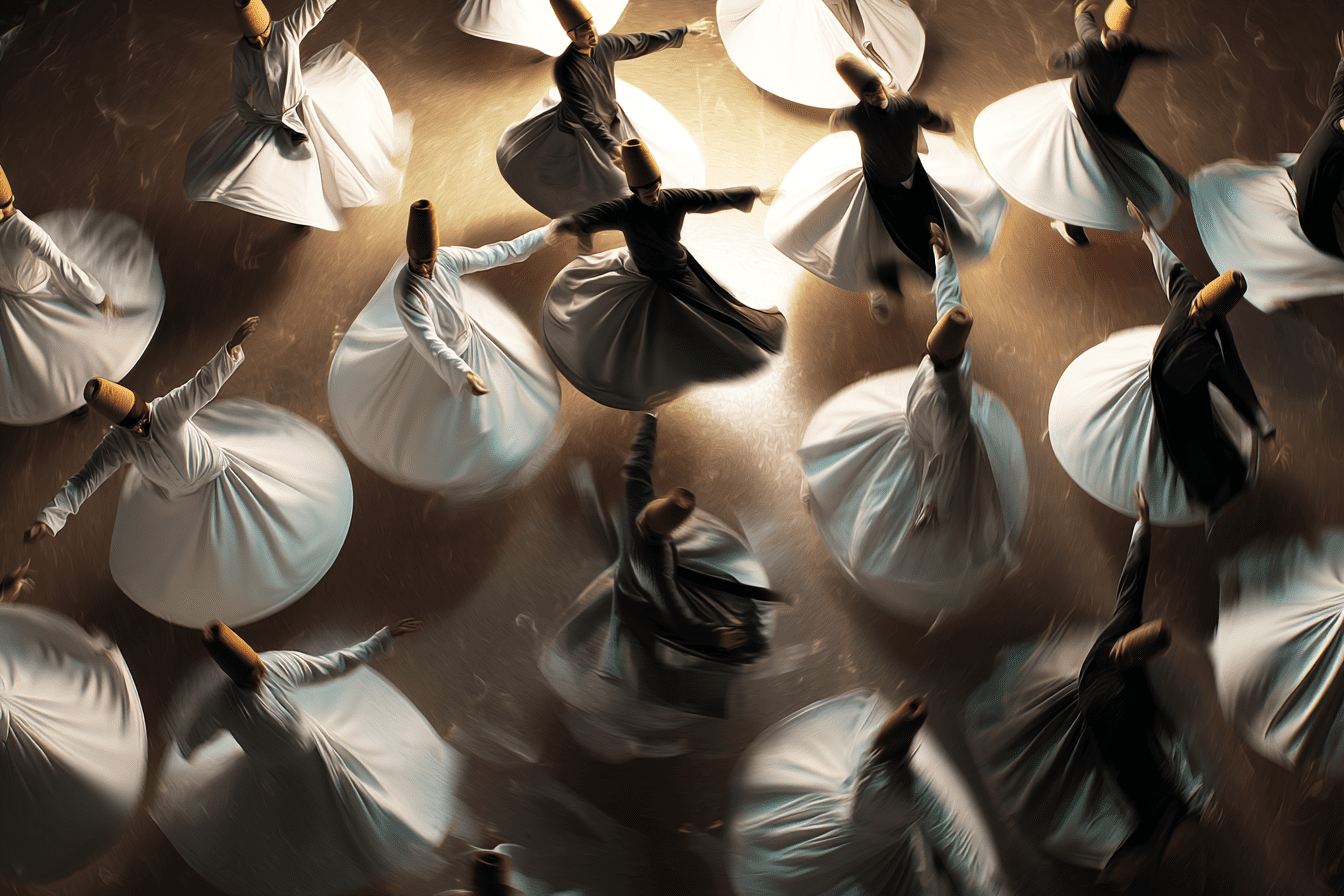

This article explores the universal questions that have fascinated humanity for centuries: Why are we born, why do we live, and why do we die? Through the lenses of biology, philosophy, spirituality, and human connection, I reflect on what gives our existence meaning. This is an invitation to pause and consider how these fundamental aspects of life shape not only our daily experiences but also our understanding of our place in the universe.
If you’re interested in exploring how we, as individuals, can find or create meaning in our lives, I invite you to read my article: Discovering vs. Creating the Meaning of Life: Two Paths to Purpose.
Introduction: Why Do We Still Ask?
I remember the exact evening this question first truly hit me. It wasn’t an intellectual puzzle to be solved over coffee, but a physical weight. I was sitting on my porch, looking up at the dark sky, and suddenly, in a fraction of a second, the fragility of everything washed over me. My presence here, at this specific point in time and space, felt both infinitely important and utterly random. Why me? Why now? And where is all this headed when the last light goes out?
I think we all have a moment like that. Sometimes it comes in times of great joy—the birth of a child or reaching a life goal—and other times in the silence of grief or loneliness. It’s a universal human experience: that sudden pause in the rush of daily life, when the mechanical act of doing gives way to a profound wonder at the sheer fact of existence.
Socrates once said, “The unexamined life is not worth living.” Those are strong words, maybe even too harsh for the modern person who is often just tired. But there’s a truth in them that can’t be ignored. For millennia, from the first cave drawings to modern quantum physics labs, humanity has been trying to solve the same equation. The tools, language, and methods change, but the core remains the same: Where did we come from? Why are we here? What happens when we leave?
These aren’t questions Google can answer in 0.34 seconds. They are questions that require us to stop. They demand the courage to look into the abyss of not knowing and not turn away.
In this article, I don’t intend to offer a ready-made recipe for life, because one doesn’t exist. I’m not a sage sitting on a mountaintop, but a traveler, just like you. I want to invite you, however, on a shared exploration. We’ll try to break this big question down into its core components—we’ll look at it through the microscope of a biologist, the prism of a philosopher, from a spiritual perspective, and finally, through the simple, everyday relationships with other people.
Because maybe the meaning of life isn’t something you “find” like a lost key. Maybe it’s something you build, brick by brick, with every breath, every choice, and every moment you decide to live consciously. I invite you on this journey. Let’s see where it takes us.
The Biological Perspective: Survival Machines in Search of “Why”
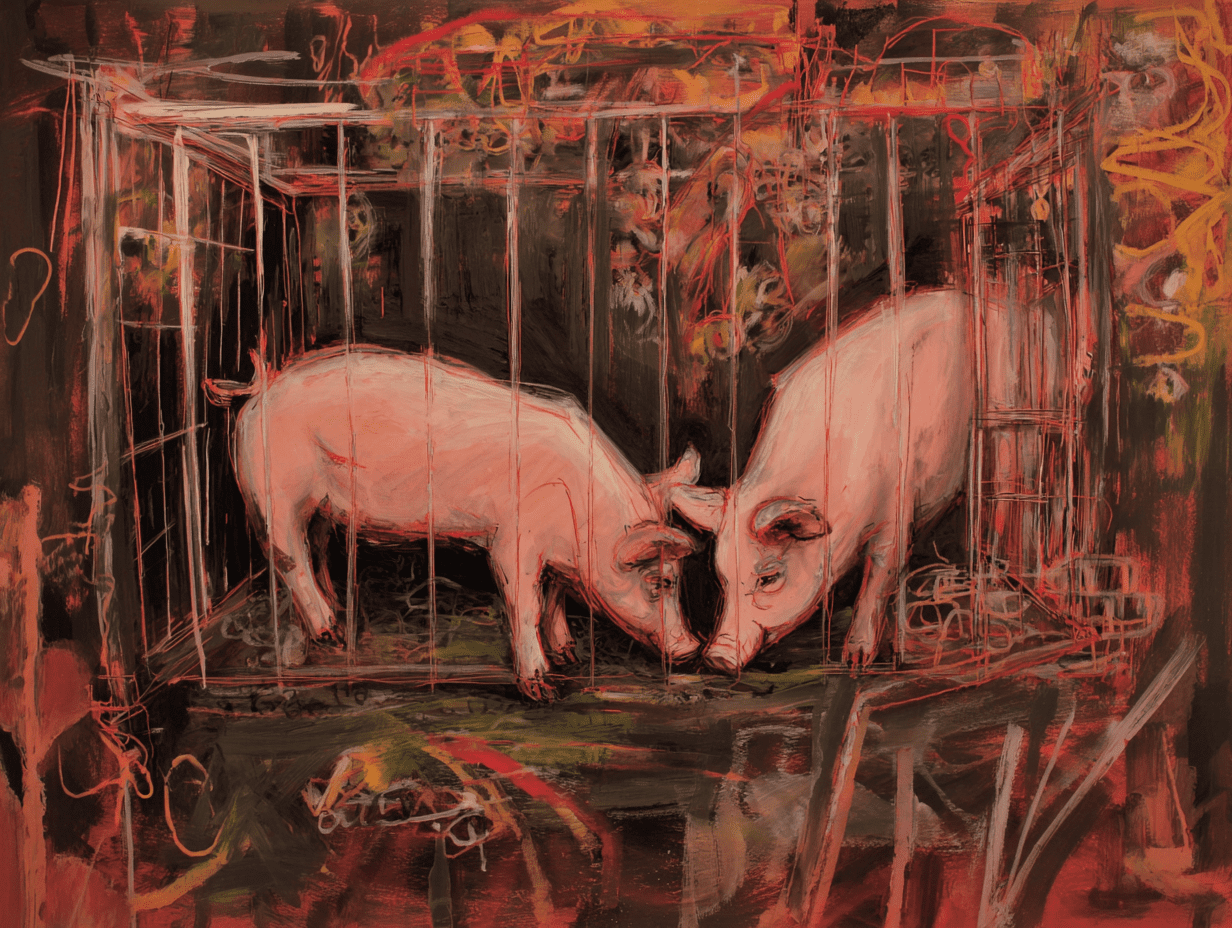
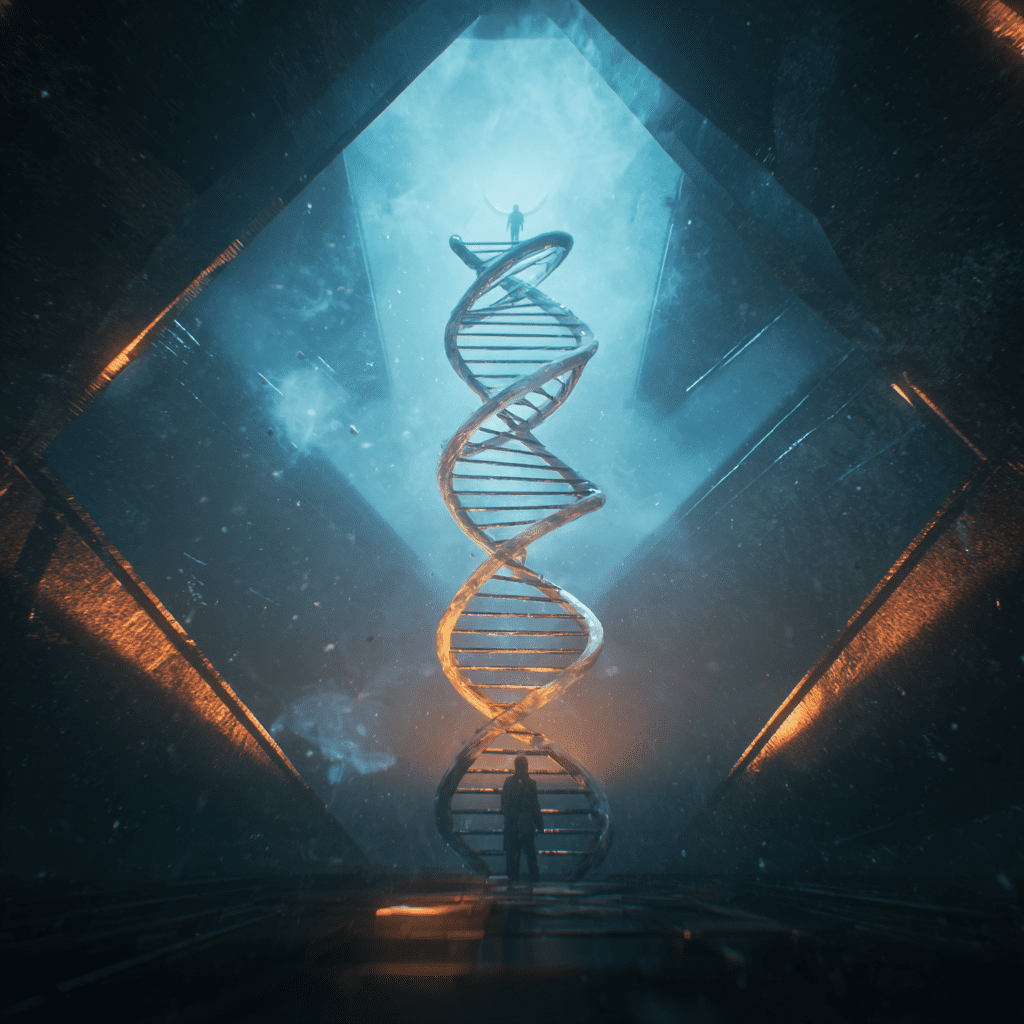
Before we dive into the philosophical depths, let’s come back down to earth. Or even deeper—to the level of cells, DNA, and the fundamental laws that govern every living organism on this planet. From a biological standpoint, the answer to the meaning of life is brutally simple and, at the same time, fascinating: we live to pass on genetic information. We are vehicles whose main purpose is to transport genes down the river of time.
Birth: The Start of a Genetic Relay Race
Our birth is not a mystical act but rather the culmination of billions of years of evolution. We are the result of an unbroken chain of reproductive successes. Every single one of our ancestors, reaching all the way back to the first single-celled organisms, managed to survive long enough to reproduce. Our existence is proof of their effectiveness. In this view, we aren’t born for a higher reason, but because the mechanism of natural selection favored traits that led to procreation. We are an evolutionary echo of the past, carrying a code that proved victorious in the endless struggle for existence.
Life: A Complex Dance for a Single Purpose
If our purpose is to pass on our genes, then our entire life—from the first cry to the last breath—is an intricate strategy to accomplish this task. We eat to have energy. We learn to better navigate our environment. We form social bonds because cooperation increases our chances of survival. Even our most sublime feelings, like love, can be interpreted from an evolutionary biology perspective as a mechanism to ensure care for offspring and pair-bonding, maximizing genetic success.
In his groundbreaking book “The Selfish Gene”, Richard Dawkins presented a radical but logical vision. He argued that it is not we, as conscious beings, who are the focus of evolution, but our genes. He wrote, “We are survival machines—robot vehicles blindly programmed to preserve the selfish molecules known as genes.” This is a cold, almost mechanical perspective. It reduces our dreams, fears, and passions to biochemical processes whose ultimate goal is the replication of DNA.
Death: A Programmed End for the Good of the Species
And what about death? Why can’t we live forever? From an individual’s point of view, it seems like the greatest injustice. From a biological perspective, however, death is a necessity. Our cells have a built-in self-destruct mechanism called apoptosis, or programmed cell death. This is a process that protects the organism from cancer and removes worn-out components.
On a larger scale, the death of an individual makes room for new generations. It allows for the evolutionary adaptation of the species to changing conditions. If individuals lived forever, the gene pool would become static, and the species would lose its ability to evolve, becoming vulnerable to extinction at the first major environmental shift. Our death is, therefore, the price for the survival and development of the species as a whole.
Does all this mean we are just biological automatons? Is our search for meaning merely an echo of an empty program? Not necessarily. The biological perspective doesn’t strip life of meaning—it grounds it. It shows us the foundation upon which everything else is built. The fact that our brain evolved to help us survive doesn’t diminish the importance of the thoughts it produces. The fact that love has its roots in biochemistry doesn’t make it any less real.
Biology gives us the answer to “how.” It shows us the mechanism that set us in motion. But for the “why” that resonates in our consciousness, we must look for answers elsewhere. Science describes the stage and hands us a script, but how we play our role and what meaning we give it is up to us.
The Philosophical Perspective: Creating Meaning in an Indifferent Universe
Since biology has given us an answer to “how,” it’s time to face the “why” that has tormented human consciousness for centuries. Here we enter the territory of philosophy—a vast construction site where, for millennia, we have tried to build a structure of meaning on a foundation of uncertainty. Philosophy doesn’t offer a single, universal answer. Instead, it hands us a set of tools and asks, “What will you do with this?”
Existentialism: You Are Free, Therefore You Are Responsible
Imagine being thrown onto a stage without a script, a director, or any information about your role. This, in a nutshell, is the starting point of existentialism. Thinkers like Jean-Paul Sartre and Albert Camus rejected the idea that life has any inherent, pre-ordained meaning. According to them, the universe is indifferent to our existence. We are born into absurdity—a collision between our human desire for meaning and a silent reality.
Sartre famously put it this way: “Existence precedes essence.” This means that first, we exist, and only then, through our choices and actions, do we define who we are. No one is born a hero, a coward, or an artist. We become them. It’s a terrifying, yet liberating, perspective. If there’s no pre-written plan, it means we are completely free to create our own. As Sartre wrote, “Man is nothing else but what he makes of himself.” Meaning is not something we discover; it’s something we create.
Camus took it a step further, comparing the human condition to the myth of Sisyphus—condemned to eternally push a boulder up a mountain, only to watch it roll back down. Sound hopeless? Camus argued that it is in the very act of rebellion against this absurdity, in the conscious effort and persistence, that we find freedom and meaning. “One must imagine Sisyphus happy,” he wrote. Our life may be the tedious pushing of a boulder, but it’s our boulder, our mountain, and our struggle.
Stoicism: Focus on What You Can Control
Stoicism offers us a completely different set of tools. Born in ancient Greece and Rome, this philosophy is experiencing a renaissance today. Stoics like Seneca, Epictetus, and Emperor Marcus Aurelius also saw the world as a place of chaos and unpredictability. Their solution, however, was not rebellion but acceptance.
The core idea of Stoicism is to distinguish between what we can control (our thoughts, judgments, decisions) and what is beyond our control (external events, others’ opinions, our health). The meaning of life, according to the Stoics, lies in perfecting the former—in striving for virtue, wisdom, and inner peace, regardless of external circumstances. Marcus Aurelius wrote in his “Meditations,” “You have power over your mind—not outside events. Realize this, and you will find strength.”
This is not a philosophy of passivity. It’s a philosophy of action where action matters—within ourselves. Birth gives us an arena, life gives us challenges, and death is a natural, unavoidable end. The goal is not to avoid difficulties but to navigate them with dignity and calm. The meaning is to be the best version of yourself in whatever conditions fate throws your way.
Meaning as a Product of Culture
Philosophy doesn’t exist in a vacuum. What we consider meaningful is deeply rooted in the culture we grow up in. For a traditional society based on Confucianism, the meaning of life is to fulfill one’s social roles, maintain harmony in the family, and honor one’s ancestors. In Buddhism, the goal is to break free from the cycle of suffering and reincarnation by achieving nirvana. In Western culture, the Judeo-Christian perspective dominated for centuries, where the purpose was to serve God and strive for salvation.
Today, in our globalized world, these narratives mix, creating a mosaic of possibilities. We can draw from Eastern wisdom by practicing mindfulness while being inspired by the existentialist pursuit of self-realization.
Ultimately, philosophy holds up a mirror to us. It shows that the answer to the meaning of life is not hidden in the stars but within ourselves. Do you feel more like Sisyphus, stubbornly creating meaning in an absurd world? Or perhaps you’re closer to a Stoic, building an inner fortress with unshakable calm? Or is your meaning woven from the values passed down to you by your culture and family?
Each of these paths is equally valid. Each forces us to reflect and take responsibility for our own story. Biology gave us existence. Philosophy gives us the tools to give it meaning. Which ones we use is the most important choice we will ever make.
The Spiritual Perspective: A Light Beyond the Horizon
While biology explains the mechanics and philosophy grapples with the logic of existence, spirituality opens the door to the unseen. It’s here that the question “why?” transforms into a quiet search for “Someone” or “Something” greater than ourselves. For billions of people around the world, the meaning of life is not a puzzle to be solved by reason, but a mystery to be lived through the heart.
Birth: A Gift, A Spark, A Return
From a spiritual perspective, our arrival in this world is rarely an accident. In monotheistic traditions like Christianity, Judaism, and Islam, birth is seen as an act of a Creator’s will. You are here because you were wanted. Your life is a gift, and your very existence reflects a spark of the divine. This is a powerful narrative that gives every human life an inherent dignity and value, independent of achievements or social status.
In Eastern traditions like Hinduism and Buddhism, on the other hand, birth is another chapter in an endless book of existence. We are not a blank slate but a continuation—the sum of our past actions, desires, and karma. We come into the world to finish the lessons we didn’t learn before, to repay our debts, and to move one step closer to liberation.
Life: A Training Ground for the Soul
If birth is the beginning of a journey, then what is life itself? Spirituality often views it as a school, a training ground, or a pilgrimage. Ralph Waldo Emerson wrote, “The purpose of life is not to be happy. It is to be useful, to be honorable, to be compassionate, to have it make some difference that you have lived and lived well.” In this view, the meaning of life isn’t found in accumulating possessions, but in inner transformation.
For a Christian, meaning might be found in imitating Christ and learning unconditional love (agape). For a Buddhist, it’s the practice of compassion and mindfulness, leading to the extinguishing of the desires that cause suffering. For many people seeking spirituality outside of organized religion, life is a process of “awakening”—realizing one’s unity with the universe and seeing the sacred in the everyday.
Spirituality offers us something that is often missing from a purely materialistic approach: hope and a sense of purpose that transcends our individual “I.” It teaches us that our suffering is not meaningless and that our joys are echoes of something greater. Life becomes a form of service—to God, to truth, to other people, or to higher ideals.
Death: The End or Just a Change of Form?
Humanity’s greatest fear—the fear of nothingness—is tamed by spirituality. Death ceases to be an end and becomes a threshold. A gateway.
Religions promise that what is most essential in us—the soul, consciousness, atman—is indestructible. The vision of a Christian heaven, a Muslim jannah, or a Hindu liberation (moksha) offers a perspective in which this earthly life is just a brief introduction to the real story. Even in the concept of reincarnation, death is like changing clothes; we shed a worn-out body to put on a new one and continue our journey.
This perspective changes everything. If death is not the absolute end, then our actions have consequences that reach into eternity. How we live today resonates forever. Death, then, becomes the ultimate test, a moment of truth, not a cause for despair.
Is Faith the Answer?
You don’t have to be a religious person to see the value in a spiritual view of the world. At its core, spirituality is an openness to mystery. It’s humility in the face of the fact that reality may have more dimensions than we can measure with our tools. It is an invitation to transcendence—to move beyond our own ego and connect with something larger.
Perhaps the meaning of life, from a spiritual perspective, can be summed up in one word: relationship. A relationship with a Creator, with the Universe, with another person, and with the depths of your own being. In a world that often tells us to run, spirituality whispers, “Be still. You are part of the whole. You are home.”
The Social Perspective: Meaning Found in the Eyes of Others
We’ve journeyed through the perspectives of biology, philosophy, and spirituality. Each has given us different tools, different maps. But what if the answer to the great question of life’s meaning isn’t in our genes, in abstract ideas, or in the afterlife, but right next to us? In another person.
The English poet John Donne famously wrote, “No man is an island, entire of itself.” Though 400 years old, this sentence has never been more relevant. From a social perspective, we are fundamentally relational beings. Our identity, sense of self-worth, and meaning are shaped within a web of connections to others.
Birth: Entering a Network of Relationships
From the very first moment, we are dependent. We are born into a family, a community, a culture. Our first cry is a call for another person. It’s in our parents’ arms, in their gaze, that we learn we are important, that our presence matters. This is the foundation upon which we build our entire lives. Without this primary bond, as studies show, our emotional and psychological development is deeply impaired.
Life: A Mirror in the Other Person
Throughout our lives, we constantly define ourselves in relation to others. We are children, parents, friends, partners, colleagues. Each of these roles gives our existence a specific dimension and purpose. It’s in conversation with a friend that we find understanding, in caring for a child that we discover unconditional love, and in working with others that we achieve goals greater than ourselves.
This isn’t just a poetic metaphor. It’s a scientifically proven fact. The longest study in the history of psychology, the Harvard Study of Adult Development, followed the lives of over 700 men for nearly 80 years. The conclusions were unequivocal. What determined happiness, health, and a sense of meaning in life wasn’t money, fame, or career. It was good-quality relationships. People who were most satisfied with their relationships at age 50 turned out to be the healthiest eighty-year-olds.
Good relationships protect our bodies and our brains. They soothe pain, reduce stress, and give us the feeling that we are not alone in facing life’s difficulties. Empathy—the ability to feel with another person—becomes a key tool for building meaning. When we help others, when we share their joy and pain, our own problems take on a different perspective. In the act of giving, we receive far more than we might expect.
Death: The Legacy We Leave in Hearts
From a social perspective, our immortality lies in the mark we leave on the lives of others. This isn’t about grand monuments or a place in the history books. It’s about a simple, human legacy: the memories we’ve created, the good we’ve done, the love we’ve given.
When we are gone, our life continues in the stories told by our loved ones, in the values we’ve passed on to our children, in the smile of someone we once helped without expecting anything in return. This is our legacy. In this sense, none of us ever truly dies as long as the memory of us lives on in the hearts of others.
So maybe the meaning of life isn’t something we have to create in solitude. Maybe it’s already there, waiting for us in every encounter, in every conversation, in every act of kindness. Maybe, in the end, the most important question isn’t “What is the meaning of my life?” but “What meaning does my life have for others?” The answer to that second question is something we build together, every single day.
A Personal Reflection: My Answer, a Work in Progress
After walking through all these grand ideas and perspectives, I feel I need to take off the mask of an objective observer for a moment and share something personal. Because ultimately, this question of life’s meaning isn’t an academic debate, but something I carry within me every day.
For a long time, I struggled with an apparent contradiction: is the meaning of life universal or individual? Today, I believe the answer is “yes.” On one hand, I feel a deep connection to something larger. Call it God, the Universe, or a collective consciousness—I have a sense that we are all part of the same great story, which gives our existence a universal dimension. At the same time, we have been clothed in individual bodies, gifted with unique souls and egos that limit our awareness. In this sense, each of us has our own unique role to play in this grand spectacle. We have a common purpose, but individual paths.
My perception of life was brutally and irrevocably shaped by one event—the passing of my wife. Overnight, I was left alone with three children. In an instant, the world I knew collapsed. It was a test I would never have chosen, but it became my greatest teacher. It was then I understood that life is not a punishment, but a chance. A chance for self-growth, even if that growth is born from immense pain.
I see this life as a test, one where I am constantly being tried. But it’s not a cruel trial. It’s more a test of character, perseverance, and love. I believe this isn’t my only life, and how I live this one will influence the next. At the same time, amidst these challenges, I have the opportunity to rest and enjoy what I have—my children’s smiles, a morning coffee, the silence of the evening.
For me, the meaning of life is not a constant, a tablet of stone. It’s fluid. Every so often, I have to re-evaluate it and search for it anew, because circumstances change, and I myself change. When my children are young, I find my meaning in caring for them, in passing on my values, in helping them find their own way. This is my most important project. But I know a stage will come when they venture out into the world. Maybe then I’ll meet a new love, and meaning will be found in building a deep relationship, based not just on daily life but on shared spiritual growth. Maybe one day I’ll have grandchildren, which will open another, entirely new chapter.
In this blog, I also find a piece of my meaning. Sharing how I see the world is a form of self-therapy for me. But if even one person, reading my words, feels a little less alone in their crisis or finds inspiration to keep fighting—that gives my experience a significance that extends far beyond myself.
Ultimately, for me, life is a constant state of becoming. It’s a journey, not a destination. And the questions that still remain open no longer scare me as they once did. Instead, they are an invitation to continue the journey.
Conclusion: Your Answer Is the Only One That Matters
We’ve come a long way—from the cold logic of evolution, through the labyrinths of philosophical thought, to mystical visions of the spirit and the warmth of human connection. Each of these perspectives hands us a different piece of the puzzle. Biology tells us, “Survive.” Philosophy advises, “Think and create.” Spirituality whispers, “Believe.” Society counsels, “Love.”
Does any one of them hold the absolute truth? Or are they all a little bit wrong?
The truth is, life isn’t a math equation with only one correct answer. It’s more like a canvas, and we are handed a paintbrush at birth. Biology provides the canvas and the paints. Culture and upbringing might suggest certain painting techniques. But what ultimately appears on that canvas depends entirely on the movements of your hand.
Maybe the meaning of life isn’t something hidden in an old book on a mountaintop, waiting to be discovered. Maybe the meaning of life is a verb. It’s something you do. You create it when you get out of bed in the morning despite being tired. You build it when you forgive someone who doesn’t deserve it. You find it in the silence of a forest, in a child’s laughter, in the satisfaction of a job well done.
Don’t be afraid of not knowing. Uncertainty isn’t a flaw in the system—it’s the space for your freedom. If the meaning of life were pre-determined and obvious, we would be mere actors playing written roles. But because the answer is silence, we have the chance to shout our own truth with our lives.
Maya Angelou beautifully said, “Life is not measured by the number of breaths we take, but by the moments that take our breath away.” I wish for you, on your journey, to collect exactly those kinds of moments. For you to combine biological vitality with Stoic calm, spiritual depth, and social sensitivity.
And now, at the very end of this reflection, I turn it over to you. Pause for a moment before you close this page.
If you had to describe the meaning of your life in one sentence—what would it be?
Share your thought in the comments. Your perspective might be the spark someone else is searching for today.
P.S.
The universal questions about the meaning of life—why we are born, live, and die—serve as a foundation for deeper, personal explorations. Understanding these core aspects of existence can provide a starting point for each of us to reflect on how we individually find or create meaning in our lives. If you’re curious about how to take this journey further, I explore the personal side of this search in another article: Discovering vs. Creating the Meaning of Life: Two Paths to Purpose.
If my writing has inspired or helped you, I would be grateful for your support.
Need support yourself? Discover how I can help you.
AI Disclosure
I see my thoughts as the essence, much like the soul, and AI helps me give them form. It supports me with research, translation, and organizing ideas, but every perspective is my own. Curious how I use AI? Read more here.