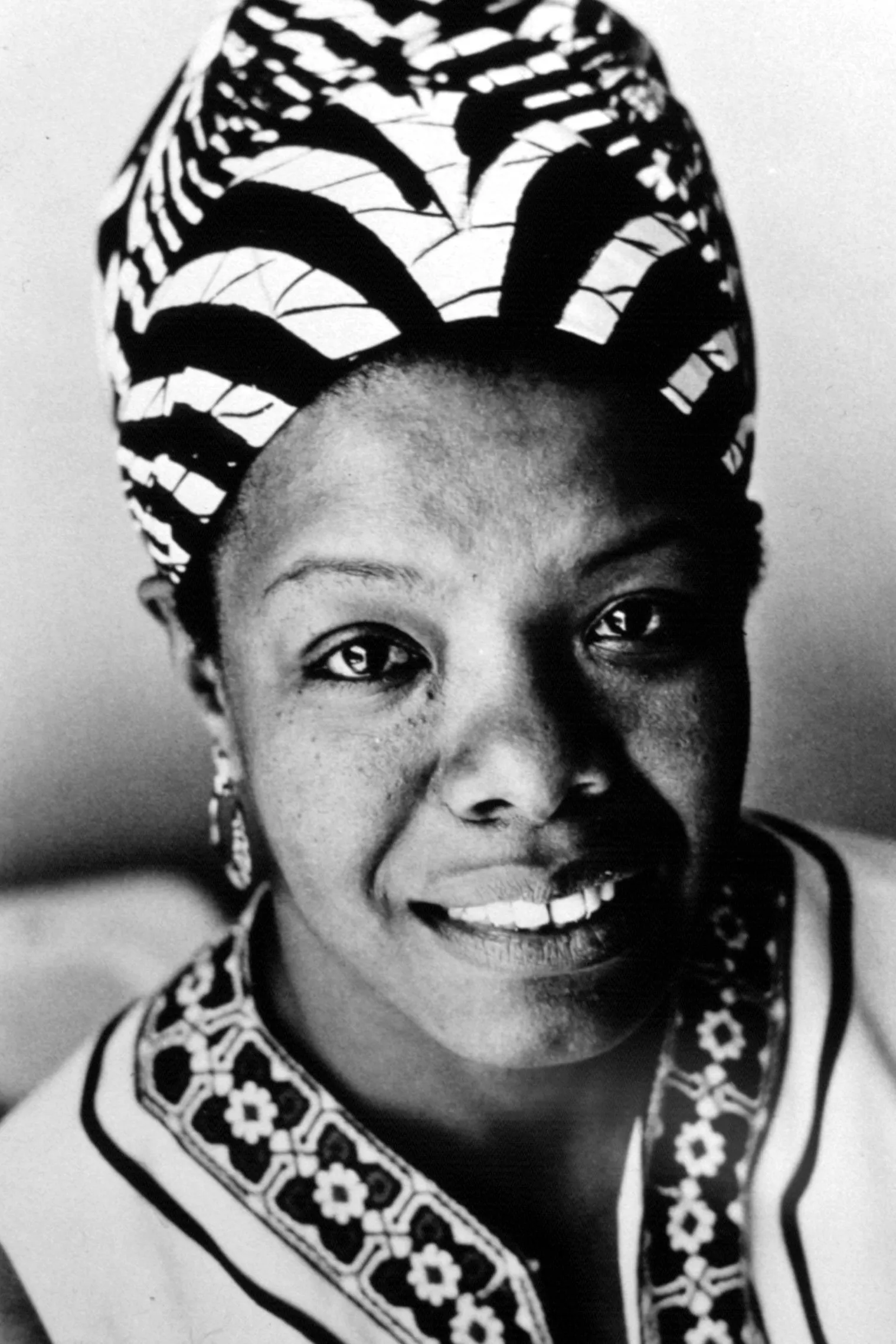
There are figures in human history whose voices resonate long after they have fallen silent. They echo in poems, essays, and memories, but above all, they live on in the hearts of the millions they empowered. One such voice, powerful and unforgettable, is that of Maya Angelou—a poet, writer, activist, and a true icon of the civil rights movement.
Her life was not a simple story. It was a narrative marked by deep trauma, but also by an extraordinary strength that allowed her to transform pain into art and silence into a powerful manifesto of hope. She influenced culture, literature, and society in a way that is hard to overstate. She became a moral compass for generations, reminding us of the power of the human spirit and the importance of empathy. As she herself said, “You may not control all the events that happen to you, but you can decide not to be reduced by them.”
In today’s article from our “Inspiring Souls” series, we will look at her remarkable journey—from a painful childhood to becoming one of the most important voices of our time. We will explore the lessons of courage, compassion, and resilience we can draw from her life to find the strength to face our own challenges.
Childhood and Youth: The Roots of Strength
Maya Angelou’s early life did not suggest she would become one of America’s most resonant voices. Born Marguerite Ann Johnson in St. Louis, Missouri, she was confronted from her earliest years with the brutal reality of racism and family instability. However, it was an event from her early childhood that became the turning point, forever defining her relationship with words and the world.
At the tender age of seven, while visiting her mother, Maya experienced an unimaginable trauma—she was raped by her mother’s boyfriend. Although she had the courage to tell her family and the perpetrator was convicted, he was found dead shortly after, likely beaten to death by her uncles. In her young mind, Maya connected these two events into a terrifying conclusion: her words had killed a man.
“I thought, my voice killed him; I killed that man, because I told his name. And then I thought I would never speak again, because my voice would kill anyone,” she recalled years later.
Thus began five years of silence. During this time, Maya did not speak a word to anyone except her brother, Bailey. To the outside world, she became mute, but inside her mind, a universe was being born. In the quiet, she began to devour literature with the voracity of someone starved for understanding. She read everything she could get her hands on—from Dickens and Poe to the poets of the Harlem Renaissance. It was during this period, deprived of her own voice, that she learned to listen to the world with extraordinary attention. She observed gestures, intonations, and the emotions hidden between the lines. Her silence was not an emptiness; it was an incubator where her remarkable sensitivity and powerful intellect matured.
This experience brings to mind a lesson we often find in the work of Viktor Frankl—whose classic book, Man’s Search for Meaning, argues that even in the deepest suffering, in situations that seem to destroy us, we can find a seed of meaning (Frankl, 1946). For Maya Angelou, trauma did not become an end but, paradoxically, the beginning of her journey as a writer. The silence that was meant to be her refuge from guilt became the foundation of her future power.
When, with the help of a teacher, Mrs. Bertha Flowers, Maya finally regained her voice, it was no longer the voice of a terrified little girl. It was a voice that knew the weight of words. She understood that words have the power not only to destroy but, above all, to heal. As she later wrote, “There is no greater agony than bearing an untold story inside you.” This sentence became the motto of her life and work, reminding us all that releasing our own truth is an act of supreme courage and the first step toward freedom.
For more on the profound impact of words, explore The Invisible Scars: How Words Can Hurt More Than Actions.
The Path to Success: Art as a Tool for Transformation
Once Maya Angelou found her voice, she never intended to lose it again. She understood that the words she had suppressed for so long held a healing power. But before she became a literary icon, her path to self-expression led through various art forms. Each one was another step in her transformation—from a victim to the creator of her own destiny.
Her artistic journey was incredibly diverse. As a young woman, she studied dance and acting, which allowed her to reclaim her body—the very body that had suffered such profound trauma. Dance became a language through which she could tell her story without words. In the 1950s, she toured Europe with the opera Porgy and Bess, and her vocal talent and stage charisma won over audiences. Art became not just a form of expression for her but also a way of life, a means of survival in a world that was not always kind.
However, writing was to become her ultimate calling. In 1969, encouraged by friends, including the writer James Baldwin, Maya Angelou published her groundbreaking autobiography, I Know Why the Caged Bird Sings. This book was more than just a memoir. It was a revolutionary act. With unprecedented honesty, she described her childhood, including the rape and racism, breaking taboos and giving voice to millions who had suffered in silence.
I Know Why the Caged Bird Sings became a landmark in American literature. As one of the first autobiographies by a Black woman to gain such wide recognition, it broke barriers and opened doors for others to share their stories. The book’s unflinching portrayal of trauma, racism, and resilience soon made it a staple in educational curricula, where it continues to ignite conversations about race, gender, and personal strength (Library of Congress: Maya Angelou Biography; PBS: Maya Angelou – And Still I Rise).
But the book’s power lay not just in the facts but in the lyrical, almost poetic language she used to write about pain, hope, and survival. She showed that one could speak about trauma not from the position of a victim, but from the position of a survivor who had found inner strength.
Her story is a reminder of the power that creativity holds in the healing process. Art allows us to process our most difficult emotions, to give them shape and meaning. It gives us the tools to build a narrative in which we are the heroes, not the victims of circumstance. This lesson is similar to the one we find in the poetry of Rumi, where pain becomes a portal to a deeper understanding of oneself and the world. For Maya Angelou, writing was precisely that—a way to reclaim control of her own story.
Her approach to art is best captured in her own words: “A bird doesn’t sing because it has an answer, it sings because it has a song.” Maya Angelou didn’t wait for ready-made solutions. She found a song within herself—a song of pain, courage, and hope—and she shared it with the world. In doing so, she not only healed herself but also gave millions of others the courage to find and sing their own songs.
Activism and the Fight for Civil Rights
The voice that Maya Angelou reclaimed in childhood and shaped through art could not remain indifferent to the injustice that surrounded her. Her work was inextricably linked with the fight for dignity and equality, and her involvement in the civil rights movement became a natural extension of her life’s mission. She was not merely an observer of history—she was an active participant who inspired change with her talent and courage.
In the 1960s, at the heart of the struggle for African American rights, Maya Angelou stood side by side with some of the era’s most influential leaders. At the request of Martin Luther King Jr., she served as Northern Coordinator for the Southern Christian Leadership Conference (SCLC), organizing and promoting the SCLC’s “Cabaret for Freedom” benefit in 1960, which helped raise funds for the organization’s civil rights initiatives (The New York Times, 2014; King Institute, Stanford University; PBS: Maya Angelou – And Still I Rise). Her organizational skills and charisma were invaluable assets to a movement based on the principle of nonviolent resistance. Dr. King saw in her a force that could unite people, and her involvement was proof that the fight for freedom is waged on many fronts—not just on the streets, but also in hearts and minds.
At the same time, Maya Angelou worked closely with Malcolm X, whom she met during her time in Ghana. Driven by a shared commitment to racial justice, Angelou assisted Malcolm X in laying the groundwork for the Organization of Afro-American Unity (OAAU) upon returning to the United States in 1964 (Angelou, The Heart of a Woman, 1981). Although Malcolm X’s approach was more radical, Angelou saw in him the same deep love for his people and desire for justice. Her role with the OAAU demonstrates her remarkable ability to build bridges and see a common goal beyond ideological divides. Her presence in both these circles is a testament to her great wisdom—she understood that the path to freedom has many roads.
Her activism, however, was not limited to organizational work. Maya Angelou’s most powerful weapon was her words. Her poetry, essays, and public speeches became anthems for those fighting for their rights. She could articulate the pain, anger, and unwavering hope of millions. Her voice carried with a power that awakened consciences and gave courage. In this way, her role in the movement was unique—she combined the spiritual depth of Martin Luther King Jr. with the strength and determination of Malcolm X.
Throughout her life, she remained true to her ideals, reminding us that the fight for justice is not a one-time act but a daily commitment. Her philosophy is best captured in one of her most famous quotes: “We all should know that diversity makes for a rich tapestry, and we must understand that all the threads of the tapestry are equal in value no matter their color.”
This simple yet profound message is the essence of her activism. Maya Angelou did not fight for the dominance of one group over another, but for a world where every thread of human experience is respected and valued. Her life is proof that true strength lies not in division, but in unity and mutual respect.
Lessons from Maya Angelou: How Her Life Can Inspire Us
Maya Angelou’s life is not just a record of historical events or literary successes. It is, above all, a collection of universal truths that can serve as a guide for each of us, no matter where we are in our journey. Her story teaches us that strength does not come from an absence of hardship, but from the ability to overcome it. Here are a few key lessons we can draw from her extraordinary path.
- Courage is Born in Confronting Pain
Maya Angelou did not run from her past. Instead of hiding the trauma of rape and her years of silence, she dared to look it straight in the eye and describe it to the world. This is a lesson for us all: healing begins when we stop denying our pain and start accepting it as part of our story. Courage is not the absence of fear, but acting in spite of it. As she said, “Courage is the most important of all the virtues because without courage, you can’t practice any other virtue consistently.” - Words Have the Power to Create Reality
As a poet and writer, Maya understood the weight of language perfectly. She taught that the words we use toward ourselves and others shape our reality. They can build bridges or walls, heal or wound. In an age of digital chaos and hate speech, her message is more relevant than ever. She encourages us to be mindful of what we say and write, reminding us that our voice—even the quietest one—matters and can impact the lives of others. - Empathy is the Key to Humanity
In a world full of division, Maya Angelou was a champion of radical empathy. She believed that we are more alike than we are unalike. Her ability to see the humanity in everyone—from presidents to the homeless—teaches us that true greatness lies in respecting others. This is a challenge for us: to pause in our daily rush and see our neighbor in the “other.” - The Right to Grow and Change
Over her lifetime, Maya Angelou was a waitress, dancer, sex worker, journalist, actress, and university professor. Her biography is proof that we are not defined by our mistakes or past choices. We have the right to change, to learn, and to reinvent ourselves. She gives us hope that it is never too late to change the course of our lives and start realizing our potential.
Her life reminds us of what is most important. It is not about what we possess, but about who we become and how we treat others. It is worth taking her words to heart, which sound like a modern commandment of love: “I’ve learned that people will forget what you said, people will forget what you did, but people will never forget how you made them feel.” This is perhaps the most beautiful and challenging lesson she left us.
Maya Angelou and Spirituality
For Maya Angelou, spirituality was not merely about religious rituals but served as the guiding force behind every aspect of her life. This deep faith formed the bedrock of her resilience and capacity for compassion. Her spirituality was lived—woven into her poetry, her acts of kindness, her relentless fight for justice, and the way she treated every human being. Maya was convinced that a divine spark exists in each person, deserving both respect and love.
Angelou often spoke of the link between her inner world and her outward actions, echoing the timeless wisdom found in the teachings of Mahatma Gandhi. Like Gandhi, she believed that lasting social change begins with individual transformation—peace in the world cannot exist without peace within ourselves. Just as Gandhi turned to nonviolence and love as tools for societal revolution, Maya Angelou’s activism was grounded in compassion and unyielding dignity, even in the face of hatred and adversity. This connection is reflected in her writing and public appearances, where she advocated for courageous action rooted in empathy rather than anger (Gandhi Heritage Portal; Stanford King Institute).
Her spirituality was especially evident in her extraordinary capacity to forgive. Maya understood, much like Gandhi, that holding onto resentment only poisons the one who harbors it. For her, forgiveness was more than an act of charity—it was an essential step in reclaiming her own freedom and moving forward from past wounds. This spiritual clarity granted her not only the strength to survive trauma but also to transcend it and emerge as a force for healing and inspiration.
Community, too, was at the core of her spiritual practice. Angelou often reminded her audiences, “We are more alike, my friends, than we are unalike,” underscoring our shared humanity. She created circles of support and hospitality, opening her home to thinkers, artists, and activists, and encouraging connection over division.
Her personal mission summed up this spiritual outlook:
“My mission in life is not merely to survive, but to thrive; and to do so with some passion, some compassion, some humor, and some style.”
For Maya Angelou, spirituality was not a withdrawn or somber asceticism—it was a vibrant, joyful embrace of life, inviting each of us to live fully, courageously, and with an open heart. In this way, her vision resonates powerfully with the Gandhian principle that inner transformation is the true foundation of social change.
The Legacy of Maya Angelou
Some people’s lives are like lighthouses—even after their physical presence fades, the light of their wisdom continues to guide others through the dark. Maya Angelou is undoubtedly one of those figures. Her legacy is far more than a collection of poems and books; it is a living force that continues to inspire, teach, and give hope to millions around the world.
In literature, her impact is immeasurable. By breaking genre conventions, she gave autobiography a new, lyrical form and opened the door for generations of writers, especially Black women, to tell their stories without shame or fear. Her books, led by I Know Why the Caged Bird Sings, have become required reading in schools and universities, teaching empathy and showing that literature can be a tool for social change (Maya Angelou Schools; Library of Congress).
In the sphere of social justice, her voice still resonates in the work of modern activists. She became a moral compass for those who fight for equality and dignity. Her poem On the Pulse of Morning, delivered at President Bill Clinton’s 1993 inauguration, was a call for unity and responsibility for the future that remains relevant today (Clinton Presidential Library). She showed that art and politics do not have to be separate worlds—on the contrary, they can and should intersect to create a better society.
Her influence is especially visible in contemporary educational and diversity initiatives inspired by her example. Programs such as the Maya Angelou Schools in Washington, D.C., empower young people from marginalized backgrounds through arts-based learning and holistic support. The Maya Angelou Foundation continues her mission by supporting scholarships and social justice projects. Across the United States and beyond, diversity and inclusion campaigns in schools, universities, and workplaces frequently draw from Angelou’s words and example to foster empathy, celebrate difference, and encourage every individual to share their story.
However, her most important legacy is personal. It is the story of a woman who, from the ashes of trauma, created a life full of passion, dignity, and purpose. She is a symbol of resilience, reminding each of us that we are not defined by our wounds, but by our ability to transcend them. Her life is powerful proof that even the most difficult experiences can become a source of strength and wisdom.
Maya Angelou’s legacy lives on in every act of courage, in every attempt to understand another person, and in every word spoken in defense of the vulnerable. Her influence is visible in the actions of contemporary equality movements, in educational programs promoting diversity, and in the hearts of people who, thanks to her words, found the strength to tell their own stories.
As she herself said: “When you learn, teach. When you get, give.” This simple call to action is the essence of her legacy. It encourages us not to keep wisdom and strength for ourselves, but to share them with others, creating an endless chain of inspiration. This is how her voice will never be silenced.
Conclusion: What Can We Do?
The journey through Maya Angelou’s life is a lesson that does not end with the final period of this article. It is an invitation to a continuous dialogue with ourselves and with the world. Her story—from a small, silent girl in St. Louis to a global icon of wisdom—reminds us that no beginning determines the end, and our scars can become the source of our greatest strength.
Maya showed us that art, activism, and spirituality are not separate entities, but intertwined threads of the same tapestry of life. She taught us that courage is not the absence of fear, but the decision to move forward in spite of it. That words have the power to heal, and that empathy is the most powerful tool for social change.
Today, in a world full of noise and division, we need her voice more than ever. But Maya would not want us to simply admire her from afar. She would want us to take these lessons and put them into practice.
Take a moment to reflect:
- How can you use your voice—at work, at home, in your community—to lift someone up?
- Where in your life do you need more courage to stand in your own truth?
- How can you, through a small gesture today, make someone feel seen and valued?
You don’t have to be a great poet or a social movement leader to change the world. Start in your own backyard. Be brave in your authenticity. Be generous in your compassion. And remember Maya’s words, let them be your guide:
“People will forget what you said, people will forget what you did, but people will never forget how you made them feel.”
May your life be proof that even in difficult times, you can not only survive, but thrive—with passion, humor, and style.
If my writing has inspired or helped you, I would be grateful for your support.
Need support yourself? Discover how I can help you.
AI Disclosure
I see my thoughts as the essence, much like the soul, and AI helps me give them form. It supports me with research, translation, and organizing ideas, but every perspective is my own. Curious how I use AI? Read more here.