
When I dive into different areas where people search for the meaning of life, but also those focused on improving our quality of life and growth—like spirituality, philosophy, or modern personal development based on psychology—it seems to me that we are all aiming for the same goal: living fully, understanding ourselves and the world. Is there a common denominator, something that glues these diverse life philosophies, approaches to growth, and human experiences together? I believe the answer lies in universal values.
Values like love, truth, compassion, or justice are something more than just abstract ideas. Maybe they are something similar to the laws of physics or math, or maybe even something more—existing outside the material world, unlike the latter. Just as the laws of physics govern the movement of planets, and math describes the structures of the universe, universal values seem to be principles that organize our spiritual and social life. They are invisible, but their impact is felt in every aspect of our existence—from interpersonal relationships to our deepest sense of meaning.
Universal values connect the spiritual teachings of the East with the philosophical wisdom of the West and our daily struggles to be better humans. In this article, I take a closer look at how these timeless principles permeate different areas of life and give direction on our path to authenticity and inner peace. I explore how living consciously in harmony with them can be the key to deep development, regardless of the path we have chosen.
What Are Universal Values?
Before I dig into how these values shape our spirituality or philosophy, I’d like to stop for a moment and ask myself—and you—a fundamental question: what actually are they? For me, universal values are something much more than just a set of rules or norms that someone wrote down once. It’s something I feel deep inside, as if it’s been part of me forever. It’s something that helps me make decisions, especially when life puts difficult choices in front of me.
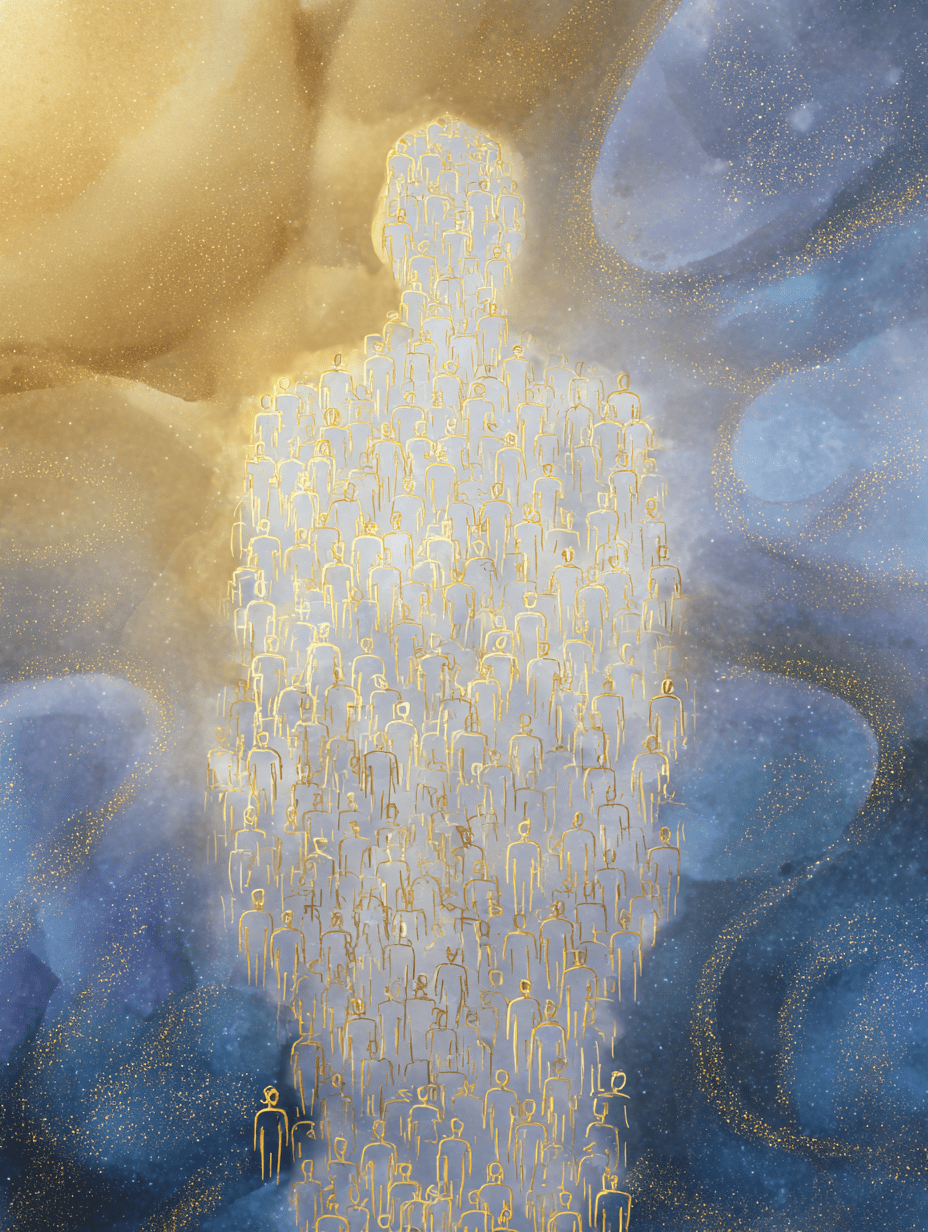
Sometimes I think of them as a common language we all speak, even if we use different words on a daily basis. We might come from different cultures, follow different religions, but when we touch the sphere of values, suddenly we start understanding each other without words. Love, truth, compassion, justice—these are things we all value, regardless of where we were born or what path we are walking through life.
When I look at the great spiritual and philosophical traditions, I see that they all share something. In each of them, the same motifs appear, the same ideas that are sort of the essence of our humanity:
- Love and Compassion – Probably the most powerful of forces. It’s not just about romantic feelings here, but about deep care for the well-being of another human, empathy, and the ability to feel a connection with other beings.
- Truth and Honesty – The pursuit of authenticity, being honest with oneself and the world. It’s the foundation of trust, without which it’s hard to build any lasting relationships or grow spiritually.
- Justice – A desire for equality, fair treatment, and protecting the weaker ones. It’s the feeling that every human deserves dignity and respect.
- Peace – Both in the social dimension and the internal one. It’s striving for harmony and resolving conflicts without violence.
It’s amazing that we find these same values in ancient Vedic scriptures, in the Gospel, in the teachings of Stoics, or in modern ethical codes. The names differ, the rituals differ, sometimes even the interpretations, but the core remains the same. It is exactly these values that are like a common foundation upon which different religions and philosophies rest. And when we understand this, it’s easier to see how much connects us, despite all the differences.
The Metaphysical Dimension of Universal Values
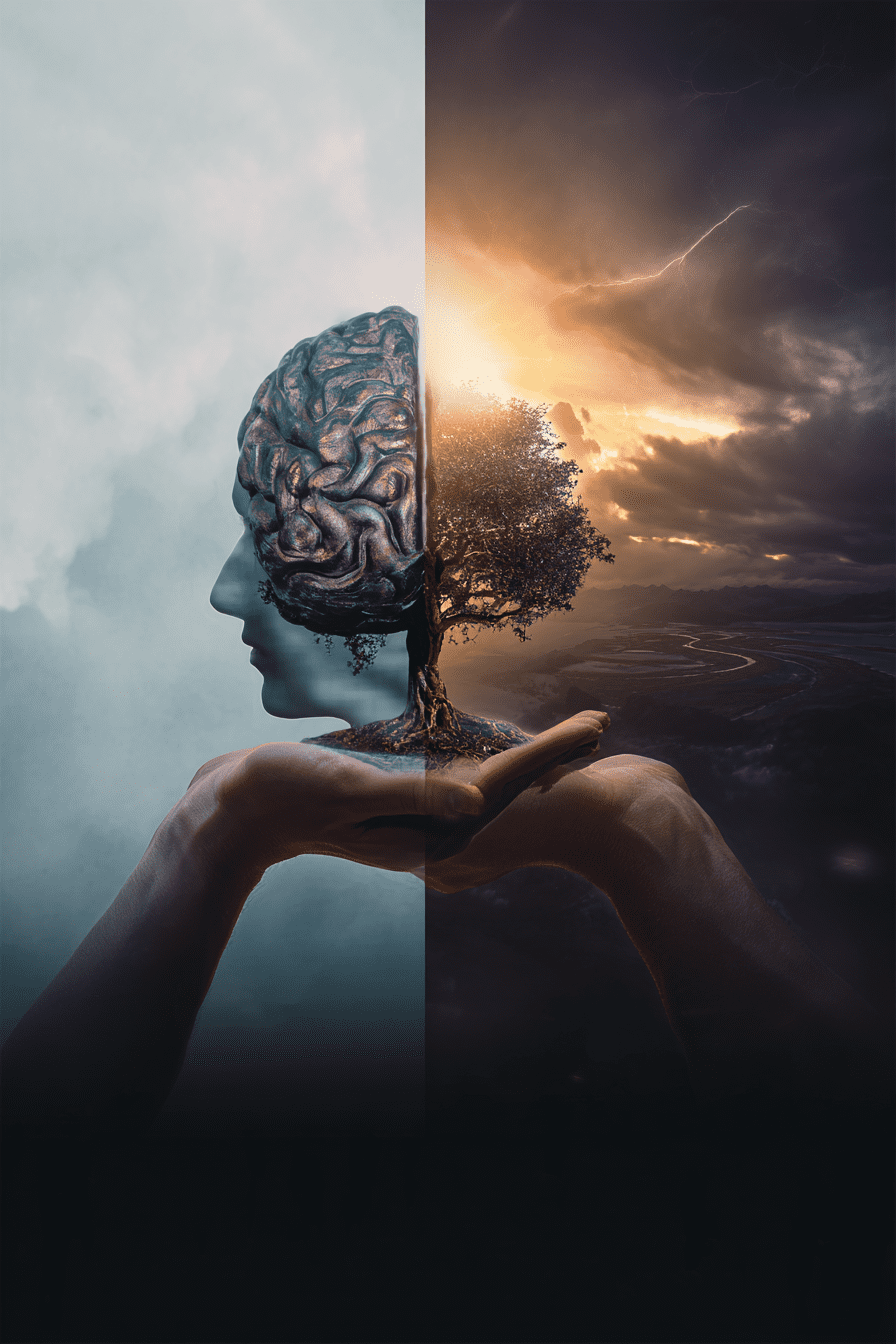
When I think about the laws governing the world, the laws of physics or principles of math usually come to mind. Gravity, thermodynamics, the theory of relativity—all this describes the material structure of reality. But what if there are laws just as fundamental that operate in the non-material sphere? What if universal values are exactly such metaphysical principles that order our spiritual and social life?
For me, this perspective opens up a completely new way of looking at values. I don’t view them merely as a product of culture or social consensus, but as something much deeper. Just as the law of gravity works regardless of whether we believe in it, values like truth, love, or justice seem to have an objective power. Ignoring them leads to chaos, suffering, and internal tearing apart, while living in harmony with them brings harmony and a sense of meaning.
Although values seem invisible, I believe we can get to know them and get closer to understanding them through mindfulness and reflection. It is precisely in moments of stopping, when we allow ourselves a deeper look into ourselves and the world surrounding us, that we begin to notice their presence. Values reveal themselves in our daily choices, in relationships with others, and in how we react to life’s challenges. For me, it’s a process of discovery that never ends—the more aware I am, the clearer I see how these principles permeate every aspect of my life.
Ancient philosophers already felt this intuitively. Plato, in his theory of forms, suggested that the material world is merely a shadow of a perfect, eternal world of forms. In this world of ideas, patterns of Good, Beauty, and Justice exist. Perhaps universal values are simply an echo of this non-material order—they are eternal, unchanging, and independent of our human limitations. Following them is therefore not so much a moral duty as an attempt to tune into the deeper harmony of the universe.
Perceiving values as metaphysical laws has one more important consequence. It makes us realize that we are not left only to ourselves in creating meaning. There is a structure, a cosmic order we can refer to. It gives a sense of safety and direction, especially in moments of doubt. Values then become a solid reference point that helps make decisions and act in accordance with what is fundamental and true.
How Do Values Influence Spirituality?
For me, spirituality is primarily a journey into oneself and an attempt to find a deeper connection with the world. It doesn’t matter if I follow the path of a specific religion or create my own—universal values are always what I base my searches on. I don’t treat them as a goal in themselves, but as signposts that help me find meaning and direction in life.
When I look at great spiritual traditions, I see that their heart is precisely these timeless principles. Christianity speaks of loving one’s neighbor, Buddhism of compassion for all beings, and Sufism of unity with divinity through love. Forms and rituals may differ, but the message is always the same: true spirituality manifests in how we live, not in what we declare.
Values have become a practical tool for me on my spiritual path. Take truth, for example.
Living in truth—in agreement with myself and my beliefs—is one of the hardest challenges I know. It requires courage to take off the masks I wear daily and stand in full authenticity. But that’s exactly when I feel I am closer to something bigger than myself.
It’s similar with other values:
Compassion allows me to step outside the boundaries of my own ego and see that the suffering of others is also my suffering. Practicing compassion opens my heart and helps build bridges where I previously only saw walls.
Humility reminds me that I am not the center of the universe, yet simultaneously gives me a sense of belonging to something larger.
Forgiveness, both for myself and others—frees me from the weight of the past and allows me to move forward with a lighter heart.
For me, spirituality experienced through the prism of universal values stops being an abstract idea. It becomes something real, something I can feel every day. It is these values that give depth to my journey, leading me to greater harmony, a sense of purpose, and an authentic connection with life.
Values in Philosophy: The Eternal Search for Wisdom
When I think of philosophy, I don’t see just thick volumes and complicated theories. For me, philosophy is something much simpler, but at the same time deeper—it is the “love of wisdom.” And what is wisdom if not the ability to see what is really important in life? For centuries, it was philosophers who were the first to try to understand and name universal values, which are the foundation of our lives to this day.
Looking at the history of human thought, I see that questions about good, truth, and justice have been with us forever. These aren’t new ideas—they are bridges connecting intellect with daily life, helping us find meaning in what we do.
Ancient Giants and Foundations of Virtue
Already in antiquity, great thinkers like Socrates, Plato, or Aristotle placed virtue at the center of human life. For them, values weren’t just abstract concepts—they were the path to happiness and fulfillment. Socrates believed that if we truly know what is good, we will naturally do it. He thought evil stems from ignorance, not ill will.
Aristotle, in turn, taught about the “golden mean”—that virtues, such as courage or generosity, lie between extremes. This approach seems incredibly practical to me because it shows that values require constant balancing and mindfulness from us.
Stoics, like Seneca or Marcus Aurelius, remind me that peace of mind can be achieved by living in harmony with nature and reason. Their teachings on cultivating virtues regardless of external circumstances are an inspiration for me, especially in difficult moments.
The Enlightenment and the Moral Imperative
When I think about the Enlightenment, Immanuel Kant and his categorical imperative immediately come to mind. His words: “Act only according to that maxim whereby you can, at the same time, will that it should become a universal law,” sound to me like a call to responsibility. Before I do something, I try to think about whether I would want everyone to act the same way. It’s a simple but powerful reminder that our actions have an impact on others.
Modern Echo
Modern philosophy, especially existentialism, reminds me of the burden and beauty of freedom. Thinkers like Jean-Paul Sartre emphasized that we ourselves give meaning to our lives through our choices and values. No one will do it for us. For me, this is both a challenge and a huge opportunity—the awareness that I have an influence on who I am and how I live.
Philosophy shows me that universal values aren’t rules imposed from the outside, but something that gives structure and meaning to my life. It teaches me critical thinking about what really matters and gives tools to live consciously, not just exist.
Universal Values in Personal Development
Thinking about personal development, various techniques often come to mind—time management, learning new skills, increasing productivity. This is all important, but over time I understood that without a solid foundation, these methods are like building a house on sand. For me, that foundation is universal values. They make it so that growth doesn’t end with superficial changes but leads to a deep transformation of character.
In difficult moments—and life is full of those—it’s not speed-reading techniques or planning that save me from doubt. What saves me is what I believe in and what guides me deep in my heart. Values are simply a foundation for me—they help me keep my balance, even when everything around seems chaotic.
How Do Specific Values Support Our Growth?
Let’s look at a few values that have huge power for me in the process of personal growth:
- Responsibility
For me, responsibility is the moment when I stop looking for the guilty ones outside and start looking for solutions within myself. When I acknowledge: “Maybe I don’t have influence over what happened to me, but I have full responsibility for how I react to it,” I regain a sense of agency. This changes everything—suddenly I feel I have control over my life, even in the toughest moments. - Gratitude
Gratitude for me is something more than a nice feeling. It’s a way of looking at the world that helps me notice the good, even in difficult situations. I remember how, in one of the hardest moments of my life, practicing gratitude allowed me to spot small things that gave hope. It really works—it changes perspective and gives strength to go on. - Love and Forgiveness
I’ve always been a harsh critic of myself. Over time, I learned that true growth isn’t about punishing yourself for mistakes, but about being understanding toward yourself. When I can forgive myself and show care, I get back up after failures faster. It’s not easy, but it gives an incredible feeling of inner peace. - Courage
Courage for me isn’t just big, heroic deeds, but also daily decisions that require stepping out of the comfort zone. It’s saying “yes” to new challenges, even if I’m afraid, and “no” to situations that aren’t aligned with my values. Courage helps me grow and face difficulties. - Humility
Humility reminds me that I am not the center of the universe. It teaches me to notice my smallness against the vastness of existence, but at the same time gives a sense of belonging to something bigger. It’s a value that helps me maintain balance and openness to learning. - Perseverance and Patience
Perseverance for me is the ability to stick to my values and goals, even when difficulties appear. It reminds me that growth is a process, not a one-time action. Every small step forward matters. I patiently pursue the goal, enjoying the journey, and if the goal is achieved—great, and if not—the journey itself has immense value for me.
How Universal Values Connect Spirituality, Philosophy, and Personal Growth
We often have a tendency to pigeonhole our lives. In one drawer we keep our spiritual practices, in another intellectual philosophical considerations, and in yet another—tools for efficiency and personal growth. Looking back, I lived like that myself, unconsciously. Along with enriching my knowledge in various fields, I came to the conclusion that a human is an integral whole, and what glues all these spheres (spiritual, personal, social, etc.) into one coherent picture are precisely universal values.
Regardless of whether you search for meaning on a yoga mat, in the writings of Stoics, or in a therapist’s office, ultimately you are aiming for the same thing: being a fuller, better human. Values are the common denominator. Truth remains truth, regardless of whether Socrates, a mystic, or a coach talks about it. Compassion heals the wounds of the soul just as effectively in a religious context as in relationship psychology.
When you understand that universal values are the binder of these worlds, you stop feeling an internal tear. Instead of being someone else at work, and someone else at home or in a temple, you become coherent and authentic, you will feel greater respect and pride in yourself. It is exactly this coherence—living in harmony with what we feel and think—that gives us the greatest strength and peace.
How to Introduce and Integrate Values into Daily Life?
Knowing what is important and living it on a daily basis—those are two different things. Universal values, like love, truth, compassion, or justice, can be our compass, but practice makes perfect. Intention plays a key role here—it’s a conscious decision that gives direction to our actions and thoughts. Without reflecting on our values, it’s hard to act with the intention of honoring them. Every morning, I try to set an intention for the day—for example, to be more patient, more present, or more authentic. This simple practice helps me return to my values, even when life throws challenges my way.
With intention as a guiding force, here are a few practical ways I integrate values into my daily life.
- Values Journaling:
In the evening, I dedicate a few minutes to reflection. I ask myself questions: “Were my decisions today in line with my most important values? In what situation could I have acted better?” This simple exercise builds greater self-awareness and helps spot patterns in my behavior. - Decision Pause (Mindfulness):
Before I react impulsively, I try to stop for a moment. I take a few deep breaths and ask myself: “What would Love do in this situation? What does Honesty tell me?” This moment of stopping allows me to act more consciously and in accordance with values. - Morning Intention:
Every morning I choose one value that will accompany me throughout the day. For example: “Today my guide is Peace.” It’s simple, but it helps me return to this value during the day, especially in difficult moments. As I mentioned earlier, setting an intention is more than just a habit—it’s a conscious decision that aligns my actions with my values. It reminds me why I choose patience over frustration or kindness over indifference, even when life gets challenging. - Look for Common Points:
Reading a book on personal development, ask yourself: “How does this technique connect with my spirituality?” Looking for wisdom in philosophy, consider: “How can I apply this to be a better partner or friend?” This exercise helps connect different spheres of life into a coherent whole. - Practice Micro-decisions:
Great values are realized in small moments. Honesty isn’t just about not lying in court; it’s also about admitting a mistake to your child—which, from experience, I know isn’t always easy, at least at first—but it’s become a habit for me. Similarly, courage isn’t just about heroic acts; it’s also about saying “no” when you feel your boundaries are being crossed. - Do a Coherence Review:
Once in a while, stop and look at your life from a bird’s eye view. Are the values you declare as important visible in your family and professional life? If you value peace, are you rushing too much or putting unnecessary pressure on yourself and others? It’s worth conducting such a review or reflection from time to time—a kind of internal self-assessment.
But don’t blame yourself or get discouraged if everything hasn’t gone perfectly. I know from my own experience that many things don’t go as planned for me either, but I keep moving forward, enriched by the lessons I’ve learned along the way. - Celebrate Values in Action:
When you make a decision consistent with values, appreciate it. Tell yourself: “That was in line with my principles and I am proud of it.” This reinforces positive habits and motivates further action.
It also teaches me self-love in the best sense of the word—gratitude for the fact that I am changing for the better. It’s not narcissism; there is humility in it. It also fosters self-acceptance and builds my sense of self-worth. - Conversations about Values:
Talk to loved ones about what is important to you. Shared reflections can deepen relationships and help in better understanding each other.
I try, for example, to explain to my children, when they argue with each other, that it happens, but I talk about respect, understanding, and forgiveness. Even if it doesn’t work immediately, I believe it’s a seed I’m planting in their minds that will sprout over time. I’ll just add, stepping away from the topic for a moment, that the brains of most teenagers are not yet mature enough to fully grasp such abstract concepts. Knowing this, I understand that I need to patiently repeat these lessons to them. - Meditation on Values:
Dedicate a few minutes a day to meditation, focusing on one value, e.g., love, peace, or truth. This helps strengthen its presence in your life. - Forgiveness and Understanding:
Don’t be afraid to admit that sometimes you don’t act according to values. Instead of blaming yourself, treat it as a lesson. Forgiveness—both for yourself and others—frees from the weight of the past and allows moving forward with a lighter heart.
Remember that working with values is a process, not a one-time task. It’s not about perfection, but about the direction you are heading. Small, conscious steps every day build a life full of meaning. As Roy E. Disney said:
“It’s not hard to make decisions when you know what your values are.”
Summary: Why is it Worth Living According to Universal Values?
We have reached the end of our shared journey through the world of spirituality, philosophy, and personal growth. We have seen how universal values, like love, truth, or compassion, constitute an invisible thread that weaves these seemingly distant fields into one coherent whole. We discovered that they are the common language of humanity, present in every great tradition and in the heart of each of us.
For me, universal values aren’t just a lofty idea—they are a way of life. They help point the direction in moments of chaos and uncertainty—putting it simply, they help me make decisions, both the small daily ones and the big difficult ones. They are what give strength to get up after falls, and inspiration to become a slightly better version of myself every day. Living in harmony with them isn’t always easy, but it’s always authentic. It is precisely this authenticity that brings the deepest peace and sense of meaning.
Now I would like to encourage You. Take a moment for reflection. What values are most important to you? How can you, even in the smallest degree, introduce them into your daily life? Remember, it’s not big, revolutionary changes, but small, conscious steps that build a life full of significance.
I leave you with inspiring thought in the words of Mahatma Gandhi:
“Be the change that you wish to see in the world.”
If my writing has inspired or helped you, I would be grateful for your support.
Need support yourself? Discover how I can help you.
AI Disclosure
I see my thoughts as the essence, much like the soul, and AI helps me give them form. It supports me with research, translation, and organizing ideas, but every perspective is my own. Curious how I use AI? Read more here.