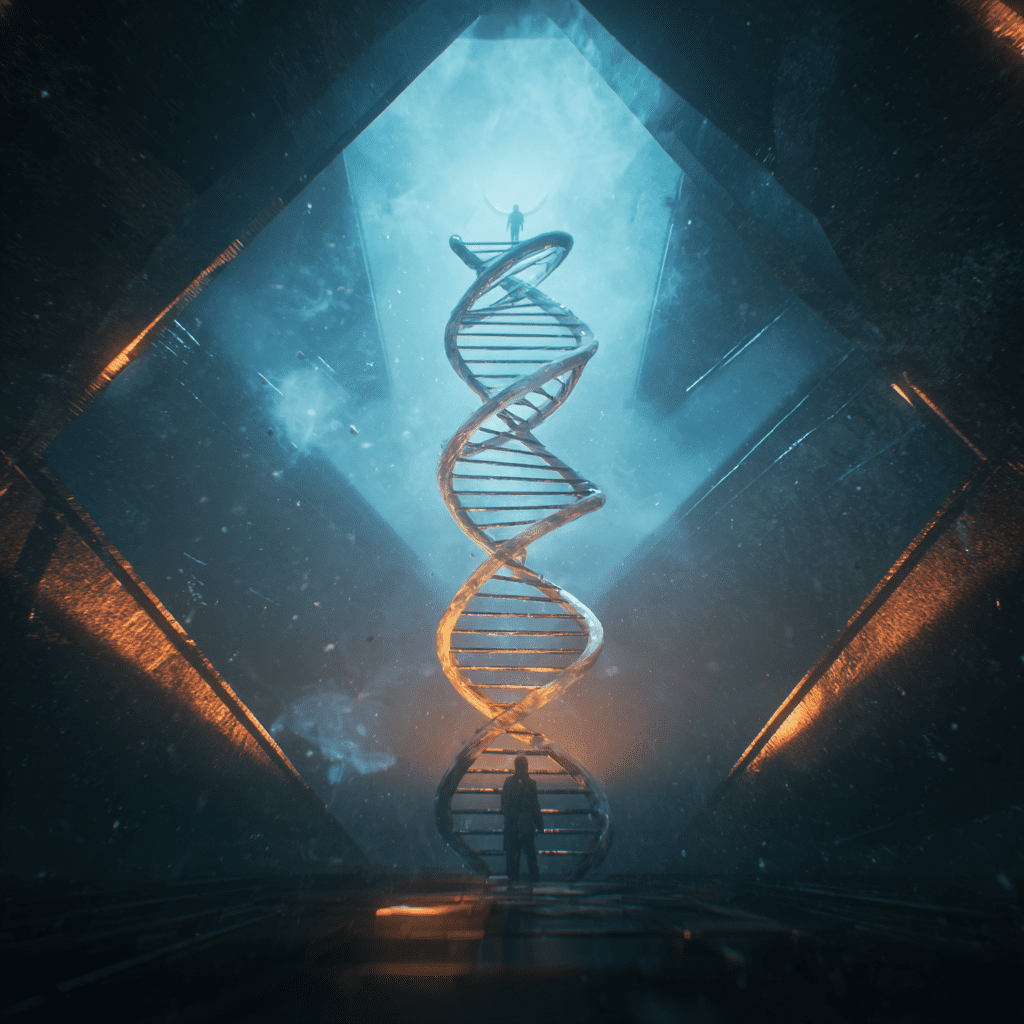
We are standing on the threshold of a fascinating new era. For centuries, we were told we had to choose. You could be a person of “reason”—trusting the cold, hard facts of the material world—or a person of “faith,” relying on intuition, feelings, and the unseen. It was a battle of the lab coat versus the monk’s robe; the microscope versus the mantra.
But that old divide is crumbling.
When I look at the landscape of modern mental health, personal development, and technology, I don’t see separation anymore. I see deep integration happening. We are moving toward a future where rigorous data meets the subtle, ineffable experience of the spirit. It’s no longer about proving who is “right.” It’s about understanding how the machinery of our biology and the world supports the mystery of our existence.
So, what does this shared path look like? Let’s walk through a future where science blazes the trail, and spirituality gives it depth and meaning.
Contemplative Neuroscience: The Brain Under the Microscope
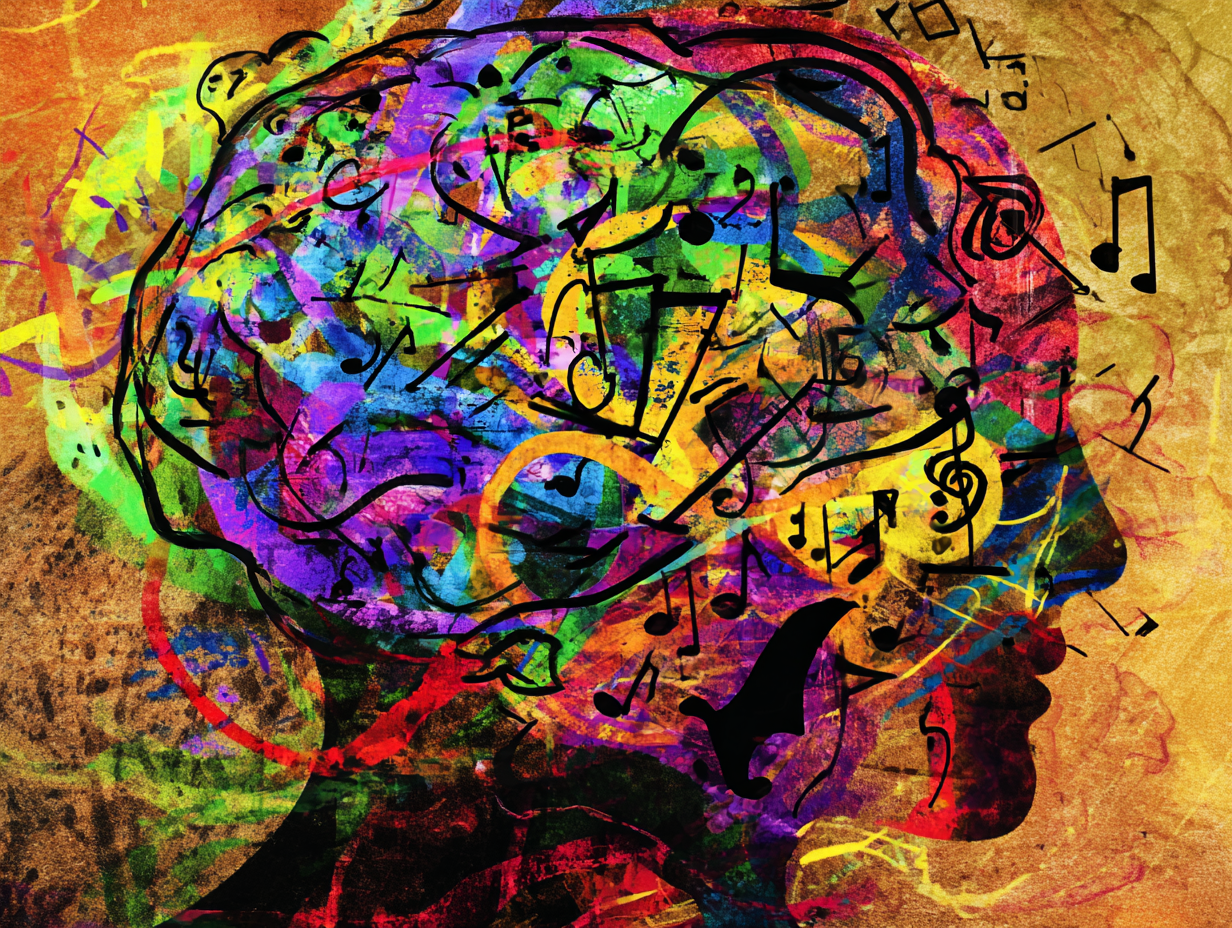
There was a time when the scientific community dismissed meditation as just relaxation or, worse, esoteric nonsense. Today, it is one of the most intensely studied topics in neurology. We have entered the age of contemplative neuroscience.
Thanks to modern imaging technologies like fMRI, scientists can observe the thickening of the prefrontal cortex—the area responsible for higher-order thinking and emotional regulation—and the shrinking of the amygdala, our primal fear center.
Silence by Prescription
I imagine a future where I walk into a doctor’s office, overwhelmed by anxiety, and instead of leaving with just a prescription, I walk out with a tailored, neurological meditation protocol designed specifically for my needs.
We are heading toward an era of personalized “spiritual prescriptions.” Science is starting to understand which specific types of contemplation trigger specific neuroplastic changes. It’s not about stripping meditation of its magic; it’s about making the tools of mystics available to everyone, with the certainty that they physically transform our brains for the better.
Epigenetics: The Biology of Belief
Going a step deeper than brain structure, we enter the world of epigenetics. For a long time, we believed we were victims of our genes—that inherited DNA was an unchangeable sentence. New science, however, suggests something much more empowering.
Studies indicate that environmental factors, including our thoughts, emotions, and state of mind, can influence gene expression. Meditation and stress reduction can literally “switch off” pro-inflammatory genes and “switch on” those responsible for immunity and regeneration. Spirituality stops being just a philosophical concept; it becomes a biological mechanism through which we consciously shape our health at the cellular level.
Invisible Architecture: Energy and the Heart Field
When we talk about spirituality, we often use words like “vibes” or “energy.” Science is starting to catch up with this language by studying the body’s electromagnetic fields.
Research on the heart is particularly fascinating. It generates the strongest electromagnetic field in the human body—measurable even several feet away from us. Institutions like the HeartMath Institute show that emotional states like gratitude or love bring the heart into a state of coherence, which can affect the nervous systems of other people around us. This is scientific confirmation of the old truth that our “presence” matters and that we are connected on an energetic level, not just verbally.
Tech Supporting Breath and Coherence
This understanding leads us to new technologies. It’s not just about fitness trackers anymore, but devices supporting heart and breath coherence.
I imagine how modern biofeedback sensors (like the previously mentioned Muse or heart rate variability monitors – HRV) allow us to synchronize our breath with our heart rhythm in real-time, bringing the organism into a state of optimal functioning. This technology acts as a digital mirror for our physiology, teaching us how to consciously manage our life energy and stress, bridging the gap between ancient pranayama and modern health metrics.
The Psychedelic Renaissance: Mysticism in the Clinic
Perhaps the most radical change I personally see is the psychedelic renaissance. Substances like psilocybin and MDMA, once shrouded in controversy and pushed underground, are now returning to universities and clinics. What was once a taboo subject is today becoming a real therapeutic tool that can change the lives of people struggling with depression, PTSD, or addiction. We see science starting to uncover the potential of these substances, giving them new meaning in the context of mental and spiritual health.
The key here is that data suggests the spiritual experience itself is often the medicine. Patients report a dissolution of the ego and a deep sense of unity, which correlates with the remission of depression or PTSD symptoms. In this future, the therapist evolves into the role of a modern shaman, helping to integrate cosmic insight with daily life.
Artificial Intelligence as a Digital Monk
And what if the guide doesn’t have to be human? We are entering an era where Artificial Intelligence can act as a spiritual assistant.
Imagine an AI that analyzes your speech patterns, heart rate, and micro-expressions to notice when you lose balance, and suggests an appropriate Zen parable, a scripture passage, or a breathing exercise exactly when you need it. Although AI does not possess a “soul,” it can become a mirror that helps us in self-discovery, offering personalized paths of development without judgment, available 24/7.
New Spaces: Education and Work
Spirituality is leaving the ashrams and entering offices and schools, changing the foundations of our society.
Spirituality in Education
I see a slow but significant inclusion of mindfulness practices and social-emotional learning (SEL) in school programs. Initially, these will likely be optional classes, similar to religion, ethics, health education, or family life education. It’s not about any form of religious indoctrination, but about equipping children with practical tools to deal with stress, build empathy, and understand themselves better. This is an approach to education that cares for emotional and spiritual development just as much as intellectual growth.
Spirituality in the Workplace
In corporations, which used to be bastions of cold professionalism, I see meditation rooms and workshops on “conscious leadership” appearing, much like current relaxation rooms or quiet zones. Companies are starting to understand that an employee is a multidimensional being whose needs go beyond salary and benefits. Spiritual well-being translates into creativity, engagement, and loyalty. Work stops being just a place to earn money and becomes a field for self-realization, cooperation, and service to a greater purpose.
Consciousness Without Borders: Sleep and Research
Our exploration also reaches where the boundaries of waking life disappear.
The Role of Sleep and Lucid Dreaming
Sleep, treated with neglect for years, is gaining importance as a time for spiritual regeneration and work. Techniques of lucid dreaming, supported by new technologies (e.g., REM-inducing headbands), allow us to use one-third of our lives for active spiritual growth, confronting the shadow, and simulating transcendental experiences in the safe environment of our own mind.
Interdisciplinary Research on Consciousness
Meanwhile, at universities, quantum physicists, neurobiologists, and philosophers are joining forces to explore the “hard problem of consciousness.” Is consciousness a product of the brain, or a fundamental property of the universe, as panpsychism theories suggest? Science is starting to ask questions that were once reserved for theologians, opening up to the possibility that matter is a manifestation of consciousness, not the other way around.
Spirituality and Ecology: Return to Earth
This new, integrated view also changes our relationship with the planet. Deep ecology and spirituality meet in the understanding that the Earth is not a resource to be exploited, but a living system of which we are a part.
Systems science and climate science provide data on our impact on the environment, while spirituality provides the motivation for change, based on reverence for life and a sense of interdependence. It is a shift from “ego” (man over nature) to “eco” (man in nature).
The Future of Group Spiritual Experiences
Finally, technology is changing the way we experience community. Virtual Reality (VR) and the metaverse are opening doors to global rituals.
We can imagine meditation groups meeting in digital, sacred geometry, where participants from all over the world chant sounds together, seeing their biofeedback auras merging into one whole. This is the democratization of mysticism—technology removes geographic barriers, allowing for the creation of powerful fields of group resonance without the need for physical travel.
Conclusion: A Holistic Future
The most exciting part of this combination isn’t the gadgets or clinical trials. It’s the shift in our perception of ourselves.
The future invites us to a holistic model of humanity. We are starting to respect biology as a vessel for the spirit. We are learning that regulating our nervous system is a spiritual act, and the pursuit of transcendence can be grounded in biological, genetic, and social health.
As we move forward, science provides the tools and methods that help us understand the mechanisms of the world, while spirituality points out the purpose and gives direction to our actions. We don’t have to pick sides. We can be fully human—built of stardust and data, biology and infinity.
Join the conversation: Which of these new areas of integrating science and spirituality fascinates you the most? Do you see a place for AI in your spiritual practice? Share your thoughts in the comments.
If my writing has inspired or helped you, I would be grateful for your support.
Need support yourself? Discover how I can help you.
AI Disclosure
I see my thoughts as the essence, much like the soul, and AI helps me give them form. It supports me with research, translation, and organizing ideas, but every perspective is my own. Curious how I use AI? Read more here.