Have you ever wondered why, despite having everything you need, happiness often feels just out of reach? Or why a simple comment from your boss can ruin your entire day? Looking back, I’ve had situations like “stupid” orders from a boss who got his position through political connections, arguments about politics in the family because I was right, or other situations—like doing or not doing something out of fear of what people would say—or, on the contrary, doing something to show off or prove myself to others.
But I only see that now. The turning point was my wife’s infidelity and her leaving me. My search—deepening my spirituality and exploring psychology—led me to discover the real culprit: the ego.
Of course, this may not be groundbreaking news, but it was a personal discovery for me. It’s one of the real game changers in my life—along with mindfulness, intention, and forgiveness. But maybe it can be for you too, which is why I want to share this knowledge with you.
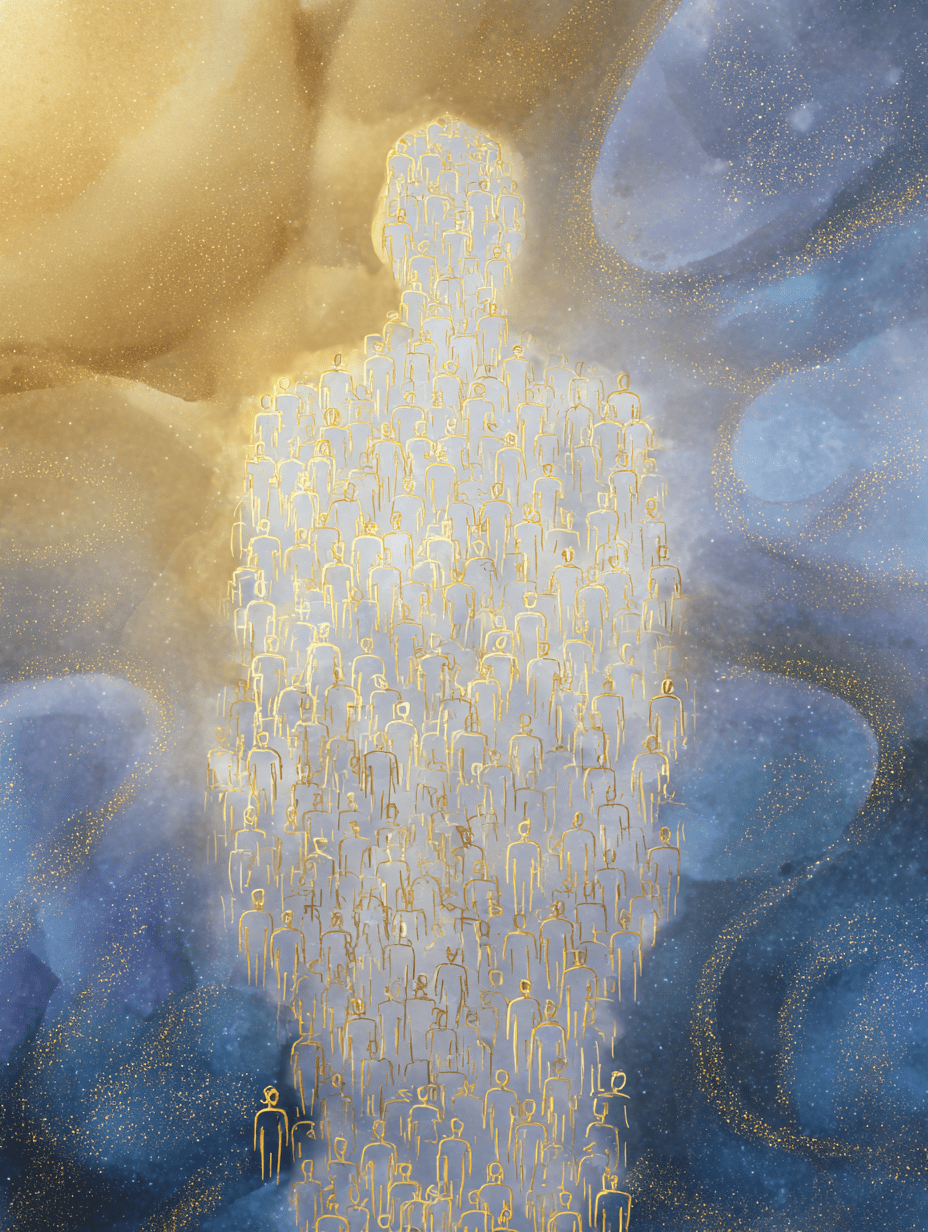
In psychology, philosophy, and spirituality, the ego is a central character. It’s the part of us that says “I,” “me,” and “mine.” While it is essential in our daily lives, it is also frequently the biggest barrier to finding true peace and connection.
What I’ve mostly learned is that understanding the ego isn’t about destroying it. It’s about learning to manage it.
I want to present different cultural perspectives here because I’ve been intrigued by how various traditions view this complex part of our psyche, how it affects our happiness, and how we can find a healthy balance between ego and spirituality.
I’ll also touch on psychological and philosophical perspectives because I believe that science goes hand in hand with spirituality—and exploring different viewpoints can help us better understand this topic.
What Exactly Is the Ego?
Before you can balance the ego, you need to understand what it is. I’ve found that different fields like psychological and philosophical perspectives offer unique perspectives on this topic, and together they help create a more complete picture. I also believe that science goes hand in hand with spirituality—and exploring different viewpoints can help us better understand this topic.
The Psychological View
In psychology, the ego was famously defined by Sigmund Freud as the rational mediator between our primal instincts (the id) and our moral conscience (the superego). It helps us function in reality by balancing these opposing forces. Freud believed that happiness was merely a compromise—a state of “balanced dissatisfaction”—as the ego could only manage internal conflicts, not resolve them entirely.
In my view, Freud’s theory lacked a spiritual dimension. His focus on psychological mechanisms overlooked the deeper essence of human existence. For me, true happiness came when I felt I could manage my ego. A spiritual perspective allowed me to find harmony—a sense of balance and fulfillment that Freud’s approach didn’t fully address.
Carl Jung, Freud’s contemporary, introduced the idea of the persona—a social mask we wear to meet societal expectations. While the ego is essential for maintaining identity, Jung warned that over-identification with the persona can disconnect us from our true self, which he saw as the key to genuine happiness.
Jung’s concept resonates with me more than Freud’s. I understand his idea of the true self as the soul, and it is through this lens that I’ve found happiness. By working on my ego and uncovering my true self, I was able to move beyond societal masks and connect with a deeper sense of authenticity. This journey brought me peace and happiness in a dimension I had never experienced before.
More recent fields, like developmental psychology, explore how the ego evolves throughout life. Erik Erikson’s stages of psychosocial development show how the ego adapts to challenges, from building trust in infancy to finding integrity in old age. As I delved into Erikson’s ideas, I began to question whether I truly needed spirituality to find happiness. Perhaps it was enough to simply accept my circumstances—being left alone with the children after my wife’s departure.
At other times, I wondered if mindfulness, as highlighted in neuroscience, could be the answer. Practices like meditation, which reduce overactivity in the default mode network (DMN), might have helped me find emotional balance. But as I reflected further, I realized that while mindfulness could quiet my mind, would it have stopped me from seeking revenge on my wife for her betrayal?
This is where cognitive-behavioral psychology offered an unexpected insight. I came to see my “conversations with the soul” as a form of cognitive restructuring—a way to reframe my thoughts and emotions. Yet, it was more than that. When I visualized having a soul—whether during meditation or moments of mindfulness, listening to my inner voice—it felt like my soul was above it all, beyond the chaos of ego. In those moments, the ego seemed to step aside on its own.
Honestly, the awareness of having a soul helped me more than mindfulness ever could. It gave me a sense of something greater, something that transcended my immediate emotions and conflicts. But now I find myself wondering: can I still believe in the soul? It helped me immensely, but was it truly a spiritual experience, or just another form of cognitive restructuring from psychology? This question lingers, but perhaps the answer matters less than the peace and clarity it brought me.
The Philosophical View
Philosophy has long sought to understand how the ego shapes our lives, happiness, and spirituality. For Nietzsche, the ego was both a driving force and a limitation. He believed that societal norms stifled its potential and that true happiness could only be found by transcending those constraints. His concept of the Übermensch—a person who creates their own values—resonates deeply with me. In my own life, discovering that my soul is something greater than my ego allowed me to rise above the expectations of others and personal grievances. It felt like finding a sense of peace that had once seemed unattainable.
Sartre, on the other hand, saw the ego as something that emerges from our relationships with others. It can be helpful, but when we over-identify with it, it becomes a trap. His idea of “bad faith”—a denial of our freedom—made me reflect on my own life. Was my ego holding me back, defining me as a betrayed husband or a struggling father? Mindfulness helped me quiet that inner voice, but it was the conscious decisions about who I wanted to be that allowed me to find authenticity. That freedom brought me a sense of fulfillment I hadn’t experienced before.
While writing about Sartre, I was struck by a thought from the Bible, specifically the moment when Moses asks God for His name to share with the Israelites in Egypt. God responds in Hebrew: Ehyeh Asher Ehyeh, which translates to “I Am Who I Am.” This profound statement seems to encapsulate the essence of authenticity and existence beyond the ego. In the context of Sartre, who spoke of authenticity as the act of recognizing one’s freedom and redefining oneself, this biblical passage serves as a reminder that the true “I” is not confined by the masks of ego or societal roles. This “I Am” is timeless, something that exists independently of our earthly identities. After all, we are created in the image of God, and so each of us, in a way, is “the one who is”—without needing to define ourselves through the lens of any specific role.
Then there are thinkers like Foucault and Derrida, who approached the ego from a completely different angle. To them, the ego is fluid, shaped by culture and environment. Their ideas made me question how much of my ego was built on societal expectations—being a father, a husband, a provider. When I let go of those rigid roles, I felt like I could finally be myself. It was like seeing myself from the perspective of my soul, which is constant and unchanging, no matter what happens around me.
And yet, it was Stoicism, with its emphasis on mastering the ego, that gave me something I could apply in my daily life. The Stoic belief that focusing on what we can control frees us from unnecessary fears and desires was transformative for me. I stopped trying to control everything—my ex-wife’s actions, other people’s opinions—and focused on what I could truly change. That brought me a sense of peace that was both simple and profound.
Each of these philosophies contributed to my understanding of the ego and happiness. But it was spirituality that allowed me to see the ego from a different perspective. When I began to see myself as more than just my ego, I found the strength to forgive, to let go, and to find happiness in the present moment. Spirituality didn’t just help me understand the ego—it gave me the tools to quiet it and discover a deeper meaning in life.
The Spiritual Roadblock
Most spiritual traditions agree on one thing: an unchecked ego is the primary obstacle to spiritual growth and lasting happiness. It distorts reality, making everything revolve around us—our desires, fears, and need for validation. But what if happiness lies in letting go of this self-centered perspective?
- Buddhism: The ego is the root of suffering (dukkha), creating endless cycles of attachment and aversion. Through mindfulness and meditation, we can see beyond the illusion of the “self” and experience the interconnectedness of all things.
- Hinduism: The ego (ahamkara) is a veil that separates us from the divine (Brahman). By practicing detachment and self-inquiry, we dissolve this illusion and realize our unity with the universe.
- Stoicism: While not a spiritual tradition in the religious sense, Stoicism offers profound insights into managing the ego. It teaches us to focus on what we can control and accept what we cannot, freeing us from the ego’s constant need for control and validation.
- Modern Spirituality: Practices like gratitude journaling and breathwork help quiet the ego’s chatter, allowing us to connect with the present moment and find joy in simplicity.
By addressing the ego’s grip on our thoughts and actions, these traditions show us a path to deeper peace, connection, and happiness. The journey isn’t about erasing the ego but learning to see through its illusions.
For me, this realization came slowly. I used to think that managing my ego was about suppressing it entirely, but I’ve learned that it’s more about shifting my perspective. When I began to see my ego as a tool rather than my identity, I found it easier to let go of the need for validation or control. Practices like mindfulness and gratitude helped, but it was the deeper spiritual understanding—that I am more than my ego—that truly transformed my outlook. It’s not about fighting the ego; it’s about stepping back and seeing it for what it is: a part of me, but not all of me. This shift brought me a sense of peace and connection that I hadn’t experienced before.
Why You Can’t Just “Kill” the Ego
When I first read about all the negative aspects of the ego, I caught myself thinking that the solution must be to destroy it entirely. It seemed like the ego was the root of all my problems. But as I delved deeper into the topic and reflected on my life in the here and now, I realized that this was a flawed assumption. After all, I need the ego to survive, to function in society, at work, in families, and among friends. Without it, I wouldn’t be able to navigate daily life.
Over time, I came to understand that the ego plays crucial roles in our lives—roles that are essential for living in harmony with ourselves and others:
- Identity: It gives us a name, a history, and a sense of who we are.
For me, this means being a father, a business owner, and someone with passions and dreams. The ego helps me understand my place in the context of my life. - Boundaries: It helps us say “no” and protects us from harm.
I remember when I first started working on myself, I was afraid that distancing myself too much from my ego would make me vulnerable—especially in my relationship with my ex-wife, who often took advantage of my sensitivity. But that’s when I realized it’s not about destroying the ego; it’s about learning to manage it. - Agency: It provides the drive to take action, achieve goals, and care for loved ones.
For me, the key was connecting my ego to intention. My ego wants me to accomplish things, but it’s my intention that gives those actions meaning. When my actions stem from good intentions, the ego stops being a problem and becomes a tool.
After a long journey of self-discovery and working on finding balance, I came to the conclusion that the problem isn’t that we have an ego. The problem is that we identify with it. It’s the inner voice in our heads that often takes control. But spiritual maturity isn’t about killing the ego—it’s about demoting it from master to servant.
And you know what? Once I started consciously managing my ego, I felt something I had been missing: genuine satisfaction, inner peace, and true happiness. For the first time, I felt like I was in control of my life—not my impulses, not my ego, not that illusory “self” that used to run the show.
My Personal “Spiritual” Journey with Ego
For a long time, I believed I had to constantly strive for perfection. My wife and I ran a business together, and even after our divorce, we continued to work side by side. At first, my motivation was a mix of ambition and a sense of duty—I felt responsible for maintaining the business and ensuring stability for our family. However, as my financial situation improved and I found other sources of income, my perspective began to shift.
Through my work on ego, I realized that my worth wasn’t tied to the success of the business or the need to control every outcome. This shift allowed me to approach the situation differently. I chose to help my ex-wife not out of obligation, but because she genuinely needed support. Unable to close the business, she relied on my assistance. Over time, my role transformed from one of duty to one of compassion and understanding.
I had always known about the concept of ego, but it wasn’t until I began exploring spirituality that I truly understood how to work with it. I’ve always been empathetic and willing to help others, but during the crisis with my wife, I felt an overwhelming inner resistance. It was through reflecting on my soul—on the idea that I am more than just a physical body—that I found a new perspective.
I realized that my soul has no ego. While my wife could hurt my feelings, she could never touch the essence of who I am. This understanding brought me peace, strength, and happiness. It freed me from the need to control or react, allowing me to focus on what truly matters: my growth, my children, and living with intention.
This journey wasn’t immediate—it was a process of reflection, reading books, and moments of deep introspection. I spent time questioning who I was beyond my achievements, beyond my roles as a father, a business owner, or even a husband. These moments of self-discovery helped me see that my worth wasn’t tied to external validation but to the unchanging essence of who I am.
Happiness, I discovered, isn’t tied to achievements—it’s found in the journey itself. While accomplishments still mattered, they no longer defined me. Success became a bonus, not a necessity. I stopped measuring my worth by external results and began to appreciate the process: setting goals, embracing challenges, and finding joy in small victories—even when the ultimate goal wasn’t reached.
At the same time, my goals no longer overshadowed what truly mattered—spending time with my kids and prioritizing my health and well-being. I asked myself: what’s the point of success if it leaves me exhausted or distant from the people I love? Releasing that inner pressure was liberating, like breaking free from invisible chains. I no longer felt the need to achieve to prove my worth. I could still pursue goals, but now with intentions rooted in meaning and balance.
As I worked on my ego, I stopped judging the choices my ex-wife made and began to accept her decisions, even when they didn’t align with mine. I realized that my role wasn’t to advise or correct her unless she sought my input. This shift brought unexpected happiness—our relationship became more peaceful, our interactions less strained, and a sense of mutual respect began to grow.
I also let go of jealousy. Even after our separation, I found myself struggling with envy when I knew she was seeing someone else. That jealousy was a barrier to my own happiness. By shifting my focus inward—on my growth and on being present for our children—I found a healthier way to support both myself and them. It wasn’t selfish; it was a step toward becoming the best version of myself.
I continued to support her, but my intentions shifted: I wanted her to feel uplifted, not burdened. I wanted our children to see her happy and thriving, not overwhelmed by challenges. This change in perspective taught me that true happiness comes from acceptance and letting go of the need to control others.
At the same time, I remained mindful of not being taken advantage of. I learned to balance taming the reactive, ‘bad’ ego with setting healthy boundaries—whether in my relationship with my ex-wife or in everyday situations. For example, with neighbors who often tested limits, assuming I’d always be willing to help or lend something. I realized that my ego didn’t need to be either aggressive or submissive. Instead, I could consciously choose when to say ‘yes’ and when to say ‘no,’ free from guilt or frustration. This newfound balance brought me a deep sense of peace.
Through this spiritual journey, I came to see my soul as a source of strength and resilience. While life’s challenges could hurt my ego, they could never touch the essence of who I am. This realization not only brought me peace but also a profound sense of happiness. It reminded me that true joy comes from within—from understanding that I am more than my circumstances, my achievements, or my failures.
As C.S. Lewis wisely said, “Humility is not thinking less of yourself, but thinking of yourself less.” This quote perfectly encapsulates the balance I’ve found in managing my ego and embracing a more peaceful, intentional, and spiritually grounded life.
Balancing the Ego for a Happier Life
How do you deal with your ego so it doesn’t mess up your life? Yeah, it’s not exactly easy, but it’s doable. I’ve got a few ideas that worked for me, but honestly, this isn’t some ultimate list. Everyone’s got their own way. Here are five things you can try—but trust me, there are way more out there.
- Take a Pause
The ego loves drama. Someone cuts you off in traffic, and your brain’s already screaming, “What a jerk! How dare they?!” Next time that happens, try something different. Stop. Take a deep breath. Instead of flipping out, just notice what’s happening. That little pause gives you space to not get swept up in the moment. Suddenly, you’re in control—not your ego. - A Little Humility Won’t Kill You
Humility isn’t about putting yourself down; it’s about realizing you’re not the center of the universe. You don’t have to know everything, and you don’t have to be the best at everything. Gratitude is a great way to practice this. Instead of focusing on what you don’t have (which the ego loves to do), think about what you do have. And suddenly, life doesn’t seem so bad. - Do Something for Someone Else
The ego is obsessed with itself. The quickest way to shut it up? Do something for someone else. And I mean, with no strings attached. It doesn’t have to be a big deal—listen to a friend, help your neighbor, whatever. Suddenly, those walls the ego builds start to crumble, and you feel more connected to the people around you. - Let Go of the Outcome
The ego loves to measure everything in terms of success and failure. “I’ll be happy if I get that job.” Sound familiar? What if you focused on the process instead of the result? Do things because you enjoy them or because they need to be done—not because of the praise or status they might bring. It’s a game-changer. - Laugh at Yourself
The ego takes itself way too seriously. It’s terrified of looking stupid. But you know what? Laughing at yourself works wonders. You mess up? Instead of spiraling into shame, just laugh it off. Humor is like kryptonite for a rigid ego. It reminds you that you’re human, you’re imperfect, and that’s totally okay.
So, what do you think? Sounds simple, right? But in practice, it’s like a workout for your soul—you’ve got to keep at it. Once you start, though, you’ll see that your ego doesn’t have to run the show. You can take the wheel and finally feel like you’re in charge of your own life.
Moving Beyond the “I”
I found my way back to feeling joy in life through the process of transcendence. I realized that I am not my thoughts, not my job title. You are the awareness behind all of that. I’m not just a physical body—I’m a soul. To me, the soul is the essence, and the body is just the form.
When I stopped defending and feeding my ego, I felt free, and happiness started to flow naturally. It became easier to connect with others, to truly listen and understand their needs. I discovered that happiness wasn’t something I had to chase, like so many of us do in this overstimulated world—it was there all along (and still is), buried under the weight of the “I.”
A Challenge for You Today:
Start small. Today, try to catch your ego in the act. Smile at it, acknowledge it, and then choose a different path—one rooted in connection, peace, and presence. Whether it’s pausing before reacting, letting go of the need to be right, or simply listening more deeply to someone else, take one small step toward quieting the ego. Your happiness—and your relationships—will thank you.
If my writing has inspired or helped you, I would be grateful for your support.
Need support yourself? Discover how I can help you.
AI Disclosure
I see my thoughts as the essence, much like the soul, and AI helps me give them form. It supports me with research, translation, and organizing ideas, but every perspective is my own. Curious how I use AI? Read more here.