Yes. In what kind? I don’t know.
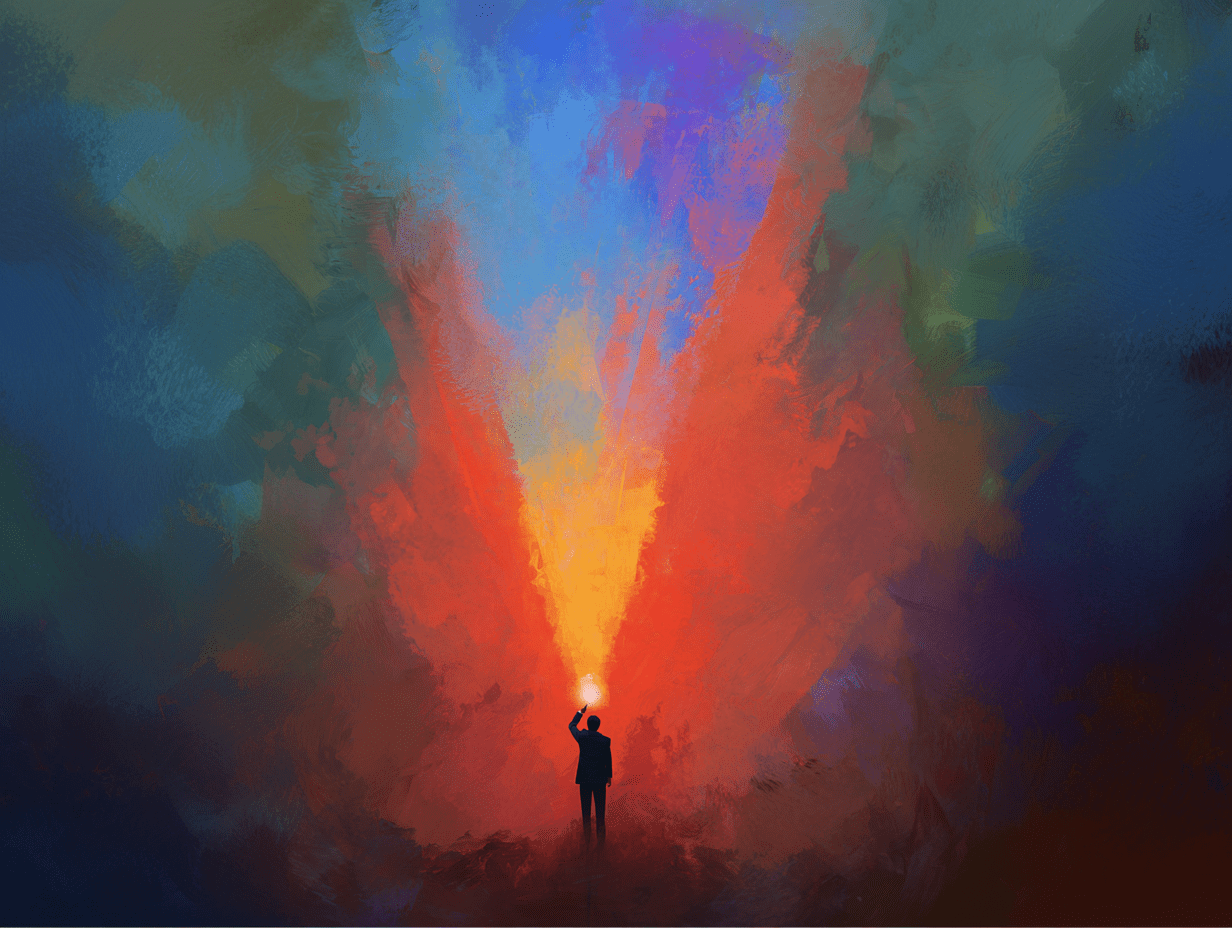
I believe in God, but I don’t know in what form – whether as a spirit, a spiritual personality, an oversoul, or as a universal consciousness, the universe, or nature.
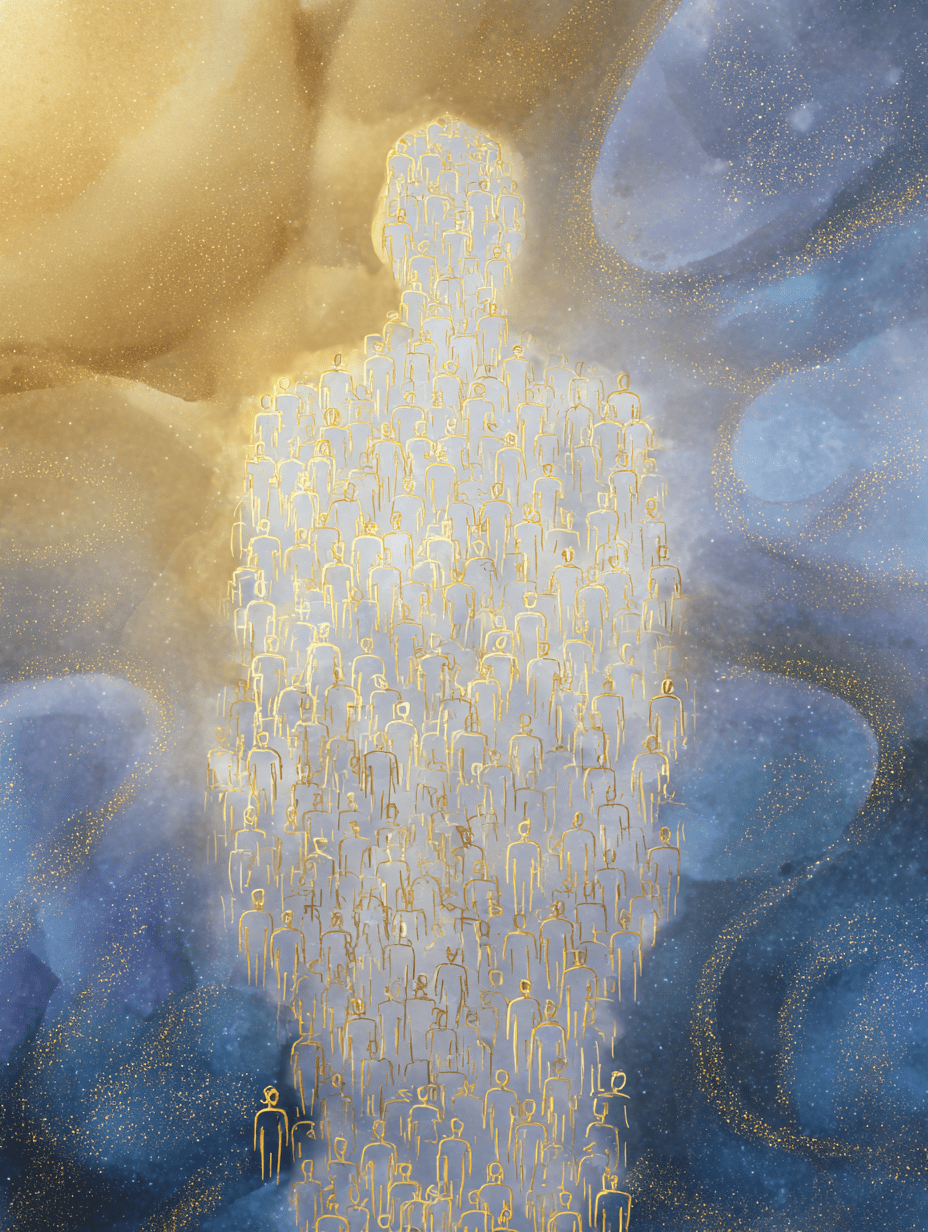
But my perspective on this changed when I came across the book Physics of the Soul by Amit Goswami. In his theory, universal consciousness is the key. It connects our soul with our mind, which is part of our physical life. Consciousness isn’t just something passive—it shapes our brain, influences how we see the world, and even creates the reality around us. This idea helped me understand that God might not be a ‘someone’ or ‘something’ but rather the force that connects everything.
Anyway, I still don’t know who He is, what He is, or if He is more of a someone or a something. Maybe God is universal consciousness, or maybe something even greater—something beyond what we can imagine.
So how do I believe, if I don’t know in what?
I know what I believe in today. I used to believe in the Christian God, then in nothing. Now, I believe in something beyond our physical existence—that something exists. I believe that there’s a soul, but also something that connects our souls—something above the souls or just connecting them. Maybe it’s universal consciousness, as I mentioned earlier, or maybe it’s something even greater. I don’t know what I will believe in the future. Maybe it will be the same, maybe something different, or maybe in nothing at all.
But I don’t want to decide this, because as a human, I’m too limited by my perception of the world. I don’t think it could ever be fully understandable for us, as humans, during our physical lives, because it might be something unlike anything we know. Or maybe someday we will understand it, maybe we will find out—not us, but future generations in a distant future. Or maybe it will still be us, if reincarnation exists.
Who or What Could God Be?
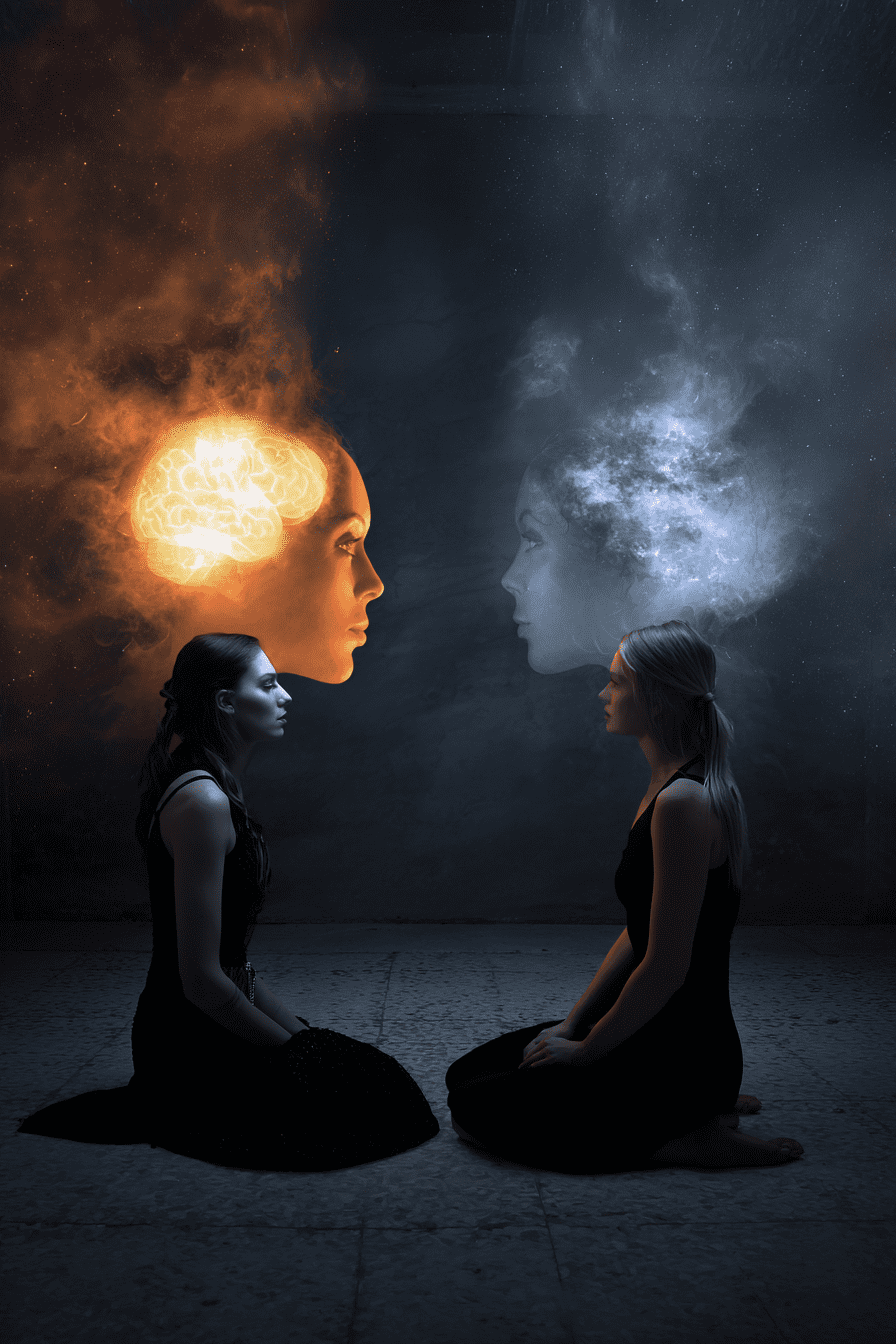
Could God be everything (meaning what exists physically – matter, but also energy), or nothing (neither matter nor even energy)? Is He in the universe, or maybe outside it? Maybe God is within us as our consciousness, each of us having our own God, our own spirit, or maybe we share one?
Maybe God is just for humans? Maybe God is planet Earth, or the solar system, some being for our planet, our solar system, or maybe for the whole galaxy, the cluster of galaxies? Or maybe for the entire universe?
And so, depending on what we accept as truth, every planet with life could have its own God. The same goes for the solar system, the galaxy, the cluster of galaxies, or the universe – assuming there are many universes.
Or maybe each such planet is God. The same goes for the solar system, the galaxy, the cluster of galaxies, or the universe – assuming there are many universes.
Maybe God is just an idea – something humans created to give meaning to life, to explain morality, or to make sense of existence. Maybe every culture has its own version of this idea, shaped by their beliefs and experiences.
Or maybe God is time. Time is everywhere, it moves everything forward, it allows for change and growth. It’s something we can’t stop or fully understand, but it’s always present, shaping everything around us.
Maybe God is the connection between all living things. Maybe it’s not just about humans, but about everything that’s alive – animals, plants, even the smallest organisms. Maybe there’s something that links all of us together, something bigger than we can see.
Maybe God is the consciousness that creates. The force that makes stars, planets, and life itself. For a long time, I was fascinated by quantum physics. I loved learning about atoms, particles, and the strange phenomena of the micro-world. But the more I studied, the more I leaned toward a materialistic view of the universe. I couldn’t find God in the equations or the experiments.
Or maybe God is universal consciousness? Let’s pause for a moment and reflect on the idea of universal consciousness. It’s a fascinating concept I came across while reading Physics of the Soul by Amit Goswami. It suggests that consciousness might connect our souls, minds, and the universe itself, and be the force some people call God. While this perspective is thought-provoking, I still don’t know if this is what I believe in.
To be precise, Amit Goswami doesn’t describe universal consciousness as “God” in the traditional sense, but rather as a fundamental principle of existence, essential for understanding spirituality and reality. I don’t want to delve too deeply into his theories here. For me, spirituality is more about reflection and applying it to daily life than about searching for who or what God is, or defining it. If you’re curious about what truly matters to me in spirituality, you can read more in my article about my personal approach to spirituality: How I See Spirituality.
Here, I allow myself to reflect on who or what God might be, treating it more as a fantasy than spirituality. Maybe this is important to you, and perhaps one of these thoughts will resonate with you.
Returning to the concept of God, maybe God is infinity. Something that has no beginning and no end, something that goes beyond time and space. Maybe it’s something we can never fully understand, but it’s always there.
Maybe God is love. The purest form of love, compassion, and joy. Maybe God exists in the moments when we feel these emotions deeply, when we connect with others and with ourselves.
What If There Is No God?
What if there’s only the material world, and we are just a tool of evolution, accidental people. Does that change anything?
If we are just a tool in nature’s hands, then let’s serve it. Let’s use our potential, what it has equipped us with: thinking, values, consciousness, reason, whatever comes to your mind. Think about what nature’s purpose might have been? This will help you answer the question of what the meaning of your life is. (For more reflections on the meaning of life, you can read my article Why Do We Live? Why Are We Born? Why Are We Alive?).
I used to reject this theory because, after all, I am conscious, you are conscious. Why does everyone have their own consciousness? But then again, everyone has their own body, their own looks, and maybe their own consciousness too – which might just mean we are a tool of nature, just like DNA. And maybe nature, in this case, is the God we’re looking for?
Or maybe consciousness isn’t just a tool of nature, but something more – something that allows us to transcend the boundaries of biology and evolution. Perhaps consciousness is the key to understanding our uniqueness as a species, and also our place in the universe. Maybe it’s thanks to it that we can ask questions about the meaning of existence, about God, about our role in the world. Consciousness might not just be a tool, but a goal in itself – something nature created so we could discover and understand reality on a deeper level.
Will We Ever Know Who or What God Is?
Maybe our current consciousness is just a stage? Maybe in the future, it will be more developed, and we will understand things that now seem beyond our reach. Maybe we are not the ultimate goal of nature, the universe, or God’s plan. Maybe after us, more advanced beings will appear, evolving from our species – just as we evolved from earlier life forms.
Or maybe technology will help us with that? After all, it’s developing at an incredible pace. Maybe thanks to it, we’ll be able to understand the world better, develop our minds, and discover new possibilities. Maybe technology will allow us to cross boundaries that now seem insurmountable. Who knows, maybe someday we will merge our minds with machines and create something completely new – something that will let us find the answers to questions that now seem impossible to solve.
It Doesn’t Matter Who or What God Is
For me, it doesn’t really matter in what form God exists or whether He aligns with the image presented by religions. Whether it’s the Christian God, Allah in Islam, Yahweh in Judaism, Brahman in Hinduism, or even Kami in Shinto, or something entirely different, like the Great Spirit in Native American beliefs—or even something we haven’t yet imagined—it doesn’t change how I choose to live my life. What matters to me is the idea of something greater, something that connects us all, and the values we live by.
If you got the answer to who or what God is, would you change anything in your life?
If you found out that heaven and hell exist, that reincarnation and karma are real, and that our life is just a stage for the soul? Getting to the point: if you knew that for your actions here, as a human, you would be punished or rewarded after death, would your life look different?
Probably yes. You’d be afraid of punishment, you’d expect a reward. But why do you want to live better only for that reason? Maybe just assume that something is there if you need internal motivation, if it’s for “something” rather than for “nothing.”
So live as if something is there. Live well, live according to universal values, if you believe in them.
For me, these values are about love, compassion, and respect—for others, for nature, and for ourselves. It’s about taking care of the world around us so that future generations can thrive. It’s about helping others when they’re struggling and finding joy in the simple things. These values might not be tied to any specific religion, but they feel universal—something we can all strive for, no matter what we believe in.
Live your life here and now. Enjoy pleasures wisely, face problems, and help others with theirs.
In conclusion, when I look back, I realize how much my perspective has changed over the years. I used to think of God as something external, something separate from us. But now, I see God as something that connects everything—our souls, our minds, and the universe itself. The idea of universal consciousness has given me a way to make sense of my beliefs. It’s not about having all the answers but about being open to the possibility that there’s more to life than what we can see or measure. And for me, that is enough.
If you’re curious about a more practical take on spirituality and the question of God’s existence, I encourage you to check out my article Does God Really Exist?. In it, I reflect on how big philosophical questions can inspire us to act and live in alignment with our values.
If my writing has inspired or helped you, I would be grateful for your support.
Need support yourself? Discover how I can help you.
AI Disclosure
I see my thoughts as the essence, much like the soul, and AI helps me give them form. It supports me with research, translation, and organizing ideas, but every perspective is my own. Curious how I use AI? Read more here.