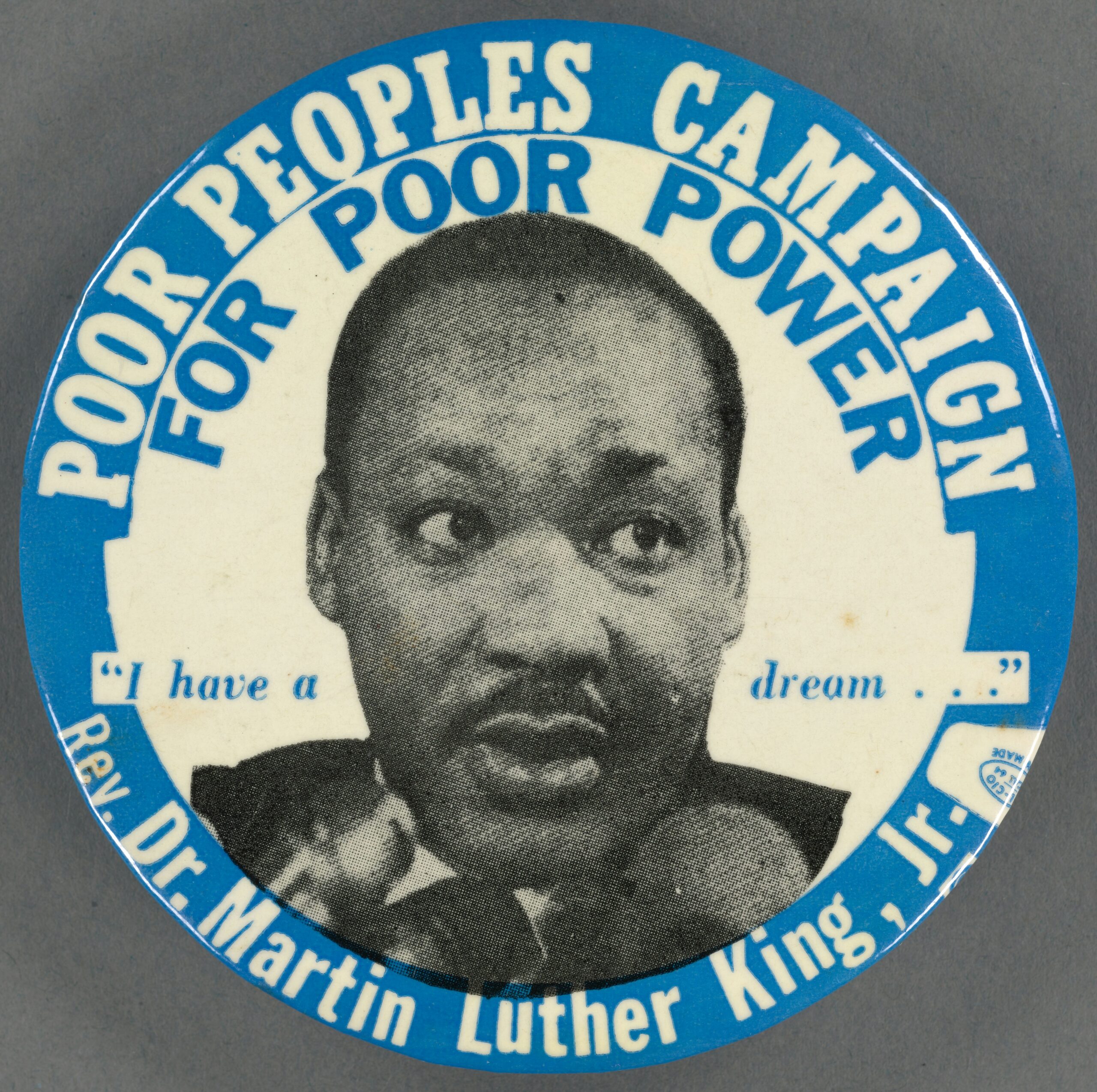
Can a single dream really change the world? Martin Luther King Jr. proved that it can. His words, “I Have a Dream,” still resonate in the hearts of millions today, inspiring the ongoing fight for equality and justice. But what lay behind those words? Was it just a rhetorical masterpiece, or the result of a deep, internal awakening?
Many of us know King as a social leader, an icon of the civil rights movement. We rarely stop to ask about the source of his unshakeable strength. The answer lies in his spirituality—a unique blend of deep Christian faith and Eastern philosophy that became the bedrock of his actions. This article takes you on a journey to the sources of his courage and shows how spiritual training—regardless of its form—can become a wellspring of vision and resilience in the face of adversity.
Spiritual Foundations: Christianity in Dialogue with Gandhi
Martin Luther King Jr.’s spirituality wasn’t one-dimensional. First and foremost, he was a pastor, immersed in the religious practices of studying Scripture, prayer, and contemplation. However, it was the fusion of his daily Christian practice with inspiration drawn from the philosophy of Mahatma Gandhi that made his stance truly one of a kind.
King led morning prayers and recorded reflections in his journal, allowing him to constantly renew contact with his own conscience and Divine guidance. At the same time, he dove deep into Gandhi’s texts on satyagraha—the power of truth and non-violence. It was there he learned how to translate internal gentleness and empathy into an effective social strategy.
This wasn’t a mindless adoption of Eastern spirituality. King engaged in a creative dialogue between traditions, translating Gandhi’s teachings into the language of his Christian identity and the brutal realities of the American South. He saw every prayer as an act of personal purification, and every protest march as the practice of spiritual love for one’s neighbor.
A Daily Routine of Rituals and Silence
In King’s biography, you’ll find numerous references to moments of solitude, reflection, and meditative focus. These weren’t techniques detached from reality, but a consciously cultivated practice of mindfulness. It was in these moments of “stopping” that he listened to the voice of conscience and gained trust in being led by something greater than himself.
These rituals manifested in the small details of daily life. Before difficult decisions, King gathered his associates for shared scripture reading or moments of focus—especially when tension or danger was rising. In his room, a rosary and texts about Gandhi held equal space, often read aloud to others. Through this, he translated his spiritual stance into practical action: enduring humiliation without retaliation, asking for forgiveness for his opponents, and encouraging quiet reflection before difficult protests.
One might ask: did the epiphany that birthed his legendary “dream” arrive precisely during these quiet moments of silence?
Spiritual Strength in the Hour of Trial
King’s philosophy wasn’t theoretical—it was tested in the most difficult, borderline moments of his life.
- Montgomery, 1956: After a series of death threats over the phone, King experienced moments of breakdown. Kneeling alone in his kitchen over a cup of coffee, he prayed for courage. He then experienced a profound sense of Divine presence that gave him the inner peace needed to continue the non-violent fight, despite the fear for his family.
- Birmingham, 1963: Imprisoned in harsh conditions, he wrote the famous “Letter from Birmingham Jail.” Instead of responding to injustice with hatred, he demonstrated immense patience, empathy, and spiritual maturity, encouraging dialogue even with his opponents.
These examples show that his strategy of non-violence wasn’t a sign of weakness, but proof of extraordinary spiritual discipline.
Love as a Powerful Tool for Change
We often think of love as a feeling—warm, soft, reserved for family and friends. For King, love was something completely different. It was a powerful, active social force. Drawing from the Greek concept of agape—selfless, sacrificial, and universal love—he made it the foundation of his strategy.
“Darkness cannot drive out darkness; only light can do that. Hate cannot drive out hate; only love can do that.”
This sentence is the essence of his spirituality. Understanding that hatred destroys not only the victim but also the perpetrator allowed him to look at his oppressors not as enemies to be destroyed, but as people lost in the darkness of prejudice. This required gigantic work on his own ego—quieting the natural desire for revenge in favor of a higher good.
Courage is a Choice, Not the Absence of Fear
Martin Luther King Jr.’s courage did not consist of a lack of fear. He was a man of flesh and blood. He feared for his life and his family’s safety. He received death threats almost daily. And yet, every morning he got up and took another step.
His secret lay in the deep conviction that his life served something greater than himself. When the goal becomes more important than personal safety, fear stops paralyzing you—it becomes merely the background for action. King teaches us that courage is a decision. It is the moment when, despite trembling hands, we choose what is right, not what is easy.
“The ultimate measure of a man is not where he stands in moments of comfort and convenience, but where he stands at times of challenge and controversy.”
In today’s times, we rarely have to risk our lives for our beliefs. But aren’t we missing courage in smaller matters? The courage to stand up for someone being mocked at work? The courage to admit a mistake? The courage to live according to our own conscience, even when it’s unpopular?
How to Apply King’s Wisdom in Daily Life
King’s story isn’t just a monument to the past. It’s a living handbook for anyone seeking meaning and inner peace. How can we bring his wisdom into our daily lives? Here is a set of practical exercises:
1. A Moment of Silence to Start the Day
Before you throw yourself into the whirlwind of duties, start the day with a few minutes of silence. Ask yourself about your intentions: “How can I respond to challenges today in a spirit of love, not anger?” Look for inspiration to live the day consciously.
2. A Week Without Anger
For seven days, pay special attention to bursts of irritation. Before you respond sharply, stop and take three deep breaths. You can keep a short journal, noting situations where you managed to maintain calm instead of escalating conflict.
3. A Letter from a Perspective of Love
Think of a person with whom you have a conflict or against whom you hold a grudge. Sit in silence and write a letter to them. You don’t have to send it. Pour your grievances onto the paper, but end the letter by trying to look at that person with empathy. What are they afraid of? What hurt them? End with words of forgiveness—do this primarily for your own liberation.
4. One Small Step Against Fear
Waiting until we stop being afraid is a trap. Make a list of things you are putting off due to fear or discomfort (a difficult conversation, a new project). Choose one of them and take the first, smallest possible step today. You don’t have to see the whole staircase immediately—just put your foot on the first step.
5. Consciously Building Bridges
Once a week, perform a small gesture of kindness toward someone outside your natural “circle”—a coworker with different views or a difficult neighbor. This is the practice of building bridges across divides, instead of building walls.
6. Journal of Hope and Gratitude
In the face of problems, it’s easy to fall into resignation. For the next week, every evening write down one thing you are grateful for, and one small, positive thing you did for yourself or others. You are creating your own “microcosm of good” this way.
Inspiring Thoughts for the Road
King’s words have the power to awaken sleeping consciences. Let these quotes become a starting point for reflection for you:
- “Injustice anywhere is a threat to justice everywhere.” – A reminder of our mutual responsibility.
- “Faith is taking the first step even when you don’t see the whole staircase.” – On trusting the process of life, even when the future is foggy.
- “We must learn to live together as brothers or perish together as fools.” – The ultimate call to unity.
The Universality of the Message: Any of Us Can Be a “Dreamer”
Martin Luther King Jr. was not a superhuman. He was someone who decided to listen to the voice of conscience more than the voice of fear. His message goes beyond religions or worldviews. He showed that values such as courage, empathy, truthfulness, and community can be practiced regardless of the tradition in which one grew up.
Whether prayer, meditation, or secular reflection is close to you, King’s message encourages: choose the common good, understanding instead of judgment. In the face of disputes, bet on dialogue.
You don’t have to speak to crowds in Washington. Your battlefield can be the dining table, the office desk, or a conversation on the Internet. Every gesture of kindness, every moment in which you hold back anger and choose understanding, is a continuation of his dream.
I leave you with a question: Which of Martin Luther King Jr.’s values move you the most today, and how can you weave them into the fabric of your life? Share your thoughts in the comments. Sometimes saying a dream out loud is the first step to making it come true.
If my writing has inspired or helped you, I would be grateful for your support.
Need support yourself? Discover how I can help you.
AI Disclosure
I see my thoughts as the essence, much like the soul, and AI helps me give them form. It supports me with research, translation, and organizing ideas, but every perspective is my own. Curious how I use AI? Read more here.