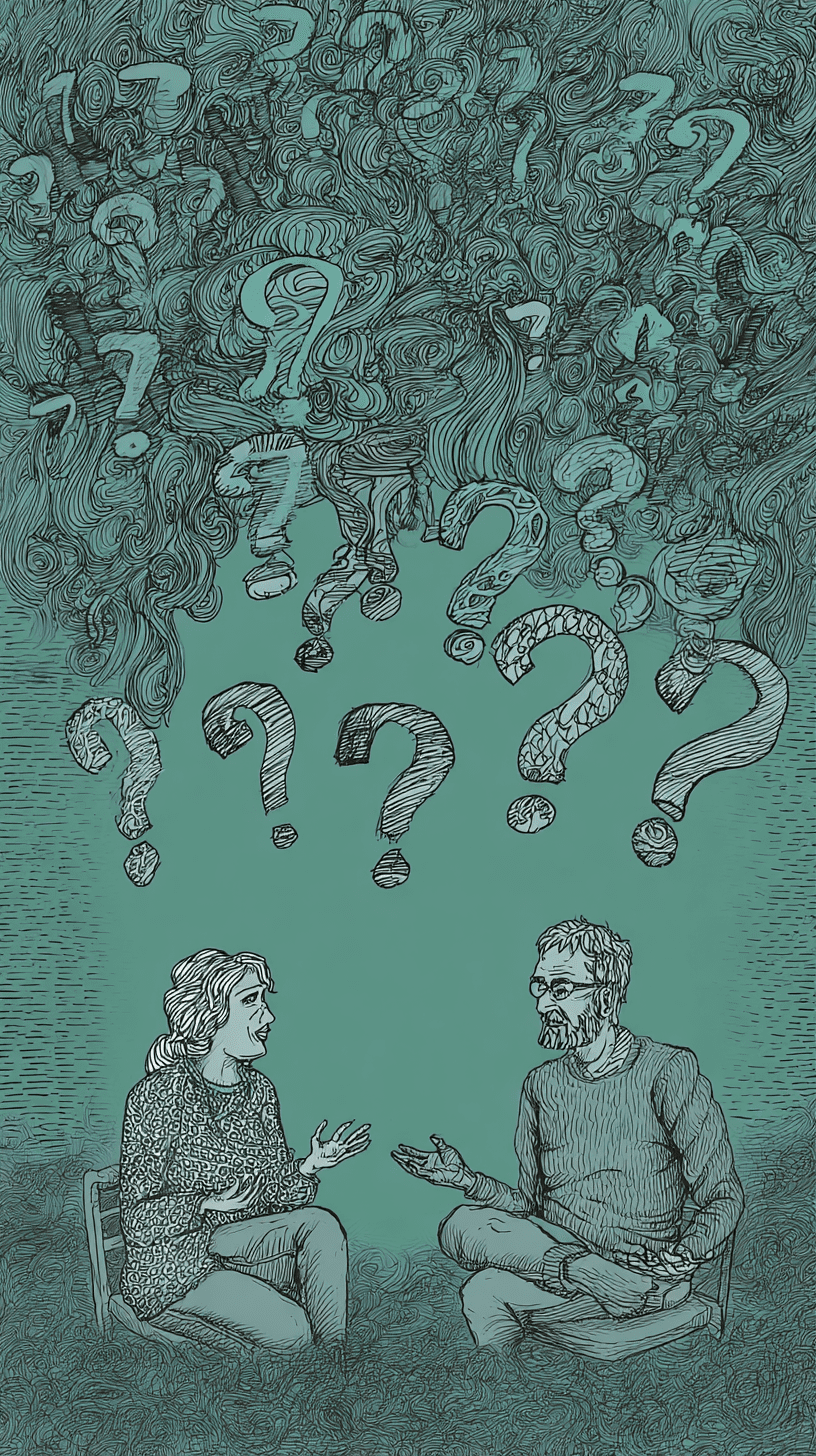
When we start combining therapeutic work with a spiritual search, a lot of questions naturally come up. Often, these doubts are what hold us back from taking the first step. Do they exclude each other? Do I have to be religious to be spiritual? Will therapy change me into someone else?
This FAQ was inspired by my article, “Therapy and Spirituality: A Holistic Path to Inner Harmony,” where I shared how both psychotherapy and spirituality can play a key role in building inner strength and peace. For me, spirituality was the turning point, but I recognize that for many, therapy is the essential first step. The article explores how these approaches can complement each other and offers practical tips for finding your own way.
Here, I’ve gathered answers to the most common questions people ask about blending psychology with spirituality. I hope this guide clears up your doubts and helps you take the next step on your journey to inner balance.
1. Can I start with spirituality if I’m afraid of therapy?
Of course. Fear of therapy is natural—it’s a step into the unknown that requires trust and a great deal of courage. If you feel that spiritual practices like meditation, yoga, or journaling are more accessible to you right now, start there. Often, spiritual work strengthens us enough that the fear of a therapist’s office lessens. A calmer mind and greater self-awareness can become a foundation that makes it easier to start working with a professional later if you feel it’s needed. Any path that leads to greater self-care is a good place to start.
2. How do I find a good therapist who is open to spirituality?
Finding the right therapist is key to success. When looking for a professional open to these topics, pay attention to the approaches they use. Therapists who work with psychodynamic, Gestalt, existential, or transpersonal approaches are often more open to conversations about the meaning of life and values. It’s also worth looking for specialists who state on their websites that they use an integrative approach and work with mindfulness or compassion. Don’t be afraid to ask about this during your first consultation. A good therapist will respect your values, even if they have different views.
3. Does spirituality require a belief in God?
Absolutely not. This is one of the most common myths. Spirituality is a much broader concept than religion. You can be an atheist and lead a deeply spiritual life by finding a sense of connection with nature, art, science, or in deep human relationships. Spirituality is primarily about the search for meaning, practicing gratitude, developing empathy, and living consciously in line with your values. It’s about connecting with something bigger than our small “self,” and that “something” doesn’t have to be God in the traditional sense of the word.
4. Can therapy and spirituality contradict each other?
No, quite the opposite—they can complement each other perfectly. Therapy helps us understand our emotions, behavioral patterns, and relationships, while spirituality provides a broader perspective, a sense of meaning, and tools for daily self-work. Using both paths can lead to more holistic growth and a deeper understanding of yourself.
5. Do I have to choose between therapy and spirituality?
You don’t have to. It’s not an “either-or” choice. You can use both paths at the same time or at different points in your life. For example, therapy can help you work through difficult emotions from the past, while spirituality can be a support in the present, helping you build inner peace.
6. Can spirituality help treat depression or anxiety?
Spirituality can be a valuable support in dealing with emotional difficulties, but it is not a substitute for professional therapeutic or medical help. Practices like meditation, mindfulness, or prayer can help reduce stress, improve focus, and build greater self-awareness, which supports the healing process. However, for serious emotional problems, it’s important to consult a therapist or doctor. Think of spirituality as a support for treatment, not a replacement for it.
7. Can I practice spirituality if I don’t have much time?
Of course! Spirituality doesn’t require hours of meditation or complicated rituals. You can start with small steps, like a few minutes of mindfulness a day, a short journal entry, or a conscious walk in nature. The key is consistency and intention, not the amount of time. Even 5 minutes of conscious breathing can change the quality of your day.
8. Can spirituality help me with my relationships with other people?
Yes, very much so. Spirituality often helps develop empathy, compassion, and the ability to listen more deeply. Practices like meditation or reflecting on your own values can help you better understand yourself, which naturally translates into greater understanding for others. When we are in better contact with ourselves, our relationships become more authentic and harmonious.
9. Can I combine spirituality with science?
Absolutely! Modern science is increasingly studying phenomena related to spirituality, such as the effect of meditation on brain structure or the health benefits of mindfulness practices. You can draw inspiration from both hard scientific data and the wisdom of spiritual traditions, creating your own unique path of development based on facts and experience.
10. Can spirituality help me find the meaning of life?
By its nature, spirituality focuses on the search for meaning and purpose. This can be the process of discovering your values, building deeper relationships, developing gratitude, or simply learning to be present in the moment. Everyone can find their own way to connect with what is most important to them and what gives their life unique meaning.
11. What if my loved ones don’t accept my spiritual search or therapy?
This is a tough situation, but remember that your path of development is your own. You don’t have to convince others of your choices. Often, loved ones react with fear to the changes they see in us. The best “proof” of your path’s value will be your own peace and improved quality of life. Sometimes it’s worth setting boundaries and not discussing these topics with people who aren’t open to them, while seeking support in groups with similar interests.
12. Can meditation be dangerous?
For the vast majority of people, meditation is safe and beneficial. However, for individuals with unprocessed, deep trauma or certain mental disorders, intense meditation can sometimes trigger difficult emotions. Therefore, if you have a history of mental health issues, it’s a good idea to start your practice under the guidance of an experienced teacher or consult with your therapist.
13. Is spirituality an escape from reality (spiritual bypassing)?
There is a risk of what’s called “spiritual bypassing,” which is using spirituality to avoid confronting painful feelings or life problems. Healthy spirituality isn’t about escaping into “light and love” while ignoring the shadow. True practice helps us face reality head-on, not run from it. Therapy is a great safeguard to ensure you’re not using spirituality as a defense mechanism.
14. How can I tell the difference between intuition and fear?
This is one of the most important questions on the path of self-development. Fear is usually loud, insistent, chaotic, and located “in your head.” It’s often accompanied by physical tension. Intuition is usually quieter, calmer, gives a sense of certainty (even if it’s not logical), and is often felt more in the body (e.g., in your gut or heart). Therapy and mindfulness practices are great for learning to distinguish between these two voices.
15. Is it normal to feel worse at the beginning?
Yes, this is the paradox of growth. When we start therapy or spiritual practices, we stop suppressing difficult emotions. What was swept under the rug comes to the surface. You might temporarily feel sadder, angrier, or more lost. This is a sign that the process is working—you are “unfreezing” your feelings. It’s a temporary stage that leads to true healing, not just symptom relief.
I hope these answers have helped you sort out your thoughts. Remember, there are no stupid questions when it comes to your health and happiness. Whether your steps lead you to a therapist’s office, a yoga mat, or a forest path, the most important thing is that you are embarking on the journey at all. If you have any questions about spirituality and therapy, or about combining both paths in your search for inner strength and peace, feel free to ask in the comments or reach out to me directly—I’m looking forward to hearing from you.
If my writing has inspired or helped you, I would be grateful for your support.
Need support yourself? Discover how I can help you.
AI Disclosure
I see my thoughts as the essence, much like the soul, and AI helps me give them form. It supports me with research, translation, and organizing ideas, but every perspective is my own. Curious how I use AI? Read more here.