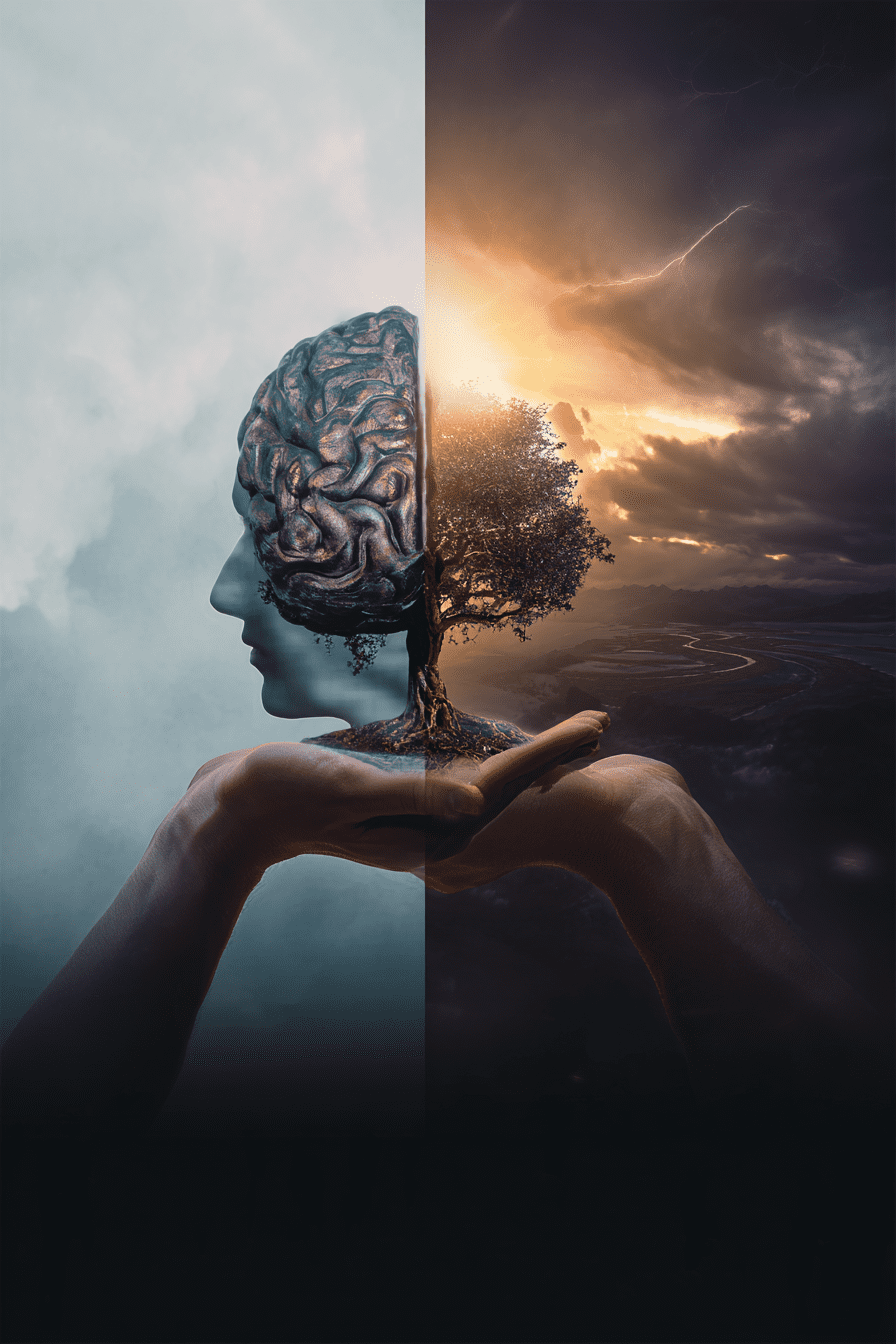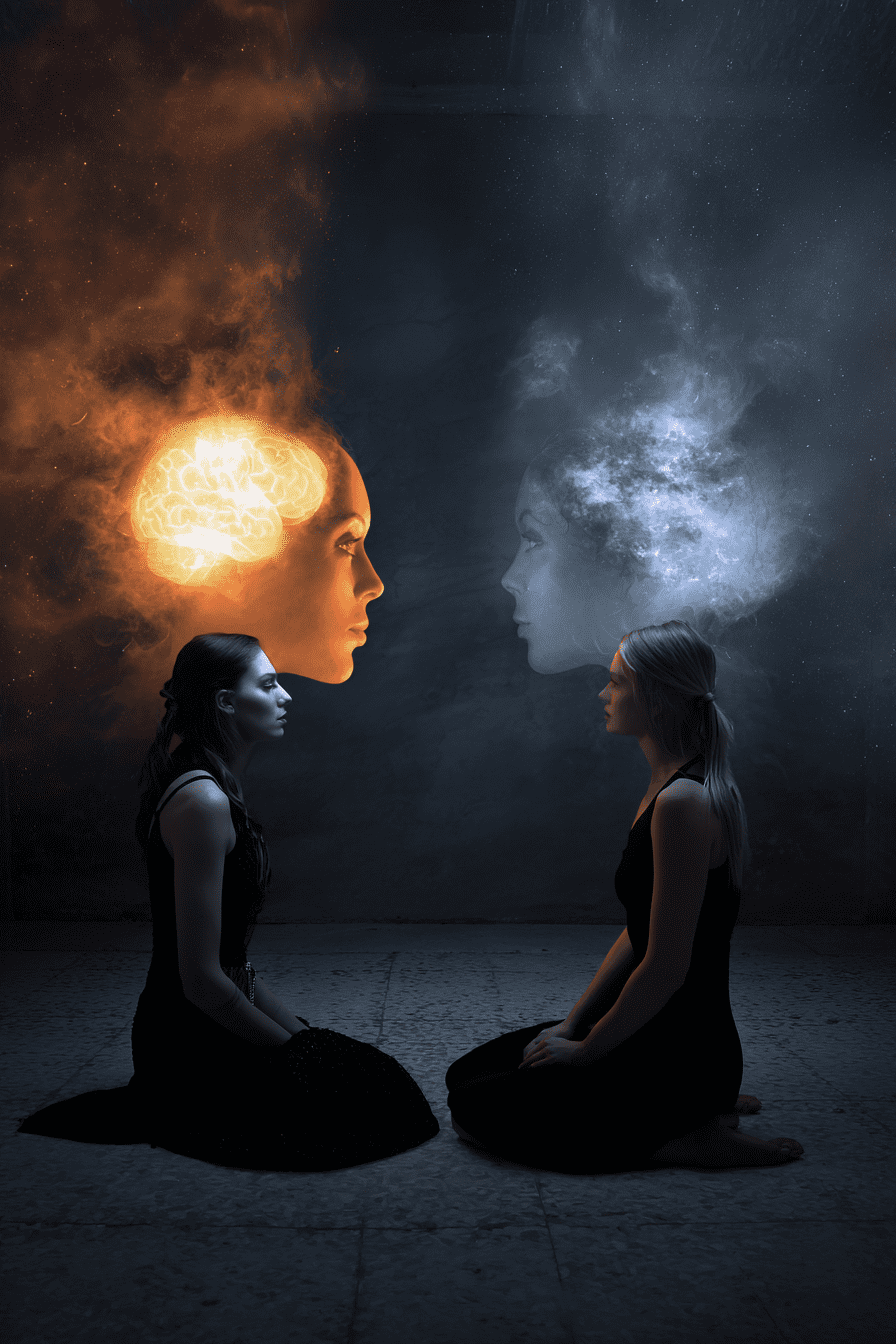
I often wonder what really drives my choices. There are days when decisions come easily, as if some inner voice is guiding me, giving me a sense of peace. But then there are moments full of hesitation, where I feel two different forces within me—one pushing me toward deep desires and intuition, and the other whispering about moral rules and obligations. That’s when I ask myself: is this the voice of my soul or my conscience? Or maybe both, intertwined in a complicated dance?
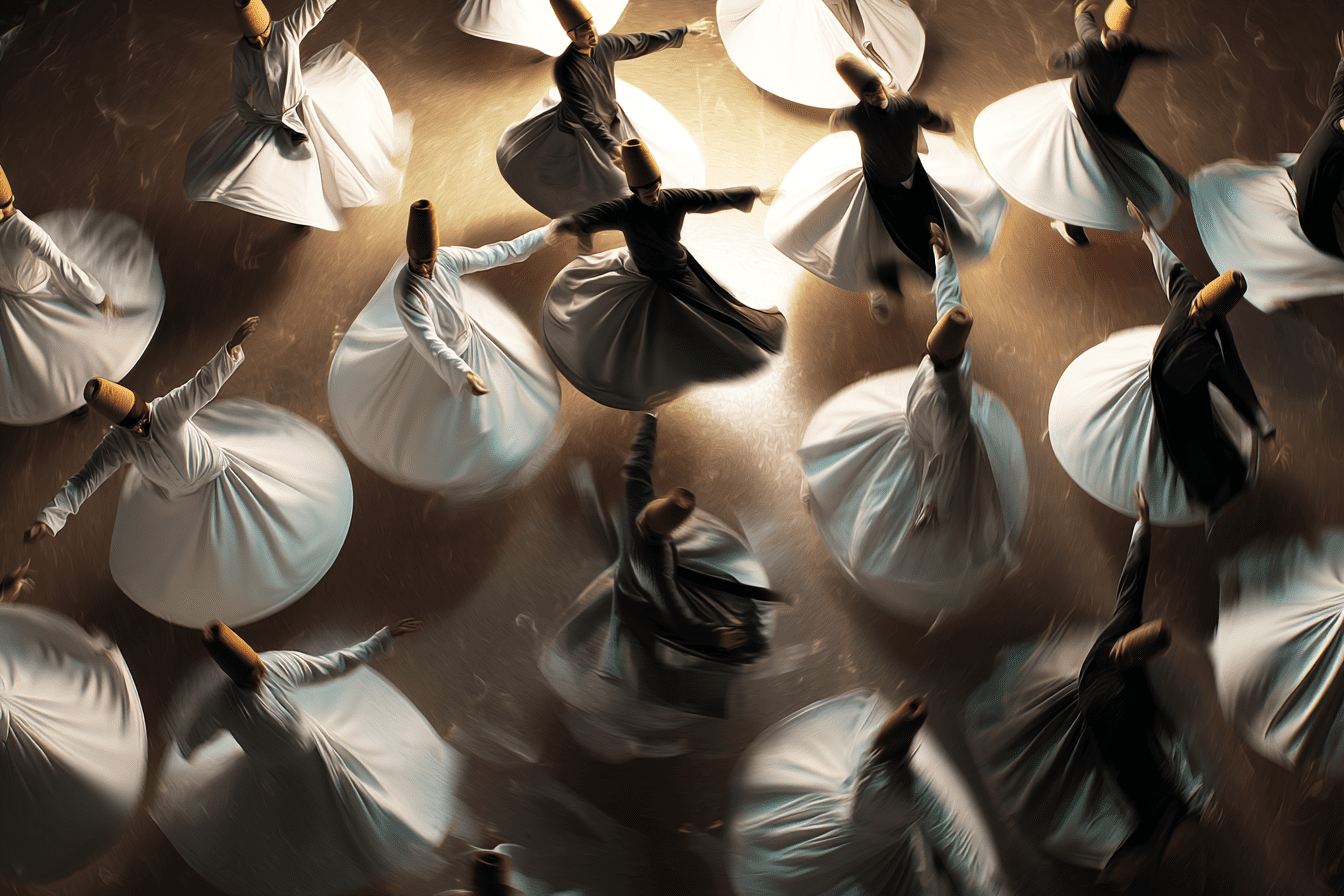
Whenever I reach for the metaphor of dance, I immediately think of Rumi—the mystic for whom dance wasn’t just art, but a spiritual path. Rumi believed that the whirling dance of the dervishes is a symbol of the soul’s journey to the Divine. It is in these spinning circles that the ego disappears, and a person comes face to face with their inner self. For Rumi, dance is an act of remembering and listening to the deep, quiet voice of the heart—the voice of the soul seeking unity and love, but also the voice of conscience ensuring we don’t get lost in selfish desires.
Sometimes the dance of soul and conscience resembles that harmonious dervish circle—light, shared movement leading to inner peace. Other times, it becomes a tense dialogue where every step feels like a struggle for control between desires and moral principles. Rumi showed me that it is within this dance, in this constant movement between the light of the soul and the voice of conscience, that our spiritual transformation happens. This inner dynamic is one of the most fascinating, yet difficult, aspects of the human experience. That’s why I want to invite you to reflect on this relationship with me, looking at it through the lens of philosophy, religion, and personal search.
To understand this inner dance, we first need to know the dancers. What exactly is the soul, and what is the conscience? Although we often use these words interchangeably, philosophy and religion have spent centuries trying to distinguish them, giving them deep and distinct meanings. Let’s dive into these definitions to better grasp the forces shaping our inner world.
What is the Soul? The Voice of Essence and Eternity
The soul is often seen as our deepest, immortal part. It is the essence of who we are, transcending the body and mind.
In ancient Greek philosophy, Plato described the soul as a divine and immortal being, temporarily trapped in the body. For him, it was the source of true knowledge, striving to return to the world of ideas. His student, Aristotle, had a slightly different view. He saw the soul not as a separate entity, but as the “form” of the body—the animating force that makes us who we are. Without the soul, the body would be just matter.
Religions approach this concept with similar reverence. In Christianity, the soul is a divine spark, an individual gift from the Creator that gives us dignity and purpose. It is what stands before God after death. Hinduism speaks of the atman—the individual soul that is part of the universal consciousness, Brahman. The goal of life is to realize this unity. Buddhism, interestingly, often rejects the concept of a permanent, unchanging soul (anatman), focusing instead on the continuous flow of consciousness. Yet, many of its branches speak of continuity through reincarnation, suggesting some form of spiritual essence.
For me, the soul is the voice of intuition, deep desires, and authenticity. It’s what whispers about our calling and longs for meaning that goes beyond the everyday grind.
What is Conscience? The Inner Moral Judge
If the soul is our essence, then I understand conscience as an inner judge—an internal voice that evaluates our actions, thoughts, and intentions in the light of right and wrong.
Here, I’ll bring up the view of Immanuel Kant, one of the most important modern philosophers. He saw conscience as a powerful internal tribunal. He believed that every human carries a moral law within them that judges them absolutely. Conscience doesn’t let us ignore our duties and forces us to confront our choices. It’s not a feeling you can just brush off, but a rational judgment we pass on ourselves.
In the Christian tradition, conscience is often called “the voice of God in man.” It is a sacred space where we meet divine law and are called to live in truth. It leads us to repentance when we stray, but also gives inner peace when we act rightly.
Digging deeper, I’ve noticed that conscience can be shaped not only by universal moral law but also by social norms, upbringing, and culture. That’s why sometimes what we perceive as the voice of conscience might actually be an echo of fears or external expectations—sometimes it’s hard to tell the authentic voice of conscience from the voice of ego or anxiety.
Conscience leads us toward good and truth, but the ego often whispers to avoid difficulties or seek approval from others. In such moments, it’s worth asking: does this decision bring me inner peace, or does it stem from a need to meet someone else’s expectations? In my experience, the true voice of conscience is quiet but firm—it doesn’t force itself on you, but invites reflection. It is in silence that we can hear it most fully. As in many areas, mindfulness and self-reflection are the keys to understanding.
Soul vs. Conscience – Connection and Differences
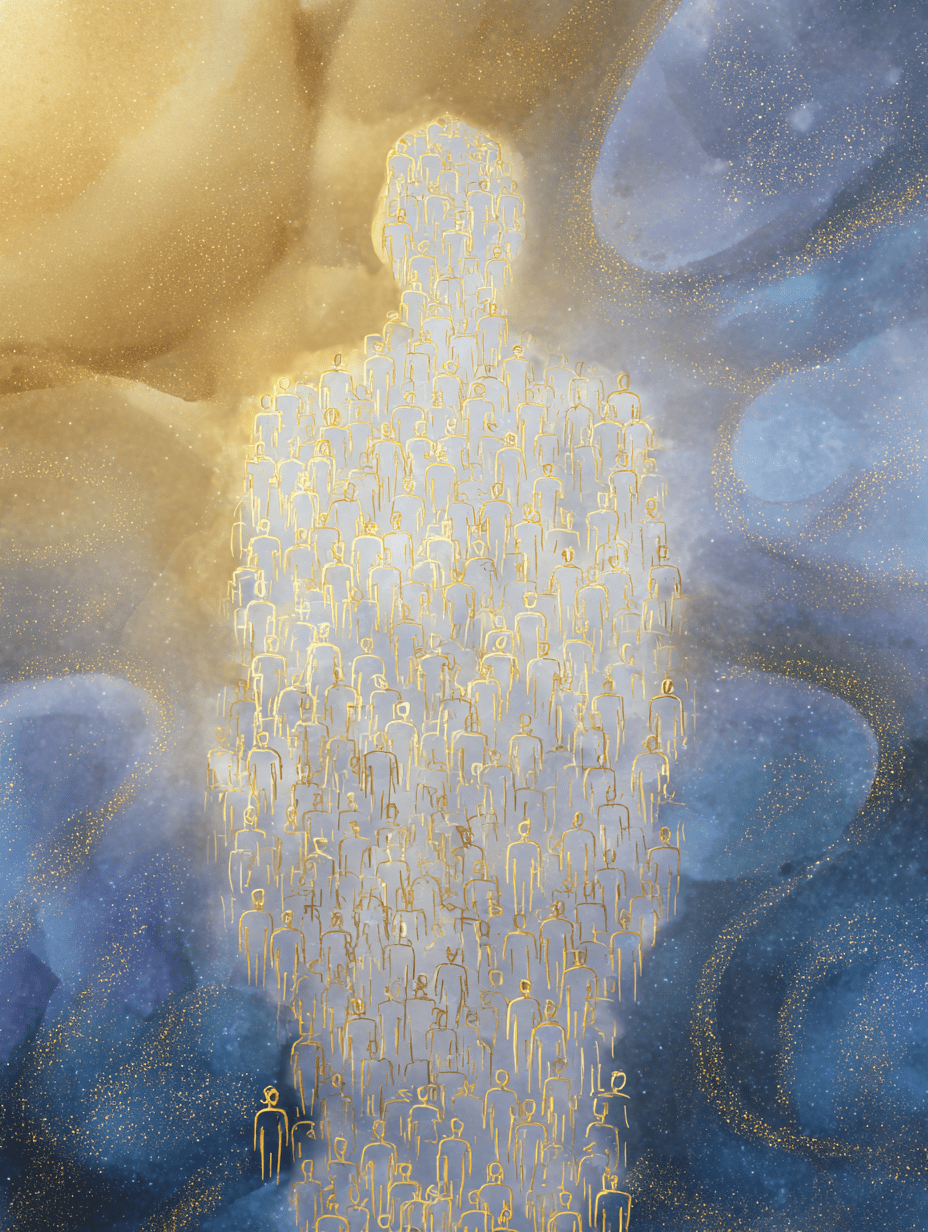
I didn’t use to distinguish between soul and conscience, probably because I never really thought about it. Personally, this visual breakdown helps me grasp the difference best: The soul desires, the conscience evaluates. The soul asks “who am I?”, while the conscience asks “what should I do?”. The soul is our identity, and the conscience is our judge. The soul strives for wholeness and self-realization, while the conscience guards the boundaries of morality.
Although their roles are different, they are inextricably linked. A healthy, well-formed conscience seems to be in harmony with the voice of the soul, leading us to choices that are both good and authentic. The problem arises when these two voices start fighting each other—when our deepest desires conflict with what we believe is right. That is where the tension begins, and their complicated dance starts.
Dancing in Harmony, Dancing in Conflict: The Dynamics
Once we know the dancers—soul and conscience—we can look at their relationship. This dance is rarely simple. Sometimes it’s a beautiful, fluid movement where both forces work together in perfect harmony. Other times, it’s a jerky choreography full of tension, where one step contradicts the other, and we feel torn. Understanding this dynamic is key to navigating our inner world.
When Soul and Conscience Dance in Harmony
There are moments in life when we feel absolute coherence. The choice we make is not only right in light of our values but also resonates with the deepest part of ourselves. These are the moments when soul and conscience lead us in the same direction.
Think of a situation where you help someone selflessly. Your conscience tells you it’s a good deed, consistent with moral duty. At the same time, your soul feels deep satisfaction and fulfillment. There is no conflict here. There is a sense that you are exactly where you should be, doing exactly what you should be doing. This is that harmonious waltz.
I experienced this in my life when I decided to support my wife, who had effectively abandoned me and the children. She still lived nearby but took no interest even in the kids, dropping by only sporadically. Instead, she was partying, flirting, and chasing various distractions. However, her fate was not indifferent to me—firstly, she is the mother of our children; secondly, she is “still” my wife; and thirdly, she is lost, depressed, and needs support.
It was a demanding path—controlling my ego, developing empathy, but also setting boundaries. Although it was tough, it brought me peace of conscience and simultaneously fed my soul, answering its longing for meaning.
At the same time, I feel my soul pushing me to be creative, to share my story, and maybe even encourage others to get to know their own souls and explore spirituality. My conscience, though, always reminds me of my practical responsibilities—like taking care of my kids and handling everyday duties. Finding the balance isn’t always easy. That’s why I lean on tools like AI to help me write these articles (How I use AI). It helps me organize my thoughts, do research, and communicate what matters to me more clearly. Creating this blog gives me a sense of inner peace, because I’m able to express my creativity while still honoring my values and staying true to my responsibilities—at least as much as my current situation allows.
In religious traditions, this state of harmony is often the goal of spiritual practice. When a Christian lives according to the commandment of love, their conscience is clear, and their soul draws closer to God. In Eastern philosophies, acting in accordance with Dharma (cosmic law and order) brings inner balance. This harmony is a state where our authentic “self” (soul) expresses itself through morally good actions (approved by conscience).
When the Dance Turns into a Struggle
Much more often, however, we experience internal conflict. These are the moments when we desire something our conscience judges as wrong, or conversely—we feel we should do something, but our soul rebels against it.
I remember a moment when I faced a choice about how to raise my children. My conscience, shaped by years of upbringing and social expectations, suggested I should impose specific extracurricular activities on them—ones that would ensure their development and diverse interests, from sports to art. Ideally, convenient ones, logistically and economically. However, my soul screamed in protest. It felt that such an approach would stifle their desire to explore the world and make their own decisions. It was like a painful tango—a step toward convenience meant a step away from supporting their authenticity. The internal tension was immense.
Ultimately, I gave them the freedom to choose, allowing them to discover their passions on their own, even if it meant more effort on my part. Instead of many imposed activities, they chose ones that genuinely delighted and absorbed them because those were their decisions. My eldest son, apart from swimming practice and English lessons, is developing a passion for filmmaking on his own. He doesn’t want to participate in any organized classes related to it, and I respect his choice. Seeing their joy and growth, I know it was the right decision.
A similar conflict can apply to dealing with an “annoying” neighbor. Surely many of us have such a neighbor—always borrowing things and having trouble returning them. My conscience suggested I should help because it’s morally right. However, my soul began to protest when I noticed this relationship was draining me. Every subsequent favor took away my energy and joy. Finally, I set boundaries, refusing help. It was hard, but it brought relief and allowed me to maintain a balance between helping others and taking care of myself.
Such conflicts can appear in many areas of life. When the soul wants to break a toxic relationship, but conscience, burdened by loyalty or guilt, orders us to stay. Or when the soul longs for simplicity, but conscience, driven by ambition, pushes us into an endless chase for success.
Existential philosophers, like Jean-Paul Sartre, highlighted this drama of choice. We are “condemned to be free” and must resolve these internal disputes ourselves, often without any external signposts. It is in these moments of tension that our character is formed. Will we listen to the voice of conscience, which might be an echo of social norms? Will we trust the whisper of the soul, risking condemnation from our inner judge?
This dance is a constant journey. Its rhythm changes depending on the stage of life, our maturity, and awareness. Understanding that both harmony and conflict are natural parts of this process brings relief. It allows us to look at ourselves with more compassion and ask the key question: how can I make this dance increasingly conscious, leading me toward wholeness rather than internal tearing?
Listening to the Dance: Practical Application
Theoretical musings on the soul and conscience are fascinating, but their true value reveals itself when we translate them into concrete actions and choices. Understanding the dynamics of this inner dance isn’t just an intellectual exercise. It’s a practical tool that can help us navigate life’s complexities, make better decisions, and grow spiritually. So, how can we apply this knowledge in practice?
Decision Making: More Than a Pro/Con List
We face them every day—from small daily choices to those that change the course of our lives. Too often, we approach them purely logically or succumb to the pressure of a conscience shaped by external expectations. Consciously listening to the voice of the soul and conscience can completely change this process.
Reflective Practice:
When facing an important choice, find a moment of silence. Instead of immediately asking “what should I do?”, ask yourself two separate questions:
- Question to the conscience: “Which option aligns with my deepest values? Which is good, honest, and just?” Notice if the answer comes from inner conviction or perhaps from fear of judgment or guilt.
- Question to the soul: “Which option makes me feel more alive, authentic, and closer to myself? Which path resonates with my deepest desires and longings, even if it sparks fear?”
If the answers to both questions point in the same direction, you have a path of harmony before you. If they are contradictory, don’t rush the decision. This discrepancy is an invitation to deeper reflection—perhaps your conscience is too harsh, or maybe your soul desires something that requires a moral course correction.
Support in Difficult Times: Finding Balance
Personal crises—job loss, the end of a relationship, illness—can turn our lives upside down. In such moments, it’s easy to lose your footing. That is exactly when the soul and conscience can help us maintain balance.
Conscience reminds us to stick to our values and not hurt others, even when we are going through tough times ourselves. The soul, in turn, gives us the strength to keep going and suggests that a crisis might be an opportunity for change and finding a new direction in life.
Reflective Practice:
In difficult moments, ask yourself:
- “What in this situation allows me to maintain integrity and act in accordance with my conscience?”
- “What is my soul trying to teach me through this experience? What part of me wants to be born from this chaos?”
This perspective doesn’t remove the pain, but it gives it meaning and helps us walk through the hardest moments with dignity.
Spiritual Growth: Consciously Shaping the Inner Dance
Ultimately, understanding the relationship between soul and conscience is the foundation of a conscious spiritual life. This isn’t a passive process. We can actively work on making our inner dance more beautiful.
We can work on shaping our conscience—through mindfulness, reading, prayer, reflection, and conversations with wise people—so it becomes more sensitive to good and less susceptible to social fears. At the same time, we can nurture our soul—also through mindfulness, meditation, moments of silence, contact with nature, creativity, and everything that makes us feel authentically ourselves.
The better we know both dancers, the easier it is for us to recognize their voices and lead them toward harmony. It’s endless work, but perhaps the most beautiful and important work we have to do in our lives.
Soul and Conscience in the Noise of Modernity
We live in times of unprecedented freedom, but also unprecedented chaos. Historically, moral and spiritual frameworks were set by tradition or religion; today, we increasingly have to build them ourselves. How do our two dancers—soul and conscience—find themselves in this modern landscape? Do they even have space to be heard?
Existential philosophy shed new light on these concepts, shifting the weight from divine commands to the shoulders of the individual. If, as the existentialists wanted, “existence precedes essence,” then we create our own soul through daily choices. Conscience stops being just the voice of external Law and becomes the voice of our personal responsibility for this freedom. It’s beautiful, but also terrifying. Modern humans often feel overwhelmed by the necessity of constantly defining good and evil on their own, which can lead to silencing the conscience with relativism—”everything is allowed if I feel like it.”
Depth psychology comes to the rescue here, especially the thought of Carl Gustav Jung. What religion called the struggle of conscience with temptation, psychology often interprets as a confrontation with the “Shadow”—those aspects of our personality we repressed because they didn’t fit our ideal self-image. Jung teaches us that the soul strives for wholeness, not just perfection. Sometimes the voice we take for pangs of conscience is actually the ego’s fear of what is hidden in the Shadow. True spirituality in a modern sense is the courage of integration—accepting the truth about oneself, even the difficult parts, which allows the soul to regain its voice and the conscience to become more human and less accusatory.
Unfortunately, contemporary culture rarely favors this integration. We live in a world of algorithms, notifications, and constant rush. The culture of success and consumerism often equates “having” with “being,” pushing the soul’s needs to the margins. Conscience, in turn, gets distorted by social pressure—we feel guilt not when we betray our values, but when we don’t meet others’ expectations, when we are “not productive enough” or “too different.”
In this context, harmony between soul and conscience becomes an act of rebellion. It requires stopping, turning off the phone, and looking deep inside. It requires asking a question that sounds almost revolutionary in the daily noise: In a world full of stimuli, opinions, and pressure, can I still hear the quiet whisper of my own soul and the authentic voice of conscience, or do I only hear the echo of the world?
Inspirations: The Wisdom of Philosophy and Religion
In my search and attempts to understand the inner dance of soul and conscience, I often turn to wisdom that has survived centuries. The thoughts of philosophers and mystics shed light on the dark corners of the human experience. There are certain sentences that resonate with me particularly strongly, becoming signposts on the path to self-knowledge.
“The soul is immortal and divine” – Plato
These words of Plato always fill me with a sense of deep awe and responsibility. They remind me that inside me, inside each of us, lies something much greater than just a collection of thoughts, emotions, and experiences. There is a spark of eternity there. When I think about this, my daily problems take on a different perspective. This belief that the soul has a divine, immortal dimension motivates me not to treat life superficially. It compels me to seek what is authentic and lasting, not just what is momentary and pleasant. It is the voice of the soul saying: “You are something more, strive for something more.”
“Conscience is an internal court of man upon himself” – Immanuel Kant
Kant’s thought is sobering for me. It presents conscience not as a vague feeling, but as an incorruptible, rational tribunal before which we stand every day. This view helped me understand that I cannot run away from myself. I can deceive others, but not the inner judge who knows my intentions. This awareness can be difficult, but it is also liberating. It teaches me to take full responsibility for my actions. I understood that true peace does not consist of avoiding mistakes, but of the courage to stand before this internal court, admit guilt, and strive for improvement.
“The voice of conscience is the voice of God in man” – Christian Tradition
This quote connects the previous two into a coherent whole. If the soul is a divine spark (Platon) and conscience is an internal court (Kant), then perhaps this court is the very space where divinity speaks within us. For me, this is an incredibly personal and intimate concept. It means that even in moments of greatest confusion, I am not alone. There is a guide in me pointing the way to good—a quiet voice that is an echo of the Creator’s own voice. In my life, there were moments when I felt this voice leading me to decisions that were illogical from a human point of view, but deep in my heart, I knew they were right. This experience teaches me to trust this inner wisdom, even when reason suggests otherwise.
These three perspectives do not exclude each other. They create a coherent picture for me. The soul gives my life direction and a longing for the sublime. Conscience is a tool that allows me to verify whether I am following this path in an honest and righteous way. And all this happens in the sacred space of meeting something greater than me. It is there, at the intersection of these paths, that the deepest and most important dance of my life takes place.
Summary: The Dance Which Never Ends
We have met the two mystical dancers who live in each of us: the soul and the conscience. We have seen how the soul, our immortal essence, longs for meaning and authenticity, while the conscience, our inner judge, guards the boundaries of morality. We watched their dance—sometimes harmonious and graceful, other times full of tension and conflict, especially in the noise of the modern world.
For me, the dance of soul and conscience is a constant journey—sometimes full of harmony, sometimes tension, but always leading me toward a deeper understanding of myself and the world. I realized that the goal is not to reach a state where conflict disappears forever. The goal is rather to learn to participate consciously in this dance. It is learning when the soul leads and when to listen to the voice of conscience. It is the courage to stop when their steps become contradictory and ask yourself about the source of this conflict. This journey has taught me humility, understanding for my own weaknesses, and constant delight at the complexity of the human spirit.
Finally, I would like to leave you with a question that you can take with you into the silence of your own heart. Look at your life, your choices, and your inner struggles. What does your dance of soul and conscience look like? Do you feel harmony, or are you wrestling with conflict?
If my writing has inspired or helped you, I would be grateful for your support.
Need support yourself? Discover how I can help you.
AI Disclosure
I see my thoughts as the essence, much like the soul, and AI helps me give them form. It supports me with research, translation, and organizing ideas, but every perspective is my own. Curious how I use AI? Read more here.