The Question of the Soul
“Is spirituality just chemistry in our brain?”
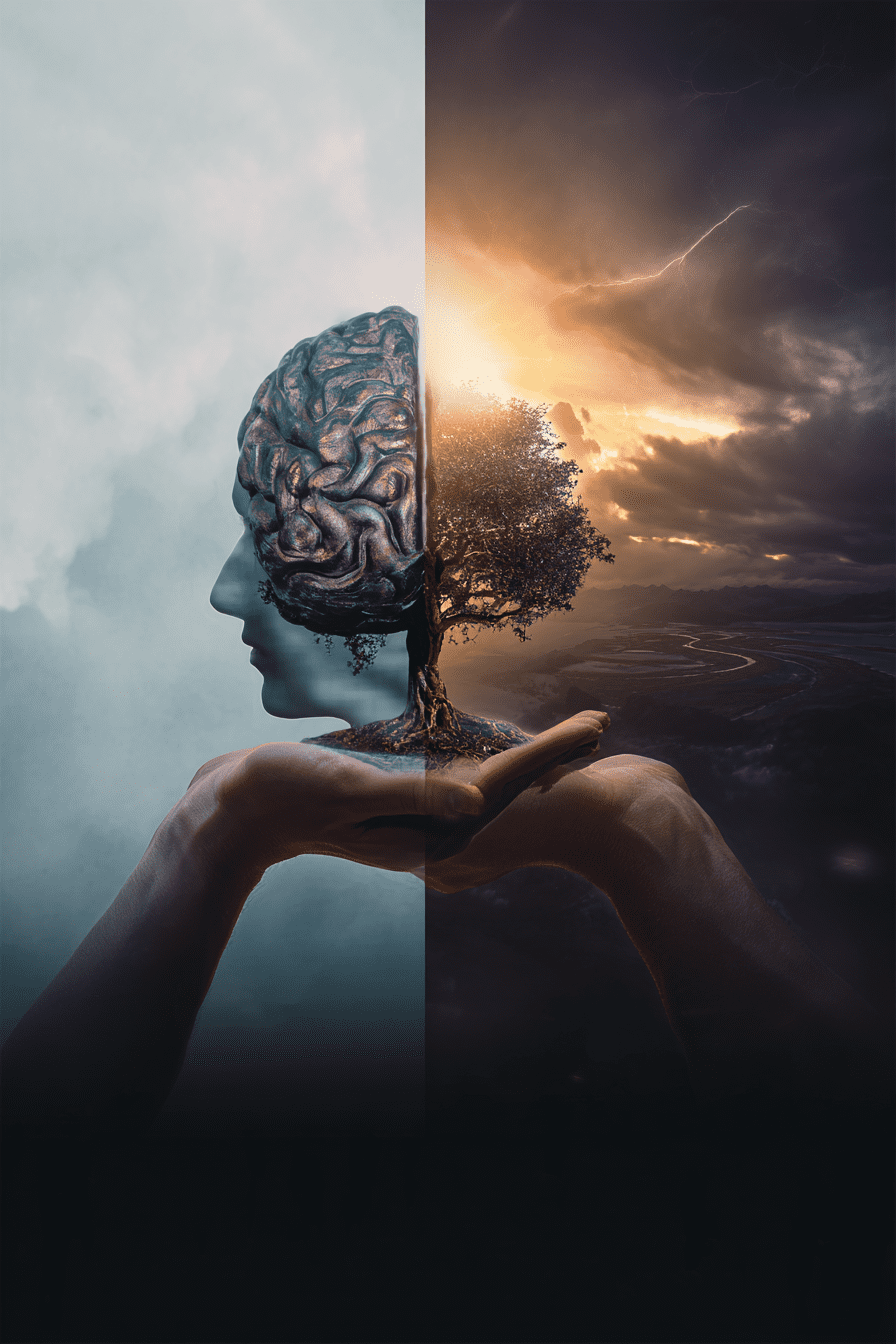
It’s a question many of us ask, especially those of us on a spiritual path. It often comes up during tough times, when we’re trying to figure out who we are and what gives our lives meaning. Modern science tells us a lot about how our brains work, but is that enough to explain spirituality, consciousness, and what we call the “soul”?
Personally, this question came up for me during a major crisis in my life. I wondered if my emotions, beliefs, and spiritual experiences were just the result of chemical reactions in my brain, or if there was something more—something beyond what we can measure and describe with science.
In this article, we’ll look at this question from different angles. We’ll explore what science says about spirituality and consciousness, what arguments philosophers and spiritual teachers make, and we’ll try to find a bridge between these two worlds. The goal isn’t to find a final answer, but to inspire reflection and exploration.
The Scientific View: Is Spirituality Just Brain Chemistry?
From a scientific standpoint, spirituality and consciousness are often viewed through the lens of reductionism—the idea that complex phenomena can be fully explained by their simplest components. In this case, those components are neurons, synapses, and chemical reactions in our brains. But does this approach truly capture the essence of spirituality?
Reductionism and the Brain
Reductionism has become a cornerstone of modern science, especially in fields like neuroscience and psychology. According to this view, everything we experience—love, fear, joy, even spiritual transcendence—can be traced back to physical processes in the brain. For example:
- Neurotransmitters like dopamine and serotonin are often linked to feelings of happiness and well-being. Practices such as meditation or prayer have been shown to increase the release of these chemicals, leading to feelings of calm or connection.
- The “God Spot” hypothesis suggests that certain areas of the brain, like the temporal lobe, are activated during spiritual experiences. Studies using functional magnetic resonance imaging (fMRI) have shown increased activity in these regions during meditation, prayer, or moments of awe.
These findings suggest that what we perceive as “spirituality” might just be the brain’s way of processing certain stimuli or mental states. In other words, spirituality could be an evolutionary byproduct—a mechanism that helps us cope with stress, find meaning, or build social bonds.
The Role of Neuroplasticity
Another fascinating area of research is neuroplasticity, the brain’s ability to reorganize itself by forming new neural connections. Practices like mindfulness meditation have been shown to physically change the brain’s structure, especially in areas related to attention, emotional regulation, and self-awareness. This has led some scientists to argue that spiritual practices are not just psychological but also physiological, with measurable benefits for brain health.
Critiques of the Reductionist View
While the reductionist approach offers valuable insights, it has its limits. Critics argue that reducing spirituality to mere brain chemistry oversimplifies a deeply complex and personal experience. For example:
- Subjective Experiences: Spirituality often involves a sense of connection to something larger than ourselves, which is difficult to quantify or measure scientifically.
- The Hard Problem of Consciousness: Despite advances in neuroscience, we still don’t fully understand how subjective experiences arise from physical processes in the brain. This gap, often called the “hard problem of consciousness,” leaves room for alternative interpretations.
Years ago, when I first encountered the idea that spirituality might just be brain chemistry, I felt a sense of relief. It was during my early adulthood, a time when I had completely turned away from the church and religion. The relief came from the fact that the scientific view seemed to validate my decision—it justified my rebellion and gave me a greater sense of inner peace. Later on, as I began to rediscover spirituality, the knowledge that practices like meditation could bring measurable benefits to my mental and physical health was empowering. At the same time, it raised existential questions: if spirituality is just a product of my brain, does that make it less real? Or does it mean the brain is simply a tool—a bridge to something greater that we can’t yet fully understand?
Philosophical Views: Is There More to Spirituality Than Brain Chemistry?
While science often tries to explain spirituality through measurable phenomena, philosophy invites us to explore the deeper, often non-material, aspects of human experience. Philosophical perspectives challenge the reductionist view by asking questions that science alone cannot answer: What is the nature of consciousness? Is there a soul? And if spirituality is more than brain chemistry, what does that mean for our understanding of reality?
For me, there are many more questions like these. Some come from the field of quantum physics: How can something be both a wave and a particle at the same time? How can we understand that an observer or the act of measurement influences the behavior of quanta? And others philosophical questions like: Why are humans the only such highly developed species on our planet? What was there before the universe began, and how is it possible that such complex forms of life, including consciousness, arose from the Big Bang?
In my opinion, the very fact that we cannot explain many phenomena suggests that reality may be far more complex than we can comprehend—extending far beyond quantum physics, space, and time.
But let’s get back on track and look at philosophical views on spirituality.
Dualism: The Mind-Body Split
One of the most enduring philosophical perspectives on spirituality is dualism, famously articulated by René Descartes. Dualism proposes that the mind (or soul) and the body are fundamentally different substances. While the body is material and subject to the laws of physics, the mind is non-material and exists in a separate realm.
From this perspective, spirituality cannot be reduced to brain chemistry because it originates from the non-material mind or soul. Dualists argue that:
- Consciousness—our ability to think, feel, and be self-aware—cannot be fully explained by physical processes. It is something “extra,” beyond the sum of its parts.
- Spiritual experiences are evidence of this non-material realm, as they often involve feelings of transcendence, connection, or meaning that seem to defy physical explanation.
However, critics of dualism point out that it struggles to explain how a non-material mind interacts with a physical body—a problem often referred to as the “interaction problem.”
The Philosophical Role of Quantum Physics
A growing number of researchers suggest that quantum physics may shed new light on this problem—both in supporting and critiquing dualism.
- Amit Goswami, a theoretical quantum physicist, argues that consciousness is the primary ground of all being, not a byproduct of the brain. In his view, consciousness acts as the link between the non-material mind and the material body. Goswami suggests that quantum phenomena like non-locality and tangled hierarchies could explain how non-material consciousness influences the material world.
- On the other hand, Roger Penrose, in his book The Emperor’s New Mind, suggests that consciousness may be the result of quantum processes occurring within the brain. Together with anesthesiologist Stuart Hameroff, he developed the “orchestrated objective reduction” (Orch-OR) theory, which posits that micro-structures in the brain called microtubules could use quantum mechanics to generate consciousness.
Both theories, though different and controversial, suggest that quantum physics could be a key to understanding the mind-body relationship. Goswami sees consciousness as something transcendent, while Penrose seeks to explain it within the framework of physical processes.
Phenomenology: The Lived Experience
Another philosophical approach, phenomenology, focuses on the subjective experience of spirituality rather than its physical or metaphysical origins. Pioneered by thinkers like Edmund Husserl and Martin Heidegger, phenomenology asks: What is it like to be spiritual? How do we experience connection, awe, or transcendence?
Phenomenology doesn’t dismiss the role of the brain, but it argues that the essence of spirituality lies in how it is experienced. For example:
- The feeling of being connected to something larger than ourselves is a deeply personal and meaningful experience, regardless of whether it can be explained by brain chemistry.
- Spirituality, in this view, is not about proving or disproving the existence of a soul, but about understanding how it shapes our perception of the world and our place in it.
Existentialism: Finding Meaning in a Material World
Existentialist philosophers like Søren Kierkegaard and Viktor Frankl offer yet another perspective. They argue that spirituality is not about metaphysics or brain chemistry, but about the search for meaning in a seemingly indifferent universe. For example:
- Kierkegaard saw faith as a deeply personal leap beyond reason, a way to confront the uncertainty of life and find purpose.
- Frankl, drawing from his experiences in concentration camps, argued that meaning is not something we discover but something we create, often through suffering and spiritual reflection.
From an existentialist perspective, spirituality is a response to the human condition—a way of navigating the challenges of existence and finding hope, even in the face of despair.
As someone who has grappled with questions of faith and meaning, I find these philosophical perspectives both challenging and liberating. They remind me that spirituality is not just about what we believe, but also how we live. Whether or not a soul exists, the search for connection, purpose, and transcendence is undeniably real—and profoundly human.
Can Science and Spirituality Coexist?
At first glance, science and spirituality might seem like opposing forces—one rooted in empirical evidence, the other in personal experience and faith. Yet, as our understanding of the universe deepens, more thinkers and researchers are exploring how these two perspectives can complement, rather than contradict, one another. Could science and spirituality be two sides of the same coin, each offering a unique insight into the human experience?
The Complementary Nature of Science and Spirituality
Science is excellent at answering “how” questions: How does the brain work? How do spiritual practices like meditation affect our physiology? On the other hand, spirituality often deals with “why” questions: Why do we seek meaning? Why do we feel connected to something greater than ourselves?
Instead of competing, these approaches can enrich each other:
- Science provides tools to study the effects of spiritual practices like mindfulness or prayer on mental and physical health. For example, studies have shown that meditation can reduce stress, improve focus, and even change the brain’s structure.
- Spirituality offers a context for these findings, placing them within a broader narrative of purpose, connection, and transcendence. While science can measure the benefits of meditation, spirituality explores why these practices resonate with us so deeply.
This interplay suggests that science and spirituality are not mutually exclusive, but rather complementary ways of understanding the world and our place in it.
New Fields: Neurotheology and Consciousness Studies
One of the most exciting developments in this dialogue is the growth of interdisciplinary fields like neurotheology and consciousness studies, which seek to bridge the gap between science and spirituality.
- Neurotheology: This field explores the relationship between the brain and spiritual experiences. For instance, researchers have studied how practices like prayer or chanting activate specific brain regions, such as the prefrontal cortex and the limbic system. While these findings don’t “prove” the existence of a soul, they highlight the profound impact of spirituality on our biology.
- Consciousness Studies: Scientists and philosophers alike are grappling with the “hard problem” of consciousness—how subjective experiences arise from physical processes in the brain. Some theories, like panpsychism, suggest that consciousness might be a fundamental property of the universe, much like gravity or electromagnetism. This idea blurs the line between science and spirituality, opening the door to new ways of thinking about the soul and the nature of reality.
Quantum Physics and Spirituality
Quantum physics has also sparked intriguing discussions about the intersection of science and spirituality. Concepts like quantum entanglement and the observer effect challenge our traditional understanding of reality, suggesting that the universe is far more interconnected and mysterious than we once thought. While these ideas are often misinterpreted or exaggerated in spiritual circles, they invite us to rethink the relationship between the material and the non-material.
For example:
- The interconnectedness observed in quantum systems resonates with spiritual teachings about oneness.
- The role of the observer in quantum mechanics raises philosophical questions about the nature of reality and consciousness.
While quantum physics doesn’t “prove” spiritual beliefs, it reminds us that the universe is full of mysteries that science has yet to unravel.
For me, the idea that science and spirituality can coexist is both comforting and inspiring. In times of crisis, I’ve found solace in spiritual practices like meditation and reflection, but I’ve also drawn strength from knowing that these practices have tangible, measurable benefits for my mind and body. This dual perspective has helped me see spirituality not as something separate from science, but as a natural extension of our quest to understand ourselves and the world around us.
A Call for Open-Mindedness
Ultimately, bridging the divide between science and spirituality requires humility and curiosity. It means acknowledging the limits of our knowledge while remaining open to new possibilities. Whether we approach these questions as scientists, spiritual seekers, or both, the journey itself is a profound act of exploration.
I try to remain neutral. Both Amit Goswami’s and Roger Penrose’s theories are fascinating to me, even though they seem to be at opposite poles. In my opinion, there may be a grain of truth in both. Goswami’s view, that consciousness creates our reality and is the foundation of everything, doesn’t necessarily exclude Penrose’s research on microtubules. These brain structures might use quantum mechanics to generate consciousness—or perhaps they are merely a bridge that connects consciousness with the non-material world.
It is these kinds of questions and diverse perspectives that remind us our understanding of reality is still incomplete. Perhaps science and spirituality are two sides of the same coin, and their integration will allow us to better understand both ourselves and the world around us.
Spirituality: Beyond Science and Philosophy
While science and philosophy provide frameworks for analyzing and understanding spirituality, they often fail to capture its deeply personal and transformative nature. Spirituality is not just a concept to be studied or debated—it is a lived experience that goes beyond words and definitions. For many, spirituality is about connection: with oneself, with others, with the universe, and perhaps with something greater than it all.
The Essence of Spirituality
At its core, spirituality is about the search for meaning and purpose. It’s the part of us that asks the big questions:
- Why am I here?
- What is the nature of existence?
- How can I live an authentic and fulfilling life?
Unlike religion, which often involves specific doctrines and practices, spirituality is deeply personal and can take countless forms. For some, it is found in meditation or prayer; for others, in nature, art, or acts of kindness. What unites these diverse expressions is a sense of transcendence—a feeling that there is more to life than what meets the eye.
Spirituality as a Journey
Spirituality is a journey, not a destination—a process of discovery that can be deeply transformative. It’s not about having all the answers but about being open to exploration and growth. This journey can be especially powerful during times of crisis or change. Personally, I’ve found that moments of doubt and struggle often lead to the most profound spiritual insights. It is in these moments that we are forced to confront our fears, question our assumptions, and search for deeper truths.
The Role of Practices
Although spirituality is deeply personal, certain practices have been shown to foster spiritual growth and well-being. These include:
- Meditation and Mindfulness: These practices help us cultivate presence and awareness, allowing us to connect with our inner selves and the present moment.
- Gratitude: Reflecting on what we are thankful for can shift our perspective and deepen our sense of connection to others and the world.
- Service to Others: Acts of kindness and compassion not only benefit those around us but also nurture our own sense of purpose and fulfillment.
These practices are not just spiritual—they are also backed by science, which has shown their positive impact on mental and physical health. This overlap between science and spirituality highlights their shared goal: to help us live more meaningful and satisfying lives.
The Mystery of the Soul
For many, spirituality is inextricably linked to the concept of the soul. While science may struggle to define or prove the existence of a soul, spirituality embraces its mystery. The soul is often seen as the essence of who we are—a timeless, unchanging part of us that connects us to something greater. Whether we see the soul as a literal entity or as a metaphor for our deepest self, it serves as a powerful symbol of our search for meaning and connection.
A Personal Reflection
On my own journey, spirituality has been a source of strength and clarity. It has helped me navigate moments of uncertainty and find meaning in experiences that seemed senseless at the time. For me, spirituality is not about escaping reality, but about engaging with it more fully—seeing the beauty in the everyday, the lessons in the challenges, and the connection that binds us all.
Conclusion: The Soul, Science, and the Human Experience
The question, “Is spirituality just brain chemistry?” is not one with a simple yes or no answer. It lies at the intersection of science, philosophy, and personal experience, each offering valuable but incomplete perspectives. What we know for sure is that spirituality—whether seen as a product of the brain, a philosophical construct, or a connection to something greater—plays a profound role in the human experience.
What Science Teaches Us
Science gives us incredible insights into how spiritual practices affect our brains and bodies. It shows us that meditation can reshape our neural pathways, that gratitude can improve our mental health, and that spiritual experiences are deeply rooted in our biology. But science also has its limits. It can measure the “how” of spirituality, but it often struggles with the “why.”
What Philosophy Reminds Us
Philosophy challenges us to think beyond the material world, to question the nature of consciousness and the essence of the soul. It reminds us that not everything that matters can be measured or explained. Whether through dualism, phenomenology, or existentialism, philosophy invites us to explore the deeper dimensions of our existence.
What Spirituality Offers
Spirituality, in its many forms, provides a deeply personal and transformative way to engage with these questions. It’s not about finding definitive answers, but about embracing mystery, seeking connection, and living with purpose. For many, spirituality is a journey that gives meaning to life’s joys and challenges.
Bringing It All Together
For me, the journey of exploring spirituality has been as much about asking questions as finding answers. I’ve come to see spirituality not as something to be proven or justified, but as a way of being—a lens through which I can view the world with greater clarity, compassion, and curiosity. Whether spirituality is “just brain chemistry” or something more, its impact on my life has been undeniable.
The beauty of this topic lies in its complexity. It challenges us to think critically, feel deeply, and remain open to the unknown. Whether you lean toward science, philosophy, spirituality, or a blend of all three, the search for meaning is a universal human quest—one that unites us in our shared curiosity and wonder.
As I close this article, I invite you to reflect on your own experiences. What does spirituality mean to you? Is it something you find in science, philosophy, or personal practice—or perhaps in all three? Whatever your perspective, the journey of exploring these questions is, in itself, a profoundly spiritual act.
If my writing has inspired or helped you, I would be grateful for your support.
Need support yourself? Discover how I can help you.
AI Disclosure
I see my thoughts as the essence, much like the soul, and AI helps me give them form. It supports me with research, translation, and organizing ideas, but every perspective is my own. Curious how I use AI? Read more here.