A Voice of Courage in Times of Injustice
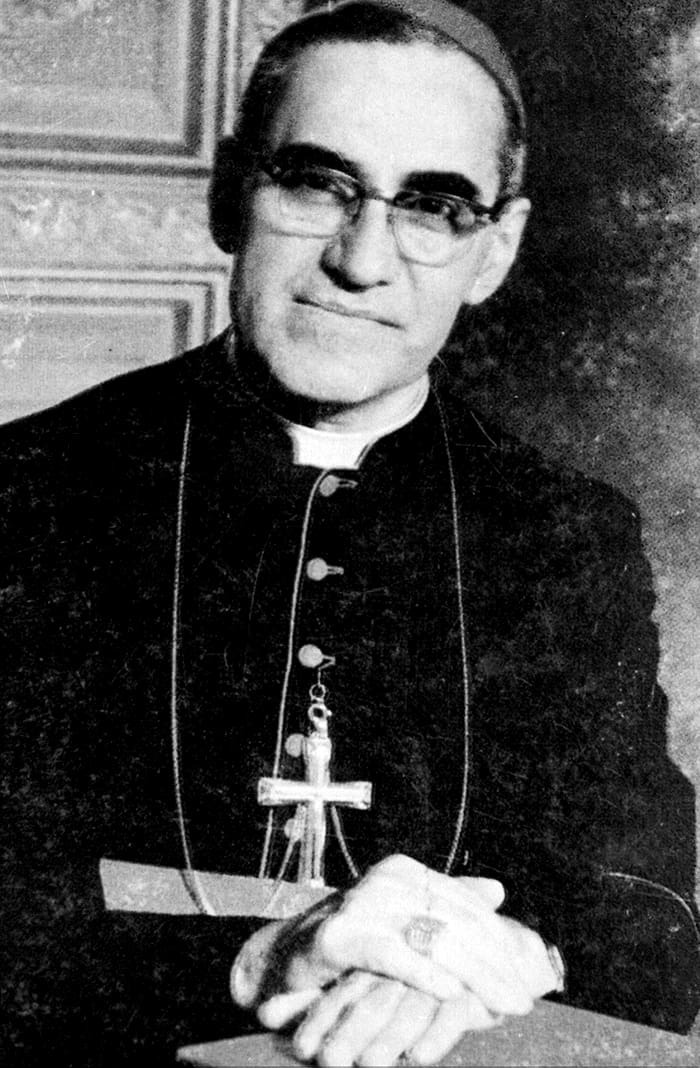
Oscar Romero (Óscar Arnulfo Romero), the Archbishop of San Salvador, is a figure who commands my deep respect and admiration for what it means to be a spiritual leader. Although his life was tied to the small Central American country of El Salvador, his story resonates worldwide. At a time when his homeland was descending into the chaos of violence and inequality, Romero underwent a remarkable transformation. From a conservative cleric who preferred to avoid conflict, he became a fearless defender of human rights and the voice for the voiceless.
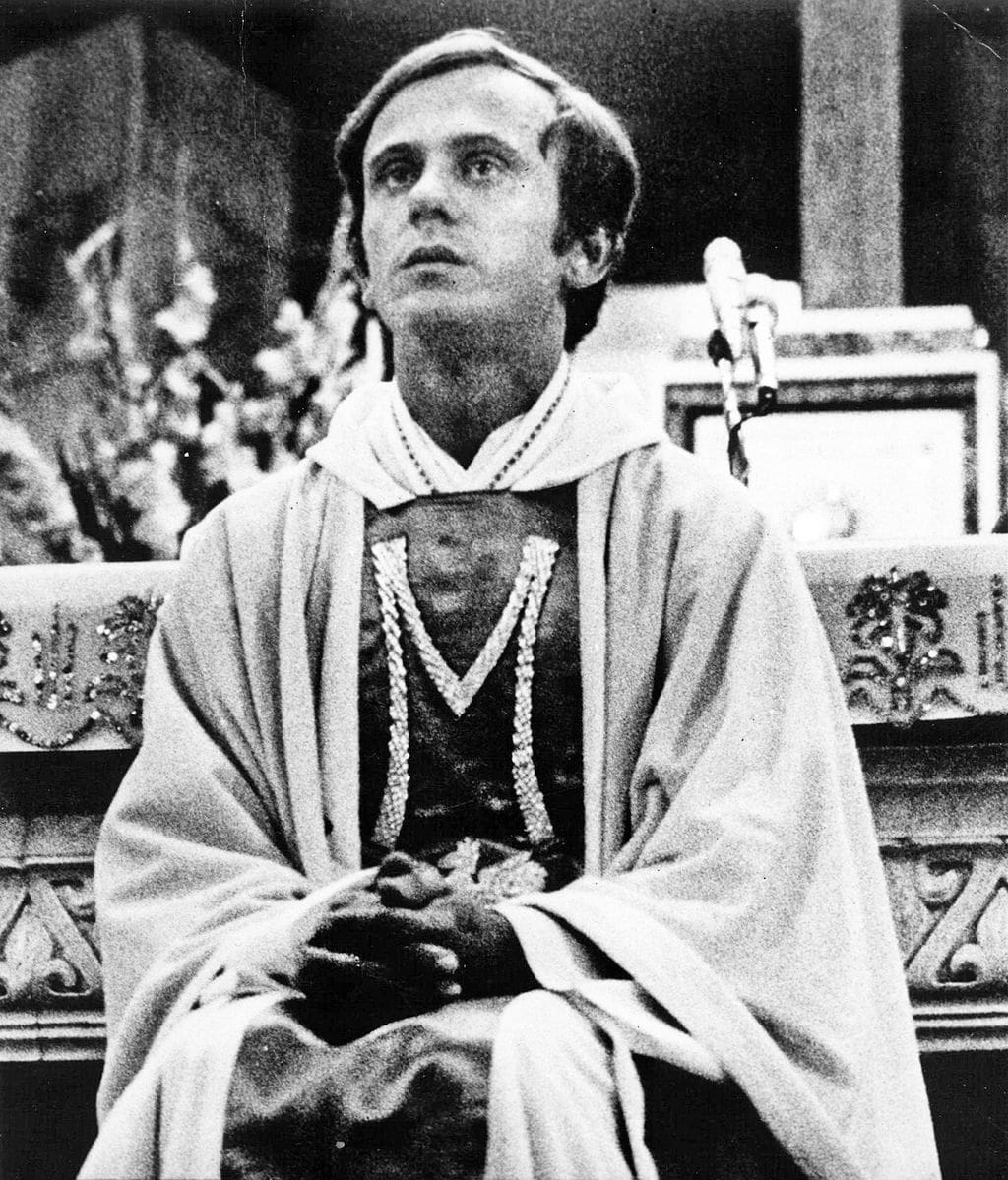
To me, Romero’s story is proof that courage isn’t a trait we’re born with, but a decision we make when faced with evil. He reminds me of other great figures I’ve written about, like Jerzy Popiełuszko and Martin Luther King Jr. All of them paid the ultimate price for their beliefs. Romero was murdered in 1980, but his death didn’t silence his message. On the contrary, it made the whole world listen.
In this article, I want to look at Oscar Romero’s journey—from his humble beginnings and turning points to his tragic death. We’ll also consider why his stance is so important today, in a world still grappling with social and political injustice.
Early Life and Calling: The Roots of His Mission
Oscar Arnulfo Romero was born on August 15, 1917, in Ciudad Barrios, a small town in the mountains of El Salvador. He came from a modest family; his father was a telegraph operator, and his mother was a homemaker. In his youth, Romero learned carpentry, which I find to be a beautiful, down-to-earth detail—before he started building a community of believers, he learned to build things with wood. These simple roots later helped him better understand the hardships of ordinary people.
At the age of 13, he entered the minor seminary, which began his long path within the Church. He studied in El Salvador and Rome and was ordained a priest in 1942. For most of his early career, he was seen as a traditionalist. He avoided politics, focusing on church administration and pastoral duties. When he was appointed Archbishop of San Salvador in 1977, the ruling and military elites were relieved. They saw him as a “safe choice”—someone who wouldn’t cause trouble.
What fascinates me about this stage of his life is that nothing pointed to a revolutionary. Romero was a quiet, almost shy man who believed in order and obedience. His transformation didn’t come from ideology but from a direct collision with the brutal reality his countrymen faced. It’s a reminder that it’s never too late to change your perspective.
Faith as a Force for Change
The turning point in Romero’s life was the murder of his close friend, Jesuit priest Rutilio Grande, in March 1977. Father Grande worked with poor farmers, helping them organize and fight for their rights, which the regime didn’t like. He was shot and killed on his way to say Mass. For Romero, this was a shock. He understood that the Church could not stand by while innocent people were being murdered.
That event changed everything. Romero stopped being a cautious administrator. He began to openly criticize the government, the military, and the wealthy elites for exploiting the poor and using terror. His faith was no longer just theology confined within the cathedral walls; it became a tool of resistance. This is how I see the role of the Church—I really value this shift in Romero’s moving story from protecting the institution to truly caring for people.
Romero opened the seminary doors to refugees fleeing violence in the countryside. He started documenting cases of torture and disappearances. His actions show that true faith requires action. It’s not enough to pray for peace; you have to actively oppose violence. This is a lesson that remains relevant, no matter where we live in the world.
The Power of Homilies: A Voice for the Oppressed
In a country where the media was censored and the truth was suppressed, Romero’s Sunday homilies became the main source of information. They were broadcast on the Catholic radio station YSAX and listened to by the entire nation—from rural huts to the halls of power. Romero used these sermons to name the victims, describe the military’s crimes, and call for change.
His style was simple and direct. He didn’t use complicated language. He spoke so that every farmer and worker could understand him. He was called “the voice of the voiceless.” What impresses me most is his courage to speak truth directly to the oppressors. In one of his last homilies, he addressed the soldiers directly: “I beg you, I command you in the name of God: stop the repression!”
These words had immense power. They gave people hope and a sense of dignity. But they also brought the regime’s wrath down on Romero. The radio station was repeatedly bombed, and the archbishop himself received numerous death threats. Still, he didn’t stop speaking. His determination to use words as a weapon against rifles is an inspiring example of moral strength to me.
Martyrdom: The Price of Truth
On March 24, 1980, the worst-case scenario became a reality. Oscar Romero was celebrating Mass in a small chapel at the Hospital of Divine Providence in San Salvador. As he lifted the chalice, a shot rang out. A sniper, acting on the orders of a death squad, shot him directly in the heart. Romero died instantly, at the altar.
The murder shocked the world. Killing an archbishop during Mass was an act of barbarism that showed the regime would stop at nothing. His funeral, attended by thousands, turned into a massacre when the army opened fire on the crowd. Romero’s death became a prelude to the bloody civil war in El Salvador, which lasted for the next 12 years.
For me, Romero’s death is a painful reminder of the price of truth. He knew he was risking his life. A few days before his death, he said, “As a Christian, I do not believe in death without resurrection. If they kill me, I will rise again in the Salvadoran people.” These were not just words; they were an expression of his deep conviction that the idea of justice is stronger than death.
Legacy: An Inspiration in the Fight for Justice
Oscar Romero did not disappear with his physical death. He became an icon in the fight for human rights around the world. His tomb in the San Salvador Cathedral is a place of pilgrimage, visited by people of different faiths and beliefs. His life reminds us that one person can influence the fate of an entire nation.
In 2018, Pope Francis declared Oscar Romero a saint of the Catholic Church. It was a moment of great satisfaction for many Salvadorans who had revered him as a saint long before the Vatican’s official decision. The canonization confirmed that standing with the poor and persecuted is the essence of Christianity.
Romero’s legacy extends beyond religion. He is a symbol for anyone fighting against systemic injustice. His life teaches us that neutrality is impossible in the face of oppression. As he himself said, “He who is not with the poor is not with God.” This simple sentence challenges all of us to re-examine our priorities.
Reflection: What Can We Learn from Oscar Romero?
Oscar Romero’s story forces me to reflect personally. It’s easy to admire heroes from the past, but it’s much harder to follow their example in our daily lives. Romero wasn’t born a hero; he became one by responding to the suffering of others. This gives me hope that each of us has the potential to do good if we just dare to step out of our comfort zone.
The key lesson I draw from his life is the importance of empathy. Romero listened to people. He didn’t impose ready-made solutions from above but accompanied them in their pain. In today’s polarized world, the ability to listen and empathize seems to be a scarce commodity. Romero shows that empathy is the very foundation of justice.
Another takeaway is that speaking the truth requires courage but is essential for a healthy society. Romero was not a politician, but his words had a political dimension because they touched on the common good. It reminds us that we cannot separate our moral values from public life.
Conclusion: A Life That Inspires Action
Oscar Romero’s life is a story of transformation, courage, and sacrifice. He showed us that even in the face of terrifying violence, one can maintain dignity and faithfulness to one’s beliefs. His legacy lives on in everyone who dares to stand up for the weak and the excluded.
Thinking about his fate, I return to the idea that his greatest victory was not a political win but the awakening of consciences. Romero gave people the strength to believe in their own worth. That message is universal and timeless.
Let the story of Oscar Romero be not just a history lesson for us, but a call to action. In a world full of noise and disinformation, let’s try to be a voice of truth and compassion, just as he was the voice for the voiceless.
If my writing has inspired or helped you, I would be grateful for your support.
Need support yourself? Discover how I can help you.
AI Disclosure
I see my thoughts as the essence, much like the soul, and AI helps me give them form. It supports me with research, translation, and organizing ideas, but every perspective is my own. Curious how I use AI? Read more here.