A Voice of Courage in Oppressive Times
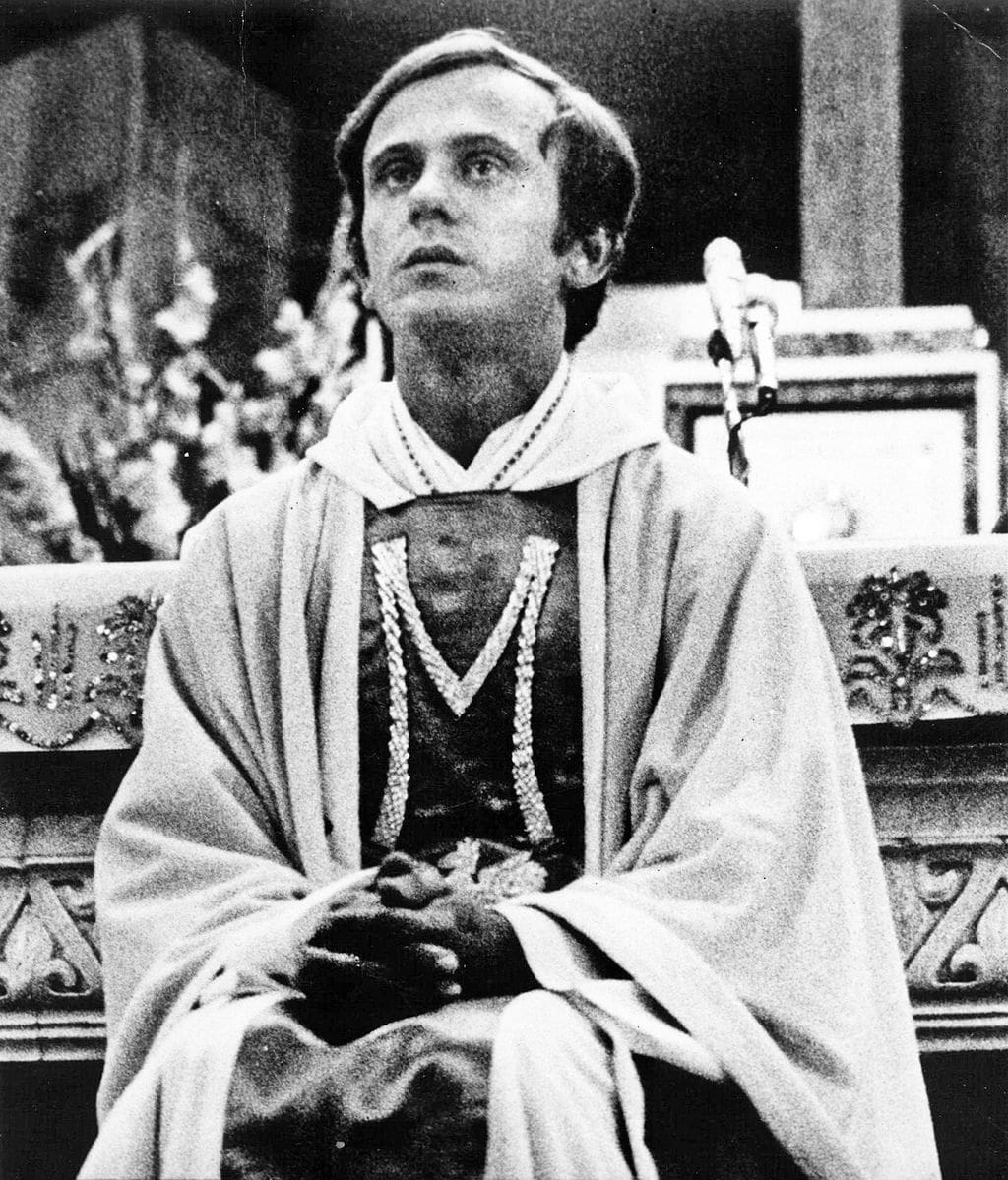
Jerzy Popieluszko (Jerzy Popiełuszko), known internationally as Father Jerzy Popieluszko, was a Polish Roman Catholic priest whose life and death became a symbol of resistance against oppression. Born as Alfons Popieluszko in 1947, he later changed his name to Jerzy, a decision that reflected his desire to distance himself from the negative connotations tied to his birth name. To me, this small but significant act already shows the courage and determination that would define his life.
Father Jerzy’s story is deeply intertwined with the history of Poland during the communist era. At a time when the government sought to suppress freedom and control every aspect of life, he became a symbol of determination and courage, using his faith and his voice to inspire the nation. His sermons, often broadcast by Radio Free Europe, were not just spiritual messages but also calls for justice, dignity, and truth. Tragically, his unwavering commitment to these values led to his brutal murder in 1984 by agents of the communist regime.
What strikes me most about Father Jerzy’s life is how he embodied the idea that faith isn’t just a private matter, but a driving force for social change. His story reminds me of other figures I’ve written about, like Lech Walesa, whose faith fueled his fight for freedom, or Desmond Tutu, who used his spiritual leadership to challenge apartheid. These individuals, much like Father Jerzy, show us that courage and conviction can inspire entire movements.
In this article, I want to explore not just the events of Father Jerzy’s life, but also the lessons we can take from his example. How did an ordinary parish priest become a national hero and a martyr? What can his story teach us about the power of faith and the price of standing up for what’s right? Let’s dive into the life of Jerzy Popieluszko, a man whose legacy continues to inspire.
Early Life and Calling: The Roots of His Mission
Jerzy Popieluszko was born on September 14, 1947, in the small village of Okopy, near Suchowola, in northeastern Poland. His birth name, Alfons, was later changed to Jerzy during his seminary years, a decision made to avoid the negative associations with his original name. For me, this detail is a reminder of how even small choices can reflect a deeper sense of purpose and identity.
Growing up in a devout Catholic family, Jerzy’s early life was shaped by faith and hard work. His parents, were farmers who instilled a strong sense of morality and responsibility in their children. I can just imagine the simplicity of his upbringing—daily prayers, chores on the farm, and a community bound by shared values. It was in this environment that Jerzy’s calling began to take root.
In 1965, he entered the seminary in Warsaw, but his path to the priesthood wasn’t without its challenges. During his mandatory military service, Jerzy faced harsh treatment designed to discourage young men from pursuing a religious vocation. Despite the physical and psychological pressure, he remained steadfast in his faith. This resilience, I believe, was a key trait that later allowed him to stand firm against the communist regime.
Jerzy was ordained as a priest in 1972 by Cardinal Stefan Wyszyński, a major figure in the Polish Church and a mentor to many during that turbulent period. His first assignments involved serving in small parishes, where he quickly earned a reputation for being humble and dedicated to his parishioners. For me, it’s inspiring to see how these seemingly ordinary beginnings laid the foundation for his extraordinary impact.
What stands out about Jerzy’s early years is that his faith wasn’t just a personal belief, but a guiding force in his relationships with others. He wasn’t an intellectual or a charismatic speaker, but he had a way of connecting with people on a deeply human level. This ability to relate, combined with his unwavering commitment to truth and justice, would later make him a powerful voice for the oppressed.
The Role of Faith in Resistance
In the early 1980s, Poland was in the midst of a deep political and social crisis. The Solidarity movement was gaining momentum, challenging the authority of the communist regime. It was during this time that Father Jerzy found his calling as a spiritual leader for the movement.
In 1980, workers at the Warsaw Steelworks went on strike, demanding better conditions and greater freedoms. They asked for a priest to celebrate Mass for them, and Jerzy was chosen. This moment marked the beginning of his close association with Solidarity. For me, it’s fascinating to see how his role evolved—not as a political leader, but as a moral and spiritual guide who gave strength and hope to those fighting for their rights.
Father Jerzy’s sermons during this period were a unique mix of spiritual teachings and social commentary. He spoke about the dignity of every person, the importance of truth, and the need for nonviolent resistance. His words resonated deeply with the Polish people, who longed for both spiritual and political liberation. One of his most famous messages, “Overcome evil with good”—which comes from the Holy Scripture, specifically the Letter to the Romans—became a guiding principle for the movement, one that Father Jerzy repeated often in his work during the 1980s.
What I find particularly moving is how Jerzy’s faith shaped his approach to resistance. He didn’t call for revenge or hatred, but for love and forgiveness, even toward those who persecuted him. This echoes the teachings of figures like Martin Luther King Jr., who also combined faith with a commitment to nonviolent resistance. It’s a reminder that real courage often lies in choosing compassion over anger, even in the face of injustice.
The Power of Words: His Sermons and Their Impact
Father Jerzy’s sermons were more than just religious homilies; they were acts of defiance against a regime that tried to silence dissent. Delivered during the monthly “Masses for the Fatherland” at St. Stanislaus Kostka Church in Warsaw, his words inspired thousands to stand firm in their pursuit of freedom and justice.
What strikes me about these sermons is their simplicity and clarity. Jerzy didn’t use complicated theological arguments or lofty rhetoric. Instead, he spoke directly to the struggles and hopes of ordinary people. He reminded them of their inherent dignity and the power of truth, even in the face of oppression. For me, this ability to connect so personally with his audience is a testament to his authenticity and humility.
One of his most powerful messages came in 1983, when he said, “Violence is not victorious, though it may triumph for a while. We have proof of that standing underneath the Cross.” These words, spoken in the shadow of martial law, were a profound reminder of the enduring power of love and sacrifice. They resonate with me because they capture the essence of Jerzy’s mission: to inspire hope and courage in the face of fear.
His sermons were so influential that they were broadcast by Radio Free Europe, reaching millions across Poland and beyond. This widespread influence made him a target of the regime, which saw his growing popularity as a threat. Yet, despite the risks, Jerzy continued to speak out, driven by his unshakeable faith in the power of truth.
Martyrdom: The Price of Truth
By 1984, Father Jerzy Popieluszko had become one of the most prominent voices of resistance in Poland. His sermons, which combined spiritual guidance with calls for justice and human dignity, had angered the communist regime. It breaks my heart to think about how his courage and commitment to the truth ultimately made him a target for those who wanted to crush freedom.
On October 19, 1984, Father Jerzy was returning from a Mass in Bydgoszcz when he was ambushed by agents of the Security Service. The initial plan was to stage a car accident, but when that failed, the agents kidnapped him. He was brutally beaten, tied up, and finally thrown into the Vistula River with a heavy stone tied to his body. His body was found eleven days later, on October 30.
The news of his murder sent shockwaves through Poland and around the world. For the Polish people, it was a moment of deep sorrow but also a turning point in their struggle against oppression. Over 250,000 people attended his funeral, including Lech Wałęsa, who gave a eulogy. The funeral became a powerful act of defiance, with mourners chanting, “We forgive,” a testament to the values Father Jerzy had preached throughout his life.
What moves me most about this tragic event is that Jerzy’s death, though meant to silence him, only amplified his message. His martyrdom became a symbol of the cost of defending truth and justice. It reminds me of other figures I’ve written about, like Martin Luther King Jr. and Oscar Romero, whose lives were also cut short because they dared to challenge systems of oppression. Their deaths, like Jerzy’s, were not the end of their influence but the beginning of their lasting legacies.
Legacy: A Symbol of Hope and Justice
Father Jerzy’s influence didn’t end with his death. In fact, his martyrdom became a catalyst for change, inspiring millions to continue the fight for freedom. His life and sacrifice are now deeply woven into the fabric of Poland’s history and identity.
In 2010, Father Jerzy was beatified by the Catholic Church, which officially recognized him as a martyr for the faith. His grave at St. Stanislaus Kostka Church in Warsaw has become a pilgrimage site, visited by millions of people seeking inspiration and comfort. For me, the image of his tomb, surrounded by a rosary made of stones in the shape of Poland, is a powerful reminder of his connection to his homeland and its people.
What I find especially inspiring is how Father Jerzy’s legacy resonates beyond Poland. His story has been told in films, books, and documentaries, reaching audiences all over the world. It’s a testament to the universal message: that faith, courage, and compassion can overcome even the darkest forces.
Father Jerzy’s life also serves as a reminder of the Church’s role in standing up for justice. At a time when many institutions were complicit in the regime’s oppression, he showed that faith could be a force for liberation. This is a theme I’ve explored in other articles, such as those on Desmond Tutu and Lech Walesa, who also used their spiritual convictions to challenge injustice.
Reflection: What Can We Learn from Jerzy Popieluszko?
For me, the story of Father Jerzy Popieluszko is not just a historical account, but a deeply personal reminder of the power of faith and courage. His life challenges us to reflect on our own values and actions. Are we willing to stand up for what we believe in, even when it comes with a great cost? How can we use our faith or personal convictions to bring about positive change in the world?
One of the most profound lessons from Father Jerzy’s life is the importance of forgiveness. Despite the violence and hatred he faced, he consistently preached love and reconciliation. This message feels especially relevant today, in a world often divided by anger and resentment. His example reminds us that true strength lies in choosing compassion over revenge.
Another takeaway is the role of ordinary people in extraordinary movements. Father Jerzy wasn’t a politician or a revolutionary in the traditional sense. He was a simple parish priest who used his voice and his faith to inspire change. This is a powerful reminder for me that we don’t have to hold positions of power to make a difference. Sometimes, it’s the quiet acts of courage and kindness that have the greatest, most lasting impact.
Conclusion: A Life That Inspires Action
The life and death of Jerzy Popieluszko are a testament to the enduring power of truth, faith, and justice. He showed us that even in the face of overwhelming odds, one person’s courage can inspire a nation. His story is a reminder that the fight for freedom and dignity is never easy, but it is always worth it.
As I think about his legacy, I’m reminded of the words he often preached: “Overcome evil with good.” These simple but profound words capture the essence of his mission and the values he stood for. They call on us to look past our fears and doubts and to act with integrity and compassion, no matter the circumstances.
Father Jerzy’s life is a symbol of hope for all of us, a reminder that even in the darkest times, we must not give up. His story continues to inspire not only Poles but people all over the world who are striving for a better, more just society. For me, his legacy is a call to action—a challenge to live with courage, faith, and a commitment to the truth.
If my writing has inspired or helped you, I would be grateful for your support.
Need support yourself? Discover how I can help you.
AI Disclosure
I see my thoughts as the essence, much like the soul, and AI helps me give them form. It supports me with research, translation, and organizing ideas, but every perspective is my own. Curious how I use AI? Read more here.