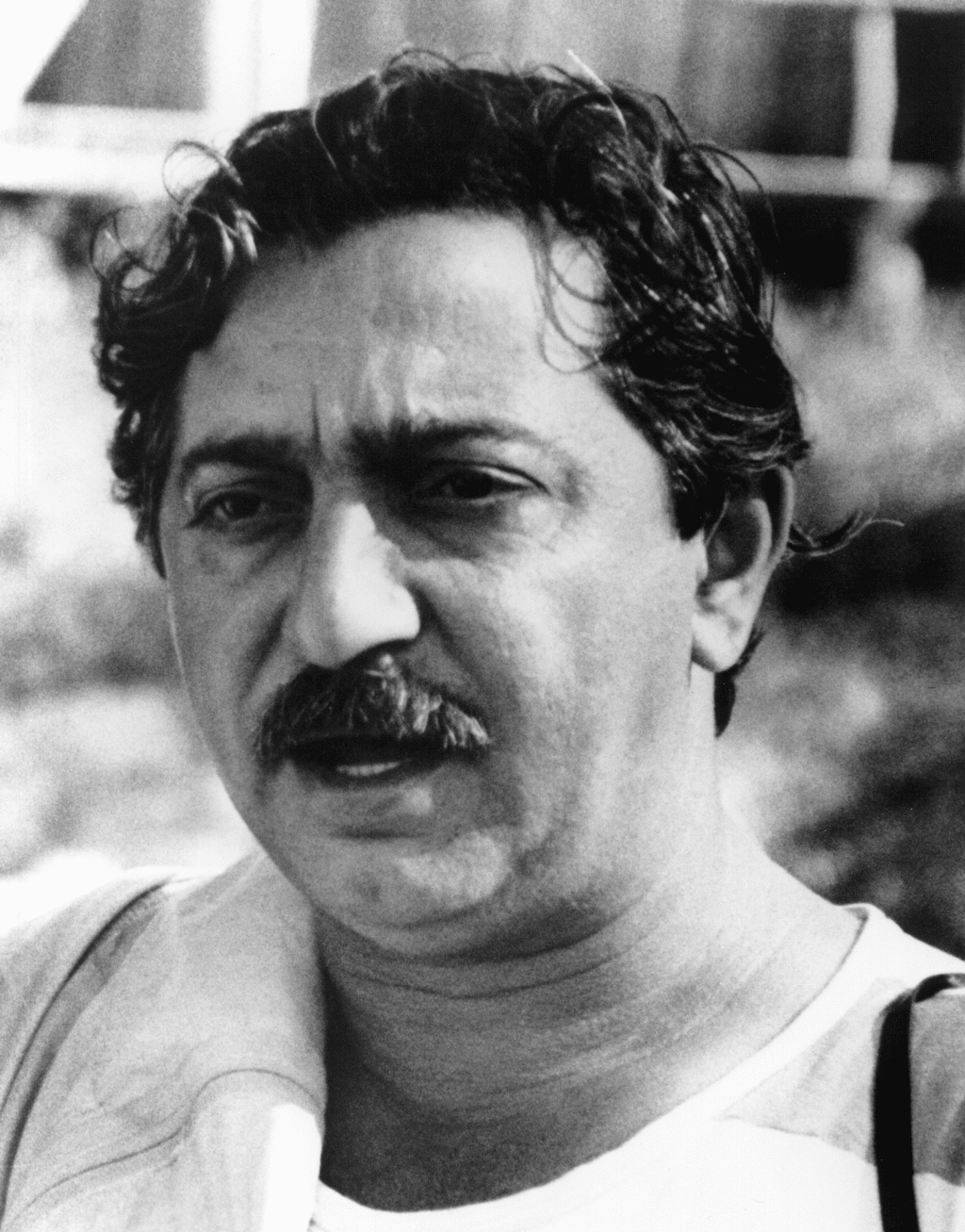
“At first I thought I was fighting to save rubber trees, then I thought I was fighting to save the Amazon rainforest. Now I realize I am fighting for humanity.”
These words from Chico Mendes aren’t just a political manifesto from an environmentalist. They are a deep confession from a man who saw nature as something more than just a pile of resources. In our “Inspiring Souls” series, we often look at people who managed to make brave choices during hard times. Chico Mendes, a simple rubber tapper from Acre, Brazil, became more than just a defender of the forest. He became a symbol of moral courage, reminding us that spirituality can also mean standing up loudly against the injustice destroying our shared home.
When you look at his story, you see a man whose life experience was shaped by the jungle. It was there, among the giant trees and thick undergrowth, that his sensitivity and resilience were formed. His fight didn’t come from cold calculation or political ambition, but from a deep sense of connection to nature and other people. Mendes understood something we often lose track of in our busy modern lives: that we don’t own the Earth, we are part of it. And that the harm we do to nature always comes back as harm to ourselves.
Today, I invite you to get to know the story of a man who paid with his life for his belief that justice and respect for life are non-negotiable values. This is a story about how one person’s voice—initially quiet and humble—can become a force that simply cannot be ignored.
Historical Context: The Amazon on Fire
To understand Chico Mendes’ fight, we have to go back in time and dive into the reality that shaped him. In the 20th century, the Amazon—often called the “lungs of the Earth”—became the scene of a brutal conflict. For the world, it was a priceless reservoir of oxygen and biodiversity. For Brazil, it was an untapped resource meant to drive the economy and “civilize” wild lands.
In the 70s and 80s, the Brazilian military government, under the banner of “integrating” the Amazon with the rest of the country, launched massive infrastructure projects. They built highways, like the famous Trans-Amazonian Highway, that cut right through the virgin rainforest. Following the roads came big cattle ranchers, logging companies, and gold miners. Each of them saw the forest not as a living ecosystem, but as a source of quick profit. Trees fell to chainsaws, and the land, stripped bare, turned into pastures that became wasteland after just a few years.
Living in this chaos were people for whom the forest had been home for generations. Rubber tappers, or seringueiros, like Chico Mendes, lived their lives to the rhythm of nature. Their work involved gently tapping the bark of rubber trees to collect latex without destroying the forest. Alongside them lived indigenous tribes, guardians of ancient knowledge about the rainforest. For both groups, the land wasn’t a commodity. It was the foundation of their lives, their source of food, medicine, and identity.
But in the eyes of those pushing for “progress,” they were just obstacles. Cattle ranchers, backed by corrupt politicians and police, ruthlessly drove them off the land. Homes were burned, crops destroyed, and those who resisted were intimidated or murdered. Rubber tappers and indigenous people, stripped of rights and protection, became victims of greed. It was in these harsh conditions that Chico Mendes’ resistance was born.
The Odyssey from Acre: From Quiet Tapper to the Voice of the Forest
Chico Mendes was born in 1944 in the heart of the forest, in the state of Acre. From day one, the jungle was his world. He didn’t go to school; he only learned to read and write as a teenager, taught by a political refugee hiding in the forest. It was this unusual teacher who showed him the wider context of political and social dependencies that affected his small community.
As a young seringueiro, Chico quickly realized that his fate was inextricably linked to the fate of the forest. He watched as his father and neighbors were exploited by landowners. At first, his fight was purely human—it was about fair wages, schools for children, the right to a decent life. But as the chainsaws cut deeper into the heart of the Amazon, Mendes went through a profound transformation. He realized that social justice cannot exist without environmental justice. If the forest dies, the people who have lived in its shadow for generations will die too.
This understanding became the foundation of his mission. Chico didn’t want reserves where “nature can’t be touched.” He knew that humans could live in symbiosis with nature. That’s how the revolutionary idea of “extractive reserves” (reservas extrativistas) was born—protected areas where local communities could harvest rubber, nuts, and fruits sustainably, without destroying the ecosystem. It wasn’t just an economic theory; it was a vision of harmony where the forest gives life, and in return, people protect it.
His journey from a quiet tapper to a union leader was tough. It required not just charisma, but above all, courage to stand up to the powerful cattle rancher lobby. He organized empates—peaceful protests where entire families of seringueiros stood in front of bulldozers and chainsaws, blocking the destruction of the forest with their own bodies. In those moments, Chico Mendes was no longer just a local activist. He became a symbol of resistance, proof that even the poorest people, armed with a sense of what’s right and solidarity, can challenge the machinery of greed. His transformation showed the world that true leadership isn’t born in palaces, but from a love for the land and people.
Spiritual Connection to Nature: The Heart of His Mission
Chico Mendes’ fight wasn’t fueled solely by politics or economics. At its core lay a deep conviction about the value of life and the unbreakable bond between humans and nature. For him, the rainforest wasn’t a collection of raw materials, but a living organism. This perspective was the heart of his mission and the source of his extraordinary courage.
Mendes saw the jungle as a web of interconnected relationships, where every element has its place and purpose. He believed that destroying the forest wasn’t just an economic mistake, but primarily an act lacking respect for life. This philosophy was deeply rooted in the wisdom passed down by generations of seringueiros and indigenous Amazonians, who for centuries knew how to use the forest without destroying it.
It was this connection to nature that gave him the strength to face deadly danger. When he received death threats, his calm and determination came from a deep sense of purpose. He knew he was fighting for something bigger than himself—for harmony between humanity and the planet. His resistance was an act of faith that nature has rights, and it is a human duty to protect them.
In one interview, he said something that perfectly captures his philosophy: “There is no defense of the forest without the defense of the forest people.” This simple sentence holds his entire perspective: protecting the environment requires understanding and caring for people, and the fight for nature must also be a fight for human dignity. Mendes saw no line between protecting trees and protecting human life. For him, one was inextricably woven into the other. It was this holistic perspective that gave his voice a truth that survived his death and continues to inspire today. His legacy is a reminder that real change starts with finding that connection within ourselves to the world around us.
Activism and Legacy: Courage in the Face of Death
Chico Mendes’ fight wasn’t an abstract debate. It was a daily, tangible act of courage. His greatest strength was his ability to unite people who for years had been at odds or indifferent to their fate. He understood that scattered seringueiros and divided indigenous tribes stood no chance against the power of capital. So, he tirelessly traveled around Acre, organizing meetings, building trust, and creating an alliance that seemed impossible—the Forest Peoples’ Alliance. This unity became his most powerful weapon.
Mendes took a local conflict to the international stage. He began working with environmental and human rights organizations, and his voice reached Washington and Geneva. He testified before the U.S. Congress, convincing international financial institutions like the World Bank to stop funding projects that destroyed the Amazon. His arguments were simple but devastating: he showed how money meant for “development” was actually funding environmental destruction and human tragedy. Thanks to him, the world heard about the dramas playing out deep in the jungle.
However, the louder his voice became, the greater the danger grew. For powerful landowners and corrupt politicians, he became enemy number one. He received regular death threats, and his home was surrounded by police protection that was more of an illusion than real security. Despite this, Mendes didn’t give up. In interviews, acknowledging the risk, he would repeat: “I don’t want to die. But my death will help our cause.” He knew his life had become a symbol, and his sacrifice might turn the world’s attention to the plight of the forest and its people.
On December 22, 1988, an assassin’s bullets found him on the doorstep of his own home. His murder shook Brazil and the world, becoming proof of the brutality of the conflict over the Amazon. But Mendes’ enemies miscalculated. His death didn’t silence the movement; it strengthened it. Under international pressure, the Brazilian government finally started to act. Within a few years of his death, over a dozen extractive reserves were created, protecting millions of acres of rainforest. Chico Mendes’ legacy isn’t just saved trees. It is proof that one man’s unwavering belief in justice and courage can actually change the world, even if the price for that change is the ultimate sacrifice.
Legacy and Lessons: What Does Chico Mendes Teach Us Today?
Chico Mendes’ legacy is alive, though his fight continues. The most tangible fruit of his sacrifice is the creation of extractive reserves—a concept that revolutionized thinking about nature conservation. Thanks to him, millions of acres of Amazon rainforest are protected in a way that doesn’t exclude humans but makes them guardians of the land. It’s a model showing that economic development and ecology don’t have to be in conflict.
However, his death didn’t solve all the problems. The Amazon is still threatened by deforestation, and corporate interests and political pressure remain a danger. The people of the forest, just like in Mendes’ time, are still fighting for their rights and lives. His story is, therefore, not just a reason for pride, but also a reminder that the fight for our planet is a process that requires constant engagement.
What can we learn from Chico Mendes’ life? First and foremost, that change doesn’t start with grand manifestos, but with brave decisions made in one’s own community. He teaches us that real strength lies in unity—in bringing people together despite differences and divisions. His example shows that every one of us, regardless of background or status, has the power to stand up for what is right.
His legacy is a call for reflection for each of us. What is our connection to nature? Can we see that the fate of a distant rainforest is intertwined with our own? Chico Mendes’ story forces us to ask ourselves: What am I capable of doing to protect our shared home? Not everyone has to stand in front of a bulldozer, but everyone can make conscious choices, support just initiatives, and use their voice to demand accountability. The heritage of this hero from Acre is a reminder that change for the better starts with our actions.
Conclusion: A Reflection on Courage and Humanity
Chico Mendes wasn’t a figure from a legend. He was a man of flesh and blood who loved the land he lived on so much that he was willing to give his life for it. His story is proof that the biggest changes often come from the actions of ordinary people. He showed us that spirituality isn’t an escape from the world, but an engagement with its problems and an attempt to solve them. His fight for the forest was really a fight for humanity—so that we wouldn’t lose the ability to feel compassion for the nature that sustains us.
Looking at his life, we see that courage isn’t the absence of fear, but acting despite it. Mendes was afraid for his life, for his family, for the future of the forest. But that fear didn’t paralyze him; it became motivation to act. His legacy reminds us that each of us has the potential to become a guardian of life. The Amazon still needs voices like his—voices of reason and hope.
Leaving this story, it’s worth pondering a question that remains relevant. This question isn’t just about ecology, but about the meaning of our existence and the values we live by every day:
“What are we willing to fight for, not just for ourselves, but for the generations to come?”
Let the answer to this question be the beginning of action for a better world.
If my writing has inspired or helped you, I would be grateful for your support.
Need support yourself? Discover how I can help you.
AI Disclosure
I see my thoughts as the essence, much like the soul, and AI helps me give them form. It supports me with research, translation, and organizing ideas, but every perspective is my own. Curious how I use AI? Read more here.