“You who call yourselves the great civilization, you who have knelt upon Plymouth Rock, I am calling out to you for justice!”
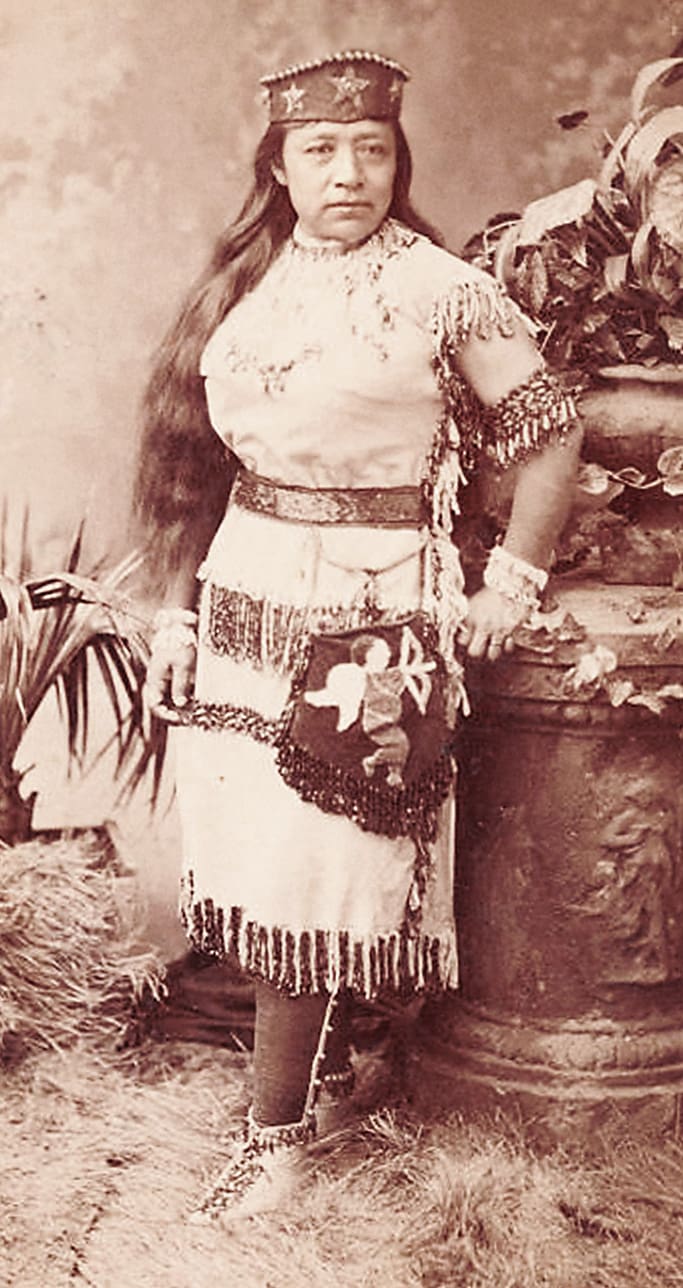
These words didn’t come from a modern-day activist’s speech. They were spoken over a century ago by a woman who watched the world of her ancestors crumble under the weight of “progress.” Sarah Winnemucca, known to her tribe as Thocmetony (Shell Flower), didn’t have an army or political power. She only had her voice and her pen. Yet, that was enough to shake the conscience of a nation that considered itself civilized while acting barbarically.
When I think of Sarah, I see a figure standing on the borderline of two worlds—the traditional world of the Paiute people and the rapidly expanding world of white settlers. Instead of letting that border crush her, she became a bridge. She was the first Native American woman to write and publish an autobiography, “Life Among the Piutes”, bearing witness to a truth that many would have preferred to keep silent.
For me, her story is a lesson that even when facing overwhelming odds, truth spoken with courage has immense power. It leads me to ask the question that often comes up when I write about “Inspiring Souls”: Where do you find the strength to stand up for your people when the odds are stacked against you?
Historical Background: When the “Roaring Lion” Arrived
To understand Sarah’s determination, we have to dive into the reality of the American West in the mid-19th century. For many settlers, this was the era of “Manifest Destiny”—a romantic vision of conquering new lands. For indigenous people like the Paiute living in what is now Nevada, it was an apocalypse.
Sarah was born around 1844. In her memoirs, she wrote: “I was a very small child when the first white man came into our country. They came like a lion… and have continued so ever since.” This comparison to a roaring lion perfectly captures the fear and helplessness that must have accompanied her people. Later in life, Sarah married Lewis Hopkins, an officer in the U.S. Army, and became known as Sarah Winnemucca Hopkins. This union reflected her ability to navigate between two worlds and may have provided her with unique insights into the challenges her people faced under U.S. policies. Settlers seized land, destroyed natural food sources, and Native people were confined to reservations often run by corrupt government agents.
I imagine the dilemma young Sarah faced. Her grandfather, Chief Truckee, believed in peaceful coexistence with the whites. Her father, Chief Winnemucca, was full of mistrust. Sarah grew up in this tension, learning the invaders’ language and customs, but at the same time watching them destroy everything she loved. That internal conflict could have broken her. Instead, it shaped her unique perspective and gave her the tools to fight back.
The Spiritual Roots of Paiute Resilience
For the Paiute people, spirituality was not confined to rituals or ceremonies—it was a way of life. Their beliefs were deeply rooted in the natural world, emphasizing harmony with the land, respect for all living beings, and the interconnectedness of the community. Elders were revered as keepers of wisdom, and storytelling was a sacred act, preserving the history and values of the tribe for future generations.
Sarah Winnemucca often reflected these values in her writings and speeches. In “Life Among the Piutes”, she described the social structure of her people, where women played an equal role in decision-making, and the community worked together to ensure everyone’s well-being. These traditions stood in stark contrast to the individualism and materialism she observed in settler culture.
Her spirituality also gave her strength in the face of adversity. The Paiute belief in the sacredness of truth and justice likely inspired her relentless advocacy. By sharing her people’s stories and exposing the injustices they faced, Sarah was not only fighting for survival but also honoring the spiritual legacy of her ancestors.
This connection to her roots may explain her resilience. Even as she navigated the complexities of two worlds, Sarah remained grounded in the values of her people—values that taught her to see the land as sacred, to respect the dignity of all beings, and to use her voice for the greater good.
The Journey of Advocacy: A Pen Against Guns
What fascinates me most about Sarah’s story is that words became her weapon. Because she was fluent in English and Spanish, as well as several Native dialects, she became a key interpreter. But being an interpreter in those days didn’t mean being neutral. It meant being right in the center of the pain.
Sarah worked for the U.S. Army and the Bureau of Indian Affairs, which often put her in a difficult position in the eyes of her own people. Yet, she used every opportunity to expose corruption and injustice. She saw agents stealing food meant for starving families on reservations. She saw the violence and the broken treaties. Her marriage to Lewis Hopkins, while controversial among some in her community, gave her a closer view of the U.S. military and government operations. This relationship may have further fueled her determination to expose systemic corruption and advocate for justice, as she witnessed the complexities of these institutions firsthand.
Her greatest achievement, however, was stepping out of the shadow of the interpreter role and taking the stage as an advocate. In the 1880s, she went on a lecture tour across the East Coast. Imagine that: a Native woman standing in front of halls full of white people in San Francisco, Boston, or New York, looking them straight in the eye and telling them about the crimes of their government. That took unimaginable courage.
In 1883, she published “Life Among the Piutes: Their Wrongs and Claims”. It wasn’t just an autobiography; it was an indictment and a cry for dignity. She wrote about her tribe’s social structure, about love, respect for elders, and the equality of women in tribal councils, contrasting it with the hypocrisy of “civilized” Christians.
The Power of Words and Action: Echoes of Other Inspiring Souls
When I read about Sarah Winnemucca, I see the same spark that drove other figures I’ve written about in the “Inspiring Souls” category.
Her fight reminds me of Desmond Tutu, whom I wrote about in “The Healing Power of Joy and Justice”. Just as Tutu fought apartheid using the power of moral authority and truth, Sarah fought systemic racism and exploitation, refusing to be a silent victim. Both understood that the real battle isn’t just on the battlefield, but in the hearts and minds of people.
I also see a parallel with Viktor Frankl (“Finding Meaning in Chaos”). In the concentration camps, Frankl discovered that you can take everything from a person except the last of the human freedoms—the ability to choose one’s attitude. Sarah, even though she saw her world in ruins, chose an attitude of action. She didn’t let hatred or despair take away her agency.
Her story shows that words can be a form of resistance. In a culture that tried to erase her identity, simply writing down her people’s history was a revolutionary act.
Lessons for Today: The Courage to Be a Voice
What can Sarah Winnemucca teach us today? We live in different times, but the mechanisms of injustice, exclusion, and ignorance remain similar.
For me, her most important lesson is that silence in the face of evil is consent. Sarah teaches us that advocacy isn’t just for politicians or lawyers. Each of us has a voice. sometimes using that voice means going against the majority, stepping out of your comfort zone, or even facing criticism.
Her life is also a lesson in resilience. Resilience isn’t just physical survival. It’s keeping your dignity, culture, and values when the world tries to change you. Sarah showed that you can integrate with the modern world (she learned languages, wrote books, gave lectures) without losing your soul and identity.
I wonder how often we give up on speaking out because we’re afraid “it won’t change anything.” Sarah’s story proves that one voice—persistent, honest, and brave—can break through a wall of indifference.
Conclusion: The Legacy of Shell Flower
Sarah Winnemucca died in 1891, exhausted by years of struggle, feeling that many of her efforts were in vain because government promises were still being broken. And yet, history proved her right. Today, her statue stands in the U.S. Capitol, representing the state of Nevada—a symbolic victory for a woman who wasn’t afraid to speak truth to power.
Her life is proof that justice is a marathon, not a sprint. Even if we don’t see the immediate effects of our actions, the seeds of truth we plant will eventually bear fruit.
I’d like to leave you with a reflection that echoes the words of Martin Luther King Jr.: “Injustice anywhere is a threat to justice everywhere.” Sarah Winnemucca understood this instinctively. fighting for the Paiutes, she was fighting for the humanity of us all.
Let her unbreakable spirit inspire us to be braver in our daily lives. To seek the truth, to defend the weak, and to remember that our voice matters. Because, as Thocmetony showed, even in the roar of the “lion,” the voice of truth will always find a way to be heard.
If my writing has inspired or helped you, I would be grateful for your support.
Need support yourself? Discover how I can help you.
AI Disclosure
I see my thoughts as the essence, much like the soul, and AI helps me give them form. It supports me with research, translation, and organizing ideas, but every perspective is my own. Curious how I use AI? Read more here.