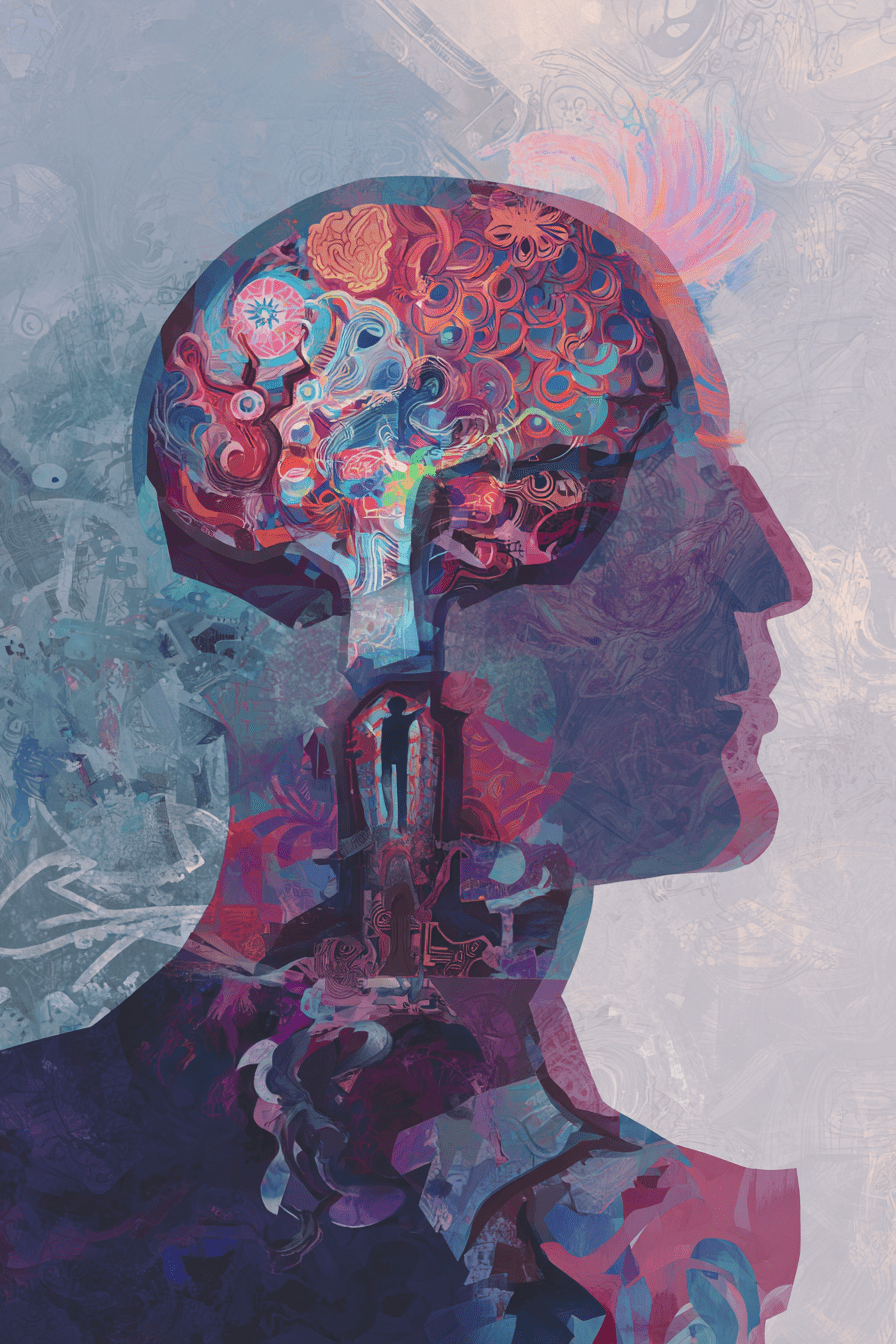
Lately, I’ve been asking myself: what does spiritual growth mean to me, and how does it differ from personal growth? Does it even make sense to draw a line between them—at least in my case? You might find this topic interesting too, especially since “personal growth” pops up everywhere these days—from books and social media to movies, podcasts, and courses. Spiritual growth is also gaining traction, experiencing something of a renaissance.
While researching this topic, I realized (something that actually seemed obvious to me before) that I often mix these two concepts. For me, the boundary used to be clear: spirituality meant religion, meditation, prayer, looking inward, and seeking God. Personal growth felt more grounded, understood intuitively like most people see it—education, character building, developing social skills, improving physical fitness, and so on.
This article is going to get a bit philosophical—you might even feel like I’m splitting hairs or confusing concepts. But for me, this is a way to express my own thoughts, hoping to inspire both myself and you to explore these ideas further.
First, I’ll present what I used to believe not so long ago—which aligns with what I found in most mainstream literature—along with my own commentary. As we get closer to the end, I’ll shift more toward my current point of view.
What is Spiritual Growth?
Spiritual growth, as commonly understood (and how I used to see it), is a journey inward; a process that doesn’t necessarily have a concrete, measurable goal. It’s more about searching for meaning, harmony, and connection with something larger than ourselves—whether you call it the universe, nature, or just a deeper part of our consciousness.
In practice, spiritual growth might include meditation, prayer, mindfulness practices, or reflecting on fundamental values. For me, it’s primarily the awareness that there is something more than just my physical body equipped with a mind. I treated spirituality as learning to be present here and now, finding peace in the chaos of everyday life, and accepting what is. It wasn’t an escape from problems (though I admit I strayed down that path in the beginning), but a shift in perspective that allowed me to look at them with more distance and understanding. Initially, my hope in spiritual growth was simply to find the meaning of life, especially during a marital crisis.
What is Personal Growth?
Personal growth always associated itself in my mind with action and learning new things. back in my scouting days (I was in a sailing team), it was about acquiring new skills and advancing in hierarchy—back then in the scouts, but generally in society. It’s conscious work on specific skills, habits, and goals, meant to improve the quality of our lives in a tangible way. It could be learning a new language, developing emotional intelligence, working on assertiveness, honing professional skills, but also improving physical fitness.
Personal growth used to be synonymous with success for me—a promotion at work, higher earnings, greater productivity. However, literature views it more broadly—as a tool for building a satisfying life in harmony with oneself. It involves planning, achieving goals, and continuous improvement.
Key Differences According to Literature
Although both paths lead to a better life, according to what I’ve read, they differ in several fundamental aspects. But I won’t hesitate to throw in my own two cents here.
The Goal:
- Spiritual Growth: Focuses on being—searching for meaning, inner harmony, and transcendence. The goal is a state of mind, not a concrete result.
- Personal Growth: Focuses on doing—achieving goals, improving skills, and acquiring resources. The goal is achieving a measurable result.
My take: This division isn’t entirely correct for me—it feels a bit pointless. Spirituality should be practical, and I realize spiritual growth through personal growth. It’s not just a state of mind. Through mindfulness or reflection, I find direction for action—for example, how to behave in a given situation according to my values, how to solve a problem, what will make me (e.g., what skills) a better human being so I can apply my values in life. This is practical spirituality, realized through personal growth.
Goal? In spirituality, my goal can be (and actually is) to become a better person, to go deep into myself, into my soul, and realize what my soul truly wants in my life. In this sense, I act in spiritual growth. In both spiritual and personal growth, I can have a goal, or I might not. I won’t argue about measurability—it’s true that in the classic understanding of personal growth, metrics are important.
The Direction:
- Spiritual Growth: Directed inward. It’s a journey into oneself, discovering one’s true nature.
- Personal Growth: Directed outward. It’s about functioning better in the world, building relationships, and achieving successes.
My take: Similar to the previous point—for me, insight into oneself and inner growth are just elements of spiritual growth. Without action, meaning opening up to the external world, it’s just superficial spirituality, a facade.
The Effects:
- Spiritual Growth: Brings inner peace, deeper understanding of oneself and the world, a sense of unity.
- Personal Growth: Leads to better relationships, greater efficiency, professional and material success.
My take: This division makes more sense. But I can’t fully agree, because spiritual growth aims to lead to better relationships and developing one’s talents—this is a mandate of many religions. According to newer concepts, spirituality also connects with creativity, like in Amit Goswami’s theory of universal consciousness and quantum non-locality.
Since there is a mandate in spirituality to develop talents or stimulate creativity (which I have truly experienced), we must develop these talents to best serve society and the world. Of course, in spirituality, professional and material success aren’t goals in themselves—they might be side effects—but in personal growth, if someone isn’t acting from spiritual motivation, the need to understand oneself and the world still exists: one can strive for this through personal growth, for example, by focusing on the materialistic science of humanity or life.
Spiritual Growth Is Also Personal Growth
I used to believe—and it’s a common view—that spiritual growth leads to internal transformation, while personal growth focuses on changes visible on the outside. You can try to separate them like that, but it seems pointless to me, especially regarding spiritual growth—its natural effect is personal growth.
Of course, where I read about separating these concepts, they emphasized that spiritual and personal growth are not opposites. On the contrary—they complement each other perfectly. Both require self-awareness, discipline, and a readiness to work on oneself.
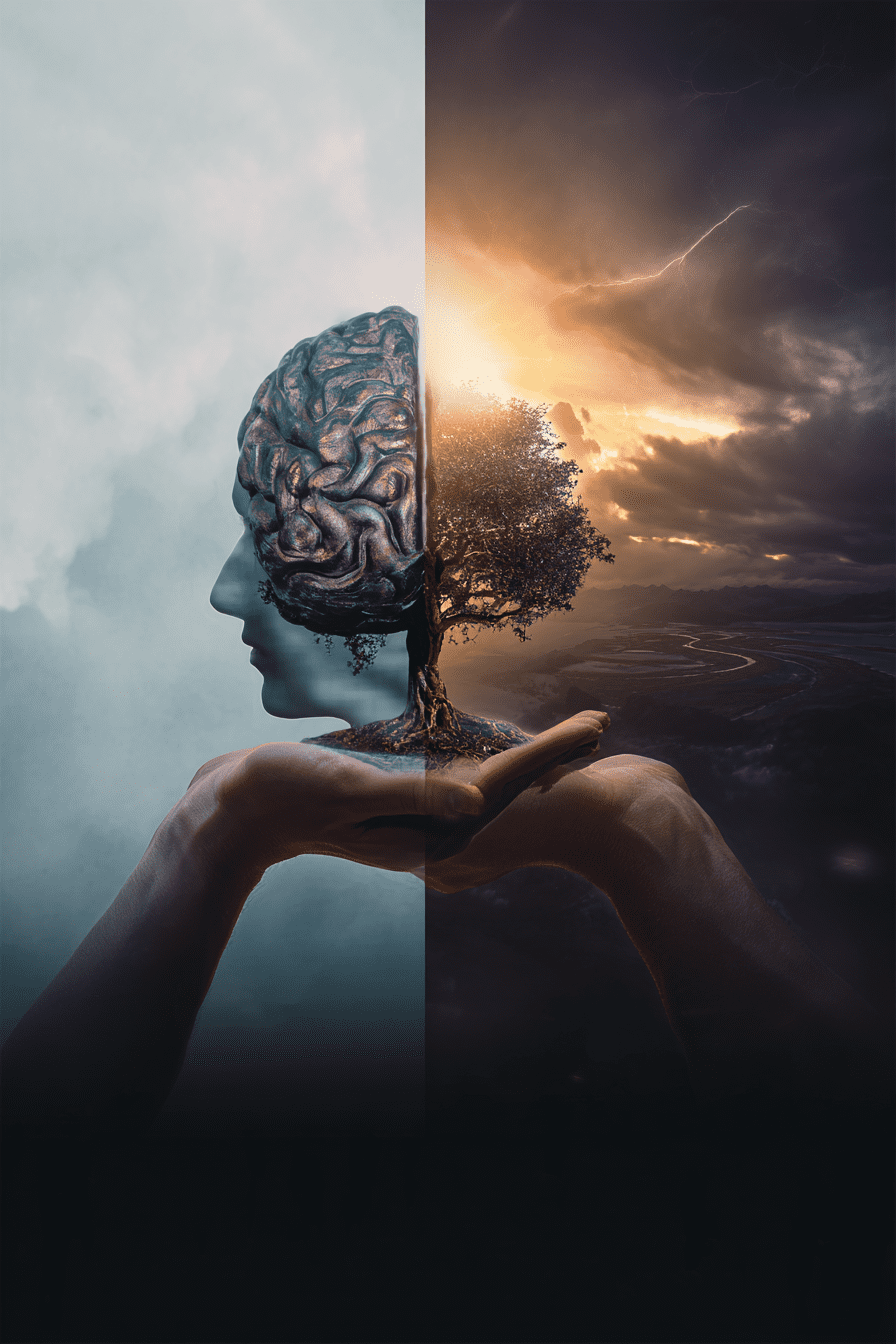
For me, these two paths simply merge, and I touched on this above. Especially from the point of view of my spirituality: since I have a body and a soul, I must develop both areas—the mind (mental skills, psychological skills), the body (physical fitness, healthy diet, sleep), and the soul—my life is supposed to enrich it. Someone might ask: why the body? Putting aside various religious mandates—it’s to live as long as possible in health, to give as much of myself to the world as I can, and to enrich my soul for as long as possible. As the Latin phrase goes, “Mens sana in corpore sano”—”a healthy mind in a healthy body.”
If you’re curious about how I personally understand spirituality and how it shapes my life, I invite you to read my article “How I See Spirituality”. It offers a deeper look into my perspective and the values that guide me.
Now, for fairness and contrast, let’s look at that more “textbook” perspective: for example, a regular meditation practice (spiritual growth) helps me manage emotions and stress better—this translates into effectiveness at work and better relationships with loved ones (personal growth). On the other hand, tools from personal growth, like time management or habit-building techniques, help me stay consistent in my spiritual practices.
According to this common concept, spiritual growth gives deeper meaning to personal goals, and personal growth provides the tools to implement spiritual values in everyday life—meaning I apply spirituality in practice through personal growth.
Do you think this second, popular concept speaks to you more, and is it worth drawing that line? For me, it only makes sense if we divide people into believers (practicing spirituality) and non-believers. If you are developing spiritually, such a division seems artificial and pointless to me—because without personal growth, spirituality is superficial to me.
In Conclusion
Although I tried to separate spiritual and personal growth in the discussion above to better understand their specifics, for me personally, these two paths are inextricably linked. The spirituality I try to implement in life includes personal growth. Even when taking care of my body or developing skills, I feel like I’m doing it in the service of my spirituality—to better understand myself, my place in the world, and to live in accordance with my values. Maybe for someone who doesn’t engage with their spirituality, personal growth is a separate category. But for me, spiritual growth contains everything that leads to a fuller, more conscious life.
If you’d like to learn more about my journey and how I began exploring spirituality, I encourage you to read “What Spirituality Means to Me: A Journey of Self-Discovery and Growth”. It’s a reflection on my early steps and how my understanding continues to evolve.
Unless you prefer the textbook division: spiritual and personal growth as two different but complementary paths. One teaches us how to be, the other—how to do. One leads to inner peace, the other to external fulfillment. Only their combination allows us to build a life that is not only effective but also full of meaning and harmony.
And you? Which approach is closer to you? Have you ever thought about this? Maybe you have a different concept? I know this is a bit of philosophizing, but my point was to show that spirituality must be followed by action in life. Share your experiences in the comments. Or just write, how do you combine spiritual and personal growth in your life?
If my writing has inspired or helped you, I would be grateful for your support.
Need support yourself? Discover how I can help you.
AI Disclosure
I see my thoughts as the essence, much like the soul, and AI helps me give them form. It supports me with research, translation, and organizing ideas, but every perspective is my own. Curious how I use AI? Read more here.