In a village nestled between the spine of a mountain and the whisper of a river, there lived a man known simply as the Master. He was not wealthy, nor did he hold any title of power. Yet, people traveled from distant lands just to sit in his presence. Why? Because the Master possessed something far more valuable than gold or authority: he was undeniably, unshakeably happy.
His laughter was as constant as the sunrise, and his eyes held a serene light that seemed to calm the storms in anyone who looked into them.
Among the visitors was Julian, a wealthy merchant from the city. Julian had everything a man could want—fine silks, a grand estate, and chests full of coins—yet his heart was a cavern of anxiety. He worried about his ships at sea, his reputation among peers, and the relentless ticking of time. He came to the village not to trade, but to find a cure for his restless soul.
The Question
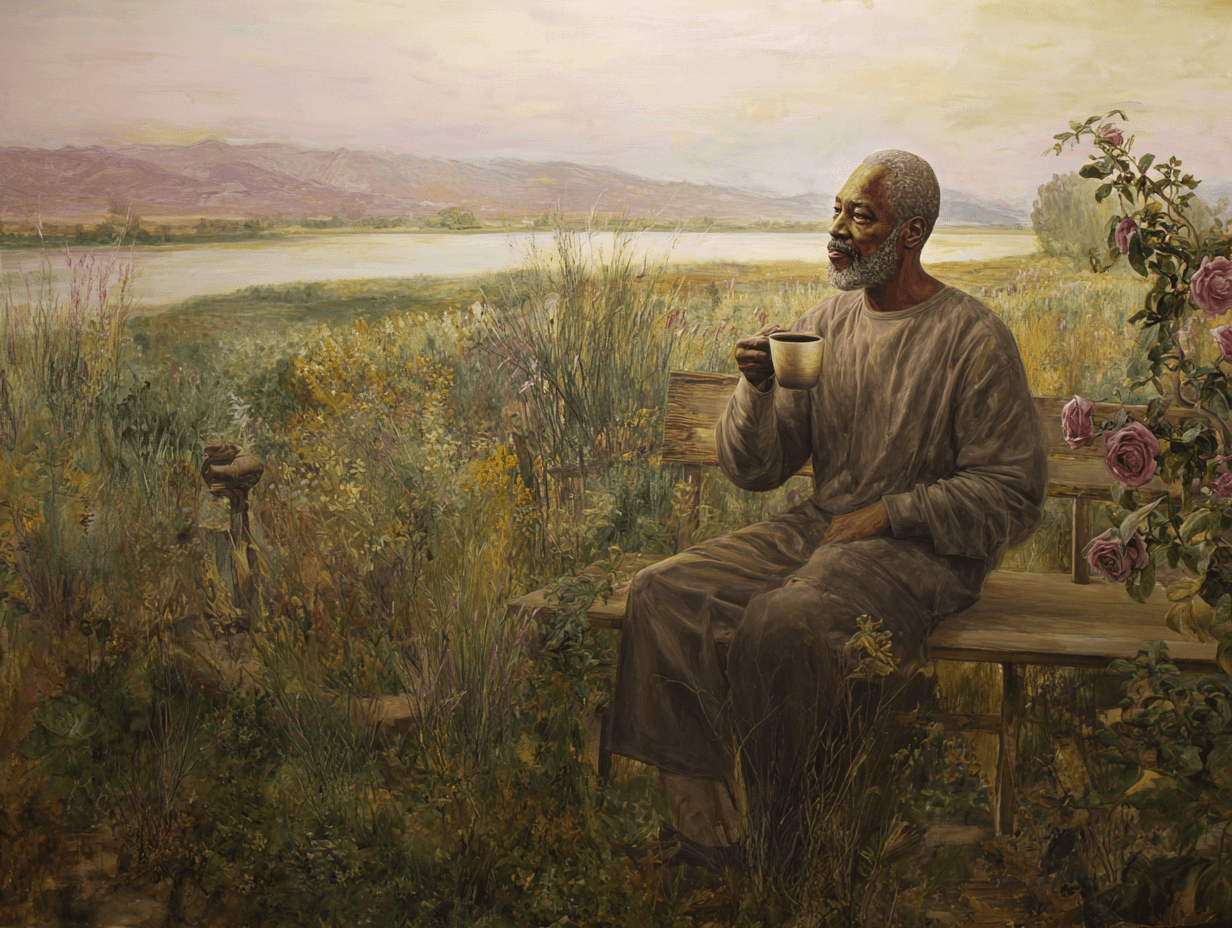
Julian found the Master sitting in his modest garden, pruning a rose bush with the delicate care one might give a newborn child. The old man hummed a soft tune, his face radiant with a simple, quiet joy.
“Master,” Julian began, his voice heavy with exhaustion. “I have conquered markets and built empires. I have everything the world says I should want. Yet, I wake up with dread and go to sleep with worry. You have nothing, yet you smile as if you own the stars. What is your secret?”
The Master paused, snipping a withered leaf. He looked up, his smile deepening into something mischievous yet kind.
“My secret is simple, my friend,” the Master replied. “I live every day as if I were to die tomorrow.”
Julian frowned. He had heard such platitudes before. “That is a common saying,” he scoffed. “Eat, drink, and be merry. It is reckless advice.”
The Master laughed, a rich sound that seemed to bubble up from the earth itself. “Ah, you misunderstand. It is not about recklessness. It is about clarity.”
The Lesson of the Tea
The Master invited Julian to sit. He poured two cups of tea. The steam rose in delicate spirals, carrying the scent of jasmine.
“Drink,” the Master said.
Julian lifted the cup hastily, his mind already racing to his next appointment, his next worry. He took a gulp, burning his tongue, and set the cup down with a grimace.
The Master, however, held his cup with both hands. He inhaled the aroma deeply, closed his eyes, and took a small, slow sip. He savored it as if it were the nectar of the gods.
“If you knew,” the Master whispered, opening his eyes, “that this was the very last cup of tea you would ever taste—that tomorrow, your lips would be cold and your breath gone—how would you drink it?”
Julian fell silent. He looked at the porcelain cup. If this were the last? He would feel the warmth of the ceramic against his palms. He would inhale the floral scent until it filled his lungs. He would taste every subtle note of the tea. He would be fully, completely present.
“Most men live as if they have a thousand years,” the Master continued softly. “They save their joy for a future that may never come. They rush through the tea to get to the business. But life is not the business, Julian. Life is the tea.”
The Weight of Tomorrow
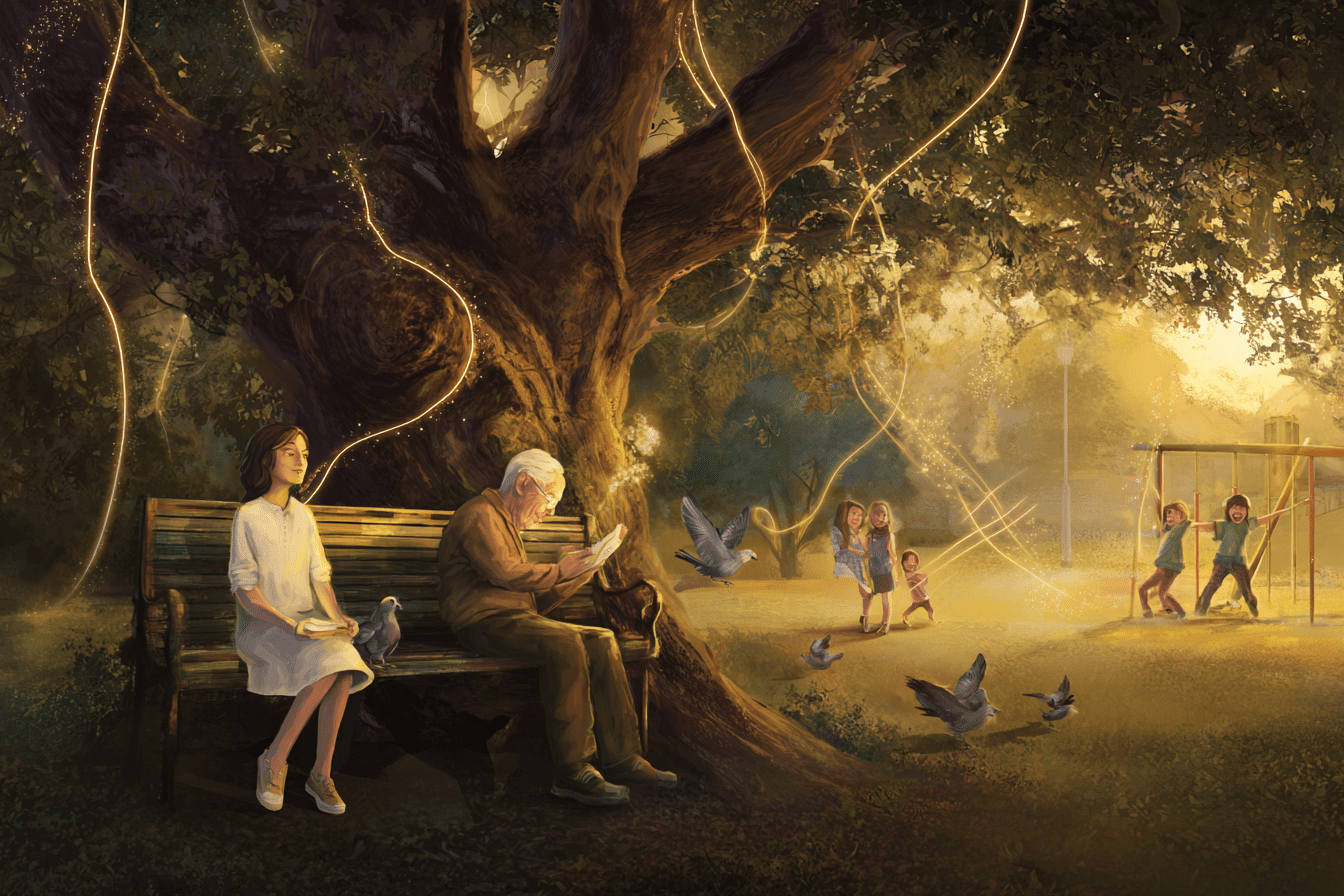
Over the next few days, Julian shadowed the Master. He watched as the old man greeted the baker with genuine delight, as if seeing an old friend after a decade of separation. He watched him pause to admire the way the afternoon light hit the river, standing still for minutes in pure appreciation.
“Do you not worry about the winter?” Julian asked one day as they walked through the autumn woods. “Do you not fear what comes next?”
The Master stopped and picked up a vibrant red leaf that had just fallen.
“If I were to die tomorrow,” the Master said, turning the leaf in his fingers, “would worrying about the winter change the cold? No. It would only rob me of the beauty of this autumn leaf. Fear of the future is a thief that steals the present.”
He handed the leaf to Julian. “When you accept that your time is limited, every moment becomes a gift. You stop holding grudges because you have no time for anger. You stop delaying happiness because you realize ‘later’ is a luxury you may not afford. You forgive quickly, love deeply, and laugh often.”
The Master did not live in the shadow of death; he lived in the brilliance of life’s fragility.
The Transformation
Julian returned to the city, but he was not the same man. He didn’t sell his business or give away all his wealth, but he changed how he inhabited his life.
When he signed a contract, he looked his partner in the eye and offered a sincere smile, grateful for the connection. When he ate dinner with his family, he put away his ledgers and listened—truly listened—to his children’s laughter. He stopped racing against time and started walking with it.
He realized that the Master’s secret wasn’t about morbidity. It was about intensity. It was about stripping away the trivial noise of “what if” and immersing oneself in the beautiful music of “what is.”
Years later, when Julian lay on his own deathbed, he did not feel fear. He held his wife’s hand, felt the texture of her skin, and smiled. He had drunk his tea. He had smelled the roses. He had lived.
Reflection
And now, a question for you…
What do you make of the Master’s philosophy? Is the idea of “living as if you were to die tomorrow” a grim reminder of mortality, or is it the ultimate key to freedom?
Perhaps the Master’s secret is a metaphor for mindfulness. We often spend our days sleepwalking, lost in regrets of the past or anxieties about the future. By acknowledging the finite nature of our time, we are jolted awake. We begin to see the extraordinary in the ordinary—the warmth of the sun, the taste of a meal, the sound of a loved one’s voice.
It forces us to ask: If today was truly the end, would I be happy with how I spent it? Would I be happy with who I was?
What would you change today if you knew there was no tomorrow? Would you forgive someone? Would you finally pursue that passion? Or would you simply pause to enjoy a cup of tea? Share your thoughts in the comments below.
If my writing has inspired or helped you, I would be grateful for your support.
Need support yourself? Discover how I can help you.
AI Disclosure
I see my thoughts as the essence, much like the soul, and AI helps me give them form. It supports me with research, translation, and organizing ideas, but every perspective is my own. Curious how I use AI? Read more here.