
Have you ever walked into a room after an argument and felt the tension hanging in the air, even when no one was speaking? Or maybe you’ve felt a sudden wave of optimism just by being around a joyful person.
These subtle, invisible forces shape our daily experiences. It leads to a fascinating question: Do our thoughts carry an energy that affects us and the world around us?
This article will take you on a journey to explore the concept of thought energy, blending scientific perspectives with spiritual wisdom. We’ll look at what neuroscience says about the power of our minds and how, for centuries, different spiritual traditions have viewed thoughts as powerful creative tools. Understanding this connection is key to consciously shaping your life, improving your well-being, and unlocking your personal growth.
What Is the Energy of Thought?
When we think about energy, we usually picture the electricity that powers our homes, the fuel that runs our cars, or the warmth of the sun. We rarely consider that every thought passing through our minds is also a form of energy.
While we can’t touch it or see it with the naked eye, its impact on our lives is undeniable. To fully grasp this phenomenon, it’s helpful to look at it from two angles: scientific and spiritual.
The Scientific View: Thought as an Electrical Impulse
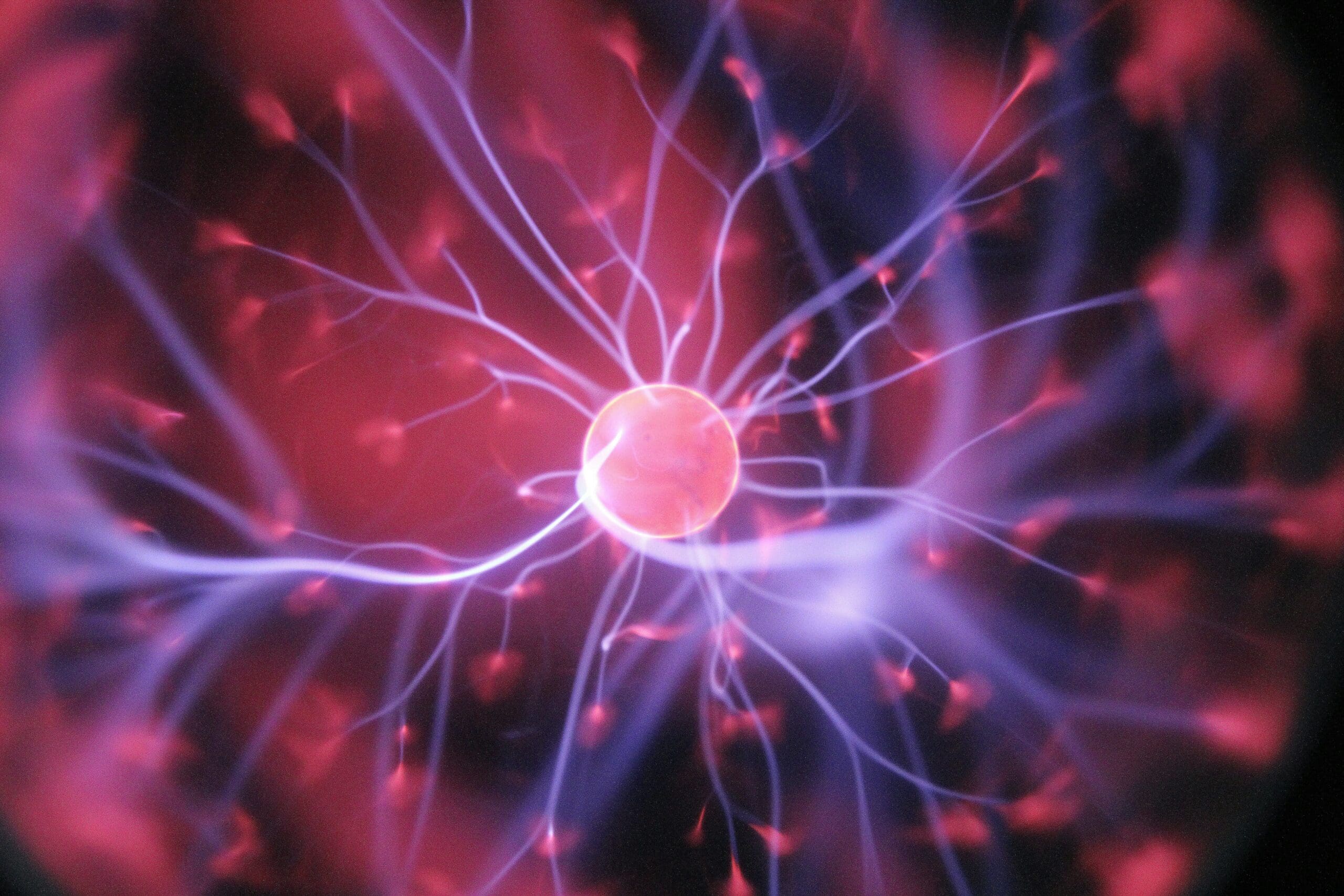
From a biological standpoint, every thought is a concrete, physical event. Your brain is made of billions of nerve cells called neurons, which communicate with each other using electrical and chemical signals. When you think about something—whether it’s a memory from a vacation or a solution to a work problem—an electrical discharge occurs in your brain.
Scientists can measure this activity with an electroencephalogram (EEG). This device records brain waves, which are simply a log of the electrical activity of your neurons. Different mental states, like focus, relaxation, or sleep, generate waves of different frequencies.
So, in a literal, physical sense, a thought is electrical energy. This isn’t a metaphor; it’s a measurable fact. And this energy doesn’t stay locked inside your skull. It triggers a cascade of chemical reactions throughout your body, influencing your heart rate, muscle tension, and hormone levels.
The Spiritual View: Thought as a Vibration
The spiritual world and many ancient philosophies take this a step further. They suggest that thoughts are not just internal impulses but vibrations that resonate with the universe around us. According to this view, everything in the universe is energy vibrating at a certain frequency. Our thoughts also have their own “frequency.”
- Positive thoughts—like gratitude, love, or joy—are often described as high, light, and expansive vibrations.
- Negative thoughts—like fear, anger, or jealousy—are low, heavy, and contracting vibrations.
This perspective proposes that the energy we send out through our thoughts attracts similar energy from the outside world. This phenomenon, often called the Law of Resonance, suggests that our inner mental state directly shapes our outer reality.
The HeartMath Institute has demonstrated how emotional states influence the electromagnetic field of the heart, supporting the idea that our thoughts and feelings resonate beyond the body (source: HeartMath Study on Emotional Energy).
How Thought Energy Shows Up in Daily Life
Even if you’re skeptical about the concept of vibrations, you’ve undoubtedly experienced the effects of thought energy in practice.
- Negative environments: Think about a time you walked into a room where a heated argument just took place. Even though it was silent, the air felt “thick” and heavy. You felt uncomfortable, even though no one said a word. This is tangible proof of how a strong emotional and mental charge can affect an environment.
- Positive influences: On the flip side, think about someone who always radiates optimism. Being around them makes you feel lighter and more energized. Their attitude—their “thought energy”—is contagious.
Our thoughts act like an invisible architect. If you wake up believing, “This is going to be a terrible day,” your brain will subconsciously start looking for signals that confirm this belief: traffic jams, spilled coffee, a rude cashier. Your focused energy (your attention) gives these events meaning.
By changing the quality of your thoughts, you change not only your brain’s biochemistry but also the way you experience the world.
The Science Behind Thought Energy
We often treat our thoughts as fleeting clouds passing through our consciousness—intangible and with little effect on the physical world. But modern science, particularly neuroscience and psychoneuroimmunology, is shedding new light on this idea. It turns out that every thought has a biological weight, and the energy generated by the brain is a powerful force that shapes our physiology.
Neuroplasticity: Your Brain Changes Based on Your Thoughts
Just a few decades ago, it was believed that the adult brain was a fixed, unchanging structure. We now know this is not true. Thanks to the phenomenon of neuroplasticity, our brain is constantly reorganizing itself in response to our experiences, learning, and, most importantly, our thoughts.
To dive deeper into how thoughts influence neurobiology and shape physical health, check out the article Feeding Your Brain with Thoughts: The Science Behind Mind and Body Connection. It explores how neuroplasticity works in practice and how your daily thoughts can literally reshape the structure of your brain.
When you repeatedly have a certain thought (e.g., “I’m so stressed” or “I can handle this”), you strengthen specific neural pathways. It’s like wearing a path in tall grass: the more you walk it, the clearer and easier it becomes to follow.
As shown in studies on neuroplasticity, repeated thought patterns can physically reshape neural pathways, reinforcing either positive or negative mental habits (source: NCBI Study on Neuroplasticity).
If you regularly focus on negativity, you are physically building up the parts of your brain responsible for fear and the stress response. On the other hand, practicing gratitude and optimism literally thickens the prefrontal cortex—the area responsible for higher cognitive functions and emotional regulation. Your thoughts aren’t just fleeting impressions; they are the architects of your brain tissue.
The Mind-Body Connection: The Biology of Belief
The energy of thought doesn’t stop at the brain. Every thought triggers a cascade of chemical reactions that reach every cell in your body. This is where science meets what we have intuitively felt for a long time: our state of mind directly affects our physical health.
When a stressful thought arises (e.g., “I’m not going to make it,” “This is a disaster”), the hypothalamus in your brain sends an alarm signal. Your adrenal glands release cortisol and adrenaline into your bloodstream. Your heart races, your muscles tense up, and your digestive system slows down. This is the physical manifestation of the energy of fear.
Remaining in this state for long periods weakens the immune system, making you more susceptible to illness.
This is where research in epigenetics becomes relevant. It suggests that our beliefs and our perception of the environment can influence the expression of our genes. Bruce Lipton, a cellular biologist, has shown in his work—particularly in his book The Biology of Belief—that it’s not our genes alone that determine our fate, but the signals from our environment—including signals generated by our thoughts—that decide which genes get “turned on” or “turned off.”
For more on the biological impact of thoughts on the body, explore The Science of Stress Reduction: Why Spirituality and Mindfulness Matter. This article highlights the scientific basis for how mindfulness and spirituality can lower stress levels and improve physical health.
Mystical Experiences and the Default Mode Network (DMN)
Mystical experiences have fascinated both scientists and spiritual seekers for centuries. Recent research on psychedelics, such as psilocybin, has shown that these profound states of unity and transcendence often correlate with reduced activity in the Default Mode Network (DMN).
The DMN, often referred to as the “ego center,” is a network of brain regions that becomes active during self-referential thinking, daydreaming, and rumination. When the DMN is suppressed, individuals report a sense of “losing themselves” and feeling deeply connected to the universe or a higher power (source: Nature Study on DMN and Psychedelics).
This phenomenon is not limited to psychedelics. Studies on advanced meditation practitioners have revealed similar patterns of DMN suppression during deep meditative states. For example, Tibetan monks and long-term mindfulness practitioners often describe experiences of profound clarity and interconnectedness, which align with measurable changes in DMN activity.
These findings suggest that mystical experiences are not just abstract or subjective but have a clear neurological basis.
If you’re curious about how meditation and mindfulness can lead to states of transcendence, be sure to read The Mystical Brain: How Neuroscience Explains Transcendence. This article provides detailed insights into how spiritual practices affect the brain and open the door to profound feelings of connection with the universe.
Practical Implications:
Understanding the role of the DMN in mystical experiences opens up new possibilities for mental health treatments.
- Psychedelic-assisted therapy: This approach, which leverages the temporary suppression of the DMN, has shown promise in treating conditions like depression, PTSD, and anxiety.
- Mindfulness and meditation practices: These offer a non-pharmacological way to achieve similar states of transcendence and emotional healing.
Exercise: Exploring DMN Suppression Through Meditation
- Find a quiet space where you won’t be disturbed.
- Close your eyes and focus on your breath.
- As thoughts arise, gently let them go, imagining them as leaves floating down a stream.
- With practice, you may notice a sense of detachment from your “self” and a feeling of connection to something greater.
- Reflect on how this state affects your perception of daily challenges and your sense of well-being.
Integrated Information Theory (IIT)
In the search for a deeper scientific explanation for the nature of consciousness and thought, it’s worth mentioning the Integrated Information Theory (IIT), proposed by neuroscientist Giulio Tononi.
Tononi’s Integrated Information Theory suggests that consciousness arises from the integration of information, providing a scientific framework for understanding the energy of thought (source: Nature Neuroscience on IIT).
While the theory is complex, its core idea is fascinating: it suggests that consciousness is a fundamental property of the universe, linked to the degree of integrated information within a system.
In the context of thought energy, IIT proposes that our subjective experiences (our thoughts) are not separate from the physical structure of the brain but are inseparably intertwined with it. This suggests that the quality of our thoughts and the way we integrate information has a real impact on our “operating system.” It’s a scientific bridge that is beginning to connect hard data about the brain with the subjective feeling of having a “spirit” or consciousness.
Measurable Proof
The impact of thoughts on the body is now measurable. Studies on mindfulness meditation, led by researchers like Dr. Sara Lazar at Harvard, have shown that just eight weeks of regular practice (which is essentially consciously directing thought energy) leads to:
- Increased gray matter density in the hippocampus (responsible for memory and learning).
- Reduction in the size of the amygdala (responsible for fear and stress).
This is proof that “mental energy” translates into tangible, physical change.
Science, therefore, confirms an old truth: we are not passive observers of reality. Our thoughts are powerful biological forces that are constantly shaping our bodies, our brains, and our health.
Spiritual and Philosophical Perspectives on Thought Energy
While science examines electrical impulses and chemical reactions, spiritual traditions have been looking at thoughts from a completely different angle for thousands of years.
For Eastern sages, philosophers, and mystics, thoughts were never just private “noise” in the head. They were, and still are, seen as a fundamental creative force—a tool with which we co-create our reality.
It’s fascinating how much ancient wisdom anticipated modern discoveries, intuitively understanding that what happens inside us inevitably manifests on the outside.
To learn more about how intention and awareness shape our lives, check out Intention, Energy, and Awareness: A Guide to Living with Purpose. This article provides practical advice on how to consciously manage your energy and live in alignment with your values.
The East: Karma and the Law of Cause and Effect
In traditions like Hinduism and Buddhism, the energy of thought is inseparably linked to the concept of Karma. We often misunderstand karma as a system of rewards and punishments, when in reality, the word simply means “action.” And action begins long before the body moves—it begins in the mind.
In Buddhism, it is said:
“All that we are is the result of what we have thought. With our thoughts, we make the world.”
This statement reminds us that the energy of intention is like a seed.
- If you plant a seed of anger in your mind, conflict will grow from it.
- If you plant a seed of compassion, the harvest will be peace.
A thought, then, is not passive; it is the first creative act. The energy you put into your intention sets the direction for your entire life.
Hermetic Philosophy and the Principle of Mentalism
Moving to the realm of Western esotericism, it’s worth mentioning the ancient Hermetic philosophy. One of its main principles, known as the Principle of Mentalism, states:
“The All is Mind; The Universe is Mental.”
This is a bold concept that suggests matter is essentially a condensed form of thought energy. According to this philosophy, we are not just observers of reality but its active designers.
Our beliefs and dominant thought patterns act like a filter or a lens through which we process life’s energy:
- If the lens is smudged with fear, the world seems hostile.
- If it’s clean, we see opportunities.
This philosophical take aligns perfectly with what psychology today calls confirmation bias—our tendency to look for evidence that supports what we already believe.
The New Age and the Law of Attraction
Modern spirituality, often associated with the New Age movement, has popularized these concepts under the name of the Law of Attraction. While the topic is sometimes trivialized (“Just think about a Ferrari, and you’ll get one”), at its core lies a profound truth about energetic resonance.
The principle is simple: like attracts like.
- If your dominant thought frequency is one of lack and scarcity (“I can never afford that,” “I’m always so unlucky”), you energetically close yourself off to possibilities.
- If your energy is focused on gratitude and openness, you start noticing the opportunities, people, and synchronicities that support your goals.
It’s not about magic wishes, but about changing the “default settings” of your attention radar.
Thought as Prayer
In many mystical traditions, every thought is considered a form of constant prayer. Not the kind spoken in a temple, but the one we send out into the ether every second of our lives.
If you constantly worry about the future, in the language of energy, you are “praying” for what you fear—you are investing your life force into that scenario.
Understanding this is a breakthrough moment. We realize that taking responsibility for our thought energy is not just a matter of mental hygiene but a spiritual duty.
As Marcus Aurelius, the Roman emperor and Stoic philosopher, wrote:
“The happiness of your life depends upon the quality of your thoughts.”
Consciously Creating Reality
Bringing all these perspectives together—from Eastern karma and Hermeticism to the modern approach to manifestation—a coherent picture emerges.
Thoughts are not empty words in our heads. They are energy that:
- Sets a direction (Intention).
- Attracts circumstances (Resonance).
- Shapes perception (Filter).
Spirituality doesn’t ask us to control every single thought—that would be impossible and exhausting. Instead, it invites us to become a conscious observer of the climate in our own minds.
Is there more sunshine or are there more storm clouds? We are the ones who decide which “radio station” to tune into.
Practical Techniques for Harnessing Thought Energy
Understanding that thoughts have energy is the first step. But real change happens when we start actively working with this knowledge in our daily lives.
You don’t have to be a monk or a neuroscientist to start influencing the quality of your mental life. Managing thought energy is a skill like any other—it requires practice, patience, and the right tools.
Here are proven, practical techniques that will help you redirect your mental energy toward supporting your growth and well-being.
If you’re looking for inspiration on daily practices to manage thought energy, I recommend reading Mindfulness vs. Meditation: Key Differences and How to Use Both in Daily Life. It offers practical tips on how to incorporate these techniques into your life for greater balance and awareness.
1. Mindfulness: Become the Observer of Your Thoughts
Most of us live on “autopilot,” letting our thoughts run without any control. We often identify with every voice in our head. Mindfulness teaches us something revolutionary: you are not your thoughts; you are the one who hears them. Mindfulness practices have been shown to naturally boost serotonin and dopamine, creating a foundation for improved mental health and resilience (source: Frontiers Study on Mindfulness and Neurochemistry).
This distinction is crucial. When you become the observer, you stop feeding energy to every negative thought that appears.
Exercise: The “Cloud Watcher”
- Sit comfortably in a quiet place for 5 minutes. Close your eyes.
- Imagine your mind is a clear, blue sky.
- Every thought that appears (e.g., “I have to do the laundry,” “I’m worried about work”) is like a cloud passing through the sky.
- Your job is not to stop the clouds, analyze their shape, or fight them. Simply watch as they drift in and drift out.
- If you notice you’ve “boarded” a cloud and floated away with a thought, gently bring your attention back to the image of the sky.
Regularly doing this simple exercise teaches you to create distance. Over time, you’ll find that a stressful thought has less power over you because you see it as just a temporary weather event, not an absolute truth.
2. Affirmations: Reprogram Your Neural Pathways
We’ve talked about neuroplasticity—the brain’s ability to change in response to repeated stimuli. Affirmations are a tool for consciously building new, positive connections in the brain. It’s not about “wishing” things into reality but about replacing old, destructive beliefs with new, supportive patterns.
For affirmations to be effective, they need to meet three conditions:
- Present Tense: The brain responds to what is happening “here and now.”
- Positive Phrasing: Avoid the word “not.” The subconscious mind often ignores negations.
- Emotional Charge: Just repeating words isn’t enough. You have to feel the emotion behind them.
Examples of Thought Transformation:
- Instead of: “I don’t want to be sick,” say: “My body is strong, healthy, and full of vitality.”
- Instead of: “I never have enough money,” say: “I am open to new financial opportunities flowing to me.”
- Instead of: “I’m afraid of this meeting,” say: “I am walking into this situation with calm and confidence.”
Choose one affirmation and repeat it in the morning right after you wake up, or in the evening before you go to sleep, when your mind is most receptive.
3. Visualization: A Dress Rehearsal in Your Imagination
Your brain has a fascinating quirk: it has a hard time telling the difference between what you see with your eyes and what you vividly imagine.
Research has shown that experienced meditators exhibit heightened gamma wave activity, associated with states of deep focus and mental clarity (source: NCBI Study on Gamma Waves).
Studies on athletes have shown that just imagining a workout activates the same areas of the brain as actual movement. This makes visualization an effective technique for preparing your mind and body for success.
Instructions for Effective Visualization:
- Relax: Take a few deep breaths to calm your body.
- Create the Scene: Imagine the goal you want to achieve (e.g., a successful presentation, recovering from an illness, a harmonious relationship). See it as if it’s happening right now.
- Engage Your Senses: What do you see? What do you hear? What scents are around you? The more sensory details you include, the stronger the signal to your brain.
- Feel the Emotions: This is the most important step. Feel the joy, relief, pride, or gratitude that comes with achieving this dream. The emotion is the “fuel” that gives the thought its energy.
Visualization is not just about imagining success—it’s about training your brain to focus on the steps needed to achieve it.
4. Gratitude: Rewiring Your Brain for Positivity
Practicing gratitude has been linked to increased dopamine and serotonin levels, fostering a positive mental state and enhancing overall well-being (source: Frontiers Study on Gratitude).
Incorporating a daily gratitude practice, such as writing down three things you’re grateful for, can help rewire your brain to focus on positivity and create a fertile ground for mental and emotional resilience.
Exercise: Daily Gratitude Practice
- At the end of each day, write down three things you’re grateful for. These can be big or small—anything from a kind word from a friend to a beautiful sunset.
- Reflect on why these moments mattered to you and how they made you feel.
Over time, this practice will train your brain to notice and appreciate positive experiences more readily, creating a lasting shift in your mental outlook.
5. Information Diet: Protect Your Energy
In an age of constant access to information, our minds are bombarded with stimuli. Most news in the media is negative because fear is the best way to grab attention. Feeding your mind exclusively with tragedies and conflicts is an easy way to lower your energy and induce chronic stress.
Take care of your mental hygiene just as you take care of your physical hygiene:
- Limit Scrolling: Set specific times to check the news and social media.
- Choose Content Consciously: Follow accounts that inspire, teach, or entertain you. If something makes you feel worse, unfollow it.
- Your Environment Matters: Pay attention to who you spend your time with. Do conversations with a particular person lift you up or drain your energy? Remember the Law of Resonance.
Using These Techniques
Using these techniques won’t make negative thoughts disappear forever—they are a natural part of the human experience. But they will give you the tools to avoid drowning in those thoughts and instead consciously choose where you focus your attention and energy.
You are the one holding the remote control to your mind.
By integrating mindfulness, affirmations, visualization, gratitude, and a conscious information diet into your daily routine, you can take control of your mental energy and direct it toward creating a life filled with purpose, positivity, and resilience.
Practical Applications of Thought Energy
Now that we’ve explored the techniques, let’s look at how they can be applied in real-life scenarios to achieve meaningful goals.
Visualization is not just a mental exercise; it’s a proven method for aligning your thoughts with your goals. By regularly practicing visualization, you can:
- Train your brain to focus on success.
- Build the confidence needed to achieve it.
Whether you’re an athlete preparing for a competition or a professional aiming for a promotion, visualization helps bridge the gap between intention and action (source: Psychology Today on Visualization).
When combined with mindfulness and gratitude, visualization creates a holistic approach to directing your mental energy toward meaningful goals. This practice not only enhances performance but also fosters a sense of clarity and emotional resilience, helping you navigate challenges with greater confidence.
How to Consciously Use the Power of Your Thoughts
We’ve reached the end of our journey through the fascinating world of thought energy, where science meets spirituality, and neuroscience shakes hands with ancient wisdom.
We’ve discovered that our thoughts are not just fleeting impressions. They are a measurable, biological force that sculpts our brains, affects our health, and, as many believe, resonates with the universe around us.
Let’s recap the key takeaways:
- Thought is energy: Every thought is an electrical impulse in the brain that triggers a cascade of reactions throughout the body. This isn’t a metaphor; it’s physics.
- The brain is plastic: Thanks to neuroplasticity, consciously directing your attention to positive thoughts and patterns literally changes the structure of your brain.
- Energy attracts energy: Both science (through attention mechanisms) and spirituality (through the Law of Resonance) agree that what we focus on, grows.
- We have a choice: We can’t control every thought, but we can learn to be a conscious observer of them and decide which ones to feed with our energy.
The real power lies not in trying to eliminate negative thoughts, but in consciously cultivating the ones that support you. It’s like tending a garden. Instead of fighting every weed, focus your energy on watering the flowers. In time, the flowers will grow so big and beautiful that there will simply be no room left for the weeds.
Start with small steps. Choose one of the techniques described—it could be:
- A five-minute observation of your thoughts.
- Repeating a supportive affirmation in the morning.
- Consciously limiting negative news.
See how this small change affects your day, your mood, and your interactions with others.
Remember that every great voyage begins with a single, small turn of the rudder.
Now, the ball is in your court. Your thoughts are the most powerful tool you possess. Use it wisely, with intention, and with compassion for yourself.
What are your experiences with the energy of thought? Have you noticed how your attitude affects your reality? Share your thoughts in the comments below!
If my writing has inspired or helped you, I would be grateful for your support.
Need support yourself? Discover how I can help you.
AI Disclosure
I see my thoughts as the essence, much like the soul, and AI helps me give them form. It supports me with research, translation, and organizing ideas, but every perspective is my own. Curious how I use AI? Read more here.