Introduction: Why Does This Question Even Matter?
Have you ever looked up at the night sky and felt a strange shiver run down your spine? It’s that nagging sense that the universe surrounding us is something more than just a cold void filled with stars and planets. I get that feeling quite often. A thought pops into my head that maybe, just maybe, there’s an invisible web connecting everything into one unbreakable whole.
For centuries, the brightest minds—philosophers, scientists, mystics—have wrestled with this question. Today, in the age of advanced physics and, interestingly enough, a renaissance of spirituality, it’s coming back with double the force in the form of the theory of universal consciousness.
One of the most intriguing voices in this discussion for me is Amit Goswami, a quantum physicist. He proposes a bold thesis: consciousness isn’t just a byproduct of our brain’s activity. It is the fundamental building block of reality—something that existed before time, space, and matter. In his view, the universe doesn’t just “exist”; it “experiences” itself, and we are a part of that experience.
In this journey we’re taking together, we’ll take a closer look at this fascinating theory. We’ll ponder whether the universe could actually be God—not necessarily a bearded old man on a cloud, but a living, conscious structure. Let’s see how science intertwines with philosophy and what all of this means for you and me, right here, right now. Are we just accidental specks of dust in the cosmos, or are we waves in an infinite ocean of consciousness?
What Is Universal Consciousness?
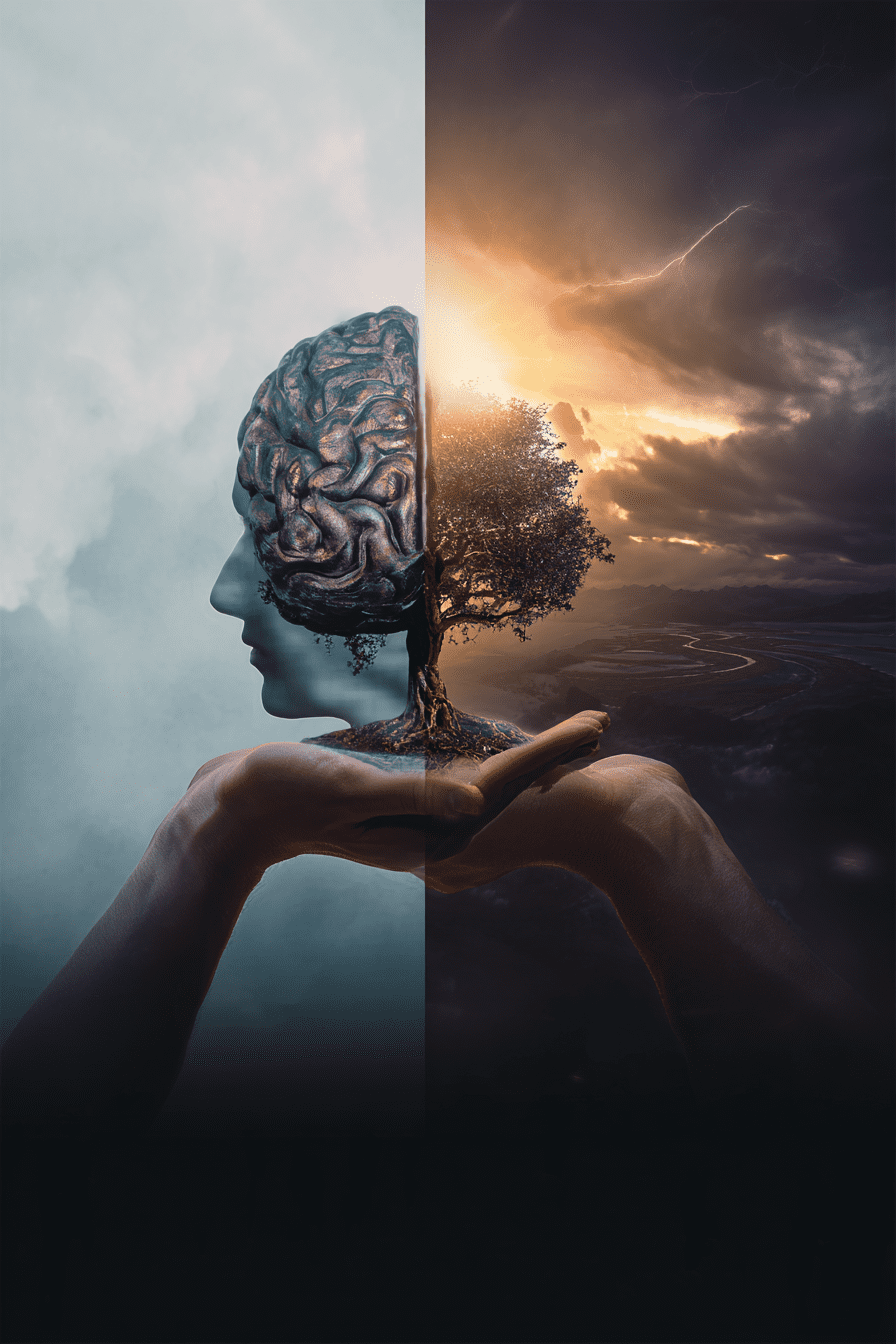
I’ll be honest: this concept flips everything I learned in school on its head. We live in a world dominated by materialism, which tells us that matter is the basis of everything. In that view, your mind, my thoughts, our feelings—they’re all just complex chemistry happening in the brain. The theory of universal consciousness asks us to look at it from a completely different angle.
What if consciousness is the foundation? What if matter, time, and space emerge from it, rather than the other way around? That is the core of this concept. Amit Goswami, in his book The Self-Aware Universe, argues that consciousness is a field of infinite possibilities. We don’t “have” consciousness—consciousness “has” us.
The Ocean and the Waves – A Metaphor That Speaks to Me
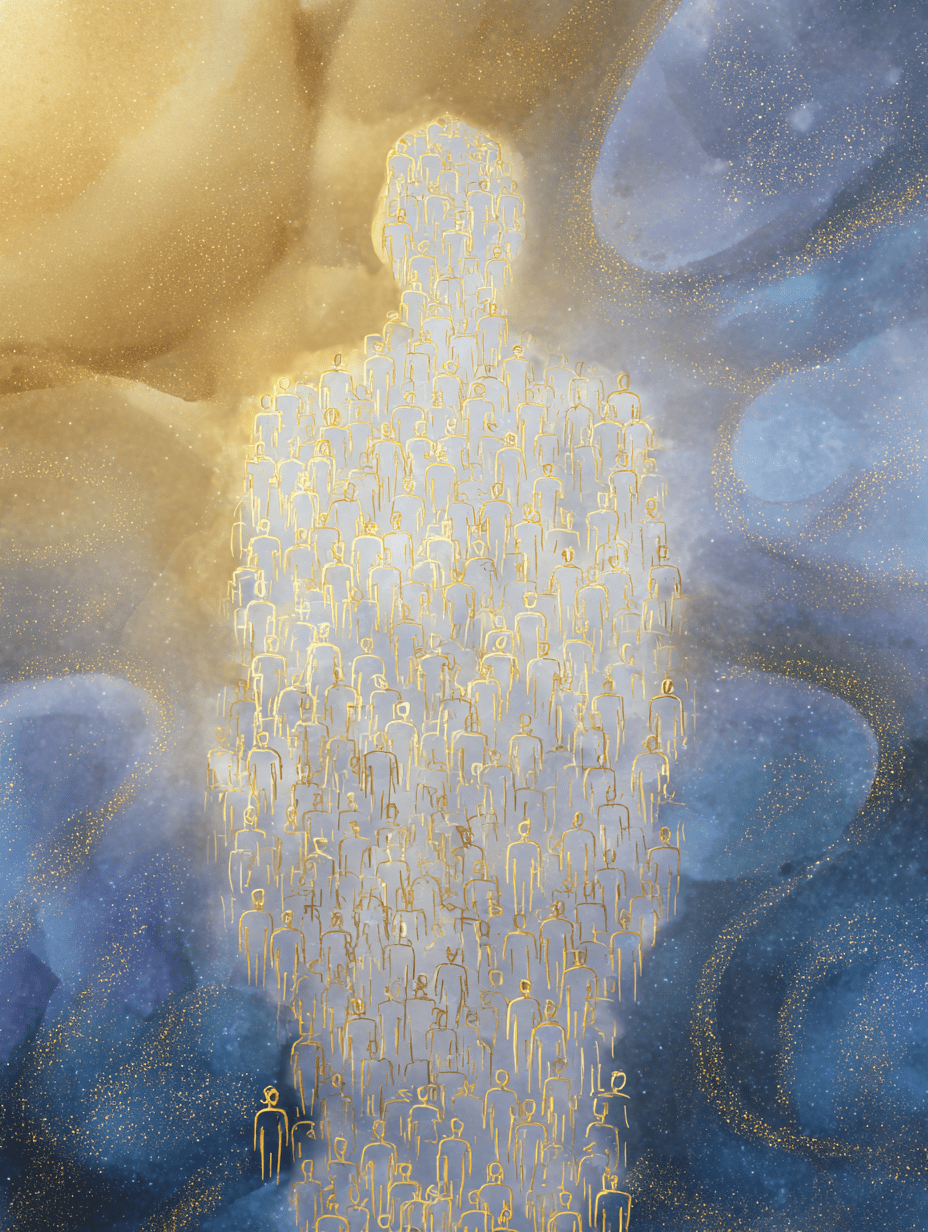
How do we wrap our heads around this? The best way to picture it is with the metaphor of an ocean. Imagine a vast, infinite ocean. Every wave on its surface is an individual life—you, me, your neighbor. The waves look separate; they have their own shape and duration. But at their core, they are just water. They are an inseparable part of the ocean.
In this analogy, universal consciousness is the ocean. Our individual stories are temporary, but the essence we are made of is eternal and all-encompassing. Have you ever thought about it that way?
This approach isn’t exactly new. In Eastern tradition, specifically in Advaita Vedanta, we find the concept of Brahman—an all-encompassing reality that is the only truth. The material world, Maya, is seen as an illusion, and deep down, we are all the same thing. In my opinion, Goswami is simply dressing this ancient wisdom in the language of quantum physics.
Consciousness as the Foundation of Reality
Goswami bases his theory on discoveries in quantum physics, which suggest that reality isn’t as “solid” and “objective” as we think. At the quantum level, particles exist in a state of superposition—they are in many places and states simultaneously until they are observed. It is the act of observation—consciousness—that “collapses” the wave function and causes the particle to take on a specific state. In other words, material reality exists only because it is being “experienced.”
Goswami goes even further, claiming that consciousness isn’t limited to our universe. It is transcendent—it exists outside of time and space, yet simultaneously permeates everything that exists. It is the source of all laws of physics, energy, and matter. In his view, the universe isn’t a random collection of particles, but a conscious entity that “lives” and experiences itself through us and everything else.
Philosophical and Spiritual Inspirations
Although the theory of universal consciousness sounds novel, its roots reach deep into the history of philosophy and spirituality. In Eastern tradition, particularly in Advaita Vedanta, there is the concept of Brahman—an all-encompassing consciousness that is both transcendent and immanent. Similarly, Buddhism speaks of “emptiness” (Sunyata), which is the source of everything that exists, while simultaneously being “nothing” in a material sense.
In Western philosophy, similar ideas appeared with thinkers like Baruch Spinoza, who equated God with nature, or Alfred North Whitehead, who developed the concept of a process universe where everything is dynamic and connected. Goswami, although relying on science, in a sense bridges these traditions, proposing a vision of reality that is both scientific and spiritual.
Universal Consciousness and Us
If universal consciousness really exists, what does that mean for us? Goswami suggests that our individual minds are like “windows” onto this greater reality. When we experience love, compassion, or deep intuition, we might be in contact with this universal consciousness. What we perceive as “me” is just a momentary manifestation of something much larger.
Does this mean we are part of God? Or maybe God is part of us? These questions remain open, but one thing is certain—the theory of universal consciousness changes the way we look at ourselves, the universe, and our place in it.
The Universe as God: Pantheism, Panentheism, and Other Approaches
If we accept that consciousness permeates everything, the question of God naturally arises. Does this mean the universe itself is a deity? It’s a fascinating perspective.
The concept of the universe as God isn’t new—it has woven its way through centuries of philosophy, religion, and science. However, different traditions and thinkers have interpreted it in various ways, leading to a fascinating diversity of views. Is the universe God in a literal sense, or is it merely a manifestation of God? Or maybe God is something that transcends the universe but simultaneously permeates it? Let’s look at a few key approaches.
Pantheism: God Is Nature
Pantheism is the doctrine that God and the universe are one and the same. In this view, God isn’t a personal being standing outside the world watching His creation, but rather the world itself—its nature, energy, and laws. One of the most famous pantheists was Baruch Spinoza, a 17th-century philosopher who claimed “God is nature.” In his vision, divinity isn’t about miracles or interfering in our lives, but about the infinite perfection of the laws of nature. For a pantheist, every stone, every tree, and every star is holy because they are part of God.
Spinoza wrote: “God is the only substance that exists by itself and is the cause of itself.” In his philosophy, the universe is divine, but not in a supernatural sense—it is divine because it is infinite, eternal, and perfect in its nature.
Panentheism: God in the World and Beyond It
Panentheism goes a step further. It assumes that God is in everything (like in pantheism) but also transcends the universe. This approach is found in the process philosophy of Alfred North Whitehead. According to Whitehead, reality is dynamic and constantly becoming, and God evolves along with the universe while simultaneously being its source.
Panentheism is also present in some religious traditions, such as Hinduism, where Brahman is both immanent (present in the world) and transcendent (going beyond the world). In this view, God not only “is” the universe but also “experiences” it and grows with it.
Goswami’s theory of universal consciousness can be interpreted as panentheistic because it assumes that consciousness permeates everything that exists, but simultaneously transcends time, space, and matter.
Einstein’s “Cosmic Religion“
Even Albert Einstein, though he stayed away from institutional religion, felt a deep admiration for the structure of reality. He once wrote: “I believe in Spinoza’s God, who reveals himself in the lawful harmony of all that exists, but not in a God who concerns himself with the fate and the doings of mankind.” Einstein called his approach a “cosmic religion“—it was a form of spirituality based on awe at the order and beauty of the universe.
Einstein’s view of the universe as something divine, yet impersonal, is close to both pantheism and the theory of universal consciousness. For Einstein, the laws of physics were “God’s laws,” and the universe was an expression of infinite harmony.
The Universe as a Conscious Entity
Modern theories, like the hypothesis of universal consciousness, go even further, suggesting that the universe not only exists but also “thinks” and “experiences.” Amit Goswami claims that consciousness is what gives meaning and coherence to the universe. In his view, the universe is like a giant organism where every particle, every being, and every phenomenon is connected.
This approach also reminds me of ancient concepts, like the Greek idea of Logos—the universal reason governing the cosmos. Modern quantum physics, with its discoveries regarding entanglement and the role of the observer, provides new arguments for this vision.
Is the Universe God?
The question of whether the universe is God remains open. Pantheism, panentheism, and the theory of universal consciousness offer different answers, but they all agree on one thing: the universe is something more than it seems. Whether it’s an infinite cycle of birth and death, as physics suggests, or a conscious entity experiencing itself—these are questions that continue to inspire philosophers, scientists, and spiritual seekers.
In the following sections, we’ll look at what science says about this, what the evidence for universal consciousness is, and what implications this has for our lives.
Science vs. Universal Consciousness: What Does Quantum Physics Say?
Here we enter some really interesting territory where hard science meets metaphysics. Quantum physics, which studies the behavior of the smallest particles, provides phenomena that, frankly speaking, are hard to explain within the framework of classical materialism.
Quantum Entanglement: “Spooky Action at a Distance”
Imagine two particles that once interacted with each other. Even if you separate them by millions of light-years, a change in the state of one instantly affects the other. Einstein called this “spooky action at a distance.” For me, this is one of the biggest pieces of proof that reality is much stranger than we think.
For Goswami, quantum entanglement is evidence of universal consciousness. He claims that it is consciousness that connects all particles in the universe into one coherent whole. In his view, entanglement isn’t just a physical phenomenon, but a manifestation of a deeper unity that exists at the level of consciousness.
The Role of the Observer: Do We Create Reality?
The double-slit experiment is a true classic that keeps physicists awake at night to this day. It shows that particles (like electrons) behave like waves (existing in many places at once) until we observe them. The moment of observation causes the wave to collapse into a specific particle in a specific place. Isn’t that extraordinary?
This suggests that the observer—consciousness—is not a passive spectator. It is an active creator. Without consciousness, reality remains merely a “soup of possibilities.” It is us, through the act of observation, who bring the world into existence. This thought is both exciting and a little terrifying to me.
Critique of Materialism: Why Science Needs a New Paradigm
Traditional materialism, which has dominated science since Newton’s time, assumes that everything that exists can be reduced to matter and energy. This approach seemed solid and undeniable for years. But is it really? Quantum physics, with its bizarre and counterintuitive phenomena, is beginning to undermine this paradigm. At the subatomic level, reality turns out to be much more complex and unpredictable than we ever thought.
David Chalmers, a philosopher and consciousness researcher, calls consciousness the “hard problem” of science. And it’s hard to disagree with him. How do we explain that physical processes in the brain—electrical impulses, chemical reactions—can lead to subjective experiences? How is it possible that we feel love, sadness, or awe at beauty? Goswami goes a step further, claiming that consciousness isn’t a problem to be solved. It is the foundation upon which all reality rests. That’s a bold statement, but isn’t there something intriguing about it?
Universal Consciousness and the Theory of Everything
For years, physicists have been searching for the so-called “theory of everything”—one coherent concept that would explain all phenomena in the universe, from gravity to quantum mechanics. It’s like putting together a giant puzzle where a key piece is still missing. Goswami suggests that this missing piece might just be universal consciousness. If consciousness is the basis of reality, it could unify different aspects of the universe into one whole. Doesn’t that sound like something worth exploring?
Can Science and Spirituality Meet?
This is a question I ask myself more and more often. Can science and spirituality, which for centuries seemed to be in conflict, finally find a common language? Quantum physics shows that reality is far more mysterious than we imagined. And consciousness—that elusive yet so fundamental part of our existence—might play a key role in it.
Is universal consciousness the answer to questions that science and philosophy have been asking for ages? Or is it just another hypothesis waiting for confirmation? One thing is certain—research into consciousness and reality is just getting started. And while we don’t know all the answers yet, that uncertainty is exactly what makes it exciting. I am impatiently waiting for further research and discoveries in this field. And you? Where do you think this might lead us?
Philosophical and Spiritual Implications: What Does This Mean for Us?
If universal consciousness really exists and forms the foundation of reality, its consequences could be downright revolutionary. Imagine how it would change the way we look at ourselves, other people, and even the meaning of our existence. Wouldn’t that be like looking at the world with a completely fresh pair of eyes? Such a concept turns our current understanding of life and relationships upside down, suggesting that everything—literally everything—is connected.
In this section, I’d like to invite you to reflect with me on the philosophical and spiritual implications of this theory. Maybe you’ll find something here that inspires you to think deeper about your place in the universe. What do you think would change for you if we were all part of one universal consciousness?
1. The Unity of Everything: Ethics and Compassion
If we really are part of one universal consciousness, the boundaries between “me” and “you” begin to blur. Isn’t that fascinating? In this view, every human, every animal, and even every particle of matter is a manifestation of the same all-encompassing consciousness. This changes everything—from how we treat others to how we perceive ourselves.
Compassion as a Natural Stance
If we are all connected, then harm done to someone else is actually harm done to oneself. It’s not just a beautiful idea, but a logical consequence of this theory. It reminds me of the Buddhist principle of compassion (Karuna), which says that the suffering of others is our shared experience. Wouldn’t it be wonderful if we all started looking at the world this way?
Ecological Responsibility
And what about nature? If the Earth and everything living on it are part of the same consciousness, how can we treat it as something to be exploited with impunity? Instead, we start seeing the planet as a living organism of which we are a part. As Thich Nhat Hanh wrote: “We are waves of the same ocean. When one wave suffers, the entire ocean feels it.” Doesn’t that give you pause?
2. Death and Immortality: Is Consciousness Eternal?
Death—a topic that stirs up so many emotions and questions in us. What happens to us when we die? Is it really the end? If consciousness is the foundation of reality, maybe death isn’t an end, but merely a transformation.
Consciousness as Eternal Essence
In the theory of universal consciousness, the death of the body doesn’t mean the end of existence. Our individual “self” might disappear, but the consciousness that permeates us continues. This reminds me of the concept of reincarnation in Hinduism and Buddhism, where life is seen as a cycle of birth, death, and rebirth. Isn’t that a comforting thought?
Death as a Return to the Whole
You can compare it to a drop of water falling into the ocean. The drop ceases to exist as a separate entity, but it becomes part of something greater—the universal whole. As Rumi beautifully put it: “Don’t be afraid of death. What seems like an end is actually a beginning.” Doesn’t that change your perspective on what awaits us?
3. The Meaning of Life: Does Universal Consciousness Provide an Answer?
And what about the meaning of life? It’s a question every one of us asks at least once. If consciousness is the foundation of the universe, can it give meaning to our existence?
Life as an Expression of Consciousness
Imagine that your life isn’t an accident, but a purposeful manifestation of universal consciousness. Every experience you have, every emotion, and every thought is part of a larger process in which the universe “experiences” itself. Doesn’t that make everything you do take on deeper meaning?
Meaning as a Process, Not a Goal
Instead of looking for one final goal, the theory of universal consciousness encourages us to view life as a process of discovery, experiencing, and connecting with others. As Viktor Frankl wrote: “The meaning of life is not something we discover—it is something we create through our actions and choices.” Isn’t that a beautiful and inspiring thought?
4. Spiritual Experiences: Contact with Universal Consciousness
Have you ever felt like you were part of something bigger? Maybe during meditation, prayer, or just in a moment of awe at nature’s beauty? Those moments, though hard to describe, are perceived by many as contact with universal consciousness—something that goes beyond our daily experiences.
Meditation and Introspection
In Eastern traditions like Buddhism or Hinduism, meditation is a key tool for “awakening” and connecting with universal consciousness. It is in silence and focus that we can experience this deeper reality. Amit Goswami suggests that such practices allow us to step outside the boundaries of our ego and touch something greater than ourselves. Have you ever tried meditation? Maybe this is a good moment to give it a shot.
Mystical Experiences
Mystics from various traditions, from St. John of the Cross to Rumi, describe states of unity with God or the universe. Their words, though coming from different cultures and eras, often sound surprisingly similar. Is it possible that they were all experiencing the same universal consciousness, just calling it by different names? That’s a question that always fascinates me.
5. A New Perspective on Reality
The theory of universal consciousness changes the way we look at the world. Instead of seeing reality as a collection of separate objects, we begin to perceive it as a dynamic, connected whole. This not only inspires deeper reflection but also encourages us to change our approach to life.
From Separation to Unity
In a world that often seems divided—politically, socially, culturally—the theory of universal consciousness reminds us that we are all part of the same whole. Isn’t it a beautiful thought that our differences are only superficial, and deep down, we are one?
From Materialism to Spirituality
For years, science and spirituality were seen as opposites. But maybe they don’t have to be mutually exclusive? The theory of universal consciousness shows that they can complement each other, creating a fuller picture of reality. What once seemed impossible to reconcile is now starting to merge into a coherent whole.
How Does Our View of the World Change?
The philosophical and spiritual implications of universal consciousness are truly profound. From ethics and compassion, through reflection on death, to the search for the meaning of life—this theory changes the way we perceive ourselves and the universe. Is universal consciousness the answer to our deepest questions? Or is it just another step in our endless journey toward understanding reality?
I invite you to continue this reflection and discussion. What are your thoughts? Does this theory speak to you?
Criticism and Alternative Views
I have to admit, the theory of universal consciousness is incredibly inspiring to me. But like any bold concept, it has its critics—and not without reason. After all, if we really want to understand the nature of reality, we have to be open to different perspectives, even those that challenge our favorite ideas. So, let’s look at the arguments against this theory and alternative views that try to explain what reality is.
1. Criticism of Universal Consciousness Theory
Lack of Empirical Evidence
One of the most common charges against the theory of universal consciousness is the lack of hard evidence. Quantum mechanics provides fascinating clues, like quantum entanglement or the role of the observer, but is that enough to talk about a universal consciousness? Many scientists, such as Steven Pinker or Daniel Dennett, argue that consciousness is simply a product of evolution and biological processes in the brain. Do we really need anything more to explain our experiences?
The Problem of Subjectivity
I also wonder how the theory of universal consciousness explains subjective experiences—our “inner worlds.” How do thoughts, emotions, or the sense of “self” arise? This is a question that remains open, even within the framework of this theory.
Controversies Surrounding Amit Goswami
There is no denying that Amit Goswami, one of the main proponents of this idea, stirs mixed feelings in the scientific world. His interpretations of quantum mechanics are often criticized as being more philosophical than scientific. Some even accuse him of pseudoscience. Does that mean his theories are worthless? Not necessarily—but it’s worth approaching them with a degree of caution.
2. Alternative Theories Explaining Reality
Reductionist Materialism
Materialism, which has dominated science for centuries, assumes that everything can be reduced to matter and energy. In this view, consciousness is simply a side effect of chemical processes in the brain. Brain research, like that conducted by Antonio Damasio or Christof Koch, provides plenty of evidence that our thoughts and emotions are strictly tied to neuronal activity. But does that explain everything? For me, materialism, while logical, seems too limited to capture the full complexity of human experience.
The Multiverse Theory
And what if our universe is just one of an infinite number of universes? The multiverse theory suggests that reality is the result of random quantum fluctuations, not the action of a universal consciousness. It’s a fascinating concept, but equally hard to prove. Isn’t it ironic that both the multiverse theory and universal consciousness remain in the realm of speculation?
The Simulation Hypothesis
Or maybe we live in a simulation? Nick Bostrom suggests that our reality could be an advanced computer program created by a highly developed civilization. In this view, consciousness is simply the result of an algorithm. I admit, this theory intrigues me, though at the same time, it arouses a certain anxiety. Do we really want to believe that we are just “code”?
3. Can Science and Spirituality Meet?
Despite the criticism and alternative theories, the idea of universal consciousness opens the door to a fascinating dialogue between science and spirituality. We may not have all the answers yet, but aren’t the questions the most important part? The history of science shows that many theories initially rejected eventually gained acceptance. Maybe universal consciousness is one of those ideas.
Reflections for the End
Criticism and alternative theories show how complex the question of the nature of reality is. Is consciousness the foundation of the universe, or merely its product? Or perhaps the truth lies somewhere in between? I admit, I don’t know the answer. But maybe that’s where the beauty lies—in the endless journey toward understanding. And you? What are your thoughts?
Conclusion: Is the Universe God? My Perspective
The question of whether the universe is God goes beyond a simple intellectual exercise—it invites us to see reality through an entirely new lens. The idea of universal consciousness, even with its critics, sparks a compelling dialogue between science and spirituality. Could consciousness truly be the foundation of all that is? Is it what draws every part of existence into a single, connected whole?
To me, this theory serves as a bridge—uniting the analytical rigor of science with the depth and warmth of spiritual exploration. While it may not provide ultimate answers, it encourages us to keep questioning and to reflect on who we are in this vast cosmos. Are we mere products of random evolution, or is the universe coming to know itself through our existence?
Perhaps the real beauty lies in embracing uncertainty, in our relentless search for meaning, and in realizing that we are all threads in something far greater—something that will always retain an element of mystery. As Carl Sagan beautifully wrote: “We are a way for the cosmos to know itself.”
What about you? How do you view your place within this grand cosmic puzzle? I’d love to read your thoughts in the comments.
If my writing has inspired or helped you, I would be grateful for your support.
Need support yourself? Discover how I can help you.
AI Disclosure
I see my thoughts as the essence, much like the soul, and AI helps me give them form. It supports me with research, translation, and organizing ideas, but every perspective is my own. Curious how I use AI? Read more here.