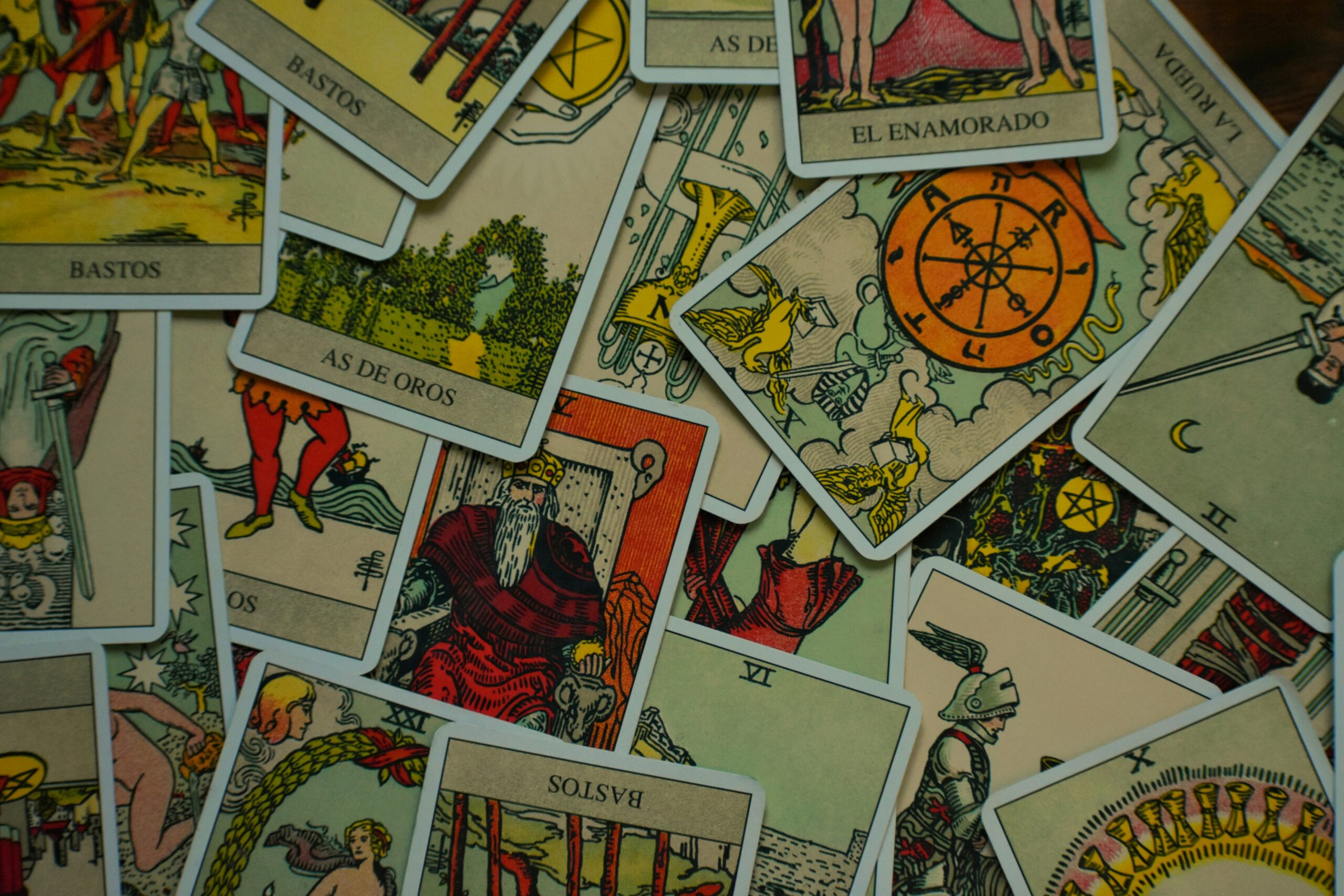
For centuries, people have been fascinated by the esoteric, drawn to tools like tarot cards, horoscopes, and numerology. Each of these practices has a rich, and often surprising, history deeply rooted in specific cultures.
For example, tarot wasn’t always associated with mysticism—originally, in 15th-century Europe, it was simply a card game played by the aristocracy. It’s only over time that tarot gained new layers of meaning and evolved into one of the most recognizable esoteric tools, transforming into a complex system of symbols used for self-reflection and “fortune-telling.”
Then there’s the I Ching, or the Book of Changes, which is much more than just a Chinese oracle. It stands as one of the world’s oldest and most influential philosophical texts, with roots stretching back to the second millennium BCE. In Chinese culture, the I Ching has long been considered a foundational treatise for contemplating change, harmony, and decision-making—its importance as a guide for personal and political reflection far predates its later use in fortune-telling practices.
Runes, on the other hand, originated as an alphabet used by Germanic peoples, especially the Norse. Beyond their practical function, each runic character held symbolic significance, and in Norse mythology the runes were considered a gift from Odin, embodying strength, wisdom, and spiritual protection. While people did later use runes for divination, their origins are deeply rooted in the cultural and mythological traditions of the Vikings—serving as both a written system and a set of profound spiritual symbols.
I’ll be honest, I approach these topics with a heavy dose of skepticism. I don’t believe in predicting the future, the magical powers of stones, or the idea that the alignment of the stars on my birthday determined my fate. And yet, something about these ancient practices intrigues me. I think some of them can be surprisingly useful tools for reflection and self-discovery—as long as we approach them consciously and with a healthy bit of distance.
Esotericism and Skepticism: Can You Reconcile Fire and Water?
My stance is simple: I don’t see these tools as oracles—they’re mirrors for the mind. Tarot cards or a numerology chart won’t tell me what’s going to happen, but they can reflect back questions I rarely ask myself in my busy life. It’s not magic, but rather an intriguing prompt for introspection. The key is to treat the symbols, numbers, and archetypes as inspiration for thought, not as absolute truth. It’s like talking to a wise friend who, instead of giving you answers, asks just the right questions—helping you see yourself with greater clarity.
This perspective aligns closely with the ideas I explored in “Fantasy vs. Spirituality: How to Stay True to Your Path”. In that article, I delve into the fine line between using tools like these for authentic self-reflection and falling into the trap of escapism. It’s essential to remain grounded and ensure that these practices inspire meaningful action and growth, rather than becoming a way to avoid life’s challenges.
A Tour of Esoteric Tools: What’s Worth Knowing?
Let’s look at a few popular tools and consider how they can be used in a way that supports personal growth rather than a dependency on predictions. To be clear, this isn’t about “fortune-telling,” but about mindfully using these practices in our daily lives.
- Tarot Cards for Reflecting on Decisions: When you’re facing a tough choice—say, changing jobs—tarot can serve as a powerful tool for self-inquiry. Instead of asking, “what will happen,” you could randomly draw a card and use its meaning as a springboard for examining your own emotions and needs. For example, drawing the Strength card might prompt you to think about your courage and what you’ve already overcome. This symbolic nudge can spark a deeper conversation with yourself, offering insight and perspective—without getting lost in superstition.
- Creating Mandalas as a Form of Meditation: If you struggle to quiet your mind, try drawing your own mandala or coloring a pre-made one. Immersing yourself in the shapes, repetitive patterns, and colors can become a meditative ritual in itself. Focus deeply on the process and your breath. This mindful practice is a powerful way to calm racing thoughts, detach from daily worries, and center yourself in the present moment. Coloring a mandala isn’t just a creative activity—it can be a highly effective tool for relaxation and self-awareness, much like traditional meditation.
- Interpreting Dreams for Emotional Insight: When you wake up from a powerful, unsettling dream, try not to reach for a dream dictionary right away. Instead, ask yourself what emotions were dominant in the dream. Often, the fears, insecurities, or joys from our dreamscapes relate directly to our current mental state and can provide valuable signals for self-reflection. For example, recurring dreams about falling might point to a feeling of being out of control or a fear of change.
In daily life, using esoteric tools this way can help you see things from a different angle, and sometimes, with a bit more distance and self-compassion.
Tarot Cards
How they work: A tarot deck is a set of cards with symbolic images and archetypes that reflect various aspects of the human experience.
How to use them for reflection: Instead of asking, “Will I get the promotion?” try asking, “What inner resources can help me grow professionally?” or “What should I focus on as I prepare for new challenges?” The card you draw becomes a starting point for your thoughts.
My skeptical take: I don’t believe a piece of paper can predict the future. However, the universal symbolism of the cards can help you look at a problem from a completely different, non-obvious perspective and tap into your intuition.
Horoscopes and Astrology
How they work: Astrology is based on interpreting the influence of planets on human life according to their alignment at the moment of birth.
How to use them for reflection: You can use the description of your zodiac sign as inspiration to reflect on your personality traits. Are you really as stubborn as a Taurus? Or as creative as an Aquarius? It can be an interesting starting point for better understanding yourself.
My skeptical take: I don’t think the stars determine our destiny. However, astrology uses archetypes that can be interesting material for self-analysis, as long as we don’t treat them as a definitive diagnosis of our personality.
Numerology
How it works: This is the analysis of the symbolic meaning of numbers, usually associated with your birth date or name.
How to use it for reflection: It can be used as a way to reflect on your natural talents, challenges, or life goals that certain numbers are said to represent.
My skeptical take: Numbers themselves don’t have magical powers. But they can be a prompt to think about your life priorities and the path you’re on.
Runes
How they work: This is a set of symbols from ancient Norse alphabets. Each rune has its own symbolic meaning.
How to use them for reflection: Like tarot, runes can be used as a tool for meditation or to focus your thoughts on a specific theme, such as strength, protection, or change.
My skeptical take: For me, runes are more about the art of interpretation and connecting with fascinating history than a magical tool. Their raw symbolism has a primal quality that can be very thought-provoking.
I Ching (The Book of Changes)
How it works: This is an ancient Chinese text that offers answers to questions through the casting and interpretation of one of 64 hexagrams.
How to use it for reflection: Instead of looking for a specific prediction, you can use the wisdom of the I Ching to consider different scenarios and perspectives related to a decision.
My skeptical take: I don’t believe that tossing coins will reveal the future. But the philosophical depth of the Book of Changes is undeniable and can inspire deeper thoughts on the nature of change itself.
Crystals and Stones
How they work: In esotericism, they are attributed with various energetic properties.
How to use them for reflection: You can use them as a physical reminder of your intentions. For example, holding a rose quartz can help you focus on the intention of self-love, while holding an amethyst can represent the need for calm.
My skeptical take: I don’t believe in the healing powers of crystals. Their beauty and symbolism, however, can act as an anchor for the mind, helping to focus on meditation or a specific goal.
Mandalas
How they work: These are geometric designs, usually based on a circle, used in Buddhism and Hinduism as meditative tools.
How to use them for reflection: The process of creating or coloring a mandala is a form of meditation. It allows you to quiet the mind, focus on the “here and now,” and disconnect from the flood of thoughts.
My skeptical take: I see mandalas more as a form of art therapy than a spiritual tool. But there’s no doubt that creating them has a remarkably relaxing and organizing effect on the mind.
Dream Dictionaries
How they work: Dream dictionaries offer ready-made interpretations of symbols that appear in dreams.
How to use them for reflection: Instead of taking a dream dictionary literally, you can analyze your dreams as a reflection of subconscious fears, desires, and emotions. What does a particular symbol mean to you?
My skeptical take: I don’t believe in the universal meaning of dreams. However, dream analysis can be a fascinating journey into your own psyche and a way to understand what’s happening beneath the surface of your consciousness.
Why Is a Healthy Dose of Skepticism So Important?
Approaching esotericism with a bit of distance protects us from many pitfalls. It helps avoid disappointment when a “prediction” doesn’t come true. More importantly, it keeps us in a state of agency—we are the ones steering our lives, not external forces. Healthy skepticism allows us to draw the best from these tools—inspiration for reflection—without surrendering control over our own destiny.
It’s also worth highlighting that science and psychology are increasingly paying attention to the potential psychological benefits of certain esoteric practices, even if they don’t support mystical claims. For example, research on coloring mandalas has demonstrated that this activity can significantly reduce stress and promote relaxation. An experiment published in Art Therapy: Journal of the American Art Therapy Association found that participants who colored mandalas reported much greater relaxation and lower anxiety compared to those who simply made random drawings. These findings suggest that when used mindfully, some esoteric-inspired practices can offer real and measurable support for our mental well-being.
Psychology, especially through the work of Carl Jung, also emphasizes the importance of working with symbols. Jung saw dreams as an expression of subconscious processes and considered recurring archetypal motifs a valuable clue on the path to self-knowledge. For him, it wasn’t about literal “prophecies,” but about a deep, personal interpretation of the images that appear in our dreams.
Interestingly, modern research on the role of rituals also shows that regular practices—regardless of their mystical packaging—can strengthen our sense of control over our lives. An article in Scientific American describes how even simple rituals, like lighting a candle during meditation, can improve well-being and provide a sense of calm. It doesn’t have to be about magic; the very act of mindful action provides a sense of structure and control, which is especially valuable in uncertain times.
My Conclusion: Reflection Instead of Prediction
Even though I don’t personally use these tools in my everyday life, writing this article has truly been an intriguing journey. It’s opened my eyes to the unique ways esoteric practices can serve as catalysts for self-reflection and personal discovery—if we use them with intention. I’ve seen people I know turn to these tools during pivotal moments: one friend told me that simply drawing a tarot card nudged her to ask herself what she really wanted out of her relationship (rather than searching for a quick answer). Another shared how the gentle ritual of coloring mandalas brought her an unexpected calm during a stressful period—what started as a simple activity turned into a mini-meditation, providing her mind with much-needed ease. Maybe one day, out of curiosity, I’ll try one of these practices myself, just to explore a new perspective.
Esoteric tools don’t have to be treated as oracles. They can become a creative way to have a dialogue with yourself, helping you better understand your emotions and needs. The key is to remember that we are the ones who shape our lives—not the stars, numbers, or cards.
So, what’s your take on all this?
Have you ever used tarot cards, horoscopes, or other esoteric tools? What was your experience?
Do you think these practices can support personal growth, or are they just harmless fun?
What other methods of self-reflection do you use in your daily life?
Share your thoughts in the comments—I’d love to hear a different point of view.
If my writing has inspired or helped you, I would be grateful for your support.
Need support yourself? Discover how I can help you.
AI Disclosure
I see my thoughts as the essence, much like the soul, and AI helps me give them form. It supports me with research, translation, and organizing ideas, but every perspective is my own. Curious how I use AI? Read more here.