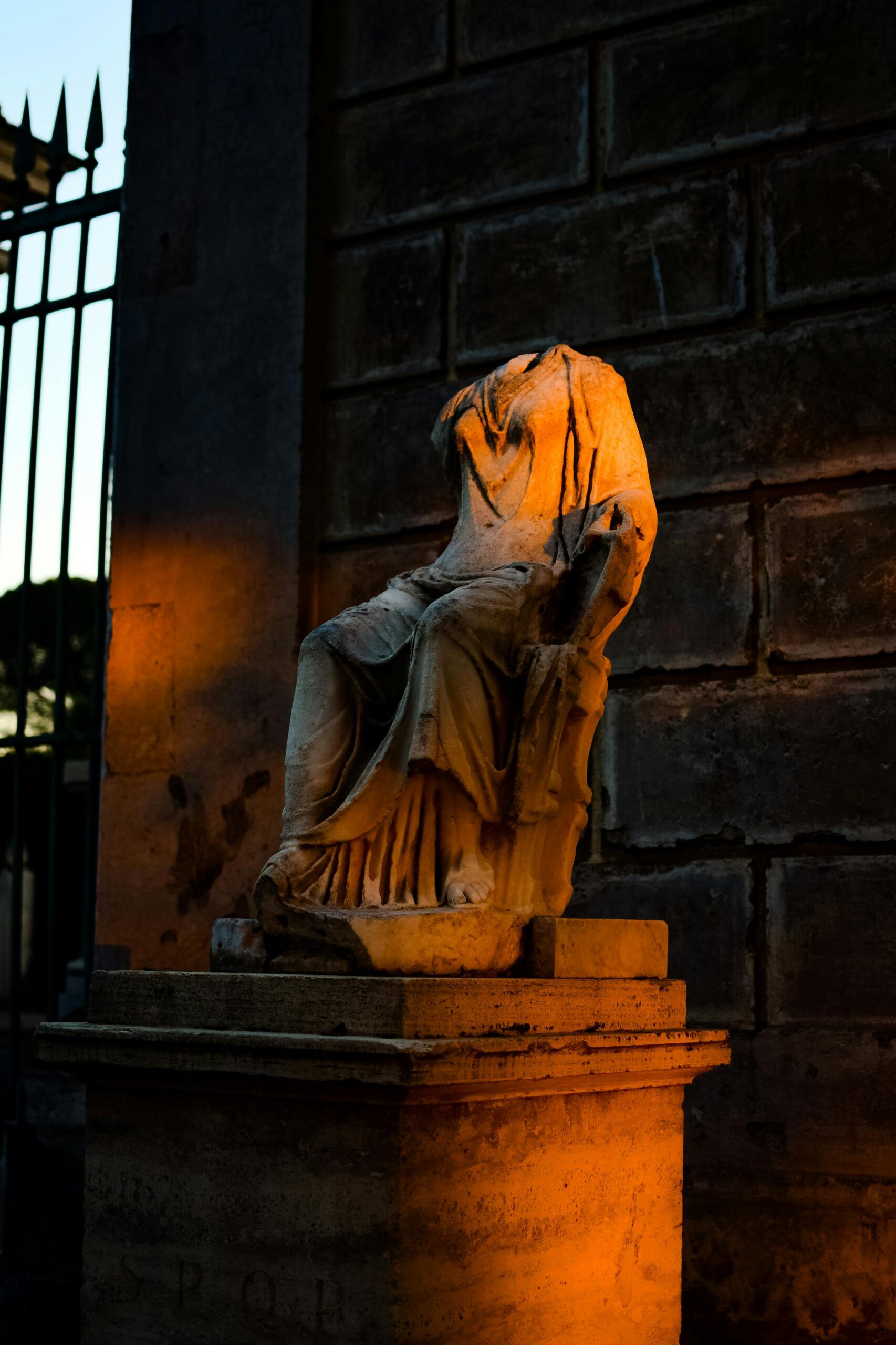
In a city that prided itself on its achievements, a statue stood in the very center of Glory Plaza. It didn’t depict a historical hero or a mythical deity. It was a sculpture of an anonymous man, carved from polished marble, with perfect features and a posture of unwavering confidence. Each year, the city council bestowed the honor of “The Face of the Statue” upon the person who had achieved the most that year. Their likeness would be meticulously carved onto the statue’s face, serving as a reminder to all of the power of success for the next twelve months.
This year, the honor went to Mark, an architect whose innovative skyscraper design had won international acclaim. Mark had long dreamed of this recognition. In his ambition-driven world, becoming The Face of the Statue was the ultimate validation.
A Crown of Stone
On the day of the unveiling, Mark stood in the crowd, his chest swelling with pride. When the cloth fell, he saw his own face—idealized, free of wrinkles and traces of fatigue—gazing out at the city with stony perfection. The people applauded, and he savored every second. He was finally someone. His ego, like an invisible cloak, wrapped him in a sense of invincibility.
But over time, something began to feel wrong. Walking through the plaza, Mark noticed his stone doppelgänger seemed to be watching him. When he accepted a compliment at work, he felt the statue’s cold gaze on his back, as if it were saying, “That’s my glory, not yours.” When he made a small miscalculation, the statue seemed to mock his imperfection.
He started avoiding Glory Plaza. He grew easily irritated by small things—a colleague’s loud laughter, a client’s critical comment, a rival’s success. Each event felt like a scratch on his perfect image. He became defensive and isolated. His ego, which had fed on admiration, now devoured his peace, terrified of the slightest flaw.
A Whisper in the Dark
One evening, unable to bear the tension, he went to the plaza. The night was quiet and empty. He stood before the statue and looked into his own marble-carved eyes. They were cold, empty, and lifeless. They embodied everything he had wanted to be—strength, success, perfection. But there was no joy, warmth, or humanity in them.
Then, a quiet thought entered his mind, like a whisper on the wind: “This statue is just stone. It was carved to show an ideal, but ideals don’t breathe, feel, or love. Your worth is not in this stone.”
Mark touched the marble’s cool surface. He felt its smoothness and hardness. Then he looked at his own hands—stained with ink, marked with small scars and lines of life. These hands had made mistakes, but they had also created. They belonged to a man, not a monument.
He realized he had focused so much on defending his stone-carved image that he had forgotten who he truly was. His ego had built a fortress to protect him, but it had actually imprisoned him.
From the next day on, Mark began to change. When a younger architect asked for his help, he no longer felt threatened but felt a desire to share his knowledge. When a client criticized his idea, he listened with curiosity instead of defending himself. He stopped comparing himself to others and started appreciating their contributions.
One day, he was crossing the plaza with his daughter. The little girl looked up at the statue and asked, “Daddy, is that man happy?”
Mark smiled and stroked her hair. “I think he’s just standing there. Happiness is down here, where we can stumble, laugh, and hold hands.”
When the year ended and his face was replaced by someone else’s, Mark didn’t feel a sense of loss. He felt relief. He was free. He understood that true strength isn’t found in building monuments to one’s ego, but in the courage to be an imperfect human being.
Reflection
And now, a question for you…
What is your “statue on Glory Plaza”? Perhaps it’s a perfect image on social media, the need to be infallible at work, or the fear of admitting a mistake in a relationship. Acknowledge it without judgment. Then, take one small action that shows your worth lies beyond that stone ideal. Maybe it’s admitting you don’t know something or offering a sincere compliment to someone you see as a competitor. See what happens when you allow yourself to simply be human.
Share your thoughts and reflections in the comments below. I’d love to hear your perspective!
Support My Work
If my writing has inspired or helped you, please consider supporting my work. You can buy me a coffee via Buy Me a Coffee or support me through PayPal.
Your support means the world—thank you!