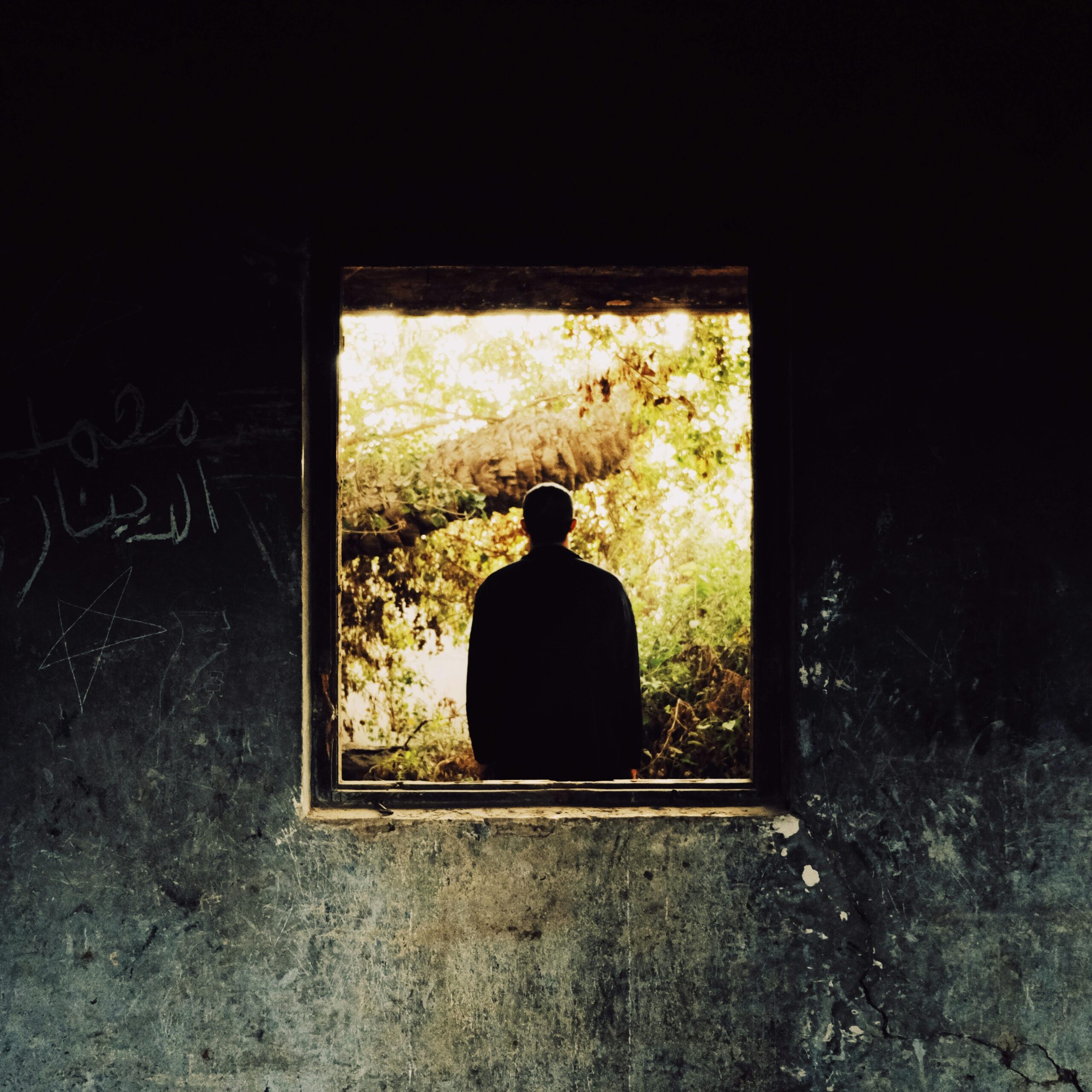

Have you ever had the urge to drop everything—the job, the bills, the difficult conversations—and disappear into a cabin in the woods? Just you, the silence, and the trees, with no cell service to interrupt your meditation. It is a seductive vision, especially when the weight of daily life feels like it’s crushing you.
In moments of crisis or overwhelm, spirituality often becomes our sanctuary. We light incense, sit on our meditation cushions, and for a few blissful moments, we vanish from the world. But there is a fine line between seeking solace to recharge and using spirituality as a trapdoor to escape reality.
As spiritual teacher Thich Nhat Hanh reminds us, “The real miracle is not to walk either on water or in thin air, but to walk on earth.” True wisdom isn’t about rejecting the material world or floating above it. It is about the ability to navigate the messy, loud, and demanding reality of everyday life with an internal sense of peace.
This article isn’t a critique of spiritual practices—I am a devoted advocate of them. Rather, it is a call for grounding. How do we ensure our spirituality serves as a compass that guides us through life, rather than a cave where we hide from it?
Spirituality Is the Gym, Not the Main Event
Imagine your goal is to be physically healthy and strong. You join a gym, you lift weights, and you watch your nutrition. But do you live at the gym? Do you sleep on the bench press and eat your meals by the treadmill? Of course not. You train at the gym so that you have the strength to live your life outside of it—to carry groceries, play with your kids, or hike a mountain without getting winded.
Spirituality works the same way. Your meditation, breathwork, prayer, or study of sacred texts are your “spiritual workout.” This is the time you spend charging your internal batteries, calibrating your moral compass, and gaining perspective. But the practice itself is not the ultimate goal of your day.
In fact, psychologists have found that integrating spiritual practices into daily routines—rather than making them an all-consuming focus—correlates with greater emotional well-being and resilience. Research published in the Journal of Positive Psychology (2017) suggests that people who view spirituality as a tool for personal growth (rather than an escape) experience less anxiety and more satisfaction in daily life.
The goal is life itself. The goal is to apply the patience you cultivated in silence to the stressful meeting at work. It is to bring the compassion you felt during prayer into a heated argument with your partner. If your spirituality evaporates the moment you stand up from your meditation cushion, you aren’t integrating it; you are compartmentalizing it.
Our material existence—this physical reality—is here for a reason. We are here to create, to solve problems, to build relationships, and to experience the full spectrum of being human. Your soul didn’t choose this life to sit on the sidelines; it chose it to play the game.
A Personal Note
There was a period when I found myself retreating into my inner world, hoping that focused thoughts and affirmations could magically change my circumstances. I’d slip into daydreams, convinced that meditation and positive intentions alone would take care of my problems. What I ultimately realized, though, was that while I couldn’t control the world around me with my mind, I could change myself. Practices like mindfulness, meditation, breathwork, and honest self-reflection didn’t let me escape reality—they gave me the calm, clarity, and creativity to face it more fully.
Over time, this shift showed real benefits: I became more productive, more resilient in difficult times, and I rebuilt close relationships by approaching people with genuine empathy. Instead of using spirituality to avoid challenges, I learned to meet them head-on, supported by a renewed sense of inner peace.
Have you ever noticed yourself slipping into fantasy to avoid a hard truth or tough situation? What could shift for you if you used spiritual practice to strengthen your presence in everyday life?
When the Medicine Becomes the Poison: The Trap of Spiritual Bypassing
Psychologists have a term for using spiritual beliefs to avoid facing unresolved emotional issues or practical problems: spiritual bypassing. As John Welwood, the psychologist who coined the term, explains: “When we are spiritually bypassing, we may use ideas like ‘all is one’ to rationalize away emotional pain.” It’s what happens when we use “high vibes” as a shield against the gritty texture of reality.
Research in Mental Health, Religion & Culture (2020) suggests that excessive reliance on spiritual practices as a sole coping mechanism can lead to avoidant behaviors and even worsen feelings of isolation.
How do you know if you’ve crossed the line from healthy practice to avoidance? Here are three common warning signs:
1. Detachment from Responsibilities
You might start viewing everyday tasks—paying taxes, cleaning the house, answering emails—as “low vibration” or insignificant. You might tell yourself that you are “above” these mundane concerns because you are an energetic being. This is a dangerous path that often leads to financial chaos, neglected health, or professional failure. Living in a material world requires material maintenance. Ignoring it doesn’t make you enlightened; it makes you irresponsible.
2. A Sense of Spiritual Superiority
Paradoxically, focusing too intensely on dissolving the ego can sometimes inflate it. You might find yourself judging others for their “unconscious” choices—watching reality TV, eating meat, or getting angry in traffic. You might think, “I am beyond that drama.” Instead of fostering connection and unity, your practice builds a wall between you and the rest of humanity. As Ram Dass noted, “If you think you are enlightened, go and spend a week with your family.”
3. Abstraction Over Action
When faced with a concrete problem, do you retreat into abstract questions? If your boss criticizes your work, do you ask, “What is the karmic lesson here?” instead of asking, “How can I improve this report?” While finding meaning is valuable, it cannot replace practical action. Spirituality should help you make decisions with clarity, not paralyze you with over-analysis.
If you are building castles in the sky, you need to make sure you have a ladder that reaches the ground.
Practical Tips for Finding Balance
For most of us—people with careers, families, and mortgages—the goal is to be a “monk in the city.” We need to maintain inner stillness amidst the external noise. Evidence backs this up: a 2021 study in Frontiers in Psychology concluded that brief, regular spiritual practices integrated into daily routines improved stress management and relationships without causing social withdrawal.
Here is how to integrate the two worlds effectively.
The 80/20 Rule
Try dedicating roughly 20% of your spiritual energy to “formal practice” (meditation, reading, workshops) and 80% to “practice in action.” Your office, your commute, and your living room are your true temples.
- Instead of: Meditating for an hour in the morning and then snapping at your children in the afternoon.
- Try: Meditating for 15 minutes, and then practicing active mindfulness and patience while making breakfast.
Grounding Techniques
If you feel yourself “floating away” or becoming too detached, you need to come back to your body.
- Physical sensation: Feel your feet firmly on the floor when you walk. Focus intently on the taste and temperature of your coffee.
- Manual labor: Do something physical. Scrub the bathtub, weed the garden, or fix a leaky faucet. Physical work is one of the best antidotes to spiritual abstraction.
Spirituality as Support, Not Escape
When a crisis hits, use your spiritual toolkit to shift your perspective, not to blind yourself to the problem.
- The Scenario: You are dealing with a difficult client who is angry.
- The Escape: You tell yourself, “This is all an illusion, it doesn’t matter,” and you mentally check out. (Result: You lose the client and damage your reputation.)
- The Support: You take three deep, conscious breaths to regulate your nervous system. You remind yourself that this person is likely suffering. With that calm, you engage in a professional, solution-oriented conversation. (Result: You handle the situation with grace and integrity.)
Exercise: The Reality Check
Once a week, conduct a brief audit of your life balance. Rate yourself honestly in these four areas:
- Body: Am I sleeping enough, eating well, and moving my body?
- Finances/Work: Are my affairs in order? Am I meeting my obligations?
- Relationships: Am I present for my loved ones? Do I listen to them?
- Spirit: Does my practice give me strength, or is it isolating me?
If your spiritual life is blooming but your relationships are withering and your finances are a mess, take it as a red alert. It is time to redirect energy from the crown chakra down to the root.
Conclusion: The Harmony of Two Worlds
We are not just bodies, but we are not just spirits either. We are spiritual beings having a human experience. The key word there is experiencing. Not avoiding, not denying, but fully living through the highs and lows.
“Spirituality does not mean escaping life but engaging with it more deeply,” writes Dr. Lisa Miller, psychologist and author of The Spiritual Child. Your meditation practice truly matters when it makes you a more patient parent, a more reliable partner, a more conscientious employee, or simply a kinder stranger in the grocery store line. Spirituality is meant to be the fuel for your creativity and resilience in the real world.
Let your yoga mat be the starting line, not the finish line. The real test of your spirituality doesn’t happen in the quiet of a retreat center. It happens out here, where it’s loud, imperfect, and beautifully chaotic—right in the heart of your everyday life.
A Challenge for You Today:
Pause for a moment and look honestly at your last week. Did you use a phrase like “everything happens for a reason” or “it is what it is” to avoid a difficult action or confrontation?
Choose one mundane, practical task that you have been putting off—maybe it’s making that dentist appointment, organizing the garage, or having a transparent conversation with a friend. Treat this task as your highest spiritual practice for the day. Do it with full attention, presence, and quality. That is what balance looks like.
Support My Work
If my writing has inspired or helped you, please consider supporting my work. You can buy me a coffee via Buy Me a Coffee or support me through PayPal.
Your support means the world—thank you!